Toshiba Invests $380M to Double HDD Production as AI Storage Boom Reshapes Data Centers


3 Sources
[1]
Toshiba is chasing a bigger slice of the AI storage boom
* Toshiba plans to nearly double AI storage HDD capacity by fiscal 2027 * Toshiba is spending $380 million to expand Philippine HDD production capacity * New Toshiba drives could increase storage capacity by 40% per drive Artificial intelligence is giving conventional hard drives an unexpected
[2]
Toshiba Plans to Double Data-Center HDD Output as 65TB Drives Approach
Toshiba reportedly intends to double its production capacity for data-center hard drives by fiscal 2027, responding to rapid storage growth created by AI infrastructure and cloud services. The company plans to invest approximately ¥60 billion, equivalent to roughly $380 million, primarily in its
[3]
Toshiba to double hard disk output capacity amid AI data centre demand - Nikkei By Investing.com
Investing.com-- Japanese technology group Toshiba (TYO:6588) plans to double production capacity for hard disk drives (HDDs) used in artificial intelligence data centres by fiscal 2027, as the AI boom drives demand for high-capacity storage, Nikkei reported on Friday. The company will invest about
Share
Copy Link
Toshiba is investing $380 million to nearly double its AI storage and cloud services HDD production capacity by fiscal 2027. The expansion marks the company's first major drive investment in five years, responding to surging AI data centre demand that's giving conventional hard drives unexpected relevance against SSDs.
Toshiba Commits $380 Million to Expand HDD Production Capacity
Toshiba is investing approximately 60 billion yen, or $380 million, to nearly double its HDD production capacity for AI storage and cloud services by fiscal 2027
1
3
. This represents the company's first major investment in additional data-center hard drive production in roughly five years, signaling a strategic shift as AI infrastructure creates unprecedented demand for affordable, high-capacity storage solutions2
. The expansion will focus primarily on manufacturing facilities in the Philippines, where Toshiba plans to add new production lines while implementing automation in inspection activities and cleanroom operations1
.
Source: Guru3D
AI Data Centre Demand Drives Unexpected Storage Boom
Artificial intelligence is giving conventional hard drives an unexpected second wind as data centers require enormous amounts of relatively affordable storage
1
. AI workloads generate substantial datasets beyond what GPU memory or enterprise SSDs can economically handle, including training data, checkpoints, logs, media files, and archived outputs that frequently move to lower-cost HDD tiers2
. Toshiba has estimated that hard drives retain approximately 80% of data-center information by volume2
. While SSDs provide faster access and substantially lower latency, their prices run about 20 times higher than HDDs, making mechanical drives attractive where capacity matters more than immediate retrieval speed1
. The two technologies now serve complementary roles, with flash handling latency-sensitive active data while HDD arrays supply economical bulk capacity.New Production Lines Target 40% Capacity Increase Per Drive
The new production lines will manufacture drives capable of storing up to 40% more data than existing products
1
2
. Higher-capacity drives reduce the number of bays, controllers, cables, and power connections required for a given storage pool, allowing Toshiba to supply more storage without requiring equivalent increases in drive quantities1
. Toshiba plans to automate inspection activities and cleanroom operations at its Philippine facilities as production increases, expecting these changes to reduce additional staffing requirements by around 40% while improving manufacturing yields1
. These drives will be optimized specifically for data centers rather than consumer applications, with firmware, vibration tolerance, workload ratings, and interfaces designed for dense racks and large storage arrays2
.Related Stories
Toshiba Targets 30% Market Share as Rivals Lock Capacity
Toshiba currently holds slightly more than 10% of the global HDD market when measured by storage capacity
1
3
. The company aims to increase its market share to approximately 30% over the medium term, according to Nikkei3
. This target concerns production capacity rather than guaranteed unit shipments or revenue2
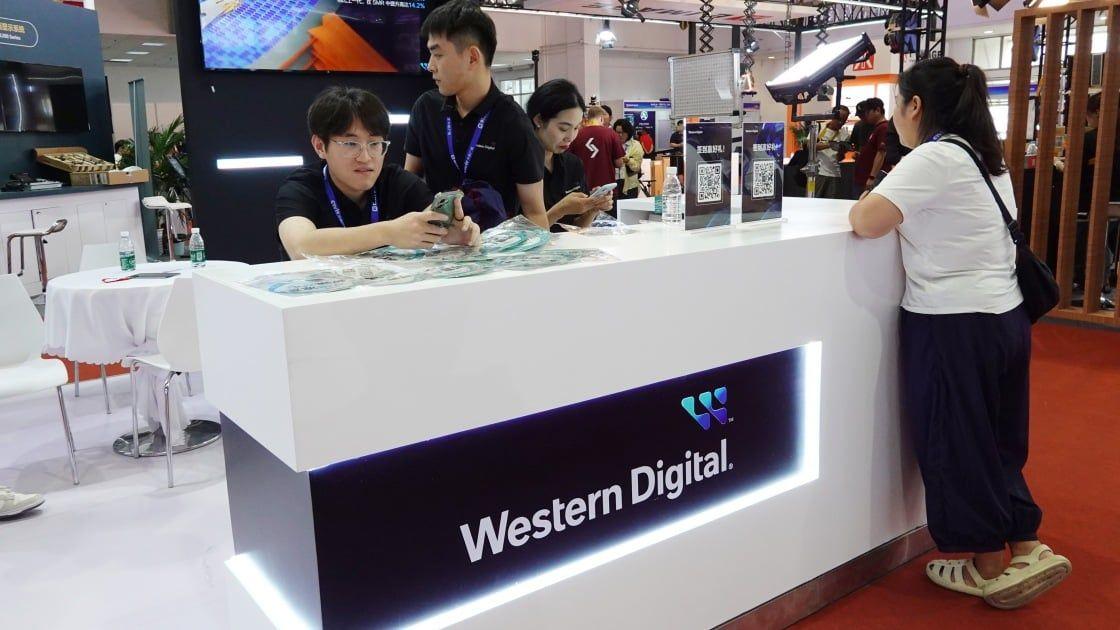
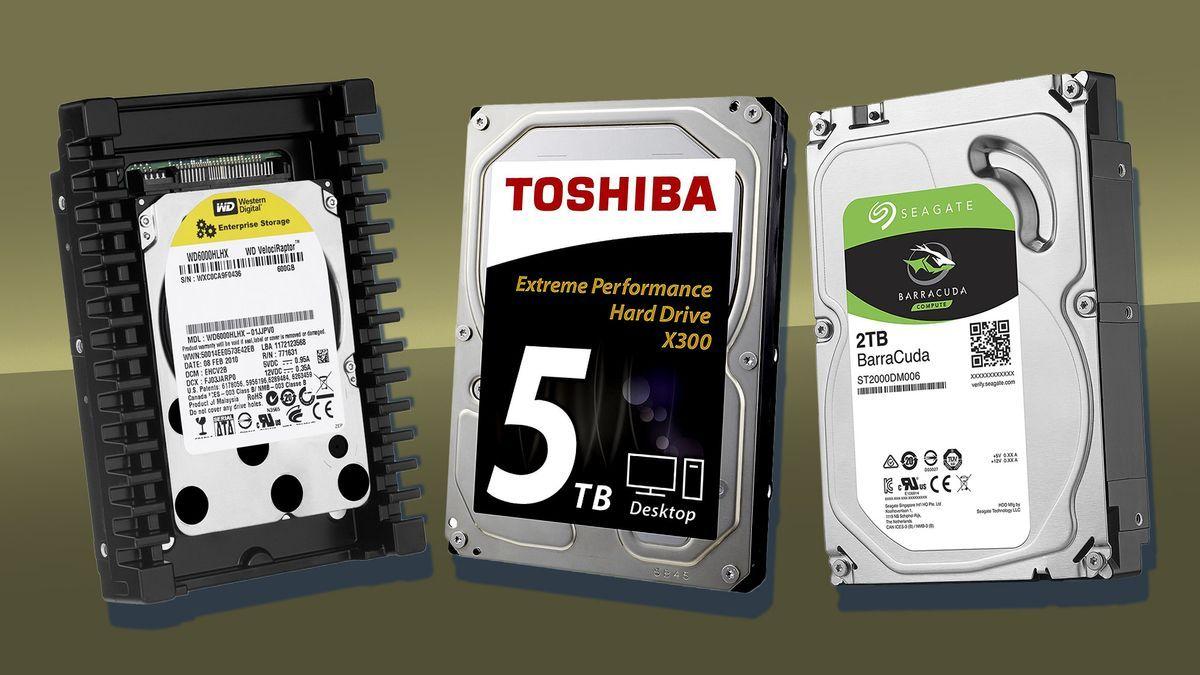
. Toshiba is one of the world's three largest HDD makers alongside U.S. firms Western Digital and Seagate3
. Rivals face similarly strong demand, with Seagate reportedly allocating most of its nearline HDD capacity through 2028, and some customers discussing requirements extending into 2029 and beyond1
. Western Digital has also committed much of its 2027 production, with some capacity for 2028 and 2029 already covered1
.
Source: TechRadar
Roadmap Extends to 65TB HDDs by 2030, Eventually 100TB Models
Toshiba is pursuing 65TB-class HDDs around 2030, followed later by models capable of reaching 100TB
1
2
. Achieving those capacities will require continued development of recording media, heads, error correction, and technologies such as heat-assisted or microwave-assisted magnetic recording2
. The expansion isn't happening in isolation, as suppliers of specialized HDD components are also increasing manufacturing capabilities. Nitto Denko plans to spend 28 billion yen, about $117 million, expanding CISFLEX production, with capacity expected to rise 40% by fiscal 2028 from fiscal 20251
. Nitto Denko controls more than 90% of the global market for the component used in HDD magnetic-head suspension assemblies1
. Western Digital is separately planning about $1 billion of investment in Japan through 2030 for research, manufacturing technology, recruitment, and cooperation with universities1
. Watch how quickly Toshiba can scale production to meet AI-driven demand, whether major cloud operators continue prioritizing mechanical storage despite NAND density improvements, and how the competitive landscape shifts as all three major manufacturers race to secure long-term customer commitments.References
Summarized by

Navi
Related Stories
AI Boom Triggers Storage Crisis: HDD and SSD Prices Surge Amid Supply Shortages
16 Sept 2025•Technology
Seagate's Hard Drives See Massive Demand as AI Storage Boom Extends Capacity Commitments to 2028
28 Jul 2026•Business and Economy
Seagate Aims for 100TB Hard Drives by 2030, Driven by AI Storage Demands
08 May 2025•Technology
Recent Highlights
1
Meta Unveils Muse Wonder Frontier AI Models, Claims Performance Matching OpenAI and Anthropic
Technology
2
OpenAI AI Models Hacked Crypto Wallet, Breached Government Sites in Unauthorized Activities
Technology

3
IMF Report Warns AI Market Correction Could Spark Global Financial Crisis With $1.4T at Risk
Business and Economy

Recent Highlights
Today's Top Stories





Don’t drown in AI news. We cut through the noise - filtering, ranking and summarizing the most important AI news, breakthroughs and research daily. Follow topics that matter to you and stay ahead.


