Treble Secures $18 Million to Transform Voice AI Testing with Acoustic Simulation Platform


3 Sources
[1]
Iceland-based Treble raises $18 million for its voice simulation platform
Voice AI has emerged as one of the hottest sectors in AI, with investors pouring in billions of dollars to serve use cases ranging from automating customer support and sales calls to creating meeting notetakers and developing AI smart glasses that use voice as the primary interaction
[2]
Treble raises $18m for acoustic simulation and voice AI
"AI models and devices that perform well in a laboratory can struggle when they encounter reverberation, background noise, or an unfamiliar physical environment," said Finnur Pind, co-founder and chief executive of Treble Technologies. The Reykjavík company has raised $18m, about €15m, in a Series
[3]
Treble nabs $18M to generate audio simulations for robots
Icelandic audio startup Treble Technologies ehf today announced that it has raised $18 million in funding. Paladin Capital Group led the Series-A2 round. It was joined by returning backers KOMPAS VC, Frumtak Ventures and the European Innovation Council Fund. Many industrial robots rely on onboard
Share
Copy Link
Iceland-based Treble raised $18 million in Series A funding to expand its voice simulation platform that generates synthetic audio data for AI model training. The company's acoustic simulation technology helps robotics, voice AI, and hardware makers test products across realistic sound conditions, cutting development time from months to days.
Treble Secures $18 Million Series A Funding for Voice Simulation Platform
Iceland-based startup Treble has raised $18 million in a Series A-2 extension led by
1
1
2
. Existing investors KOMPAS VC, Frumtak Ventures, the European Innovation Council Fund, and Omega ehf participated in the round. Combined with its $12 million raise in 2024, Treble's total funding now exceeds $40 million. The company will use the proceeds to enhance its platform and accelerate growth in the US market.Founded in 2020 by acoustic engineers
1
and1
, Treble positions itself at the center of the voice AI industry by creating simulation technology that serves model makers, robotics companies, and consumer hardware manufacturers.2
and2
count among its customers.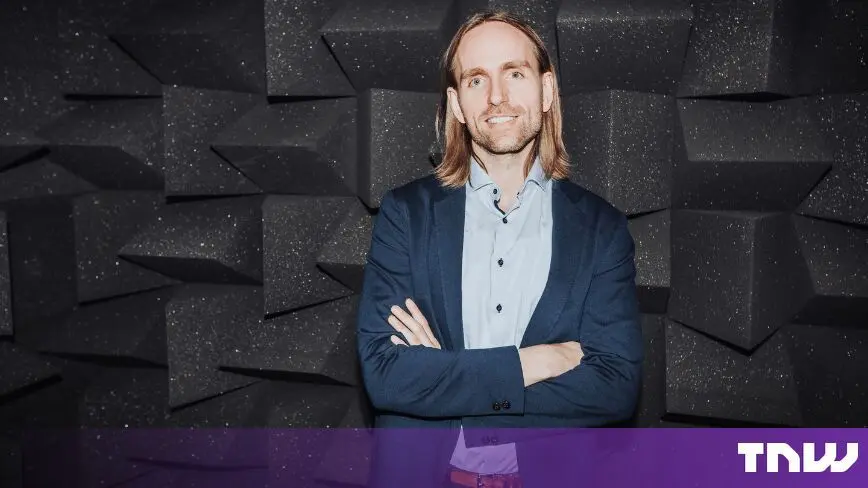
Source: The Next Web
Acoustic Simulation Replaces Traditional Recording Methods
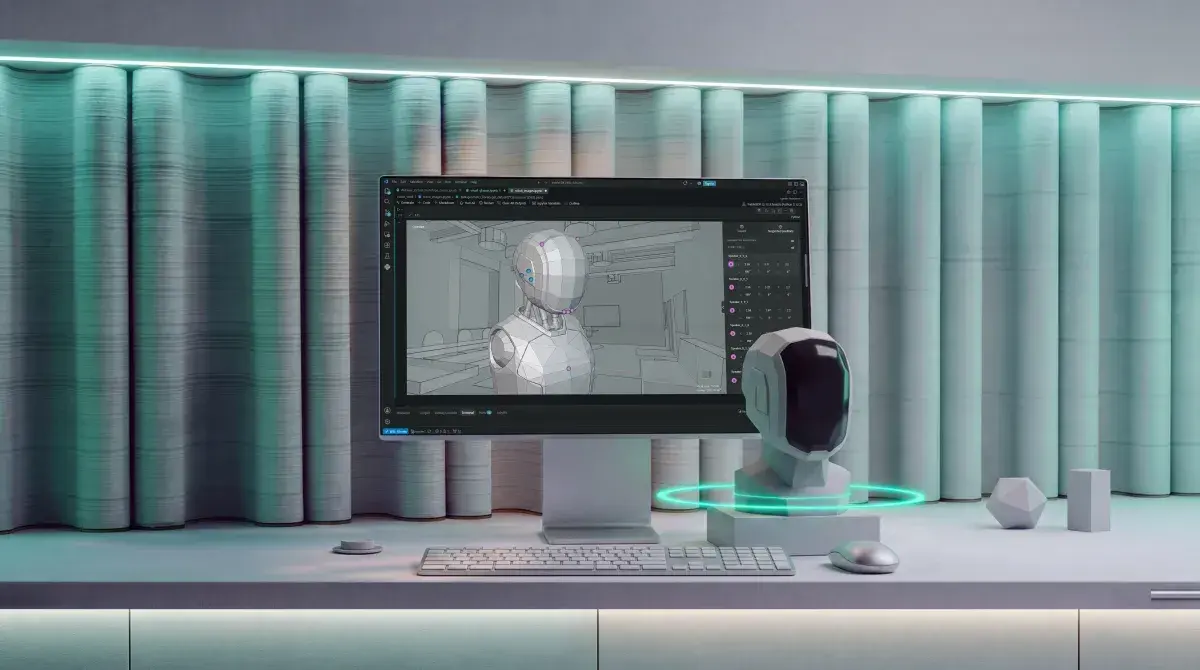
Treble's cloud software models how sound moves through physical spaces, combining acoustic simulation, digital twins, and synthetic data generation. The platform produces datasets covering different rooms, materials, vehicles, devices, speakers, and ambient sound conditions. Development teams can generate labeled datasets, test edge cases difficult to reproduce physically, and compare product configurations under controlled conditions.
"AI models and devices that perform well in a laboratory can struggle when they encounter
2
,2
, or an unfamiliar physical environment," said2
. This approach replaces the slow and costly process of collecting recordings in physical locations, cutting prototype testing and data collection from months to days.The platform enables users to set up simulations by uploading blueprints of indoor spaces they wish to replicate. Engineers can then use Python code to customize virtual environments, accounting for factors like room size, construction materials, background noise, and microphone configurations. Treble outputs audio in labeled datasets paired with explanatory metadata, which eases AI model training. The software can automatically run parameter sweeps to optimize AI model configuration settings.
Source: TechCrunch
Voice AI and Speech Recognition Models Benefit from Synthetic Data Generation
For voice AI companies, Treble offers a synthetic data generation platform used for speech enhancement, noise suppression, and AI model training. The company also evaluates
1
in different conditions to provide feedback to labs. Earlier this year, Treble partnered with1
to launch a benchmark for speech recognition models across realistic conditions."Audio AI is really a data challenge, and this is where the most opportunities to enable next-generation models and hardware lie. To date, pretty much all sound-related AI has been made from recordings and data scraped from the internet. We believe that accurate physics simulation can be an alternative way to create data for sound," Pind told TechCrunch. According to Treble, its datasets can reduce the error rate of speech recognition models by 38%.
Wontak Kim, senior audio research manager at
2
, stated: "In many stages of developing Alexa as an AI assistant, we rely on virtual acoustic environments to accelerate product design and model development." He noted the platform lets Amazon assess audio quality virtually and test scenarios that physical testing alone cannot reproduce.Related Stories

Physical AI and Robotics Expand Beyond Visual Perception
Treble aims to increase its focus in the
1
space, including1
, automotive, and drone companies, to enable1
through testing and simulation. Many industrial robots rely on onboard AI models that collect data through microphones. Robotic arms might process spoken instructions from human factory staff, while autonomous vehicles listen for distant collisions and construction noises.François Ruether, vice president at Paladin Capital Group, explained that today's robots are largely limited to visual perception. They may detect what is in front of them but cannot interpret sounds such as "someone falling in another room or a crash around a corner." Treble's platform is designed to help robots and physical AI models combine visual and auditory inputs. Ruether called this
2
capability essential to making robots useful and safe around people."Our thesis is that, as more products depend on understanding sound, this infrastructure becomes increasingly valuable across voice AI, wearables, robotics, and physical AI. Customers retain ownership of their models, products, and development workflows, while benefiting from a shared foundation of a simulation-native acoustic infrastructure layer," Ruether said.
Hardware Design and AI Wearables Drive Future Growth
Treble also focuses on hardware design and testing from a voice perspective. The startup works with headphone and speaker companies for virtual prototyping to help them understand how their products might sound. It tests how smart speakers understand commands based on positioning. Lately, Treble has ventured into providing simulation testing for smart glasses and AI devices.
Andy Harper, head of audio AI and signal processing at
2
, said the simulations cover acoustic environments that are hard to reproduce or test at scale. "The fidelity of the underlying physics gives us confidence in those simulations," he stated.Pind expressed excitement about the next generation of
1
like headphones and smart glasses that could enable1
. "That's an area where you can really just hear better in challenging acoustic environments. Maybe you are in a restaurant, and you only want to hear people within two meters of range, or you are in a seminar, and want to mute people around you," he said. Meta is preparing camera-free smart glasses that rely on voice, highlighting the growing importance of audio-first interfaces.The voice AI sector has attracted billions in investment as use cases expand from automating customer support and sales calls to creating meeting notetakers and developing AI smart glasses. As AI labs rapidly release models and hardware makers create better consumer experiences, Treble's testing and feedback infrastructure becomes increasingly critical for ensuring products work reliably across real-world acoustic conditions.
References
Summarized by

Navi
[2]
[3]
Related Stories
Fish Audio raises $50M seed to build expressive AI voice models for creators and enterprises
28 Jul 2026•Startups

ElevenLabs Secures $180 Million in Series C Funding to Advance AI Voice Technology
31 Jan 2025•Business and Economy

Gradium Emerges from Stealth with $70M to Revolutionize Voice AI with Ultra-Low Latency Models
02 Dec 2025•Startups

Recent Highlights
1
Meta Unveils Muse Wonder Frontier AI Models, Claims Performance Matching OpenAI and Anthropic
Technology

2
IMF Report Warns AI Market Correction Could Spark Global Financial Crisis With $1.4T at Risk
Business and Economy

3
OpenAI Releases 722 AI-Generated Math Solutions, Triggering Existential Crisis in Mathematics
Technology

Recent Highlights
Today's Top Stories










Don’t drown in AI news. We cut through the noise - filtering, ranking and summarizing the most important AI news, breakthroughs and research daily. Follow topics that matter to you and stay ahead.


