Big Tech Signs Pledge to Pay AI Data Center Energy Costs, But Will It Protect Consumers?


22 Sources
22 Sources
[1]
Are consumers doomed to pay more for electricity due to data center buildouts?
Big Tech is set to agree to build its own power plants for data centers and shield consumers from rising electricity costs, but companies face daunting logistical obstacles to delivering on the pledge championed by President Donald Trump. At a White House event on Wednesday, executives from Amazon, Google, Meta, Microsoft, xAI, Oracle, and OpenAI are due to sign the pledge to supply their own power instead of relying on a grid connection. Trump hailed the plan in his State of the Union speech last week, promising US consumers that "no one's prices will go up" as a result of "energy demand from AI data centers." But industry executives have suggested the commitment will not be binding, while experts warn it is likely impossible to fully insulate consumers from the extra power demand coming from the vast expansion of data centers to run AI. "Regardless of how these data centers connect, behind the meter or as part of the network, you're going to increase demand," said Ari Peskoe, director at Harvard Law School's Electricity Law Initiative. Independent power supplies for data centers most often come from gas turbines, which are in short supply and not always designed to provide continuous power. "We still need more of these turbines," Peskoe added. Trump's pressure on big data center operators comes in response to consumer backlash and political pressure over rising power bills. On the campaign trail in 2024, Trump pledged to cut energy bills in half within a year of taking office. In reality, residential electricity costs rose by 6 percent nationwide in February, compared with a year before, according to the US Energy Information Administration. States such as New Jersey and Pennsylvania, which have clusters of data centers, reported bigger increases at 16 percent and 19 percent respectively. Natural gas prices, extreme weather, and the need to upgrade aging grid infrastructure have all contributed to higher costs -- after decades of low investment in power plants and transmission lines. The hit to energy supplies from Trump's war against Iran could add to the problem. Critics of data centers say they are increasing energy bills by adding to demand. US data center power demand will more than triple by 2035, rising from almost 35 gigawatts in 2024 to 106 GW, according to data from BloombergNEF. To avoid political backlash and waits of up to four years for grid connections, tech companies are already building their own power supplies for many new data centers. Nearly three-quarters of planned generation equipment for data centers is natural gas fired, according to energy research firm Cleanview, which is tracking 56 GW of projects across the US. Wednesday's pledge would see tech companies expand these efforts to prevent higher power costs being pushed on to customer bills. Josh Price, director of energy and utilities at strategy firm Capstone, said Big Tech was "trying to push back against the narrative that they're the bad guy." But the boom in data center building is already pushing the limits of the supply chain for power generation, making it difficult for companies to meet their commitment to Trump. Competition for gas turbines is fierce, with waits as long as seven years for new orders. Turbine-maker GE Vernova said it would expand production by 25 percent, and Mitsubishi Power announced plans to double its output over the next two years. But manufacturers have been cautious about expanding capacity, and it may not be enough to meet booming demand. Two-thirds of gas projects in development in the US have not announced a turbine manufacturer, according to Global Energy Monitor. The price of gas turbines has risen sharply, and greater competition from tech companies will mean higher costs for utilities and industrial customers who also need generating capacity -- costs that could still be passed on to ratepayers. To overcome shortages, data centers are increasingly relying on alternatives. Companies, including Google and Microsoft, have also struck deals to reopen nuclear power plants, but these plans will take years to deliver. In the near term, companies are using options such as reciprocal engines and diesel generators. Experts point out that these power sources, as well as ordinary gas turbines, are not designed to provide the kind of continuous power needed by data centers. "They say, 'we have documented evidence that these can run 90 percent of the time'... But that's not the average use case," said Jigar Shah, an energy investor and former Department of Energy official. Keeping these data centers, and their power supplies, operational for decades would also present challenges around securing spare parts and qualified technicians, he added. Shah said: "The level of ineptitude by which the data center companies are sleepwalking into major problems just seems shocking for trillion-dollar companies."
[2]
7 Companies Agree to Pay Data Center Energy Costs. Will It Lower Your Bill?
UPDATE 3/5: The White House today said seven companies have agreed to President Trump's Ratepayer Protection Pledge: Amazon, Google, Meta, Microsoft, OpenAI, Oracle, and xAI. Under the deal, the companies will: * Negotiate separate rate structures with utilities and state governments, and pay these rates whether they use the electricity or not. * Coordinate with grid operators to make backup generation resources available. * AI companies and hyperscalers will hire and train talent from within the communities where they build and operate data centers. "Google is committed to paying for 100% of the power our data centers use and any new infrastructure costs directly driven by our growth," says Amanda Peterson Corio, Google's Global Head of Data Center Energy. On X, xAI tweeted that it's "committed to deploying artificial intelligence that makes the lives of people better as well as adding more power near our datacenters to reduce the cost of energy for the American people." (Memphis residents might like a word.) Meta, meanwhile, said it's committed to minimizing water use. "For example, at our New Albany data center in Ohio, we're cooling so efficiently that we use less than half the amount of water it takes to irrigate an average golf course in the southwest," it says. That comes after OpenAI CEO Sam Altman argued that reports about AI queries sucking up gallons of water are "totally insane," and said the energy required to train an LLM is nothing compared with what it takes to raise a human. Altman hasn't posted about the Ratepayer Protection Pledge today; he's been busy tweeting about the company's Pentagon deal. Is this all lip service, or will those living near the buzz of an overactive data center actually see relief? Guess they'll have to monitor their electricity bills and water pressure in the months ahead. Original Story 2/25: In the longest State of the Union address in at least 62 years, President Trump devoted just over a minute to a topic that's left many Americans feeling increasingly powerless: whether soaring data-center demand for electricity will drive up their own rates. "Tonight I'm pleased to announce that I have negotiated the new ratepayer protection pledge," he said about 44 minutes into the nearly two-hour speech. "We're telling the major tech companies they have the obligation to provide for their own power needs." He didn't name any firms that have signed on to this commitment, although White House representatives have been telling media outlets such as the New York Times that an event at the White House next week will feature those companies. Trump called the pledge "a unique strategy never used in this country before," but some of these companies have already announced commitments to pay for any new generating capacity and grid infrastructure needed for their data-center projects. Microsoft, for example, pledged to do just that in January, following earlier initiatives to pay for data-center power generation such as its 2024 deal to restart a nuclear reactor at the shuttered Three Mile Island plant near Harrisburg, Pennsylvania. Later that month, OpenAI announced a comparable commitment for its $500 billion Stargate data-center plan "to [pay] our own way on energy, so that our operations don't increase your electricity prices." And on Feb. 11, Anthropic posted its own pledge, including promises to "pay for 100% of the grid upgrades needed to interconnect our data centers" and "bring net-new power generation online to match our data centers' electricity needs." Google, meanwhile, announced in June 2024 that it had developed a new "clean transition rate" framework, first signed with the Nevada utility NV Energy, under which it would pay for new renewable power sources to cover its data-center needs without increasing residential rates. On Tuesday, the company announced another deal along these lines with Xcel Energy to add wind, solar, and battery capacity in Minnesota. Last night, xAI CEO Elon Musk reposted a statement from xAI lobbyist James Burnham in which he said the company behind the Grok chatbot "has never caused our neighbors' electricity bills to rise." He wrote: "When our team builds supercomputers, that includes power." And Meta announced Wednesday that it was already on board: "Meta pays the full costs for the energy used by our data centers, so they aren't passed on to consumers." Trump's brief description of this pledge in his speech suggested it was necessary because of an "old grid" incapable of meeting data-center demands, which checks out. "So I'm telling them they can build their own plant, they're gonna produce their own electricity," he said. "It will ensure the company's ability to get electricity while at the same time lowering prices of electricity for you, and could be very substantial." But requiring data centers to include their own on-site power generation capacity may not make them any better neighbors, as the people living downwind of xAI's gas-turbine-powered plant near Memphis can attest. A February Washington Post report cited concerns among communities in Texas and West Virginia, among others, about the pollution coming from off-grid power facilities for data centers planned near them. The Trump administration, however, does not seem too concerned about that risk. The "AI Action Plan" announced last summer lists methane gas first among sources of "dispatchable" power for data centers, followed by an even bigger polluter, coal, and the zero-emissions options of geothermal and nuclear power. This White House has also gone out of its way to slow or halt the development of solar and wind power, including multiple attempts to yank permits for offshore wind projects that have all been rejected by courts. Republicans in Congress have joined Trump in that crusade: Last year's giant "One Big Beautiful Bill" budget-reconciliation measure terminated most of the clean-energy credits offered under President Biden's Inflation Reduction Act. That drew a mention in the official Democratic response, in which Virginia Gov. Abigail Spanberger criticized Trump for, among many other things, "driving up costs in energy."
[3]
Trump summons tech giants to White House to pledge power payment commitments -- 'ratepayer protection plan' will make data center operators negotiate discrete payment structure for electricity use
The White House wants tech giants to promise that they'll "pay their own way." The biggest AI tech companies, including Amazon, Meta, Microsoft, and Google, are expected to join President Donald Trump at the White House today to sign the new "ratepayer protection pledge" in a bid to keep electricity prices under control. Trump said during the State of the Union address, "We're telling the major tech companies that they have the obligation to provide for their own power need." According to Bloomberg, Meta, Amazon, and OpenAI have confirmed attendance at the White House event on Wednesday, while Google declined to comment. The massive power demands of the AI data centers have upended the electricity market, causing electricity costs for the average American to increase sharply. Some states have reported an increase of up to 36%, with wholesale power prices increasing by 267% in just five years. This is putting undue stress on the ordinary consumer, so much so that both sides of the aisle are demanding action from tech giants. Microsoft was the first to respond to Trump's call for AI data centers to "pay their own way" when it comes to their electricity consumption, promising to be a "good neighbor" in the communities where it is present. OpenAI soon followed suit, saying that it will fund grid upgrades and apply flexible loads to reduce stress on the grid, while Anthropic said that it will pay 100% of its grid infrastructure costs and even produce new power sources. Now, it seems that the administration wants to formalize these promises. Energy Secretary Chris Wright reportedly said in a statement that the pledge "will deliver more affordable, reliable, and secure energy for the American people and help stop the rising electricity prices that started during the previous administration," while ensuring the U.S. wins the AI race. However, experts are skeptical whether these promises and pledges will hold water in the long run. "The ratepayer protection plan is a show designed to sweep this issue under the rug and show the White House has solved the problem," Director Ari Peskoe of the Harvard Law School Electricity Law Initiative told the publication. "The White House has no real authority here aside from the bully pulpit." It's not until we see big tech companies sign separate rate structures with electricity providers, grid operators, and state governments that we will know whether these pledges are effective. Follow Tom's Hardware on Google News, or add us as a preferred source, to get our latest news, analysis, & reviews in your feeds.
[4]
Trump Vows Data-Center Pledge Will Eventually Cut Power Costs
Trump said the agreement will ensure that America can maintain the most advanced AI infrastructure without American families being forced to pick up the tab, and that electric bills will actually come down as a result. President Donald Trump declared the public would benefit from a commitment by the nation's largest tech companies to defray electricity costs related to artificial intelligence development -- but it might take a while. Trump said during a Wednesday roundtable with tech executives that "many Americans are still concerned that the massive energy demand from AI data centers could drive up their electricity bills in the future" and that thanks to his pledge, they "aren't going to have to even think about it." "Your electric bills will actually come down. It'll take a little while, but not long," he said. The companies all signed a non-binding, five-point compact pledging to secure their own electricity for the energy-hungry data centers they're constructing as part of a sweeping AI push. They vowed to build or buy added power supplies, pay for related infrastructure upgrades and negotiate separate rate structures with utilities and states wherever data centers are built. Trump said that representatives in attendance included Matt Garman of Amazon Web Services Inc., Dina Powell McCormick of Meta Platforms Inc., Microsoft Corp.'s Brad Smith, Ruth Porat of Google parent Alphabet Inc., Oracle Corp.'s Clay Magouyrk, Brad Lightcap of OpenAI Inc. and Gwynne Shotwell of SpaceX, which owns Elon Musk's xAI Corp. "This agreement will ensure that America can maintain the most advanced AI infrastructure on the planet without American families being forced to pick up the tab," Trump said. Executives also pledged to hire staff locally and coordinate with grid operators to make backup generation resources available during power outages or during times of scarcity, including cold weather events. It's the Trump administration's latest bid to address rising electricity costs, which are climbing along with the rise of the AI industry the president has championed. That has created a political risk heading into the November midterm elections. Concern about higher electricity prices, as well as environmental damage from the sites, is also helping drive grassroots opposition to the data centers so crucial for expanding processing power and AI capabilities. Follow the latest in global politics. Follow the latest in global politics. Follow the latest in global politics. Get insights from reporters around the world in the Balance of Power newsletter. Get insights from reporters around the world in the Balance of Power newsletter. Get insights from reporters around the world in the Balance of Power newsletter. Bloomberg may send me offers and promotions. Plus Signed UpPlus Sign UpPlus Sign Up By submitting my information, I agree to the Privacy Policy and Terms of Service. But the non-binding pledge offered no penalties for firms if they refuse to comply with any of the provisions of the compact. The administration is instead relying on local utilities and states to enforce the principles of the deal through the negotiated rate structures, according to senior administration officials, who briefed reporters on a call on the condition of anonymity to discuss the matter. The tech firms will need government approval and federal licensing to build the data centers, the officials pointed out. For Trump, Wednesday's roundtable offered an opportunity to show voters he's addressing the issue, one of several cost-of-living concerns that will dictate whether Republicans keep control of Congress. His administration separately has pressed the nation's largest power grid to hold an emergency auction allowing tech companies to bid for long-term electricity supplies. And the US Energy Department last week approved $26.5 billion in loans with the aim of easing power costs in Southeastern states. Trump campaigned on a promise to slash electricity bills in half, but surging demand from data centers and industrial operations has instead sparked a run-up in prices. Nationally, the average retail price for electricity hit 17.24 cents per kilowatt-hour in December, a 6% increase from a year earlier. For technology firms, Wednesday's pledges provided a similar opening to help address a vulnerability facing the nascent AI industry. Backlash to data centers has led US cities to impose stringent limits on their construction, with some municipalities banning them entirely. Analysts have said that major tech firms behind the AI data-center boom are happyBloomberg Terminal to pay more for the power they need. For months, Trump has said he expects technology companies to supply their own electricity, often suggesting that the firms will get into the power plant building business themselves by constructing plants next to their data centers.
[5]

Big tech companies agree to not ruin your electric bill with AI data centers
Today the White House announced that several major players in tech and AI have agreed to steps that will keep electricity costs from rising due to data centers. Under this Ratepayer Protection Pledge, companies are agreeing to practices that are intended to protect residents from seeing higher electricity costs as more and more businesses create power-hungry data centers. Amazon, Google, Meta, Microsoft, OpenAI, Oracle and xAI have all apparently signed on. A few of the participants -- Amazon, Google and Meta -- had conveniently timed press releases patting themselves on the back for their participation and touting whatever other policies they have for mitigating the negative impacts of data center construction. The main provisions of the federal pledge have tech companies agreeing to "build, bring, or buy the new generation resources and electricity needed to satisfy their new energy demands, paying the full cost of those resources." It also claims they will pay for any needed power infrastructure upgrades and operate under separate rate structures for power that will see payments made whether or not the business uses that electricity. The pledge doesn't appear to be any form of binding agreement and there's no discussion of enforcement or a penalty for companies that don't honor the stipulated provisions. It also doesn't address any of the other impacts data centers and AI development might be having, either on local communities, on other utilities and resources, or on access to critical computing elements like RAM.
[6]

Trump says deal on data centers will lower electricity costs, but offers few details
WASHINGTON (AP) -- President Donald Trump invited technology companies to the White House on Wednesday to commit to developing their own power generation as he tries to ease tensions over the cost of electricity used by data centers to develop artificial intelligence. "They need some PR help because people think that if a data center goes in there, electricity prices are going to go up," Trump said. "It's not going to happen." The "ratepayer protection" pledge touted by the president comes as affordability has become a top concern for an American public wary of the possibility that the AI buildout could lead to higher utility bills. Trump first announced the pledge during his State of the Union address last month, but provided few details Communities across the nation have seen a backlash against data centers over fears about rising electricity prices and concerns about pollution and water consumption. Opposition to rising power prices was also a key factor in Democratic wins last year in elections in states including Georgia, Virginia and New Jersey. The president has sought to deflect public concerns about AI, seeing the fast-evolving technology as crucial for the U.S. to attract foreign investment and maintain its economic and military prowess. But it's unclear whether the commitments will meaningfully shield Americans from higher electricity prices that have climbed 6.3% over the past year, according to the Labor Department's consumer price index. The president stressed that he understands that demand for energy will triple by 2035 largely because of AI, meaning that the U.S. needs to dramatically increase its construction of power plants. Construction spending on power generation jumped in 2022, but it has drifted slightly downward after peaking in October 2023, according to the Census Bureau. Trump has also sought to cancel wind power projects while elevating coal -- which contributes to climate change -- as a source of energy. The companies committing to the pledge included Google, Microsoft, Meta, Oracle, xAI, OpenAI and Amazon. Under the terms of the pledge, the companies intend to build or buy new sources of power generation for their data centers and cover the expense of infrastructure upgrades. The companies could also sell excess power generation to utilities for public consumption, in addition to negotiating separate rate structures with public utilities and hiring locally for their data center buildout. Energy experts have expressed doubt that promises by the tech companies can slow down fast-rising electricity prices. While Trump said the pledge would force tech companies to produce their own electricity, the deal is likely not enforceable at the federal level, experts said. Electricity supplies are mostly regulated at the state level and managed across regions, using market structures that vary across the country. Jill Tauber, vice president of litigation for climate and energy at Earthjustice, said that actual policies needed to be in place rather than a signed pledge of unclear legal value. "Data centers are increasing costs and pollution for communities across the country," Tauber said in a statement. "More than a pledge, we urgently need strong policies and protections to ensure that data centers pay their way, disclose and mitigate their impacts, and are powered by clean energy."
[7]

Trump has an AI data center problem ahead of the midterms -- with no easy solutions
U.S. President Donald Trump speaks to the media, as he departs from the White House ahead of his trip to Corpus Christi, Texas, in Washington, D.C., U.S., February 27, 2026. President Donald will haul big technology companies into the White House on Wednesday to sign a pledge that they will supply their own power for artificial intelligence data centers, as anger grows across the U.S. over rising electricity prices ahead of the midterm elections. Trump has embraced the artificial intelligence industry as an engine of economic growth and pillar of national security in the U.S. rivalry with China. But his alliance with the industry also poses political risks as Democrats zero in on the cost of living as they campaign to win back Congress. Grassroots opposition to data centers is growing in communities across the U.S. with residents blaming the facilities for high utility bills. Trump promised to cut electricity prices in half during his first year in office. Instead, residential prices increased 6% in 2025 on average nationwide, according to federal data. Trump tried to address voter frustration in his State of the Union address last week, through what he is calling a "ratepayer protection pledge." "We're telling the major tech companies that they have the obligation to provide for their own power needs," Trump told the joint session of Congress on Feb. 24. Amazon, Google, Meta Platforms, Microsoft, xAI, Oracle and OpenAI will sign the agreement Wednesday, a White House official told CNBC. White House spokeswoman Taylor Rogers said the companies will "build, bring, or buy their own power supply for new AI data centers, ensuring that Americans' electricity bills will not increase as demand grows." But it is unclear whether the pledge will carry any concrete commitments. Trump's trade and manufacturing advisor Peter Navarro has previously said the White House would "force" the tech companies to "internalize" the costs associated with their data centers. The administration faces an uphill battle turning the pledge into policy that is actually implemented on the ground, said Rob Gramlich, president of consulting firm Grid Strategies and former economic advisor to the Federal Energy Regulatory Commission. The rules governing the electric grid are decentralized across all 50 states, each with their own public utility commissions and different laws. The states would have to approve rules requiring data center developers pay for the costs of new power generation, Gramlich said. "The White House can't do that on its own," he said. "It doesn't have any jurisdiction there and of course the technology companies can't do that on their own either." Democrats quickly criticized the pledge as an empty promise. "A handshake agreement with Big Tech over data center costs isn't good enough," Sen. Mark Kelly of Arizona said in a Feb. 24 social media post. "Americans need a guarantee that energy prices won't soar and communities have a say." There is a growing political consensus across the U.S. that data center developers need to pay for new transmission and power plants, but such calls may already prove too little too late. Electricity prices are forecast to rise 6% through 2026 and another 3% in 2028 as data center demand grows more rapidly than power supply, according to a Goldman Sachs report published last month. The problem is most acute on PJM Interconnection, which covers 13 states, mostly in the Mid-Atlantic and Midwest, and is the largest U.S. electric grid. The cost to secure power supplies on PJM has exploded in recent years, with $23 billion attributable to data centers, according to watchdog Monitoring Analytics. Those costs get passed down to consumers. This amounts to a "massive wealth transfer," the watchdog told PJM in a November letter. The Trump administration and a bipartisan group of governors called on PJM in January to hold an emergency auction in which the tech companies would bid to bring new power plants online. Energy Secretary Chris Wright asked the Federal Energy Regulatory Commission in October to take jurisdiction over connecting big data centers to the grid, allowing FERC to require data centers to pay for the cost of new transmission, Gramlich said. But that wouldn't address the issue of new power generation, which is mostly regulated at the state level, he said. "You would need a new federal law" for the Trump administration to directly address bringing more generation online, Gramlich said. But as its most powerful ally, Trump holds unique political leverage over the AI industry. He has not hesitated to pressure independent agencies, and frequently uses the White House bully pulpit to pressure companies to do what he wants. "We've clearly seen this is a maximalist policy administration," said Abe Silverman, who served as general counsel for New Jersey's public utility board from 2019 until 2023. "There are reasons to think that this administration will be able to assert its will more directly than past administrations." Politicians across the political spectrum are targeting data centers. Illinois Gov. JB Pritzker proposed a two-year moratorium on tax incentives for data centers during his Feb. 18 State of the State address. Sen. Bernie Sanders of Vermont is calling for data center moratorium. Florida Gov. Ron DeSantis has proposed legislation to regulate data centers and protect families from price hikes. Energy Secretary Wright told reporters last week that the administration has warned the tech companies that if they "are perceived to drive up electricity prices," they will reap the backlash. "We want to see data centers developed," Wright said. "We want to see communities welcoming them, but to do that, it's necessary to have up front investments in the additional grid infrastructure needed."
[8]

Trump Announces A.I. Industry Pledge to Pay for Power
Artificial intelligence company executives trekked to Washington on Wednesday to meet with President Trump, pledging to cover the staggering costs of the energy needed to power the technology amid concerns about rising electricity prices. At a White House round table, Mr. Trump announced that tech companies including Google, Microsoft and OpenAI had committed to pay for the power plants and grid upgrades needed to fuel their A.I. data centers, which can consume as much energy as a small city. "This agreement will ensure that America can maintain the most advanced A.I. infrastructure on the planet without American families being forced to pick up the tab," Mr. Trump said. The president and his administration are confronting concerns about the effect of A.I. on the economy before the midterm elections this fall. Communities around the country have grown worried that electricity prices will rise for consumers as A.I. companies build more data centers, which house racks of electricity-hungry servers to run products like ChatGPT and Gemini. Power prices have already proved a potent political issue. Democrats flipped two seats on Georgia's utility commission last year by homing in on the cost of electricity, and tech companies are pouring money into ads and political campaigns to try to persuade the electorate to back the rapid expansion of A.I., including data centers. Mr. Trump has been a major booster of A.I., which he has said is vital to winning a technology race with China. He has declared the manufacturing of data centers a priority and lifted a ban on exports of A.I.-related chips to China. Last year, Mr. Trump signed an executive order directing the government to put few limitations on tech companies that build the technology. He and top administration officials reiterated those ambitions on Wednesday, saying America must lead in A.I. Still, the president has faced increasing pressure from voters concerned about high costs of living across the board. Last week, during his State of the Union address, he said he would tell tech companies to provide for their own power needs to ensure that "no one's prices will go up." The White House said the "ratepayer protection pledge" signed by the companies on Wednesday made good on that promise. "They need some P.R. help, because people think that if a data center goes in, their electricity prices are going to go up," Mr. Trump said during the round table. "And that's not happening -- that's not going to happen -- and for the areas where it did happen, it won't happen anymore." Under the White House pledge, the companies promised to secure power for their own data centers. They also pledged to negotiate their own rate structures with utilities and to pay for the cost of the power they ask for whether they end up using it or not. In remarks on Wednesday, executives painted their industry as a partner to both Mr. Trump and communities where data centers are being built. "We're committed not only to pay for 100 percent of the energy we use but, very importantly, the infrastructure to support that growth, whether or not we end up using that energy," said Ruth Porat, the president and chief investment officer of Alphabet and Google. Meta's president, Dina Powell McCormick, praised a company pilot program to train fiber technicians to help build data centers and offer the trainees jobs at the company. Executives from Oracle, xAI and Microsoft also attended. The administration acknowledged that the companies were formalizing their commitment to the kind of measures that they were already starting to adopt. Many tech companies have said they are willing to pay higher rates. Microsoft and Anthropic have publicly pledged to cover the cost of the electricity they use. But voluntary pledges can go only so far on their own. The complex details of how to divide up costs for all the energy infrastructure needed to power data centers are typically set at the state and local levels between utilities and state regulators -- not by the White House. And while many governors and state legislators agree that data centers should pay more, there are often heated debates about how best to do that. Administration officials told reporters on Wednesday that companies were likely to keep their promises because they often needed government approval for data center projects and that state regulators could enforce violations of the deals the companies reached with their utilities.
[9]

Tech firms pledge to pay for AI data centre power costs. But will they?
Technology firms including Google and Meta have said they will shoulder the costs to power artificial intelligence data centres, as the White House faces pressure to address rising electricity prices. US President Donald Trump has embraced the AI sector. But the expansion of data centres has strained the electric grid, and utility bills are a top cost-of-living issue for voters ahead of November's midterm elections. In a meeting at the White House, tech executives signed a "ratepayer protection pledge", which Trump unveiled last month. But it is unclear how Big Tech will be held to the pledge. Analysts question how such an agreement can be enforced, and what relief it would offer US households. The US and Israel's war with Iran could also undercut the president's push to lower electricity bills as supply chains are disrupted and global oil and natural gas prices spike. Seven leading tech firms - Google, Microsoft, Meta, Oracle, xAI, OpenAI and Amazon - have signed on to the pledge, Trump administration officials said. The companies have agreed to build, bring or buy new power generation capacity for data centres, officials said. The firms said they would commit to paying for new power infrastructure upgrades, and would negotiate rate structures with utility companies at the state level, as well as hire workers local to where data centres are built. The commitments "will help keep down utility bills very substantially", Trump said at Wednesday's meeting with tech executives, while cautioning it would "take a little bit of time to get there". US Energy Secretary Chris Wright told reporters during a briefing that the administration is still committed to leading in the AI boom, but "we're going to do all of that without raising electricity prices for Americans". At the same time, Trump acknowledged that tech companies "need some PR help" amid a backlash to data centres in local communities nationwide. The tech pledge may be difficult to enforce, said John Quigley, a senior fellow at the Kleinman Center for Energy Policy at the University of Pennsylvania. He cited the multiple layers of government, grid managers and electricity regulators involved in power projects. "The burden of proof is on them," he said, referring to Trump administration officials, "to prove this is more than just a stunt". On the campaign trail, Trump said he would cut energy bills in half during his first year back in the White House. But residential prices rose 6% in 2025 on average, according to the US Energy Information Administration. The number of households with severely overdue utility debt rose by 3.8% in the first six months of Trump's second term, found an analysis of consumer credit data compiled by the Century Foundation and Protect Borrowers. On top of strain from data centres, the price of natural gas - which is a crucial component for nearly half of electricity generation in the US - has jumped over the past year. The natural gas industry is exporting more and more overseas to take advantage of high demand globally, which is contributing to higher domestic utility bills, analysts say.
[10]
Why Data Center Firms Are Working With Trump on Energy Costs
Technology giants are spending hundreds of billions of dollars to build energy-hungry data centers for artificial intelligence, and many Americans worry that the A.I. boom could drive up their electricity bills. Now Silicon Valley -- and President Trump -- are trying to head off a backlash. Mr. Trump is set to host executives from Microsoft, Google, Meta and other large tech companies at the White House on Wednesday. The firms are expected to sign a "ratepayer protection pledge" and promise to shoulder a greater share of the energy costs from data centers. The pledge is voluntary, and experts say it could be tricky to put into practice, which means no one knows how much it will really do to lower prices for everyone else. But the issue isn't going away: Politicians across the country have been debating how to get tech companies to pay more for electricity and prevent utility bills from spiking for ordinary households. In many cases, they're finding it's not easy. Here's a look at the issue. How data centers could affect electric bills New data centers could increase energy prices for everyone else in several ways. Many of the hulking facilities being built today to train cutting-edge A.I. models need as much electricity as a small city to power the hundreds of thousands of specialized computer chips and cooling equipment inside. That means they can require billions of dollars' worth of new power plants, transmission lines and other upgrades to connect to the local grid. If the electric bills paid by data centers don't cover all those costs, other customers have to make up the shortfall. Researchers have found some evidence that these costs may be getting shifted onto ordinary households, though it can be hard to prove because the utility contracts signed by owners of data centers are often confidential. In states like Ohio and Georgia, critics have also raised concerns that utilities might make expensive new grid investments to prepare for future data centers that never materialize -- either because the technology changes or the A.I. bubble bursts. "We're spending billions and billions of dollars to modernize and expand the grid, and the question is, who's paying for that?" said Abe Silverman, an energy researcher at Johns Hopkins University. "Are the big tech firms paying? Or is Grandma going to be left holding the bag?" Electricity-guzzling data centers can also get built faster than new power plants can come online, which means they can drive up electricity prices through higher demand. The frenzy of data center construction can also push up the costs of equipment like gas turbines and power transformers. At PJM Interconnection, a regional grid that serves 65 million people in the Mid-Atlantic States, wholesale electric capacity prices have skyrocketed over the past year, leading to higher bills in places like Maryland and Pennsylvania. Some analyses have blamed those spikes on a surge of data center demand just as older coal plants have retired, while newer gas and renewable plants have been slow to come online. Some utilities and researchers dispute just how much data centers drive price increases. Since 2019, retail electric prices have risen faster than inflation in roughly two dozen states, and, in many cases, other factors like wildfires in California or gas constraints in New England have played a bigger role. Some analyses also find that new data centers could help suppress prices by allowing utilities to spread the fixed costs of maintaining the grid among a larger set of customers. Yet the pressure will keep building. Data centers today use around 5 percent of U.S. electricity, and that could grow to as much as 17 percent by 2030 as interest in A.I. grows, according to the Electric Power Research Institute. One popular idea: Make tech companies pay more Politicians in both parties have increasingly settled on a solution: Just get the companies behind the data centers to pay more for electricity. Trump Administration: Live Updates Updated March 4, 2026, 12:59 p.m. ET That's what Mr. Trump said he would do in his State of the Union address last week: "We're telling the major tech companies they have the obligation to provide for their own power needs and can build their own power plants so no one's prices will go up," he said. Most tech companies say they are generally fine with the idea. Microsoft and Anthropic have already publicly pledged to cover the cost of the electricity they use. And experts say it's a good concept, at least in theory. "If you could actually get data centers to commit to bring their own generation equal to their load, that would solve a lot of problems," Mr. Silverman said. "But that doesn't mean it's easy to do." For starters, neither the White House nor tech companies actually decide how much data centers pay for electricity. Those details are usually determined by complex rules set by state regulators and local utilities, as well as regional grid operators. The accounting can be tricky. Many tech firms, for instance, are building their own natural gas generators for power. But that raises questions of how to fairly charge them if these plants end up relying on the grid for backup. "Everyone says they want to pay their fair share of the costs," said Ted Kury, the director of energy studies at the University of Florida's Public Utility Research Center. "But lots of people are going to have different ideas of what their fair share is." In January, the White House and several Democratic governors floated a plan for an emergency auction at PJM, the Mid-Atlantic grid, that would have tech companies pay to build new power plants in the region through specialized 15-year contracts. But PJM is still haggling with companies and state regulators, and it is not yet clear whether the complicated plan will be approved. Dozens of states are experimenting with their own approaches. In Ohio, regulators approved a utility plan requiring large new data centers to cover the cost of at least 85 percent of the energy they say they will use, even if they end up using less. In Indiana, one utility created a program that allowed data centers to enter into direct contracts to finance new power plants. Already this year, more than 300 data center bills have been filed in legislatures in 30 states, according to MultiState, a consulting firm. "It's still very much a work in progress," Dr. Kury said. "I don't think there's any state that can say yet, Yeah we've figured out this is the best approach." The data center backlash is growing Tech companies have been willing to pay more in part because opposition to data centers has been steadily mounting. At least 25 proposed data centers were canceled last year after protests by nearby communities, according to research by Heatmap, an energy news site. Several polls have found that Americans are especially concerned about the projects' effects on utility bills. Some politicians are weighing the idea of pausing or banning data centers altogether. Senator Bernie Sanders of Vermont, an independent, has endorsed a data center moratorium, and legislators in New York and Oklahoma have introduced bills that would temporarily halt new construction. The Trump administration has been eager to speed up the data center build-out as it competes with China for the most advanced A.I. systems. And in the past, officials dismissed the idea that data centers were a big reason for the increase in electricity rates, instead blaming renewable energy policies. Lately, however, some officials have sounded more concerned, especially since affordability is shaping up to become a major issue in this year's midterm elections. "These data centers are key for us to lead in A.I., they're key for our national security," Energy Secretary Chris Wright said last week in a call with reporters. "They're large capital investments that are going to stimulate our economy and create jobs and taxpayer revenues and all the things we want to see happen." But "we've been in very candid dialogues with them from the start that, look, if you drive up electricity prices, or are perceived to drive up electricity prices, there's going to be a backlash against that," he added. "That's not good for America. That's not good for you." How that translates into policy changes remains to be seen. "Talk is cheap, power plants are expensive," Mr. Silverman said. "The big question is whether, after making these big commitments at the White House, we're going to see Big Tech show up in the halls of Harrisburg and Annapolis and Trenton and actually walking the walk. That's what I'll be watching for."
[11]

'The American people should not be footing the bill for the benefit of private companies': Tech giants sign White House pledge to not pass on data center electricity costs to consumers - here's everything you need to know
Trump wants hyperscalers and AI companies to pay their own way * The White House has introduced the Ratepayer Protection Pledge * The pledge seeks to avoid the cost of energy from data centers being passed on to American consumers * Many of the biggest tech and AI companies have already signed The White House has put forward a voluntary commitment for private companies to bear the cost of rising electricity prices due to the increased demand for data centers to power AI. The Ratepayer Protection Pledge will encourage private companies to "build, bring, or buy" new energy sources to offset the demand from data centers. The pledge has already been signed by several of the biggest hyperscalers and AI companies, including Amazon, Google, Meta, Microsoft, OpenAI, Oracle, and xAI. The Ratepayer Protection Pledge The pledge outlines that private companies will be able to build their own energy sources in the US to cover their electricity usage in order to avoid passing the costs of energy and infrastructural demand on to consumers. This means that private companies will also have to cover the cost of the infrastructure upgrades needed to meet their demand. At the signing event for the Ratepayer Protection Pledge, President Donald Trump said, "This means that the tech companies and the data centers will be able to get the electricity they need, all without driving up electricity costs for consumers. This is a historic win for countless American families and we'll also make our electricity grid stronger and more resilient than ever before." President Trump also commented on the future of energy prices for Americans, stating, "They're not going to be going up. They're going to be actually going down. In short, America's largest and richest tech companies will be funding a colossal expansion of U.S. energy." How have prices risen so far? According to the US Energy Information Administration, retail energy prices in the US have risen faster than the rate of inflation since 2022, with the average US family's electricity bill rising 7% year-over-year since September. However, areas with significantly higher data center projects have seen prices skyrocket by as much as 267% over the last five years. Whether these areas will see their prices "to be actually going down" remains to be seen. What energy sources will be built? The Trump administration has been skeptical of the human effect on climate change, with Trump revoking the ruling that greenhouse gases are harmful to human health in February of this year. The administration has also cut subsidies on renewable energy, and has introduced an expedited approval process for new fossil fuel energy projects. Environmental restrictions on coal, oil, and gas have also been lifted, with Trump's National Energy Dominance Council (NEDC) securing $15 billion in funding for new energy projects in the Mid-Atlantic and Midwest to potentially reopen coal and natural gas plants closed under the Biden administration. Private companies are likely to take this as a clear indication of the types of energy Trump would like private companies to build, despite renewable sources remaining the cheapest option even with the cut in government subsidies. If companies were to turn to renewable energy sources it would likely harm Trump's stance on "unreliable, foreign controlled" energy sources. Outside of fossil fuels or renewables, there remains another option: nuclear. Long term, nuclear is the option numerous US tech companies are betting on. In late 2024, Microsoft signed a deal with the Three Mile Island nuclear plant to supply energy for Redmond's AI computing demand, with the plant likely to reopen as soon as 2027. Meta has also shown its ambitions to power data centers with nuclear energy. The company signed a 20-year deal with the Clinton Clean Energy Center to supply 1,121 megawatts of "emissions-free nuclear energy." Other nuclear options include the use of small modular reactors (SMR), with Amazon pledging to build twelve SMRs in order to supply 1GW of output by the next decade, with plans to supply a total of 5GW US grid by 2039. The question remains on whether supply chains will be able to keep up with the demand from private companies seeking to build new energy projects as part of the pledge. High-voltage transformers, turbines, and other complex electrical equipment are currently cheaper to import than to build in the US. Trump's desire for 'America first' industry may be put at odds with companies seeking to upgrade energy infrastructure in the US. How will companies be held accountable? Currently, the Pledge is voluntary and holds no legal binding. The pledge does not lay out any mechanisms of accountability, timelines, or provisions on how much additional energy private companies will be required to provide alongside the demand for their data centers. We will have to wait and see if this is fleshed out at all, or if the Pledge is simply a stunt to improve short-term public opinion by taking advantage of existing individual commitments by tech companies to prevent energy price increases. There is also the question of additional costs incurred by states themselves. In order to attract investment by tech companies, many states have offered incentives in return for data center construction, such as tax exemptions on purchased equipment and construction, as well as business credits for local employment. However, the newly incurred cost of having to build and supply their own energy could lead companies to demand additional incentives and rate cuts - which could effectively force states to trade tax revenue for an energy grid capable of meeting demand - especially as demand for data centers outstrips current supply.
[12]

Trump's AI pledge: Tech giants say they can contain power costs
Why it matters: With rising power bills turning AI and data centers into an election-year issue, Trump -- who campaigned on a promise to cut costs -- is eager to show he's trying to protect consumers. * Skeptical Democrats and some energy observers, however, say that far more than voluntary pledges are needed. Driving the news: Microsoft, Amazon, Google, Meta, Oracle, xAI and OpenAI signed the pledge during an event with Trump, who mentioned the initiative during last week's State of the Union address. * The agreement calls for the companies to negotiate separate electricity rate structures with utilities and states. They would commit to paying those rates for power as well as for any necessary infrastructure. * Administration officials emphasized that those payments would be made regardless of whether companies use the electricity. * The companies also commit to hiring and training workers from within communities hosting data centers. Some opposition has come from local officials citing the relatively few jobs the centers create once they're built. The big picture: "They need some PR help," Trump said of the tech companies that have shouldered the blame for higher costs. * Addressing the executives, he added: "You're going to have great energy sources, because you're going to build them yourself. And if they're not good, you'll make them a little bit bigger and better, right?" * Amanda Peterson Corio, Google's global head of data center energy, said in a statement that the pledge will push her company to look at ways to avoid burdening ratepayers. * She cited a new contract model developed last year requiring large energy users to guarantee funding for new power and infrastructure. Reality check: Data centers are only one reason why electricity rates and power demand have gone up. Energy observers say the pressure being put on the electricity grid to handle more transmission is a big reason. Others include: * Higher prices for equipment to meet the extra demand. * Bureaucratic delays and denials of permits for new projects. * Weather-related threats requiring stronger towers, poles and other equipment. "Trump's desire to manage energy costs for households via the Ratepayer Protection Plan will be challenging to effect as costs are layered throughout the energy system," said Ben Heininger, U.S. data center energy lead at consulting firm Baringa. * Sierra Club principal adviser Jeremy Fisher called the agreement "a pinky promise, nothing more." Zoom in: Electricity markets also are largely regulated at the state and regional levels, limiting how much impact Washington can have. * Administration officials said the public nature of the pledge will give companies a strong incentive to hold up their end of the bargain as they negotiate with states and communities. * "We're not worried about people going rogue or cowboy on it," one administration official who spoke on condition of anonymity told reporters. The intrigue: Ahead of Wednesday's announcement, several tech giants had vowed to prevent consumers from getting stuck with the energy bills for the AI buildout. * Among those companies was Microsoft, whose president, Brad Smith, said in January that the company will "pay our way" to ensure its data centers don't raise power prices * The administration official who spoke with reporters said the pledge is "a little more comprehensive" than what companies had earlier promised. What they're saying: The National Electrical Manufacturers Association (NEMA), the trade association of electrical equipment makers, issued a statement ahead of Wednesday's meeting urging Congress to act on several bills aimed at upgrading the grid.
[13]

Eric Schmidt: big tech should power its own AI ambitions | Fortune
Currently, most data centers draw from the public grid rather than securing their own energy sources - a fact that many associate with sky-high electricity prices. Responding to widespread bipartisan concern, President Trump gathered various technology executives at the White House this week to sign a pledge promising not to raise energy prices for consumers. Tech leaders should respond to this momentum by embracing data centers that are co-located with energy sources rather than relying on the grid's power. Solutions like this will ensure everyday Americans never foot the bill for our country's AI ambitions. Most existing data centers are plugged into the grid, so they use the same energy supply on which households depend. When demand grows, utility companies often need to pass on costs of grid upgrades to consumers, so households end up paying more for their electricity. The pledge responds to this reality, but temporarily covering those costs and permanently eliminating them are two different things. There is a logical next step to turn promises into action. Data centers co-located with their own electricity source place little to no burden on the grid and can do more than prevent cost increases. When their excess electricity eventually connects to the grid, they can bring costs down for surrounding households, and hyperscalers gain the added benefit of being connected to the grid as a backup. The companies that move in this direction where possible - embracing data centers that are co-located with their own power source - can turn their commitments into reality. While residents may still have concerns about industrial neighbors, a facility that does not affect their electricity bills removes a central grievance driving bipartisan efforts to stop building data centers. In 2024, more than a third of Americans avoided an otherwise necessary expense so they could afford their electric bills. Last year, regulators across the country approved $11.6 billion in rate increases, which consumers associate with the data center frenzy that can already cause price increases of up to 25% in data center-heavy areas. At least six states - Maryland, Georgia, New York, Oklahoma, Vermont, and Virginia - are considering moratoriums on data center construction. Denver's mayor has already instituted a similar pause. At the federal level, Sen. Bernie Sanders has called for a national moratorium, while governors Ron DeSantis and Josh Shapiro have both declared that their residents should not pay higher energy bills to power AI. The White House pledge for tech companies responds to fears of what data center buildouts mean for everyday Americans' strained wallets. The public's frustration is a signal that the tech industry should heed. Last April, during my congressional testimony, I said "our energy system will become the Achilles heel of our AI ambitions." The statistics should alarm anyone concerned about American AI leadership. Lawrence Berkeley National Lab projects data centers could consume up to 12% of all U.S. electricity by 2028, more than triple their share in 2024. And yet the industry is already falling behind: a recent analysis tracking nearly 800 large projects found up to 50 percent of the capacity slated to come online this year is unlikely to materialize on schedule. Of the roughly 16 gigawatts expected in 2026, only about 5 gigawatts of power generation is currently under construction. The reasons for these delays are varied, but increased electricity bills will continue being a pressing concern for consumers. To be sure, the industry had already made efforts preceding the White House pledge to reduce costs for households. Microsoft has committed to pay utility rates that fully cover its data center energy costs; OpenAI has pledged to pay its own way on energy so its operations do not increase electricity prices; and Anthropic has committed to cover 100 per cent of the grid upgrade costs its facilities require. The signing of the White House pledge is a good start and raises the question of what comes next. Companies that avoid relying on the same grid households depend on by co-locating data centers with their energy sources will scale fastest and drive American AI leadership. Energy will determine whether the United States wins the AI race. Co-locating data centers with their own energy sources is a solution that prevents unnecessary costs for American households while advancing national competitiveness. If people believe a technology is being built on their backs, the backlash that follows is difficult to reverse. With the pledge signed, the window for companies to get this right is still open, but it won't be for long.
[14]

Big Tech Joins White House Energy Pledge as Iran Tensions Threaten Higher Costs - Decrypt
The move comes amid growing concern that AI infrastructure could strain power grids and raise energy costs. Seven of the leading companies behind the AI boom have agreed to pay for the electricity it requires. On Wednesday, Amazon, Google, Meta, Microsoft, OpenAI, Oracle, and xAI signed the White House's Ratepayer Protection Pledge, committing to cover the cost of electricity generation and grid upgrades needed to power new AI data centers. During a press conference at the White House, President Donald Trump said the agreement is intended to prevent AI infrastructure from raising electricity costs for households and address concerns that expanding AI infrastructure could increase power costs. "First, these companies are committing to provide or pay for all power generation and electricity needed for their AI projects," Trump said. "Second, they'll cover the costs of upgrading existing power delivery infrastructure." The pledge comes as local opposition to new AI data centers grows across the U.S. over concerns about electricity demand, water use, and the public costs of expanding the infrastructure needed to power them. While Trump did not link the pledge to the ongoing conflict in the Middle East, it comes as global energy markets tighten following U.S. strikes on Iran, which controls the Strait of Hormuz, a major shipping route for global oil supplies. Rising oil prices have renewed attention on energy affordability as electricity demand grows alongside AI development. Under the Ratepayer Protection Pledge, companies must build, bring, or buy the electricity needed for their AI data centers, pay for transmission lines, substations, and other grid upgrades, and cover those costs whether they use the power or not. They will also negotiate separate electricity rate structures with utilities and state regulators to prevent those costs from being passed on to consumers. "President Trump is ensuring the data center boom is leveraged to address affordability and benefit all American households and businesses," the White House said in a statement. "The Ratepayer Protection Pledge contributes to lower electricity costs, stronger grid infrastructure, and enhanced grid resilience during emergencies." Companies participating said they are investing in new power capacity and grid upgrades as AI data centers increase electricity demand. "xAI is committed to deploying artificial intelligence that makes the lives of people better as well as adding more power near our datacenters to reduce the cost of energy for the American people," xAI wrote on X. "When Amazon invests in new data centers, we also contribute to upgrading the grid because meeting the nation's growing energy demand is essential to keeping power affordable and reliable, supporting everyday life, enabling economic growth, and strengthening U.S. competitiveness," Amazon said in a statement. Speaking at the White House, Meta President Dina Powell said the company intends to cover the electricity costs tied to its facilities while investing in workforce development tied to the buildout. "We want to fully cover the cost of the energy that we use in our data centers," Powell said, adding that data centers also bring jobs. "It's not just extraordinary engineers, it is pipe fitters, it is welders, it is electricians." Powell also announced a training program tied to data center construction. "We have launched a pilot in Ohio to train fiber technicians," she said. "When you graduate, you have a license to be a fiber technician and a guaranteed job with Meta." Google President Ruth Porat said the expansion of AI computing requires major additions to the electricity supply. "It must be powered by abundant and affordable energy if it is to benefit all Americans," Porat said, adding that Google is adding new power capacity as it expands data centers. "In Texas alone, we have contracted to add more than 7,800 megawatts of net new energy generation and capacity to the grid as we grow our data center footprint," she added. Utilities and regulators have warned that AI computing could significantly increase electricity demand. Large data center campuses can consume as much power as small cities, prompting debate over how new power generation and transmission projects will be financed. White House science adviser Michael Kratsios said the pledge is meant to ensure the growth of AI infrastructure does not shift energy costs to households. "American AI leadership should never come at the cost of hard-working Americans' ability to pay their electricity bills," he said.
[15]

Big Tech makes White House pledge to stump up for the increased energy costs of AI and prevent household bills from escalating
Google, Microsoft, Meta, Amazon et al agree to pay for new power generation at the White House. Google, Microsoft, Meta, Amazon and "several artificial intelligence companies" signed a pledge at the White House yesterday, dubbed the "Ratepayer Protection Pledge," to pay for the cost of powering their data centres, the Guardian reports. But there are questions over the legal authority of the pledge and what it will amount to in practice. The move reflects concerns in the US that the proliferation of data centres, driven largely by AI, is driving up the cost of electricity for home owners and businesses. "President Trump is calling on the leading United States hyperscalers and AI companies to build, bring, or buy all of the energy needed for building and operating data centers, paying the full cost of their energy and infrastructure, no matter what," the White House statement on the Pledge said. "This means that the tech companies and the datacenters will be able to get the electricity they need, all without driving up electricity costs for consumers," President Donald Trump said. "This is a historic win for countless American families and we'll also make our electricity grid stronger and more resilient than ever before." The pledge commits participating tech companies to pay for new or expanded power plant capacity and also to sign up to special rates for power supplies. The pledge includes a commitment by technology companies to bring or buy electricity supplies for their datacenters, either from new power plants or existing plants with expanded output capacity. It also includes commitments from big tech to pay for upgrades to power delivery systems and to enter special electricity rate agreements with utilities. Notably, this includes tech companies paying those rates even if they don't actually use the power. "This will protect the American people from increased utility bills as a result of the development of these data centers," the White House said. Meta, for one, is bigging up its role in energy supply and use, saying, "We pay the full costs of our data centers' energy and water use so they aren't passed on to consumers, and fund new and upgraded infrastructure." In terms of who the other signatories were at the White House event, Oracle, xAI and OpenAI are reported to have been in attendance, but the White House release didn't include a full list. It's also not clear what legal authority the "Pledge" carries. In a "Proclamation" concerning the Pledge, the President says that the "Ratepayer Protection Pledge and the commitments embodied therein effectuate the national policy of the United States...by virtue of the authority vested in me by the Constitution and the laws of the United States." However, the Proclamation cites no specific statute or constitutional provision as the source of that authority. As things stand, then, it's hard to say what mechanism could be used to enforce signatories to meet their Pledge commitments. It's worth noting that a Presidential "Proclamation" is not the same as an Executive Order. The latter essentially instructs federal agencies, departments, and officials on how to implement policy or interpret law and has much clearer legal authority, though still bounded by the Constitution. That said, and by way of example, Trump has used both Executive Orders and Proclamations to implement tariff policy. It's just that this particular Proclamation is particularly thin when it comes to laying out its legal and constitutional standing. So, we'll have to wait and see if this amounts to genuine actions by the tech firms in question, or if perhaps this is more about political positioning as the US mid-terms approach later this year.
[16]

Smaller, more sustainable data centers might be more practical. Here's why
One compelling narrative being shaped by Big AI has been that achieving AI dominance - whether against China or competitors - requires ever larger AI data factories. Powering these requires ever-larger power plants and wires, with the costs and environmental impacts likely passed on to ratepayers and neighbors. Indeed, even the current Trump administration recently invited Big AI to a White House energy pledge photoshoot. Against this backdrop, Qoob CEO AJ Javan believes that smaller is a better bet in terms of predicted market size and systems engineering. The shift toward smaller, distributed data centers near population centers is driven by a fundamental change in AI consumption, which is the transition from training-heavy workloads to an inference-dominant market. Inference is projected to account for the majority of all AI compute needs by the end of this year. Large remote GPU farms face increasing power grid bottlenecks with long interconnection queue times. Smaller distributed data centers process information at the source, thus reducing latency and significantly reducing operational costs. A network of smaller data centers also provide redundancy and ensure any outages remain localized and contained. In the short term, large remote GPU farms continue to dominate AI capacity growth in terms of mindshare and GPUs deployed. But Javan says this growth is slowing down due to data scarcity and diminishing returns. Meanwhile, the demand for smaller-scale distributed AI-based data centers is surging. One big driver is inference, which is projected to account for the majority of all AI compute needs by the end of this year. Also on the training side, many enterprise use cases could be served just as well by training domain-specific models using thousands of regional training nodes rather than a few centralized gigawatt-scale campuses. All of the Big AI and cloud vendors have announced ambitious plans, backed by dubious financing arrangements, to outdo each other in what feels like an AI infrastructure arms race. A new 1+ gigawatt data center sounds impressive on paper, until you work through all the system details, like unrealistic nuclear power schemes, current grid bottlenecks, water consumption, and ratepayers who seem to be growing a little more cynical about how they are going to be left with the bill. There have also been some obvious economies of scale in infrastructure as the industry refines the supporting architectures and processes for cluster orchestration, memory management, and data pipelines to support bigger and longer training runs. But now, the balance between the benefits of larger data centers and the system-engineering complexity is starting to favor smaller data centers. Javan explains: The engineering sweet spot has shifted toward smaller 50 MW (megawatt) to 150 MW modular campuses that prioritize rack density, allowing for faster deployment than gigawatt-scale campuses. Constraints to be addressed include balancing 100 kW+ rack densities with direct-to-chip (DTC) liquid cooling while meeting the structural demands of heavy racks, requiring specialized reinforced flooring. Managing and orchestrating these clusters requires integrated management software that synchronizes power, thermal loads, and hardware health in real-time. The primary constraint that is significantly harder to scale is utility-level power grid interconnection, as the mismatch between the 18-month construction cycle for a data center and the 6+ year timeline for grid expansion has created a massive bottleneck. Water scarcity is also a critical bottleneck, but Javan believes it's more localized and can be addressed by innovating in DTC liquid cooling. There are also far more potential locations with access to 50 to 150 MW of power than to gigawatts. Javan says: From a systems engineering perspective, the practical limit for a cost-efficient AI factory today lies between 50 MW and 150 MW modular campuses. While gigawatt-scale mega-farms are possible, they face grid bottlenecks, making smaller sites a more viable and rapidly deployable alternative. One of the biggest gaps between new energy pledges and the felt experience of local ratepayers seems likely to lie in the details. For example, they might be constructed with sufficient local power to achieve a nominal capacity that minimizes grid energy purchases while still passing grid upgrade costs on to consumers for resilience and stability. This could arise from fluctuations in operations associated with large training runs or site power outages. The traditional approach to data centers has been relatively static local direct current (DC) infrastructure fed by alternating current (AC) grids or by power equipment such as gas turbines or diesel generators. Even with renewable power sources like wind and solar, the default has been relatively simple power transformers to shape the raw energy into the appropriate form for the AI chips. And the local grids are also evolving from 48 volts in legacy IT equipment towards 100 volts in new AI systems, with predictions of 400- or even 800-volt wiring in the near future. The benefits are improved power efficiency, denser racks, and lower copper requirements. An ancillary issue is that the electrical currents in traditional AC infrastructure must be kept tightly synchronized for safe operation, which can be challenging when starting with DC sources like solar. They need a substantial source of reactive power, such as a traditional power plant or specialized equipment, to restart after a blackout. Innovations in new energy infrastructure to support more dynamic microgrids can help mitigate these challenges. These can independently disconnect from the main utility grid when needed to balance supply and demand in real time intelligently. Unlike traditional microgrids, which mostly serve as static backup systems, dynamic microgrids could act as active grid participants, using AI to optimize energy flows from various on-site energy sources. Javan believes: Dynamic solar microgrids will transform the needs of the data center from a static energy consumer into a proactive energy and demand partner. By utilizing on-site solar generation, operators can reduce capital and operating expenses, since solar, as a permanent power source, is one of the lowest-cost and fastest to deploy energy sources. AI-driven management systems can achieve further cost reductions through real-time energy optimization and peak shaving, using a combination of solar plus battery storage. Despite the current rhetoric about nuclear, Javan argues that solar and battery combined are still lower in cost than building a new nuclear power plant. Also, solar and wind can provide cost advantages by coupling with battery storage to achieve a levelized cost of energy significantly cheaper than traditional utility power, especially in power-constrained markets. These advantages are also likely to survive the loss of federal support, driven by declining installation costs and massive load growth. I think Javan's theory that the market favors more numerous, smaller data centers over bigger ones is more realistic than the current "bigger is better" paradigm championed by Big AI. After all, the way to actually make money with these models is to run them in production, not just build bigger or better ones. And that is going to mean a lot more inference and fine-tuning of existing models. Also, the shift toward dynamic microgrids sounds promising and necessary, but it is still early. In the long run, this approach is likely to improve the economics of solar and wind in general, aligning their physical and management characteristics with those of traditional power sources. The rush to build more AI data centers, whether big or small, could also help lower the costs of integrating renewables into the grid. Water is likely to be less of an issue for renewable energy sources like solar and wind. However, it's also likely to be an emerging issue for other energy sources that are prominent in the energy dominance strategy, including nuclear, coal, and, to a lesser extent, gas. One assessment I came across suggested that nuclear power, for example, requires almost four times as much water as traditional data center evaporative cooling, and gas-fired power adds about twice as much water overhead. This is likely to become an issue in areas already experiencing water stress, whether due to increased water costs associated with infrastructure or to the depletion of shared aquifers. Water is not mentioned at all in Trump's Ratepayer Pledge Protection Proclamation. I was even surprised to recently read that even Trump is starting to push back on some aspects of the Energy Dominance meme. Last Wednesday, Trump recalled to an amused audience, chiding US Energy Secretary Chris Wright for being a bit overzealous in talking about "clean, beautiful coal," instead of just mentioning coal, the Guardian reported. It's a minor detail in Trump's rapidly evolving meme train but it also comes in the midst of spiking energy costs associated with events in Iran. I sensed an opportunity for a shift towards combining two of Trump's favorite things to talk about dominating into 'AI-energy' dominance. This could provide an interesting middle ground between Trump's previous hostility towards the "green scam" and broader aspirations of a more sustainable future, not to mention cheaper bills.
[17]

Big tech companies sign Trump's pledge to protect Americans from rising electricity costs - SiliconANGLE
Big tech companies sign Trump's pledge to protect Americans from rising electricity costs Executives from big technology giants including Google LLC, Microsoft Corp., Amazon.com Inc. and others met at the White House today, where they made the solemn promise to bear the cost of new electricity generation to power their data centers. The companies signed a pledge alongside U.S. President Donal Trump (pictured) to try and mitigate concerns that artificial intelligence data centers are driving up the cost of electricity for U.S. households and small businesses at a time when the country battles inflation. "This means that the tech companies and the datacenters will be able to get the electricity they need, all without driving up electricity costs for consumers," Trump said at the signing event. "This is a historic win for countless American families and we'll also make our electricity grid stronger and more resilient than ever before." Trump first announced the voluntary "Ratepayer Protection Pledge" during his State of the Union Address, and today he vowed that consumers will soon see their electricity bills decrease as a result of the initiative. "They're not going to be going up. They're going to be actually going down," he said. "In short, America's largest and richest tech companies will be funding a colossal expansion of U.S. energy." Data centers consume vast amounts of energy to run the thousands of servers and cooling systems needed to power AI applications such as ChatGPT, and the fear is that this demand will outstrip available supply, leading to higher costs for everyone. "Some data centers were rejected by communities for that, and now I think it's going to be just the opposite," Trump said, referring to dozens of canceled or postponed data center projects across several U.S. states. The pledge included a commitment by the tech firms to create new energy for their data centers, either by building new power plants or expanding existing facilities, so they're not tapping into existing capacity. The companies have also committed to paying for the required upgrades to energy delivery systems. Executives from Oracle Corp., xAI Corp. and OpenAI Group PBC also signed the pledge. Anthropic PBC was notably absent from the signing ceremony, which is not surprising considering that it recently drew ire from Trump after refusing to lift its safety guardrails, preventing the Department of Defense from using its systems in autonomous weapons or for mass surveillance. Trump responded by ordering all federal agencies to stop using Anthropic's tools, and designated the company as a "supply chain risk." However, Anthropic is one of a number of AI companies that have made individual commitments to protect consumers from rising energy costs. The pledge comes at a time when Americans are becoming increasingly concerned about their household energy costs, but experts say it will be almost impossible to enforce, especially considering that it's entirely voluntary. None of the companies would face penalties for not complying, although they may fear getting on the wrong side of Trump. John Quigley, a senior fellow at the Kleinman Center for Energy Policy at the University of Pennsylvania, told the BBC that the U.S. electricity industry is extraordinarily complex, with multiple layers of government, grid managers and electricity regulators involved in power projects. "The burden of proof is on them," he said, referring to Trump's administration. "They have to prove this is more than just a stunt." Trump vowed to cut electricity bills during his election campaign, and promised to do so within the first year of returning to the White House. But data from the U.S. Energy Information Administration shows that residential electricity prices increased 6% on average in 2025. It's believed that AI's energy demands played a big role in that increase. Even if the AI companies do try to make good on their pledges, they may struggle to bring enough new power supplies online in time to ease the pressure on local grids, said Jon Gordon, senior director at the clean energy trade group Advanced Energy United. Gordon told The Guardian that Trump's focus on building more fossil fuel-based power centers rather than clean energy facilities could be problematic, as they take longer to bring online. "The problem is the inability to get generation online fast enough to meet data center demand," he said. "Hyperscalers paying for the generation doesn't mean it gets online any faster."
[18]

Tech Giants Sign Pledge to Cover AI Power Costs
US President Donald Trump says AI data centers "need some PR help," promising that tech giants will pay for their own power to run the energy-intensive projects. US technology giants have signed a White House pledge to cover the power costs of their artificial intelligence data centers, which the Trump administration says will ensure consumers don't pay higher utility bills. The non-binding "Ratepayer Protection Pledge" was signed by Amazon, Google, Meta, Microsoft, OpenAI, Oracle, and xAI on Wednesday, promising the companies would "build, bring, or buy" the energy needed for building and operating data centers and not pass on costs to consumers. "The data centers [...] They need some PR help," US President Donald Trump said at a roundtable attended by government officials and representatives from Big Tech firms. "People think that if a data center goes in, their electricity prices are going to go up, and that's not happening. It's not going to happen -- and for the areas where it did happen, it won't happen anymore," he added. Data centers are cropping up across the US amid an AI boom, but the power-hungry technology is demanding more than the available capacity in some parts of the country, according to a Harvard Kennedy School report from February. The report said that data centers could demand up to 12% of all US electricity consumption by 2028. US Energy Information Administration data show that residential energy prices increased 6% in 2025 and are expected to continue rising through 2027 and 2028. Trump announced the pledge in his State of the Union address, and it comes ahead of the midterm elections in November, where voters are concerned about cost-of-living pressures and the impact of AI data centers on the energy grid. "Some centers were rejected by communities for that, and now I think it's going to be just the opposite," Trump said, referring to data centers canceled after locals opposed the projects. Related: Mining companies move deeper into AI, HPC as MARA may sell Bitcoin The pledge promises that companies will pay for all new power infrastructure required for their data centers and will pay the rates for the infrastructure and power brought online, whether they use it or not. The companies also promised to hire locally, offer skill development programs and make their backup generators available to the grid to prevent power shortages. It's not clear how Big Tech will be held to its promises, and the White House did not share how it would ensure the companies follow through on the pledge.
[19]

Trump signs agreement with Big Tech to cover data center electricity costs
President Trump and major tech firms announced an agreement Wednesday to have Big Tech companies cover the cost of the electricity they consume as development of artificial intelligence shows no signs of stopping. Google, Microsoft, Meta, Oracle, xAI, OpenAI, and Amazon have agreed to sign onto the "Ratepayer Protection Pledge," the White House said Wednesday, describing the pact as an agreement to build, bring or buy new power to support their data centers in order to prevent higher electricity costs for consumers. Trump, during Wednesday's roundtable with the companies' leaders, said that companies would make five promises in accordance with the pact: This includes a commitment to provide or pay for all power generation and electricity needed for AI projects, along with adding electricity generating capacity to the grid through new power plants when possible. Companies also agreed to negotiate separate rate structures with different utilities, invest in local communities for workforce development, and utilize their infrastructure to provide backup power to local grinds when needed. "In short, America's largest and richest tech companies will be funding a colossal expansion of U.S. energy," Trump said. He also said that the federal government would quickly approve permits for the plants. The move comes as concerns mount over data centers' impact on customer electricity rates. Trump said in his speech that data centers "need some PR help, because people think that if a data center goes in, their electricity prices are going to go up." Data centers consume large amounts of electricity, which experts say could lead to higher electric bills as companies race to meet higher demand, including through the construction of new infrastructure. Experts say the data center construction boom also raises the risk of blackouts if there is not enough power to go around as massive new consumers plug into the grid. While providing their own power could help defray some of the potential price impacts for consumers, Trump did not specify in his Wednesday remarks how the government would hold Big Tech companies to the pledge. The president was joined by numerous technology leaders along with Energy Secretary Chris Wright, House Speaker Mike Johnson (R-La.), Sen. Jon Husted (R-Ohio), White House Office of Technology and Policy Director Michael Kratsios, White House AI and cryptocurrency czar David Sacks, and other lawmakers. The White House and various technology companies have sought to limit the public blowback over data center demands in recent months, including through other pledges. Microsoft announced a five-pronged "community first" AI infrastructure, including a vow to "pay our own way" to avoid the costs being passed onto consumers. OpenAI also included energy-related commitments for the Stargate Project, the massive Trump administraton data center expansion intitiative, stating at the time "we can only achieve our mission by being good neighbors." Wednesday's announcement appears to be in line with Microsoft's prior pledge, but seems to be a more explicit commitment than the past promises made by OpenAI. The push reflects a balance the administration is trying to strike -- keeping a pro-business and innovation stance while also warding off increasing backlash to data centers. The administration has sought to bolster the technology, moving to speed up approvals for data centers, including by creating a "categorical exclusion" curtailing environmental reviews for data center projects. It has also sought to expedite approvals of new chemicals expected to be used for data centers and pushed to try to get data centers connected to the power grid more quickly. Mark Wolfe, the executive director of the National Energy Assistance Directors' Association, told The Hill that the announcement was "a step in the right direction." "The details are important, though," he added, specifically noting that the details of the rates that companies negotiate will matter. "The summer cooling season is rapidly approaching, and we need to get rates under control before that happens," added Wolfe, whose organization represents state directors of the Low-Income Home Energy Assistance Program. "Otherwise, you're looking at potentially a record cost of summer cooling." Dan Ives, analyst for Wedbush Securities, said in a memo following the event that while the initiative reduces a "major headache" for the Trump administration heading into the midterm elections, it could create a "significant bottleneck" with technology companies that could slow down data center buildouts. This comes, Ives said, as the US enters a "crucial time of the AI revolution" and as the country "faces significant energy shortages/issues to fuel data center buildouts."
[20]

Trump Says Deal on Data Centers Will Lower Electricity Costs, but Offers Few Details
WASHINGTON (AP) -- President Donald Trump invited technology companies to the White House on Wednesday to commit to developing their own power generation as he tries to ease tensions over the cost of electricity used by data centers to develop artificial intelligence. "They need some PR help because people think that if a data center goes in there, electricity prices are going to go up," Trump said. "It's not going to happen." The "ratepayer protection" pledge touted by the president comes as affordability has become a top concern for an American public wary of the possibility that the AI buildout could lead to higher utility bills. Trump first announced the pledge during his State of the Union address last month, but provided few details Communities across the nation have seen a backlash against data centers over fears about rising electricity prices and concerns about pollution and water consumption. Opposition to rising power prices was also a key factor in Democratic wins last year in elections in states including Georgia, Virginia and New Jersey. The president has sought to deflect public concerns about AI, seeing the fast-evolving technology as crucial for the U.S. to attract foreign investment and maintain its economic and military prowess. But it's unclear whether the commitments will meaningfully shield Americans from higher electricity prices that have climbed 6.3% over the past year, according to the Labor Department's consumer price index. The president stressed that he understands that demand for energy will triple by 2035 largely because of AI, meaning that the U.S. needs to dramatically increase its construction of power plants. Construction spending on power generation jumped in 2022, but it has drifted slightly downward after peaking in October 2023, according to the Census Bureau. Trump has also sought to cancel wind power projects while elevating coal -- which contributes to climate change -- as a source of energy. The companies committing to the pledge included Google, Microsoft, Meta, Oracle, xAI, OpenAI and Amazon. Under the terms of the pledge, the companies intend to build or buy new sources of power generation for their data centers and cover the expense of infrastructure upgrades. The companies could also sell excess power generation to utilities for public consumption, in addition to negotiating separate rate structures with public utilities and hiring locally for their data center buildout. Energy experts have expressed doubt that promises by the tech companies can slow down fast-rising electricity prices. While Trump said the pledge would force tech companies to produce their own electricity, the deal is likely not enforceable at the federal level, experts said. Electricity supplies are mostly regulated at the state level and managed across regions, using market structures that vary across the country. Jill Tauber, vice president of litigation for climate and energy at Earthjustice, said that actual policies needed to be in place rather than a signed pledge of unclear legal value. "Data centers are increasing costs and pollution for communities across the country," Tauber said in a statement. "More than a pledge, we urgently need strong policies and protections to ensure that data centers pay their way, disclose and mitigate their impacts, and are powered by clean energy."
[21]

Trump Secures AI Energy Pledges From Amazon, Microsoft And Other Big Tech, Calls Impact 'Tremendous' - Amazon.com (NASDAQ:AMZN), Alphabet (NASDAQ:GOOG)
On Wednesday, the Donald Trump administration unveiled a voluntary agreement with major technology companies aimed at preventing artificial intelligence data centers from pushing electricity costs higher for U.S. consumers. Tech Giants Sign 'Ratepayer Protection Pledge' At a White House roundtable, Trump and executives from several leading tech companies announced what the administration called a "ratepayer protection pledge." Under the pledge, the companies agreed to build or purchase the electricity needed to run their rapidly expanding data centers and cover the cost of the infrastructure required to connect that power to the grid. The agreement also envisions tech firms paying a separate electricity rate from regular consumers. "(It's) going to have a tremendous impact on electricity costs; we're bringing down all of the costs," Trump said, CNN reported. AI Data Centers Drive Rising Electricity Demand The move comes as electricity demand climbs sharply alongside the rapid expansion of artificial intelligence infrastructure. The U.S. brought online a record 10 gigawatts of new data center capacity in 2025, with December registering the largest monthly increase ever recorded. In total, electricity demand increased 2.8% year over year, marking the fastest growth rate in roughly 20 years. In January, Amazon CEO Andy Jassy said the company would cover the costs of its expanding electricity needs, while Microsoft has signaled similar plans. Meanwhile, PJM Interconnection, the regional grid operator, has reportedly suggested that large new electricity users either supply their own power generation or scale back usage during times of grid stress. Experts Say Pledge Lacks Enforcement Despite the announcement, experts say the pledge does not carry legal force. An energy policy expert at Harvard Law School told CNN that the White House does not have the authority to mandate new electricity pricing structures. Instead, state regulators and utility commissions ultimately decide how electricity costs are allocated. Administration officials acknowledged enforcement would depend largely on state-level policies. Still, analysts say the initiative signals that both Washington and major tech companies recognize growing public concern that AI infrastructure could drive higher electricity costs for households. Benzinga's Edge Stock Rankings show that AMZN is currently in a negative price trend across the short, medium and long term, while its Value score ranks in the 72nd percentile. Disclaimer: This content was partially produced with the help of AI tools and was reviewed and published by Benzinga editors. Photo Courtesy: noamgalai on Shutterstock.com Market News and Data brought to you by Benzinga APIs To add Benzinga News as your preferred source on Google, click here.
[22]

Tech Giants Pledge to Manage AI Data Center Power Costs By Investing.com
Investing.com -- Google, Microsoft (NASDAQ:MSFT), Meta (NASDAQ:META), Oracle (NYSE:ORCL), xAI, OpenAI, and Amazon (NASDAQ:AMZN) will sign a pledge aimed at addressing voter concerns over rising electricity bills linked to artificial intelligence data centers. The initiative seeks to ease public worries about potential increases in power costs as AI infrastructure expands across the country. Companies participating in the pledge are expected to commit to energy efficiency measures and dedicated power sources for their data center operations. The seven technology companies represent major players in the AI industry, each operating or planning significant data center facilities to support their artificial intelligence services and products. The pledge comes as communities have raised questions about the impact of power-intensive AI operations on local electricity grids and consumer utility costs. Under the expected terms, the companies will focus on improving energy efficiency in their data center operations and securing dedicated power supplies, which could help minimize the burden on existing electrical infrastructure used by residential and commercial customers. This article was generated with the support of AI and reviewed by an editor. For more information see our T&C.
Share
Share
Copy Link
Amazon, Google, Meta, Microsoft, OpenAI, Oracle, and xAI signed the Ratepayer Protection Pledge at the White House, committing to cover their own power-hungry data center energy costs. But the non-binding agreement faces skepticism from experts who warn that supply chain constraints and technical challenges could prevent Big Tech from fully insulating consumers from rising electricity costs.
Big Tech Companies Commit to Ratepayer Protection Pledge
Seven major Big Tech companies gathered at the White House on Wednesday to sign the Ratepayer Protection Pledge, a commitment intended to shield consumers from rising electricity costs driven by power-hungry data centers. Amazon, Google, Meta, Microsoft, OpenAI, Oracle, and xAI all agreed to the five-point compact championed by President Donald Trump
1
4
. The pledge requires tech companies to build, bring, or buy new generation resources to satisfy their energy demand, negotiate separate rate structures with utilities and state governments, and pay these rates whether they use the electricity or not2
. Trump declared during the event that "your electric bills will actually come down," though he acknowledged "it'll take a little while"4
.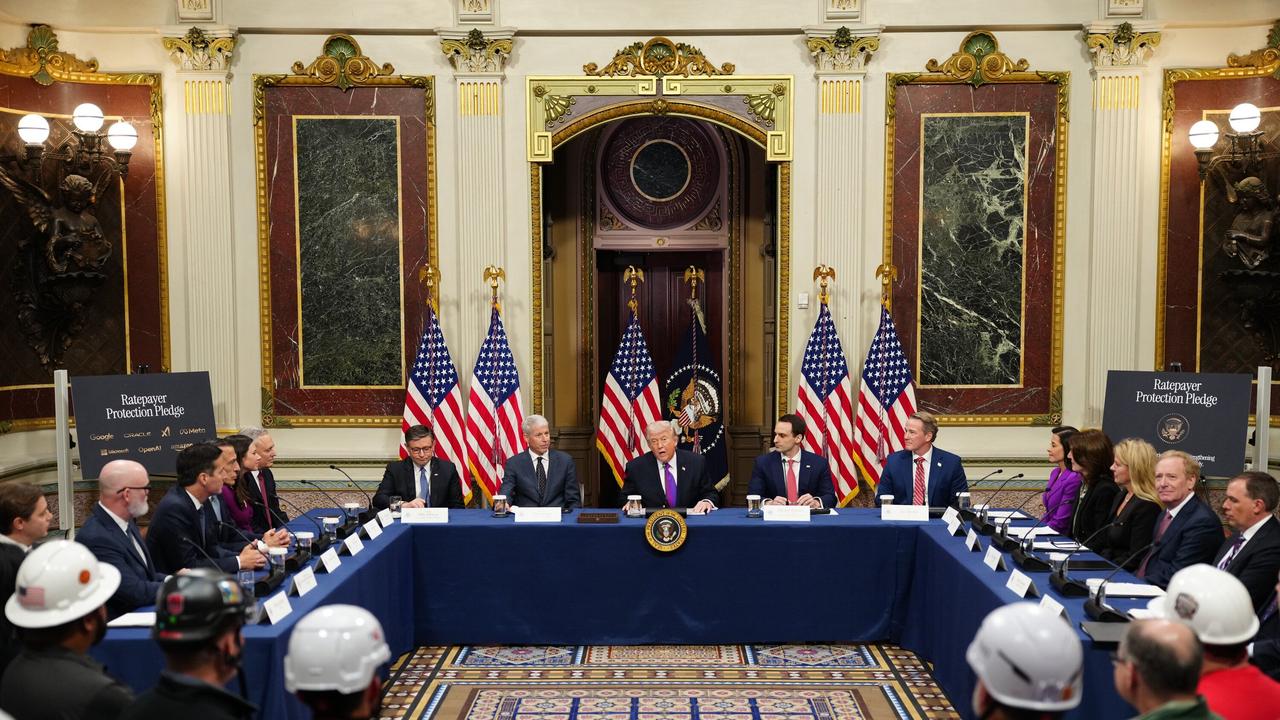
Source: NYT
Rising Electricity Costs Fuel Political Pressure
The initiative comes as residential electricity costs rose by 6 percent nationwide in February compared with a year before, according to the US Energy Information Administration
1
. States with clusters of AI data centers have experienced even sharper increases, with New Jersey and Pennsylvania reporting rises of 16 percent and 19 percent respectively1
. US data center power demand is projected to more than triple by 2035, rising from almost 35 gigawatts in 2024 to 106 GW, according to BloombergNEF data1
. Trump's push for the pledge addresses consumer backlash ahead of November midterm elections, creating political risk for his administration after he campaigned on a promise to slash electricity bills in half4
.Supply Chain Constraints Threaten Implementation
While the pledge aims to ensure AI data centers secure their own power supplies, industry experts warn of daunting logistical obstacles. Nearly three-quarters of planned generation equipment for data center energy costs is natural gas fired, according to energy research firm Cleanview, which is tracking 56 GW of projects across the US
1
. Competition for gas turbines has intensified, with waits as long as seven years for new orders1
. Although turbine-maker GE Vernova announced plans to expand production by 25 percent and Mitsubishi Power aims to double its output over the next two years, manufacturers remain cautious about expanding capacity1
. Two-thirds of gas projects in development in the US have not announced a turbine manufacturer, according to Global Energy Monitor1
.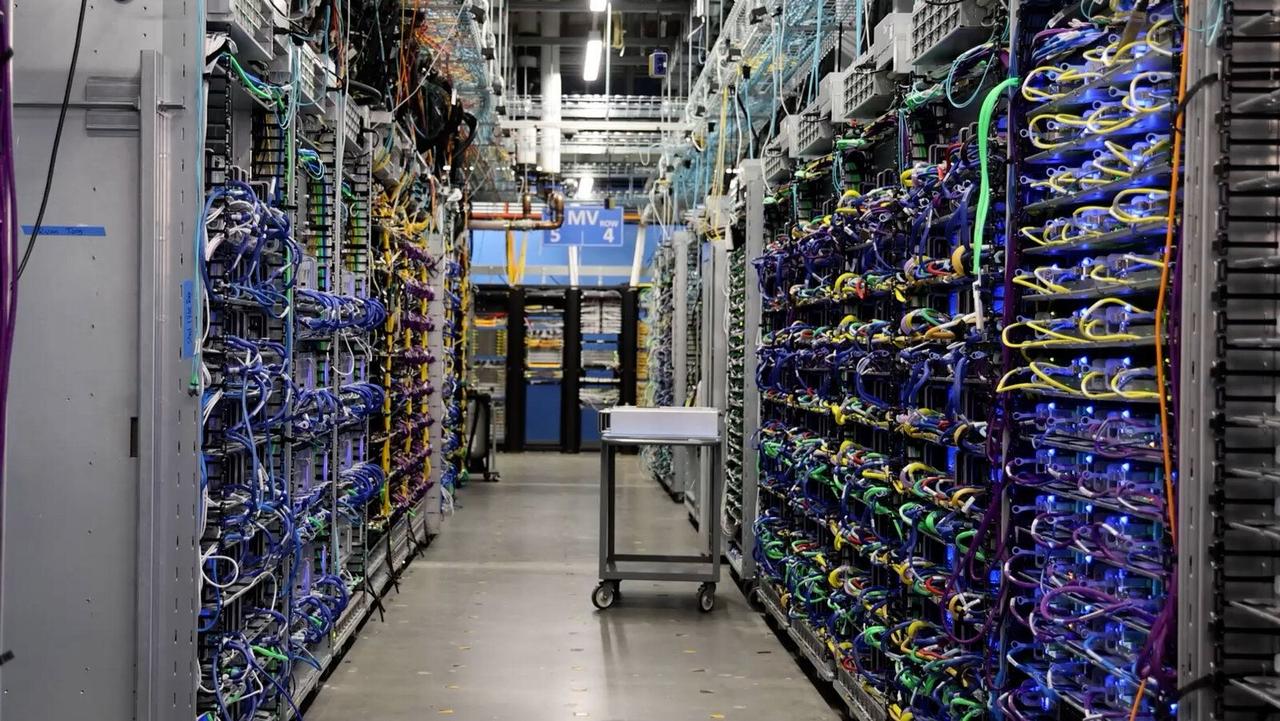
Source: NYT
Related Stories

Experts Question Whether Pledge Can Prevent Rising Electricity Costs
The non-binding agreement offers no penalties for firms that refuse to comply with its provisions, relying instead on local utilities and states to enforce the principles through negotiated rate structures
4
5
. Ari Peskoe, director at Harvard Law School's Electricity Law Initiative, expressed skepticism: "Regardless of how these data centers connect, behind the meter or as part of the network, you're going to increase demand"1
. He characterized the ratepayer protection plan as "a show designed to sweep this issue under the rug"3
. Greater competition from tech companies for turbines will mean higher costs for utilities and industrial customers who also need generating capacity—costs that could still be passed on to ratepayers1
.Technical Challenges Mount for Self-Powered AI Data Centers
To overcome shortages, companies including Google and Microsoft have struck deals to reopen nuclear power plants, but these plans will take years to deliver
1
. In the near term, companies are using alternatives such as reciprocal engines and diesel generators, but experts point out these power sources are not designed to provide the continuous power needed by AI data centers1
. Jigar Shah, an energy investor and former Department of Energy official, warned: "The level of ineptitude by which the data center companies are sleepwalking into major problems just seems shocking for trillion-dollar companies"1
. Companies also pledged to coordinate with grid operators to make backup generation resources available during power outages and hire staff locally where they build and operate data centers2
4
. Josh Price, director of energy and utilities at strategy firm Capstone, noted that Big Tech was "trying to push back against the narrative that they're the bad guy"1
. The White House stated that Energy Secretary Chris Wright expects the pledge will "deliver more affordable, reliable, and secure energy for the American people"3
, though whether these commitments translate into actual relief for consumers facing data center energy costs remains to be seen as grid infrastructure upgrades continue.
Source: Engadget
References
Summarized by

Navi
Related Stories
US Power Grid Struggles to Keep Pace with AI Data Center Boom, While China Surges Ahead
15 Aug 2025•Business and Economy
AI Data Centers Drive $580 Billion Investment Surge as Power Grid Struggles to Keep Pace
10 Nov 2025•Business and Economy
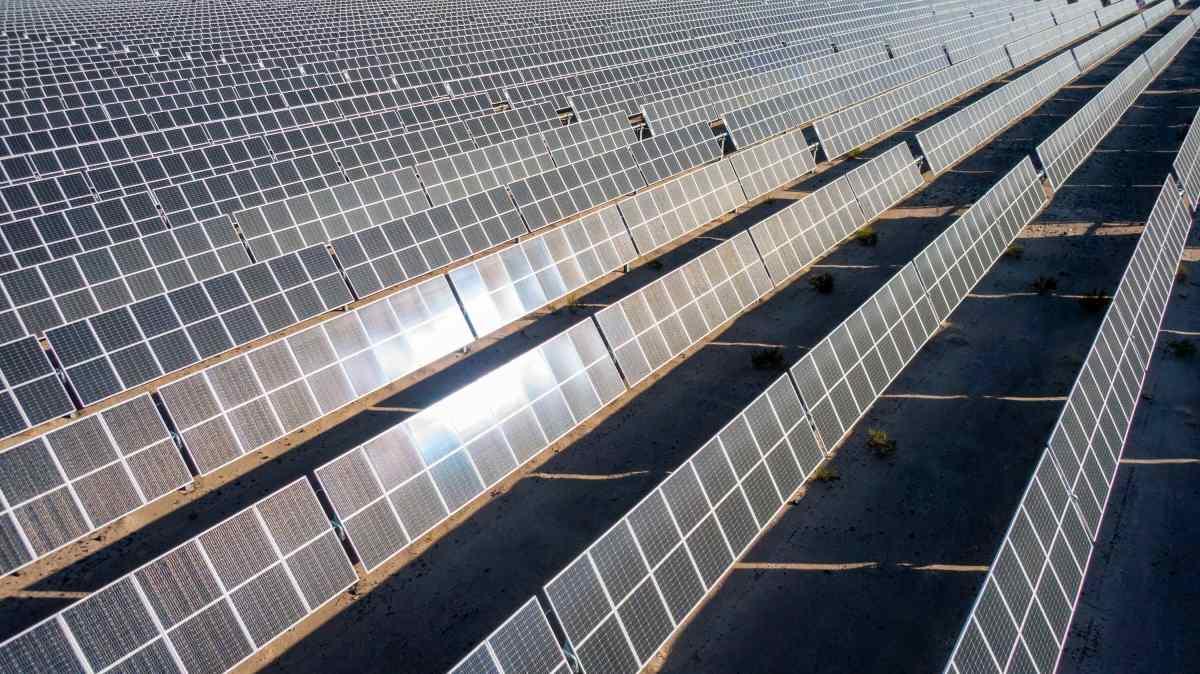
AI's Energy Dilemma: Data Centers Push Power Grids to the Limit
15 Oct 2024•Technology

Recent Highlights
1
Anthropic's Claude AI can now control your computer to complete tasks autonomously
Technology

2
Nvidia's Jensen Huang calls OpenClaw the next ChatGPT, sending Chinese AI stocks soaring
Technology

3
Elon Musk unveils $20 billion Terafab chip manufacturing project to produce terawatt of computing
Technology
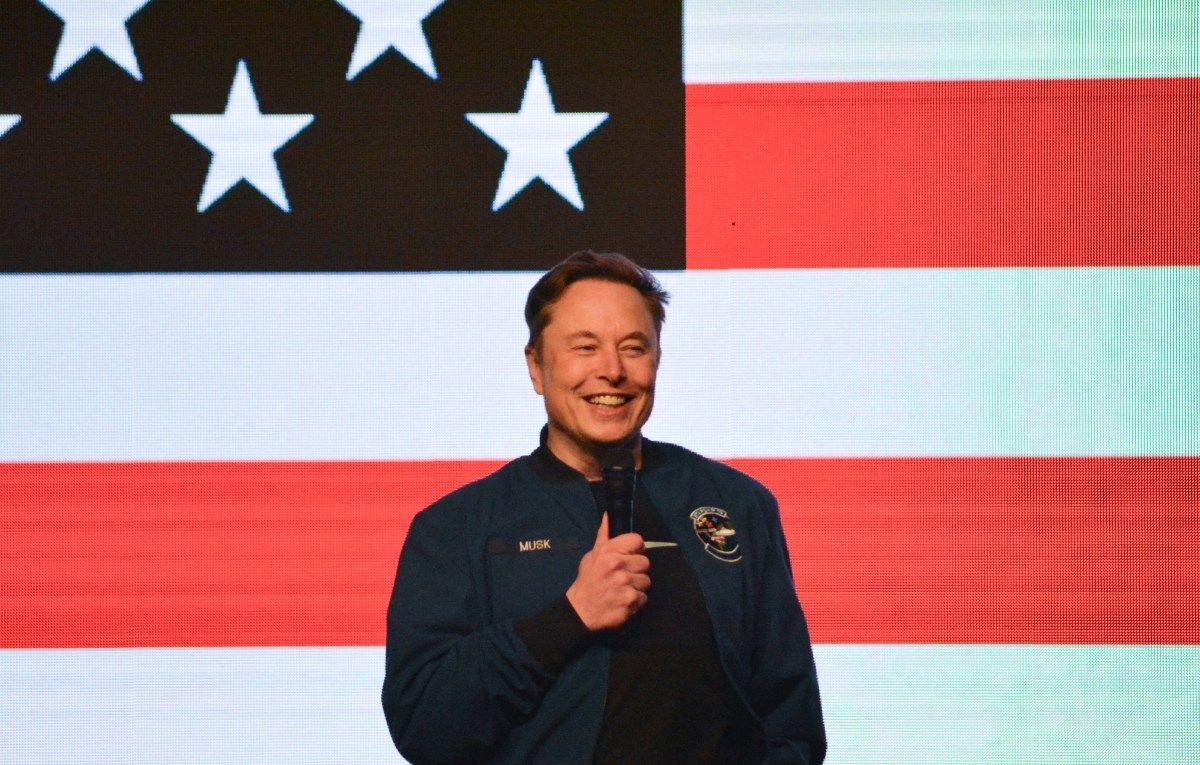
Recent Highlights
Today's Top Stories








Your Daily Dose of Curated AI News
Don’t drown in AI news. We cut through the noise - filtering, ranking and summarizing the most important AI news, breakthroughs and research daily. Spend less time searching for the latest in AI and get straight to action.

