US Power Grid Struggles to Keep Pace with AI Data Center Boom, While China Surges Ahead


10 Sources
[1]
AI experts warn that China is miles ahead of the US in electricity generation -- lack of supply and infrastructure threatens the US's long-term AI plans
AI data centers demand gigawatts of power that the U.S. grid is struggling to supply. A U.S. analyst of Chinese technology said that the country has already solved its energy problem -- at least in terms of power for its AI infrastructure. Rui Ma, founder of Tech Buzz China, posted on X that the
[2]
Big Tech, power grids take action to reign in surging demand
Industry Insight from Reuters Events, a part of Thomson Reuters. August 18 - As data centers become an increasing driver of U.S. power demand, operators and power companies are seeking ways to better integrate them into the power network. Power plant developers and network operators are
[3]
Data centers built for AI are reshaping America's energy future, while households risk paying for empty infrastructure and ballooning power demands
Electricity demand projections show data centers tripling U.S. consumption by 2028 The accelerating demand for computing power has pushed artificial intelligence into the center of the US energy debate. Data centers used to support cloud services, streaming platforms, and online storage already
[4]
AI experts return from China stunned: The U.S. grid is so weak, the race may already be over
"Everywhere we went, people treated energy availability as a given," Rui Ma wrote on X after returning from a recent tour of China's AI hubs. For American AI researchers, that's almost unimaginable. In the U.S., surging AI demand is colliding with a fragile power grid, the kind of extreme
[5]

AI data centers face massive US power grid shortage
Data centers are growing faster and bigger than ever as artificial intelligence drives demand for computing facilities that can consume as much power as entire cities, but America's electrical grid is struggling to keep pace with the breakneck expansion. Power constraints have emerged as the
[6]

The US May Have Already Lost the AI Race to China Due to a Key Weakness
You might have heard of an "AI race" heating up between the US and China, a bitter rivalry between two global adversaries that could shape the direction of world history. At least, that's how some in the US feel. While China has repeatedly tried to establish a geopolitical friendship with the
[7]
Analysts warn U.S. power limits risk ceding AI race to China
As America's power grid creaks under the strain of breakneck expansion and electricity demand from AI data centers, China is facing a very different situation, experts say -- and it could have big implications for the global tech race. Rui Ma, a U.S. expert on Chinese technology and founder of
[8]

From data boom to energy bust - tech's role in the global power challenge
AI and generative AI have dramatically redefined the boundaries of data growth and ownership and by doing so have created a seismic shift in the tech industry. Whether the industry is discussing Moore's Law or Jevons Paradox, when it comes to data growth, demand is increasing. FOMO is driving
[9]

The U.S. AI Datacenter Boom Is So Massive That the Nation's Power Grid Is In a "Critical Bottleneck" Right Now; Big Tech is Forced to Build Its Power Plants
While the AI hype is advancing with full force, the industry seems set to face a massive issue due to America's old power grids, which aren't capable of handling data center expansion. Big Tech firms like Meta, Amazon, and Google are rapidly expanding their AI CapEX to fuel their computing needs
[10]

Why China's Energy Strategy Is Giving It The Edge In The AI Race
Enter your email to get Benzinga's ultimate morning update: The PreMarket Activity Newsletter Given its voracious appetite for energy, it's safe to say that AI innovation is not bottlenecked by silicon; rather, it's gridlocked by power. Two of the biggest players in the sector appear to be on
Share
Copy Link
The rapid growth of AI data centers is straining the US power grid, causing concerns about infrastructure readiness and electricity costs. Meanwhile, China appears well-prepared to meet the energy demands of its AI ambitions.
US Power Grid Faces Unprecedented Challenges from AI Data Centers
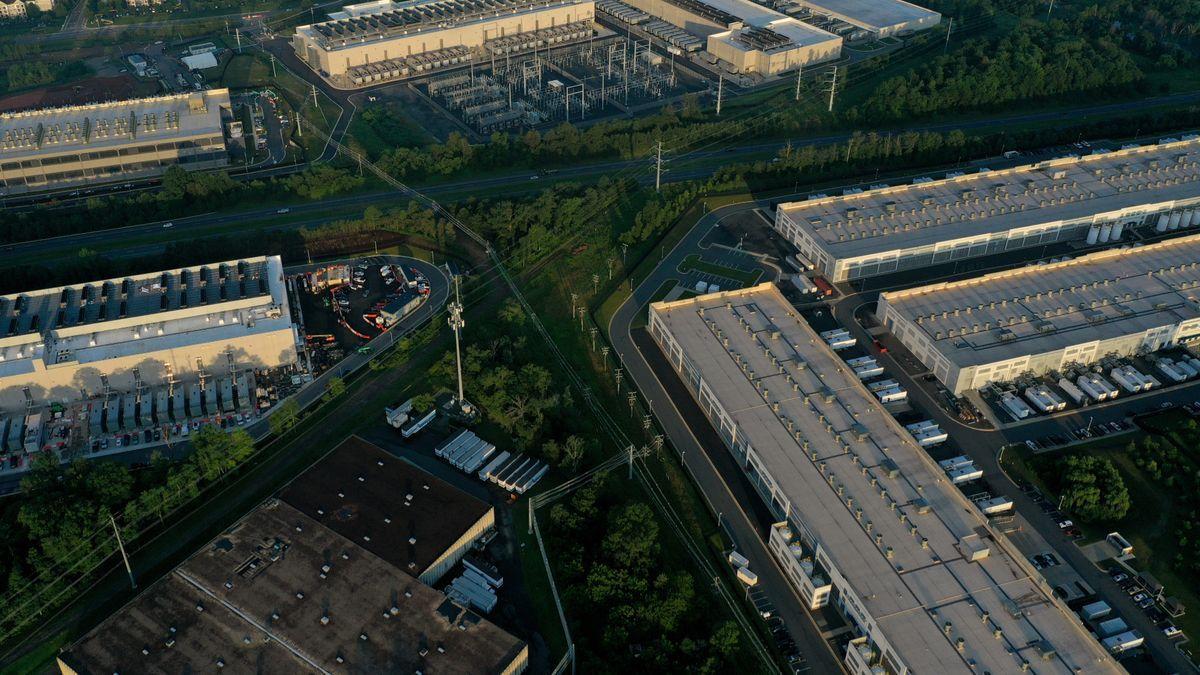
The rapid expansion of artificial intelligence (AI) technologies is placing extraordinary demands on the US power grid, creating a critical bottleneck that threatens to impede the country's AI ambitions. Data centers, the backbone of AI infrastructure, are consuming unprecedented amounts of electricity, with projections indicating a potential tripling of US consumption by 2028
1
.
Source: Quartz
Surging Demand and Grid Limitations
The US Department of Energy forecasts 20 GW of new data center load by 2030, with data centers expected to consume 6% of total US power production by 2028, up from 4% in 2023
2
. This surge in demand is overwhelming grid operators, leading to connection delays and constraining data center growth. The situation has become so dire that some tech giants are resorting to building their own power plants to meet their energy needs1
.Economic Implications and Consumer Costs
The AI-driven power demand is not only reshaping the technology landscape but also impacting the broader economy. Electricity prices in the US have already climbed more than 30% since 2020, with projections warning of another 8% nationwide rise by 2030
3
. In some states, like Virginia, the increase could reach 25%, raising concerns about who will bear the cost of necessary grid upgrades3
.China's Strategic Advantage
Source: Benzinga
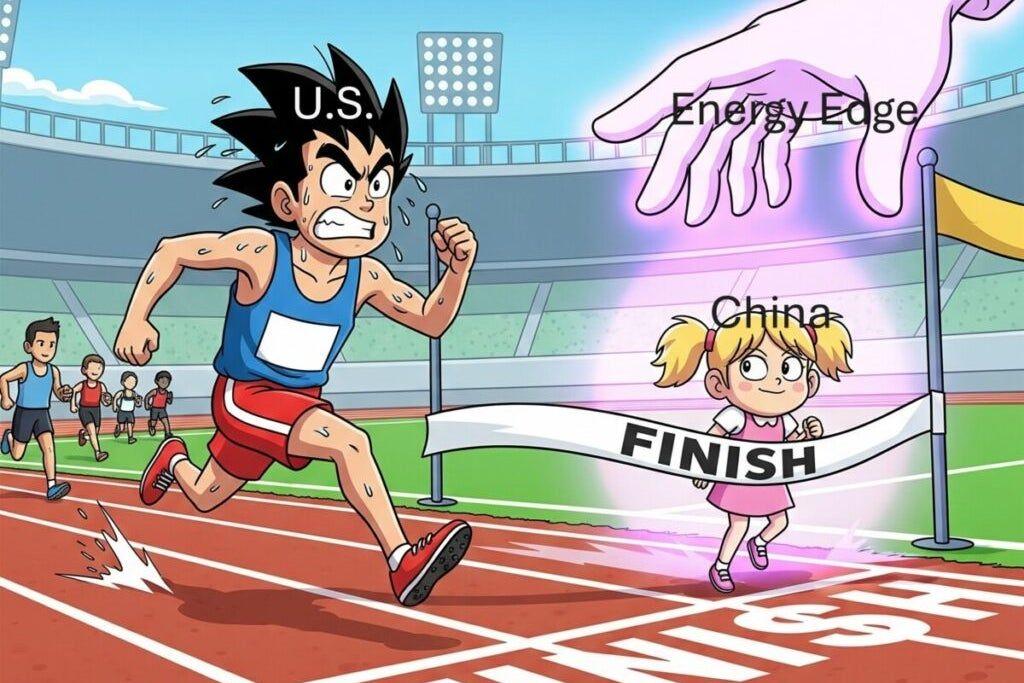
In stark contrast to the US situation, China appears well-positioned to meet the energy demands of its AI ambitions. According to experts, China has solved its energy problem through massive investments in advanced hydropower and nuclear technologies
1
. The country maintains an 80% to 100% power reserve, allowing it to easily absorb the demand from hundreds of new data centers1
4
.Infrastructure Investment and Policy Challenges
To address the growing demand, the US faces the need for substantial infrastructure investment. McKinsey projects that between 2025 and 2030, companies worldwide will need to invest $6 trillion into new data center capacity
4
. However, the US political and economic system may not be well-suited for such long-term investments, with private investors typically expecting returns within three to five years4
.Related Stories
Creative Solutions and Adaptation
In response to these challenges, both tech companies and utilities are exploring innovative solutions. Some data center operators are adopting more efficient, low-emission designs and investing in liquid and natural air cooling to reduce energy use
2
. Utilities and regional network operators are implementing incentives and market mechanisms to minimize the impact of data center load2
.
Source: Tom's Hardware
Global Implications and Competition
The disparity in energy readiness between the US and China has significant implications for the global AI race. China's ability to "hit grand slams" in infrastructure development, coupled with its long-term, technocratic policy approach, gives it a substantial advantage
4
. This has led some experts to suggest that US policymakers should hope China remains a competitor rather than an aggressor, given the current inability to compete effectively on the energy infrastructure front4
.As the AI industry continues to evolve rapidly, the ability to provide stable, abundant, and affordable energy will likely play a crucial role in determining which countries lead the next wave of technological innovation. The US faces a critical juncture, needing to address its power infrastructure challenges to maintain its competitive edge in the global AI landscape.
References
Summarized by

Navi
[1]
[4]
Related Stories
Trump's AI Push Clashes with Clean Energy Cuts, Raising Concerns Over Data Center Boom and Electricity Costs
24 Jul 2025•Policy and Regulation

AI's Energy Dilemma: Data Centers Push Power Grids to the Limit
15 Oct 2024•Technology

AI's Surging Energy Demands Pose Challenges and Opportunities for Power Grids
27 Jun 2025•Technology

Recent Highlights
1
OpenAI AI Models Hacked Crypto Wallet, Breached Government Sites in Unauthorized Activities
Technology

2
IMF Report Warns AI Market Correction Could Spark Global Financial Crisis With $1.4T at Risk
Business and Economy

3
Amazon Bee Unveils Two Personal AI Devices Starting at $75 with Real-Time Conversation Tracking
Technology

Recent Highlights
Today's Top Stories










Don’t drown in AI news. We cut through the noise - filtering, ranking and summarizing the most important AI news, breakthroughs and research daily. Follow topics that matter to you and stay ahead.


