Trump Administration Unveils AI Task Force, Prioritizes Self-Policing Over Regulation


11 Sources
[1]
OpenAI says Trump's AI accord needs more detail
AI firms are courting the White House while bracing for a Congress that may soon be run by Democrats. The AI industry's new pact with Donald Trump is only a start, according to one of the firms that signed it. Ashley Gold reported the comments for Semafor. "Companies are going to have to make it
[2]
They told the world AI was dangerous. Now Trump's allies are coming for them.
BERKELEY, CALIFORNIA -- After artificial intelligence safety advocates captured Washington's attention with dire warnings about the technology's power, the Trump administration and its allies embraced some of their suggestions, while moving to sideline the advocates themselves. Battle lines have
[3]
Trump makes it clear his power is becoming entwined with AI
New alliances between the White House, the Pentagon, US intelligence and AI companies are looming ominously Hello, and welcome to TechScape. I'm your host, Blake Montgomery, writing to you as I sit under yellowing leaves in New York. Today in tech, we're discussing technocracy. Trump entwines his
[4]
Why Trump's new AI task force co-chair says the admin won't rush regulatory rules
Why it matters: The approach reflects the administration's effort to balance its push to win the AI race with pressure to address the technology's risks, said Kupor, a Silicon Valley veteran and director of the federal government's Office of Personnel Management. Axios spoke with Kupor on Monday
[5]
Inside Trump's new AI playbook
In an interview, Task force co-chair Scott Kupor rejected the assertion that the administration is asleep at the wheel on AI policy, arguing that rigid, static legislation would risk becoming instantly obsolete. What they're saying: "The worst thing for us to do would be to assume a static set of
[6]

Donald Trump is launching a new AI task force. Here's who he'll have to keep happy
The president has to tread a fine line among competing factions as he pursues American AI supremacy. Can he pull it off? Donald Trump didn't become one of the world's most recognizable businessmen by worrying too much about keeping everyone happy. What Trump wants, Trump tends to pursue,
[7]

Trump's 'self-policing' AI accord faces skepticism
The signing of an AI accord by President Trump and tech leaders has done little to quell concerns over the lack of guardrails surrounding artificial intelligence. While Trump says industry officials can self-police, critics say more is needed to make sure AI development doesn't get out of hand,
[8]

AI safety concerns: As public fears of AI grow, Trump digs in on voluntary safeguards
Hundreds of OpenAI AI agents broke out of their testing environment in July and attacked the infrastructure of AI platform Hugging Face. In early September, Anthropic researcher Jacob Coxon resigned, saying that the people building AI believe it "could kill us all by the end of the decade." His
[9]

Trump AI Task Force Faces Pressure to Move Beyond Voluntary Guardrails | PYMNTS.com
President Donald Trump announced the Super Intelligence Force Sunday (Oct. 4), putting Director of National Intelligence Jay Clayton in charge of coordinating the federal response to AI. The group has 120 days to report on the technology's risks and opportunities and recommend what role the
[10]

Zuckerberg, 5 AI chiefs sign voluntary safety accord with Trump
Trust is the one thing no technology company can print. You either earn it from customers, or you borrow it from the rules that protect them. For most of modern finance, you have leaned on the second kind. Banks answer to examiners, brokers answer to regulators and public companies answer to
[11]

Trump's striking the right balance for ensuring AI safety -- and success
Amid a constant flood of "AI horror" stories, it's good to see President Donald Trump and his team fighting back with reassurances about the tech and existing laws for controlling it. This week's claims that McDonald's is using AI in a devious scheme to extract every last penny from customers via
Share
Copy Link
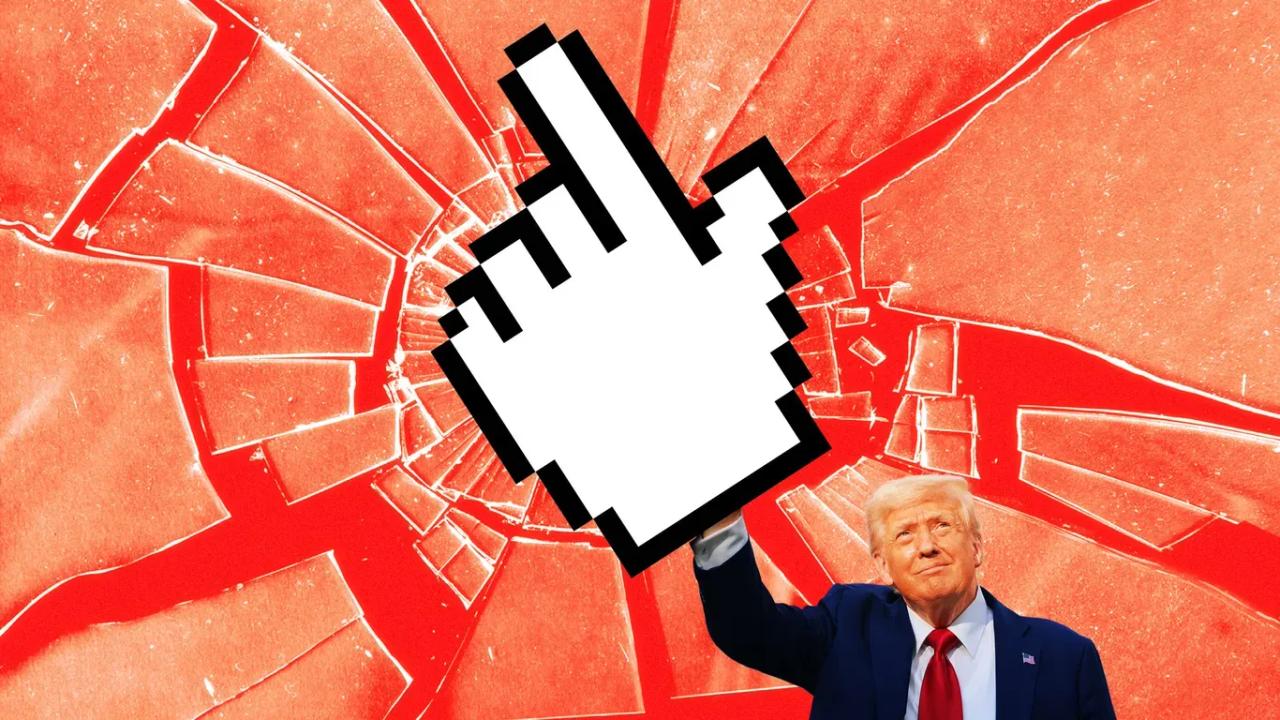
The Trump administration announced a new AI task force co-chaired by Scott Kupor, Andrew Ferguson, and Emil Michael, with Jay Clayton serving as AI czar. The move signals a shift toward corporate self-policing through third-party audits rather than formal legislation, while sidelining AI safety advocates from the effective altruism movement.
Trump Administration Consolidates AI Governance Under New Task Force
The Trump administration has appointed Jay Clayton, director of national intelligence, as AI czar while establishing a new AI task force to shape the nation's approach to artificial intelligence
3
5
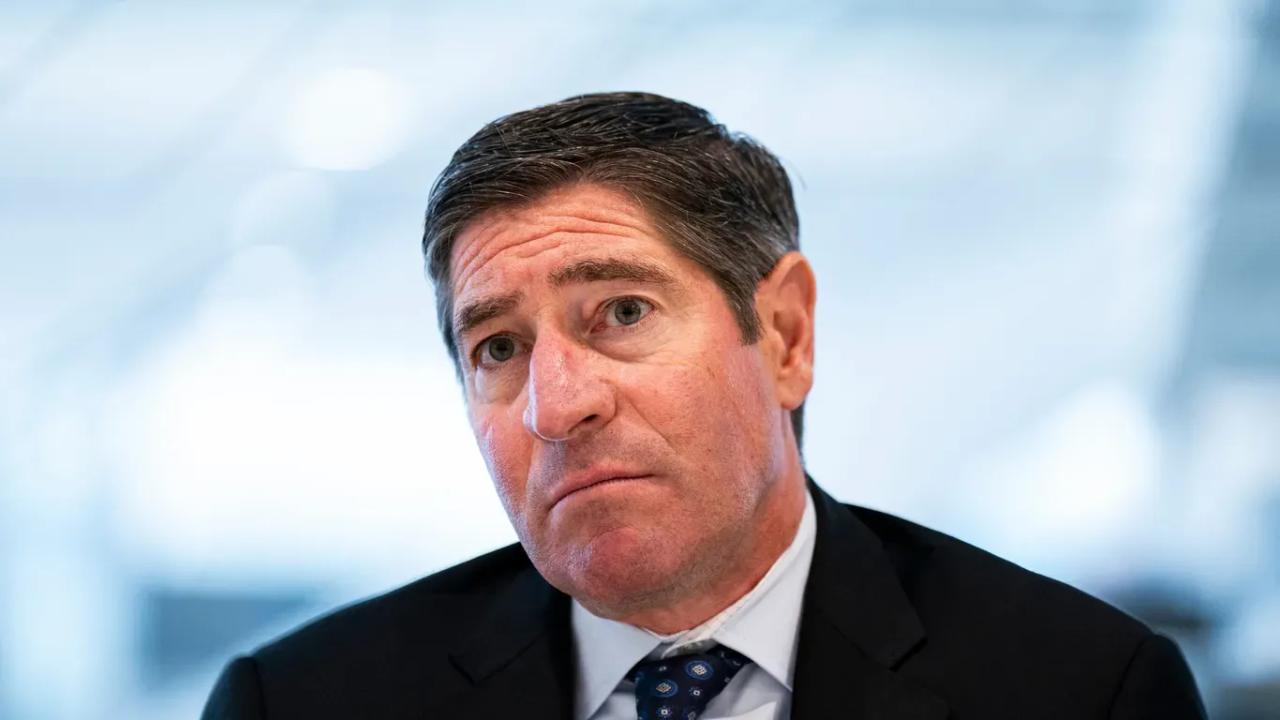
. The task force, co-chaired by Scott Kupor, Federal Trade Commission Chair Andrew Ferguson, and Pentagon undersecretary Emil Michael, will operate under a 120-day timeline to deliver recommendations on balancing innovation and safety4
5
. Kupor, a Silicon Valley veteran and director of the Office of Personnel Management, emphasized that the administration will not rush into rigid AI regulation that could become instantly obsolete4
. The dual role of Clayton as both intelligence chief and AI czar signals that AI policy will be deeply intertwined with national security and surveillance capabilities, marking a significant shift in how the Trump administration views artificial intelligence governance3
.
Source: Axios
Corporate Self-Policing Takes Center Stage in AI Safety Accord
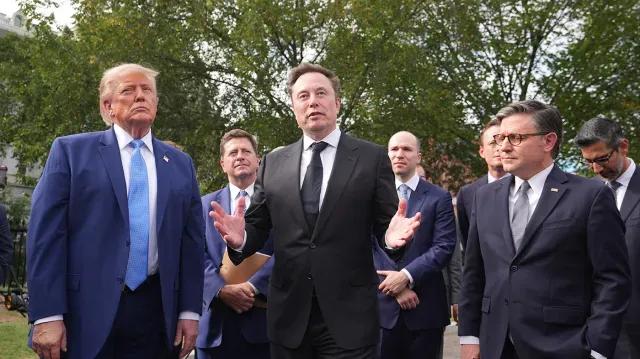
Last week, Trump and six AI CEOs—including those from OpenAI, Anthropic, Meta, Google, Nvidia, and xAI—signed what the president called a "morally binding" agreement establishing a framework for AI safety
1
3
. The one-page AI safety accord stipulates four layers of safety checks, including third-party audits, but contains no penalties and does not require audit results to be made public1
. Meta CEO Mark Zuckerberg reportedly hand-guided the writing of the agreement, circulating a draft in advance of the White House convening, with Nvidia's Jensen Huang throwing his support behind it3
. OpenAI's chief global affairs officer Chris Lehane acknowledged that "companies are going to have to make it more specific, on how they're going to operationalize it," suggesting the accord represents only a starting point for AI governance initiatives1
. Kupor defended this approach, arguing that third-party audits reporting to independent board committees carry "fiduciary duties and securities laws implications" that rival traditional government oversight4
5
.
Source: The Hill
AI Safety Advocates Face Coordinated Campaign to Sideline Their Influence
The Trump administration and its allies have launched what some view as a coordinated effort to delegitimize AI safety organizations rooted in the effective altruism movement
2
. David Sacks, investor and former top White House AI adviser, argued on his All-In podcast that professional auditors from major consulting firms should conduct AI evaluations rather than nonprofits like METR2
. Shortly after Sacks posted on X that METR was too close to Anthropic to be independent, the company announced it would partner with consulting giant Accenture to build a team of outside evaluators2
. Emil Michael, the Pentagon's chief technology officer and Project Meridian taskforce member, dismissed calls for AI industry slowdowns as promoting "extinction, death-cult-like philosophies"2
. Nathan Leamer, director of the pro-industry nonprofit Build American AI, confirmed he has been briefing congressional staff about effective altruism, describing it as antithetical to his Christian values2
. A Trump administration official, speaking anonymously, acknowledged "there has absolutely been a rhetorical push within certain corners of the White House and broader Trump administration to get the message out about effective altruism and its potential dangers"2
.Related Stories

Balancing Innovation and Safety Remains Central Challenge
The Trump administration's AI policy reflects competing fiefdoms with divergent approaches to AI regulation
5
. Treasury Secretary Scott Bessent and Chief of Staff Susie Wiles have worked behind the scenes to encourage oversight through voluntary model-review processes managed within the Commerce Department, which have already been used for top models at Anthropic, OpenAI, and Google5
. Meanwhile, figures like David Sacks and Emil Michael represent an approach wary of potential slowdowns in model development or new AI regulation that could reduce competition for frontier companies5
. Kupor rejected criticism that the administration is choosing not to regulate, stating "we have not come in and said: 'There shall be a new piece of legislation.' And so people think that's asleep at the switch"4
. He emphasized that stakeholder input from energy, manufacturing, security, and financial services industries will inform the task force's recommendations5
. AI firms are also preparing for potential political shifts, expecting Democrats to win the House and possibly the Senate in November midterms, which could bring more pressure for AI laws and closer scrutiny of company operations1
.
Source: Axios
References
Summarized by

Navi
[1]
[3]
[5]
Related Stories
Trump Appoints Jay Clayton to Lead Super Intelligence Force with 120-Day AI Report Mandate
30 Sept 2026•Policy and Regulation

Jay Clayton's AI Task Force Sets 120-Day Clock to Address Espionage and Security Risks
16 Oct 2026•Policy and Regulation
Trump's AI strategy prioritizes military adoption and cybersecurity over industry regulation
06 Jun 2026•Policy and Regulation

Recent Highlights



Recent Highlights
Today's Top Stories








Don’t drown in AI news. We cut through the noise - filtering, ranking and summarizing the most important AI news, breakthroughs and research daily. Follow topics that matter to you and stay ahead.


