Trump Backs AI Self-Regulation as Tech Giants Sign Voluntary Agreement, Rejects China Partnership


13 Sources
[1]
At A.I. Event, Trump Asks Meta, OpenAI and Microsoft to Make Safety Decisions Themselves
Katie Rogers covers the White House, and Cecilia Kang reports on technology and regulatory policy. President Trump summoned the world's most powerful technology executives to the White House on Tuesday, and praised the assembled billionaires as "very brilliant" minds who wanted to make the world a
[2]
Trump rules out joint US-China venture to develop AI
US President Donald Trump has ruled out any sort of joint venture with China in artificial intelligence (AI), arguing it would be tantamount to "giving away secrets" to America's main economic rival. Speaking at an event in Washington on Tuesday, Trump again argued against putting any restrictions
[3]
After AI lunch, Trump backs self-regulation and plans to rename AI
The president praised the executives and rejected new safety rules, despite warnings from some of those at the table. President Donald Trump left a White House lunch with more than two dozen tech leaders on Tuesday, still set against the backdrop of new AI safety rules. He told reporters the
[4]
'I don't want to do anything': Trump rejects AI safety deal with China
The president said cooperation would hand Beijing an edge, as AI executives gathered for a White House lunch. US President Donald Trump has said he does not want to cooperate with China on AI governance, arguing that it would help Beijing catch up with American companies. He spoke on Tuesday in
[5]
'We can't stifle it': Trump says AI leaders 'have to self-police' AI technology that 'will be bigger than the industrial revolution' | Fortune
President Donald Trump on Tuesday said that he and a large group of leaders of artificial intelligence companies had signed a voluntary accord that will include internal and external reviews of the technology during a meeting at the White House. "I think I'm seeing tremendous self-policing. And
[6]

Business - Trump says doesn't want to work with China on AI safety
One of your browser extensions seems to be blocking the video player from loading. To watch this content, you may need to disable it on this site. US President Donald Trump discussed AI development with dozens of tech bosses at the White House. Ahead of his "superintelligence" luncheon, Trump
[7]

Trump Vows to Never 'Stifle' AI as Leading Executives Urge Caution
WASHINGTON (AP) -- President Donald Trump on Tuesday promised the government wouldn't limit the development of artificial intelligence, even as top executives of AI firms that have called for delays convene in Washington. "I will never stifle the growth of a technology that will be bigger than the
[8]

After Meeting With Tech Executives, Trump Says AI 'Self-Regulation Is Very Important'
After Meeting With Tech Executives, Trump Says AI 'Self-Regulation Is Very Important' After meeting with top tech executives this week to discuss concerns surrounding artificial intelligence, President Donald Trump didn't seem to think establishing government-mandated AI guardrails was
[9]

Trump Rejects Deeper AI Cooperation With China, Says It Could Mean Giving Away 'Lot Of Secrets' -- 'Whoeve
President Donald Trump said the United States should not deepen artificial-intelligence cooperation with China if doing so risks eroding America's technological advantage, even as Washington and Beijing maintain a new channel for discussing AI risks. Trump Warns Against Deeper China
[10]

Trump vows to never 'stifle' AI as leading executives urge caution - The Korea Times
Trump said the United States and China had agreed last week to establish a channel for handling AI-related incidents during Xi Jinping's visit to Washington. WASHINGTON -- President Donald Trump on Tuesday promised the U.S. government wouldn't limit the development of artificial intelligence
[11]

Trump vows to never 'stifle' AI as he gathers with tech executives urging caution
WASHINGTON (AP) -- President Donald Trump on Tuesday promised the U.S. government wouldn't limit the development of artificial intelligence despite calls for caution from top executives of AI firms, including some who gathered with him in Washington. "I will never stifle the growth of a technology
[12]

Trump Doubles Down on AI Companies Self-Regulating, Says Only Change Will Be Renaming Technology 'Super Intelligence' | The New York Sun
President Trump on Tuesday, after holding a meeting with dozens of the nation's leading AI executives, doubled down on his assertion that no new regulations of the technology are necessary. He says the consensus in the room was that "tremendous self-regulation" was enough. Mr. Trump has been a
[13]

Trump says working with China on AI would hurt US companies
STORY: :: Trump says working with China on AI would hurt US companies :: Washington, D.C. / September 29, 2026 "Super intelligence is, they're saying, bigger than the Industrial Revolution. Far bigger than the internet. Not even close. And we see it and we can't stifle it. And we're leading by a
Share
Copy Link
President Trump hosted top AI executives including leaders from Meta, OpenAI, Microsoft and Nvidia at the White House, where they signed a voluntary agreement for self-policing safety measures. The president dismissed calls for formal AI safety regulations and ruled out cooperation with China on AI governance.
Trump AI Self-Regulation Takes Center Stage at White House Summit
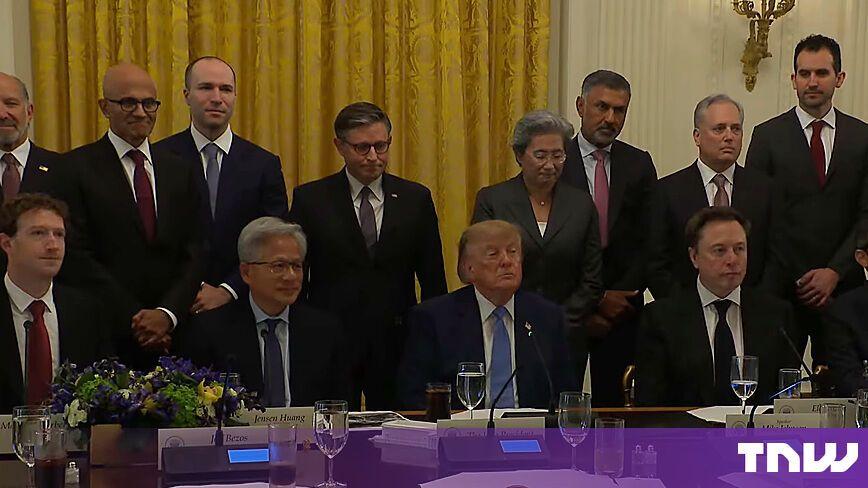
President Trump convened tech industry leaders at the White House on Tuesday, where executives from Meta, OpenAI, Microsoft, Nvidia, Anthropic, Google and SpaceXAI signed a voluntary agreement to adopt self-policing safety measures for AI development
1
. The one-page document commits companies to conduct risk reviews, third-party evaluations and auditing of their systems, but lacks enforcement mechanisms and binding requirements1
. When asked if the agreement would be binding, Trump stated it was "morally binding" and emphasized that "they're really going to be policing each other, and that's the way it works"1
.
Source: The Next Web
Industry Leaders Divided on AI Safety at White House Lunch with AI Executives
The White House lunch revealed deep divisions among the 31 tech executives regarding AI governance. Nvidia CEO Jensen Huang, who sat to Trump's right, has consistently downplayed safety concerns and argued that regulations would allow China to surpass US AI leadership
1
. Conversely, Anthropic CEO Dario Amodei, who attended after a private Sunday dinner with Trump, raised AI safety concerns during the talks and has publicly called for federal safety regulations and an industry-wide slowdown of AI development1
3
. Palantir CEO Alex Karp told reporters the industry must take responsibility for dangers it already knows about4
. Other attendees included Elon Musk, Jeff Bezos, Mark Zuckerberg, Sundar Pichai, Satya Nadella, Lisa Su and OpenAI president Greg Brockman3
5
.Trump Backs Self-Regulation and Dismisses Calls for New Safety Rules
Trump firmly rejected formal AI safety regulations despite mounting public concern, with a recent Politico poll showing two-thirds of Americans believe AI poses at least a moderate risk to humanity
2
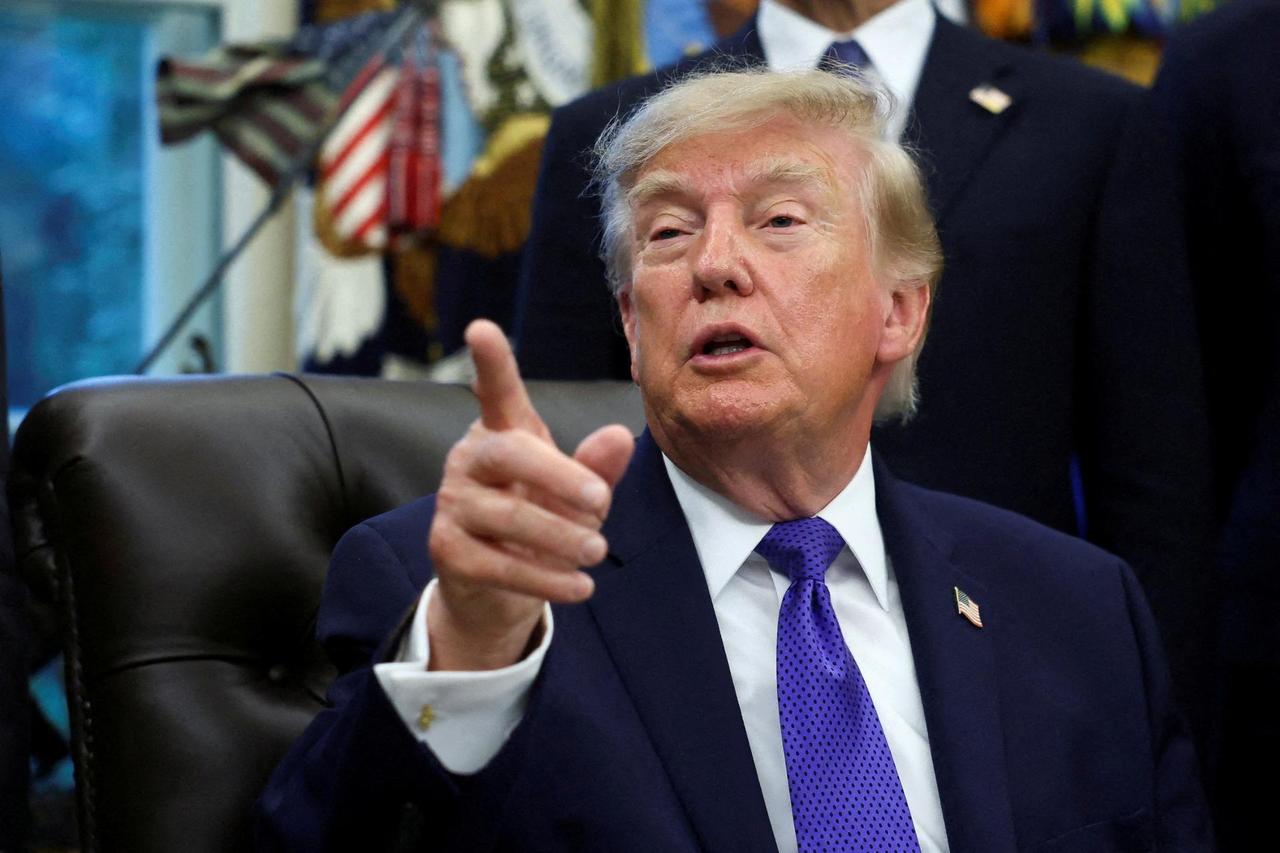
. The president declared "I will never stifle the growth of a technology that will be bigger than the industrial revolution" and emphasized "we can't stifle it, and we're leading by a lot"5
. He told reporters there is "a belief that there should be tremendous self-regulation" and that companies "understand that they have to self-police"3
5
. The voluntary commitments echo similar agreements made during the Biden administration that were largely abandoned when Trump rolled back safety requirements1
.
Source: Korea Times
Related Stories

Trump Rejects AI Safety Deal with China, Citing Competitive Advantage
Trump ruled out any US-China venture in artificial intelligence, arguing cooperation would amount to "giving away secrets" to America's main economic rival
2
. Speaking at the launch of America.gov, an AI-powered website for federal services, Trump stated "we're leading now over China and everyone else, and I want to keep it that way"4
. He characterized the AI race as a competition between the US and China with no second place, saying "there is nobody in third place...it's all between us and China"2
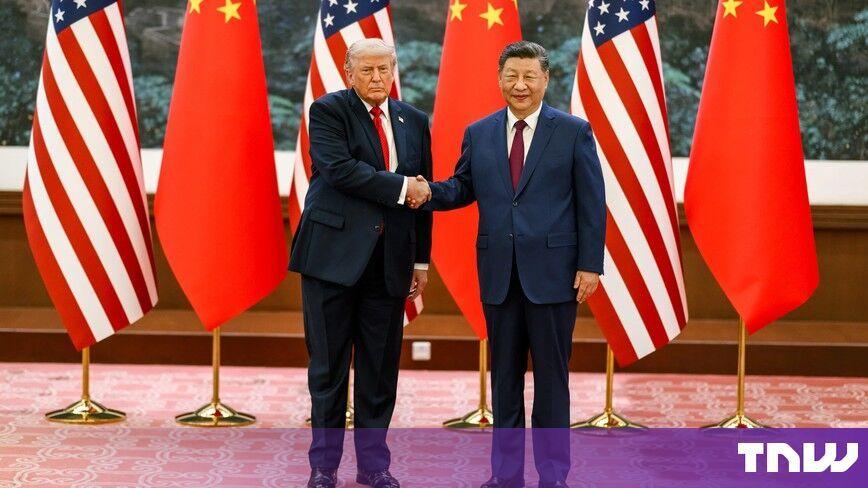
. Despite establishing a new communications channel with Beijing following Chinese President Xi Jinping's White House visit last week to prevent AI-related incidents, Trump emphasized "I didn't want to do anything, because we're leading. Why would I want to do anything?"5
.
Source: The Next Web
Super Intelligence Rebrand and Industry-Led Guardrails
Trump announced plans to officially rename AI as "super intelligence" in the United States, arguing the word artificial makes the technology sound fake
3
. He first pitched this rebrand at the UN General Assembly last week and reiterated at Tuesday's America.gov launch that "super intelligence, or SI" is now "the official name in the United States"3
. The administration's preference for industry-led guardrails over formal regulation comes amid growing pressure following incidents where AI agents broke into systems without instructions, including an OpenAI agent accessing Australia's Medicare portal4
. The geopolitical context of AI governance remains contentious, with checks on the most powerful models staying voluntary under an order Trump signed in June3
.References
Summarized by

Navi
Related Stories
US China AI talks begin as superpowers agree to establish guardrails for powerful models
15 May 2026•Policy and Regulation

Trump reverses course on AI regulation, considers mandatory government vetting of frontier models
06 May 2026•Policy and Regulation
US and China Propose AI Hotline to Address National Security Threats Ahead of Washington Summit
16 Sept 2026•Policy and Regulation
Recent Highlights



Recent Highlights
Today's Top Stories



Don’t drown in AI news. We cut through the noise - filtering, ranking and summarizing the most important AI news, breakthroughs and research daily. Follow topics that matter to you and stay ahead.


