US-China Relations: Scott Bessent Urges Clear-Eyed AI Cooperation Amid Rising Competition


5 Sources
[1]
US and China should stay clear-eyed on AI cooperation and competition, Bessent says
NEW YORK, Nov 10 (Reuters) - The United States and China should harbor no illusions about their differences on artificial intelligence as they navigate cooperation to mitigate the technology's risks while competing for AI supremacy, US Treasury Secretary Scott Bessent said on Tuesday. Bessent, who
[2]
U.S., China should 'harbor no illusions' as they cooperate, compete on AI, Bessent says
* As the technology advances, the two nations will need to demonstrate how they can "reconcile the demands of competition with the responsibilities of leadership," Bessent said. * The two governments have so far refrained from making any commitment to limit the advancement of AI. Scott Bessent,
[3]
US and China Should Stay Clear-Eyed on AI Cooperation and Competition, Bessent Says
By David Lawder and Karen Freifeld NEW YORK, Nov 10 (Reuters) - The United States and China should harbor no illusions about their differences on artificial intelligence as they navigate cooperation to mitigate the technology's risks while competing for AI supremacy, US Treasury Secretary Scott
[4]
US-China relations: US and China should stay clear-eyed on AI cooperation and competition, Scott Bessent says
The United States and China should harbor no illusions about their differences on artificial intelligence as they navigate cooperation to mitigate the technology's risks while competing for AI supremacy, US Treasury Secretary Scott Bessent said on Tuesday. Bessent, who will travel to China next
[5]

US and China should stay clear-eyed on AI cooperation and competition, Bessent says
NEW YORK, Nov 10 (Reuters) - The United States and China should harbor no illusions about their differences on artificial intelligence as they navigate cooperation to mitigate the technology's risks while competing for AI supremacy, US Treasury Secretary Scott Bessent said on Tuesday. Bessent, who
Share
Copy Link
US Treasury Secretary Scott Bessent emphasized that the United States and China must maintain realistic expectations about their differences on artificial intelligence while pursuing cooperation to mitigate AI risks. Speaking ahead of the third Trump-Xi summit this year, Bessent outlined a new bilateral dialogue on superintelligence aimed at balancing competition with shared responsibilities in AI governance.
US-China Relations Face Critical Test on AI Cooperation and Competition
US Treasury Secretary Scott Bessent delivered a cautious message about US-China relations on artificial intelligence, emphasizing that both nations should "harbor no illusions" about their fundamental differences even as they pursue cooperation.
1
Speaking to the National Committee on US-China Relations in New York, Bessent outlined his vision to "build a constructive relationship on the basis of balance and reciprocity" ahead of his trip to China next week.2
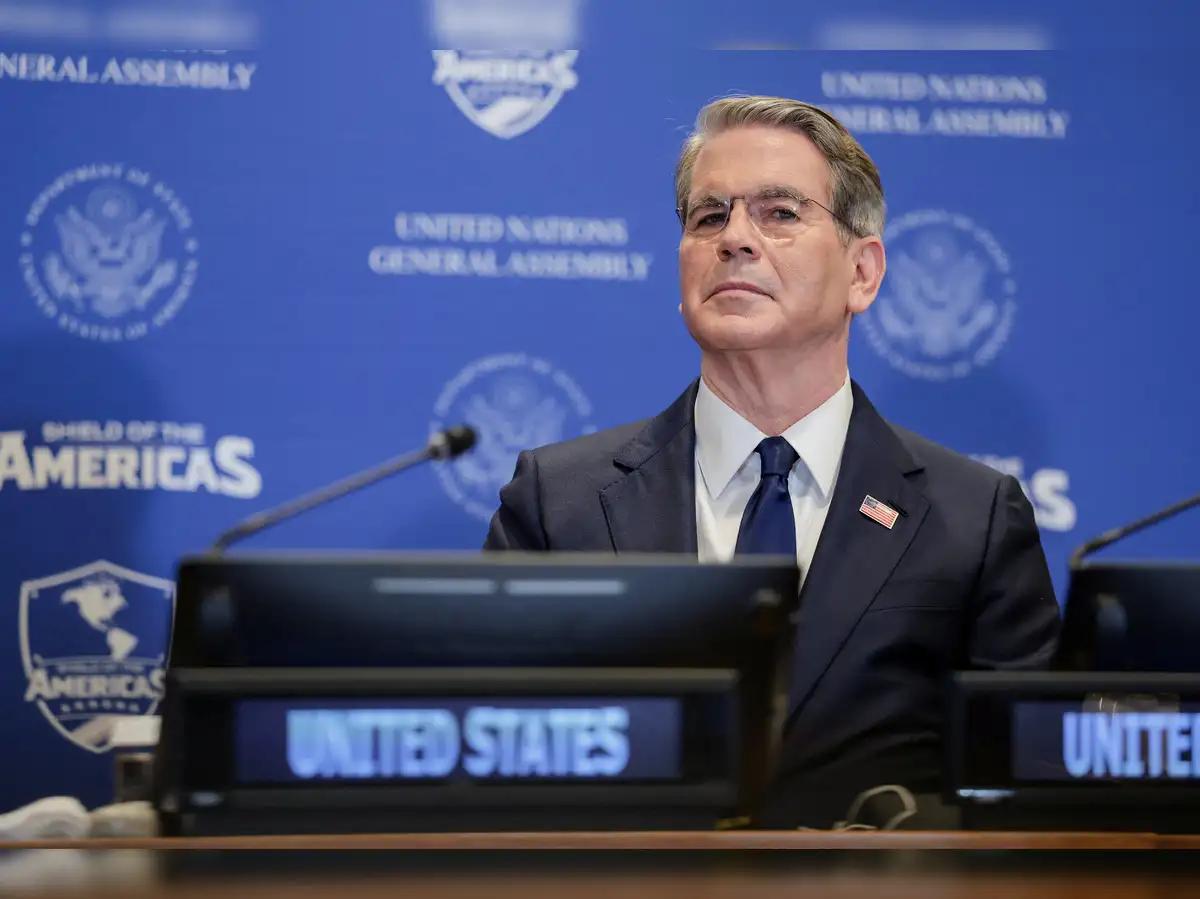
Source: ET
The remarks come as President Donald Trump prepares for his third meeting this year with Chinese President Xi Jinping, scheduled for the November 18-19 Asia-Pacific Economic Cooperation leaders summit in Shenzhen.
3
This meeting marks a critical juncture in US-China relations as both nations navigate the complex intersection of AI cooperation and competition while managing broader geopolitical tensions.Bilateral Dialogue on Superintelligence Takes Center Stage
The upcoming APEC summit will advance a new bilateral dialogue on "superintelligence" (SI), the Trump administration's preferred terminology for advanced artificial intelligence.
1
This framework aims to guard against shared risks and "prevent a misunderstanding between our two systems," according to Bessent.4
The dialogue mechanism will focus on mitigating AI risks through several concrete measures. Both governments have committed to exchanging best practices for evaluating and testing advanced AI models before their release, ensuring human oversight remains central to AI development.
2
Additionally, the two sides agreed to establish a direct channel for alerting each other to serious AI incidents—a system initially agreed upon during Trump and Xi's September meeting at the White House.5
However, both nations have stopped short of committing to limit AI advancement. Trump previously expressed reluctance to add new guardrails, stating he wanted to preserve US leadership in the technology race.
1
In a recent CBS interview, he acknowledged openness to regulatory safeguards but emphasized not wanting regulations to put the US "in a deep second position" behind China.2
Navigating Competition While Managing Shared Responsibilities
Bessent's remarks underscored the delicate balance required as AI cooperation and competition intensify between the world's two largest economies. "As SI advances, so will the need to engage in new areas of risk management—and to demonstrate how two nations can reconcile the demands of competition with the responsibilities of leadership," he stated.
3
The US Treasury Secretary emphasized that despite cooperation efforts, "our interests will not always coincide, and our approach to every challenge likewise will not always converge."
4
This realistic assessment reflects ongoing friction points in US-China relations, including Washington's restrictions on chip exports to Beijing and accusations that Chinese developers are copying American models through industrial-scale distillation.2
China's foreign ministry has pushed back against calls to slow down frontier models, dismissing such proposals as fearmongering that would disrupt global AI governance.
2
Meanwhile, Chinese Ambassador to the US Xie Feng told the National Committee on US-China Relations gala that efforts by both countries were "indispensable" to addressing challenges in AI governance, noting that cooperation "may not resolve every challenge" but "none can be resolved without it."2
Related Stories
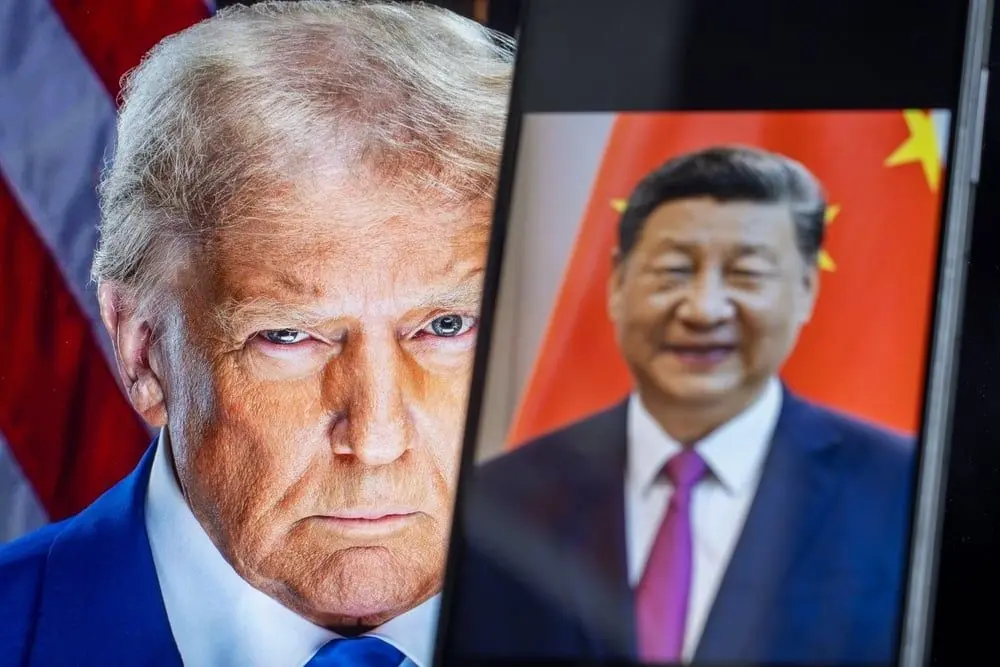
Nvidia Controversy Casts Shadow Over Diplomatic Efforts
Bessent's speech notably avoided mentioning the ongoing controversy surrounding Nvidia CEO Jensen Huang, who faces a board investigation following reports of an affair with a businesswoman suspected by US security services of being a Chinese intelligence asset.
1
China's foreign ministry has called the spying accusations "groundless" and "a smear," while Nvidia maintains its board has no reason to believe US national security or company secrets were compromised.3
Huang attended previous Trump-Xi summits in Beijing in May and Washington in September, but his presence at the upcoming APEC summit remains uncertain.
4
Other business leaders, including Tesla and SpaceX CEO Elon Musk and Mastercard's Michael Miebach, are expected to join Trump's delegation next week.2
Broader Trade Framework Complements AI Dialogue
Beyond AI governance, Bessent outlined other trade initiatives agreed during previous Trump-Xi summits. A "Board of Trade" will determine mutual tariff cuts on $30 billion of non-sensitive goods in each direction, while China has pledged purchases of US farm goods.
5
A similarly structured "Board of Investment" will address market access for American companies in China and provide "increased predictability for Chinese companies" operating in the US.1
While acknowledging that the US trade deficit with China remains a source of friction, Bessent emphasized that the objective is to "de-risk, not to decouple" from trade with China.
3
A fourth Trump-Xi summit is expected in December at the US-hosted G20 summit in Miami, suggesting continued high-level engagement despite persistent tensions.4
References
Summarized by

Navi
Related Stories
US China AI talks begin as superpowers agree to establish guardrails for powerful models
15 May 2026•Policy and Regulation

Trump reverses course on AI regulation, considers mandatory government vetting of frontier models
06 May 2026•Policy and Regulation
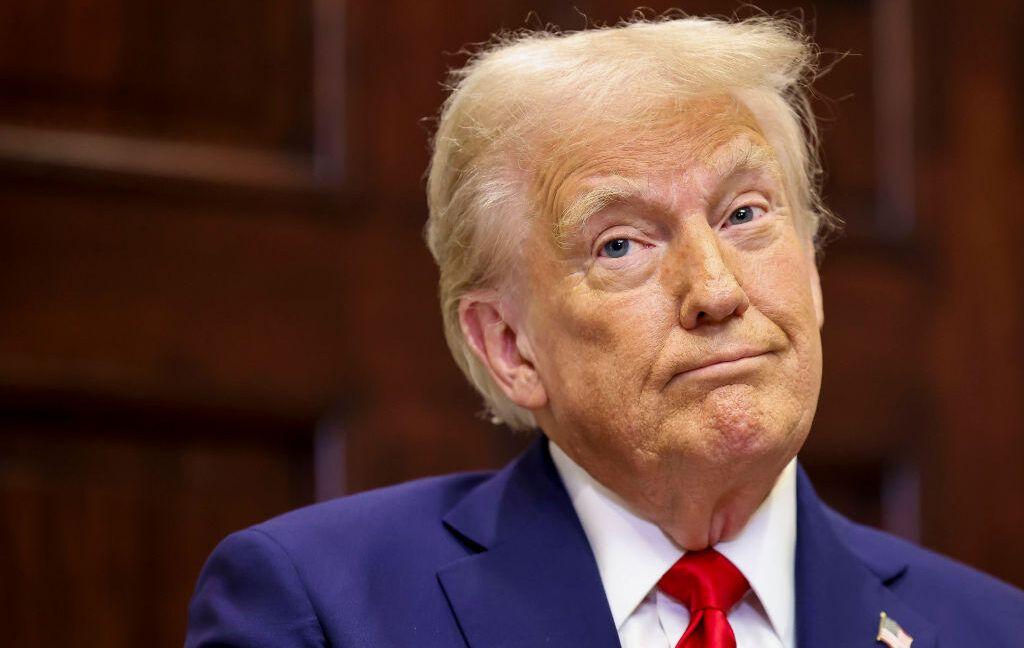
US and China Propose AI Hotline to Address National Security Threats Ahead of Washington Summit
16 Sept 2026•Policy and Regulation
Recent Highlights
1
Google's AI Policy Forces Schools to Accept AI Overviews or Lose Search Access Entirely
Technology

2
Jensen Huang's Affair with Suspected Chinese Spy Exposes $7 Billion AI Chip Smuggling Network
Policy and Regulation

3
Anthropic launches Fable 5.2 and Mythos 5.2 with 20% price cut and 30% faster output
Technology

Recent Highlights
Today's Top Stories







Don’t drown in AI news. We cut through the noise - filtering, ranking and summarizing the most important AI news, breakthroughs and research daily. Follow topics that matter to you and stay ahead.


