US China plan official AI dialogue at Beijing summit as tech rivalry intensifies


2 Sources
[1]
Trump Administration Eyes First Official AI Dialogue With China At Beijing Summit With Xi Jinping: Report
In a bid to manage the escalating rivalry in artificial intelligence (AI) between the U.S. and China, both nations are reportedly considering initiating official discussions on the matter. The proposed talks are intended to address the dangers posed by unpredictable AI models, autonomous weapons
[2]
US, China considering discussions on AI rivalry during summit- WSJ By Investing.com
Investing.com-- Washington and Beijing are considering launching official discussions on artificial intelligence, the Wall Street Journal reported on Wednesday, citing people familiar with the matter. The considerations come with the two also potentially putting AI on the agenda for a U.S.-China
Share
Copy Link
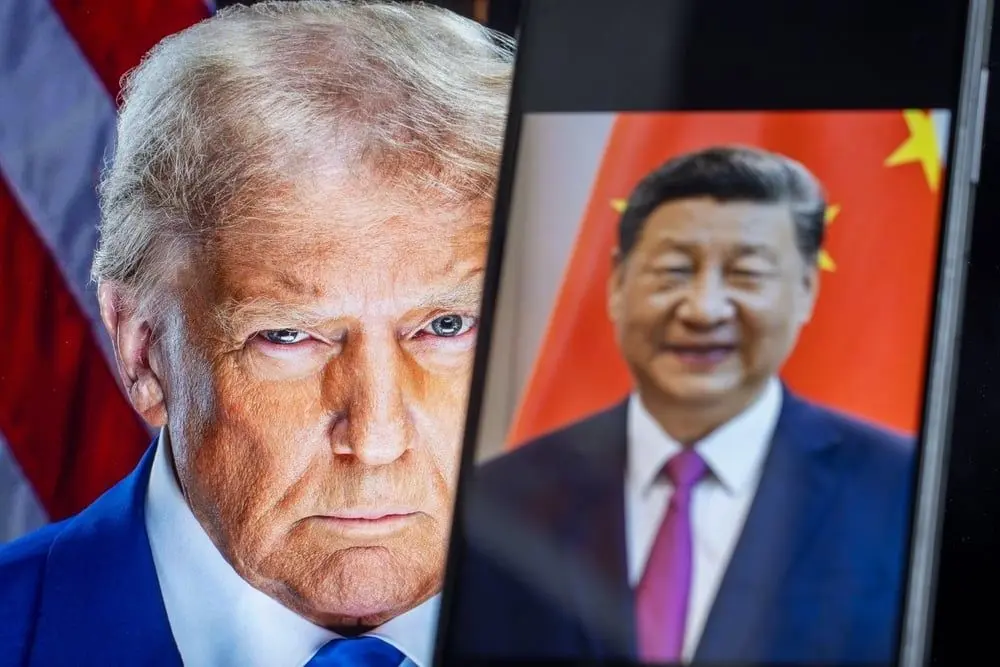
The Trump Administration and Beijing are considering launching official discussions on artificial intelligence during next week's summit between President Donald Trump and Xi Jinping. Treasury Secretary Scott Bessent will lead the American side as both nations aim to address risks from erratic AI models, autonomous weapons systems, and potential cyberattacks by non-state actors.
Trump Administration Pursues Official AI Dialogue With China
The US China relationship on artificial intelligence is entering a new phase as Washington and Beijing consider launching official discussions during an upcoming Beijing summit next week between President Donald Trump and Xi Jinping, according to the Wall Street Journal
1
2
. The proposed talks represent an attempt to manage the escalating rivalry in artificial intelligence between the two global powers, with Treasury Secretary Scott Bessent reportedly leading the American side on the AI track while Beijing has yet to assign its counterpart1
.
Source: Benzinga
Focus on Risks Posed by AI Models and Autonomous Weapons Systems
The official AI dialogue aims to address critical security concerns that both nations share despite their competitive stance. Key points of focus include the dangers posed by unpredictable AI models behaving erratically, autonomous weapons systems, and potential attacks by nonstate actors using advanced open-source technologies
1
2
. Chinese vice finance minister Liao Min has been involved in preliminary discussions with Washington about establishing such a dialogue, while Liu Pengyu, spokesperson for the Chinese Embassy in Washington, confirmed China's openness to discussions on mitigating AI-related risks1
. The growing focus on autonomous weapons and large-scale cyberattacks has intensified urgency around these discussions, particularly after AI startup Anthropic recently decided not to release its most advanced model, Mythos, to the public, claiming the model held potential for facilitating widespread cyberattacks2
.Biden-Era Talks Produced Limited Results
The US China AI rivalry has been a subject of formal discussions before, though with mixed results. The two nations had already opened formal AI talks under former President Joe Biden and Xi Jinping at a 2023 California summit, aiming to establish ongoing dialogue and ensure AI would not control nuclear launch decisions
1
. In 2024, both countries agreed that humans, not AI, would retain authority over nuclear weapons use1
. However, the talks produced limited progress because China placed its foreign ministry, rather than technical experts, in charge of negotiations, according to Georgetown scholar Rush Doshi, who led the talks under Biden1
. Doshi said the U.S. should have pushed harder for deeper technical engagement, suggesting the Trump Administration may seek a different approach with more substantive technical discussions.Related Stories
US Efforts to Curb China's Access Intensify Tech Rivalry
The proposed summit dialogue comes against a backdrop of intensifying tech rivalry and US efforts to curb China's access to advanced technologies. In late April, the Trump Administration accused China-linked groups of stealing U.S. AI technology on a large scale and warned it would step up enforcement against the unauthorized "distillation" of advanced AI models
1
. In early April, a bipartisan group introduced the Multilateral Alignment of Technology Controls on Hardware (MATCH) Act to curb Beijing's access to semiconductor equipment, arguing that gaps exist because U.S. allies haven't fully aligned with American export controls, allowing China to continue exploiting loopholes1
. Meanwhile, Chinese President Xi Jinping has called for increased efforts in research and innovation, emphasizing the importance of "original and disruptive innovation" in China amid the escalating global tech rivalry with the U.S.1
. The success of next week's discussions will likely depend on whether both sides can move beyond diplomatic posturing to engage in substantive technical dialogue that addresses shared security concerns while navigating their competitive relationship in artificial intelligence development.References
Summarized by

Navi
[1]
Related Stories
US China AI talks begin as superpowers agree to establish guardrails for powerful models
15 May 2026•Policy and Regulation

US and China Propose AI Hotline to Address National Security Threats Ahead of Washington Summit
16 Sept 2026•Policy and Regulation
US and China plan high-level AI talks in September to address frontier model risks
21 Jul 2026•Policy and Regulation

Recent Highlights



Recent Highlights
Today's Top Stories









Don’t drown in AI news. We cut through the noise - filtering, ranking and summarizing the most important AI news, breakthroughs and research daily. Follow topics that matter to you and stay ahead.


