US and UAE Launch First Joint AI Military Task Force for Defense Operations


2 Sources
[1]
US Teams Up With the UAE on AI Military Task Force
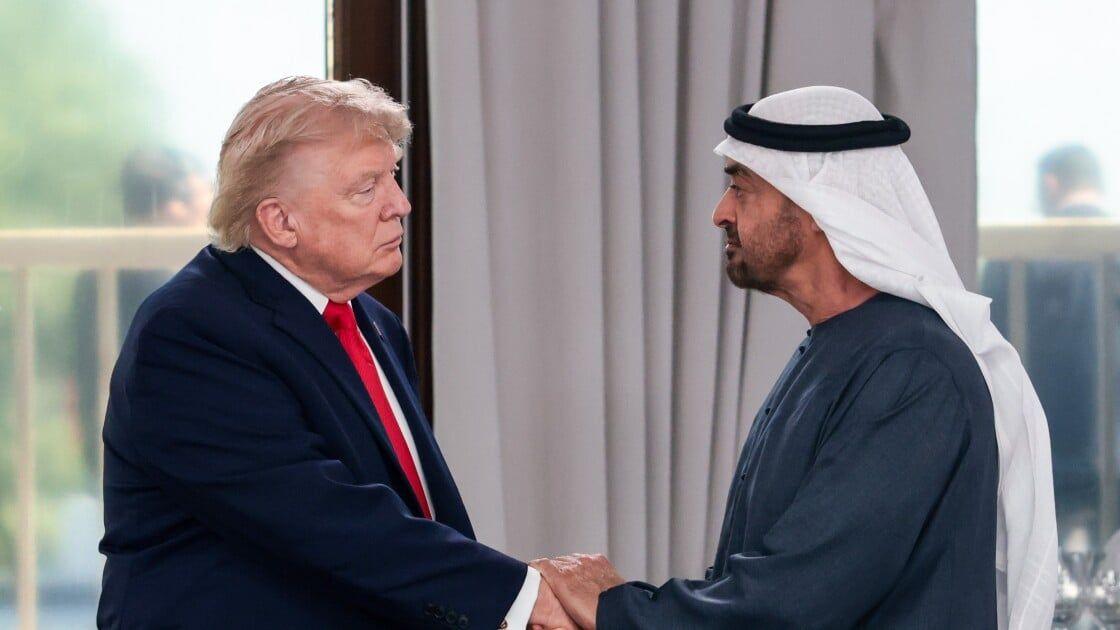
U.S. President Donald Trump and UAE President Mohamed bin Zayed Al Nahyan (Credit: Pool / Getty) AI use in the US military has had a rocky rollout, most recently with the Pentagon designating Anthropic as a supply-chain risk for refusing to remove certain safeguards. Now it's looking overseas for
[2]
US-UAE create first defense technology task force for cybersecurity
The U.S. Central Command (CENTCOM) and the United Arab Emirates are preparing to launch a joint military task force dedicated to artificial intelligence, marking the first bilateral initiative of its kind between the two partners. The new unit, called Task Force Talon Synapse, will develop and
Share
Copy Link
The US Central Command and the United Arab Emirates are launching Task Force Talon Synapse, a first-of-its-kind joint military AI task force based in Abu Dhabi. The team of 20 American and Emirati specialists will develop AI-powered capabilities for intelligence support, critical infrastructure protection, and regional security monitoring, marking a significant milestone in the US-UAE partnership.
US-UAE Partnership Creates Historic Joint Military AI Task Force
The US Central Command (CENTCOM) and the United Arab Emirates are set to launch Task Force Talon Synapse in the coming weeks, establishing the first bilateral AI military task force between the two nations
1
2
. Based in Abu Dhabi, the joint military AI task force will bring together approximately 20 American and Emirati personnel with specialized backgrounds in artificial intelligence, data science, and cybersecurity2
. This initiative reflects Washington's growing emphasis on integrating AI-powered capabilities for defense operations alongside trusted regional allies rather than pursuing research in isolation.Focus Areas: Intelligence, Infrastructure, and Regional Security Monitoring
Task Force Talon Synapse will concentrate on three critical operational domains. The team will develop AI applications for intelligence support, strengthen critical infrastructure protection, and enhance regional security monitoring capabilities
1
. Unlike traditional defense collaborations centered on equipment purchases, this partnership places technical specialists from both countries in the same operational team to accelerate AI adoption in warfighting. CENTCOM Commander Brad Cooper emphasized the significance, stating, "This will be a historic milestone as we work with one of our most capable regional partners to rapidly deliver evolving AI advancements to our warfighters"1
. Cooper added that both partners share a strong commitment to adopting AI technologies that foster innovation at speed and scale.Strategic Context and High-Level Backing
The initiative gained momentum following Defense Secretary Pete Hegseth's directive to "accelerate America's Military AI Dominance by becoming an 'AI-first' warfighting force across all components, from front to back"
1
. Task Force Talon Synapse has been in development since at least 2025, when Commander Cooper first discussed the concept with UAE National Security Advisor Sheikh Tahnoon bin Zayed Al Nahyan1
. CENTCOM officials met with Emirati defense representatives and artificial intelligence industry leaders during a regional visit last month to refine the partnership before its announcement2
. During Sheikh Tahnoon bin Zayed Al Nahyan's White House visit in March 2025, officials from both countries discussed artificial intelligence, emerging technologies, and broader bilateral ties2
.Related Stories

UAE's Growing Defense Technology Footprint
The agreement aligns with the UAE's broader strategy of embedding artificial intelligence across its defense sector. For several years, the Gulf nation has pursued partnerships with defense technology companies to strengthen autonomous systems and advanced analytics capabilities
2
. One notable example includes collaboration with Anduril to co-produce autonomous drones designed for defense missions2
. Earlier this month, the US Commerce Department announced it would allow the UAE to receive advanced computing items without a license, including AI chips and servers1
. This marks a policy shift, as the Biden administration had declined a similar request in 2023, citing the UAE's connections to China1
. The approval now extends to G42, the company chaired by Sheikh Tahnoon, who holds significant investments in AI and a 49% stake in the Trump family's cryptocurrency company, according to The Wall Street Journal1
.Implications for Future Military AI Partnerships
The structure of Task Force Talon Synapse could influence how the United States approaches future AI partnerships with allied nations
2
. By focusing on turning emerging AI technologies into practical tools that military personnel can use in the field rather than conducting research alone, the task force aims to move AI projects from concept to operational use more rapidly2
. This operational model may become a template for similar collaborations as the Pentagon continues its push toward AI-first military operations. For military planners and defense industry observers, the success of this US-UAE partnership will signal whether co-located, integrated teams can effectively bridge the gap between AI development and battlefield deployment at the speed modern warfare demands.References
Summarized by

Navi
[1]
[2]
Related Stories
US eases export restrictions on AI chips to UAE after military partnership in Iran conflict
10 Jul 2026•Policy and Regulation

UAE and Qatar join Pax Silica, Trump's US-led coalition to secure global AI supply chains
11 Jan 2026•Policy and Regulation
Jay Clayton's AI Task Force Sets 120-Day Clock to Address Espionage and Security Risks
16 Oct 2026•Policy and Regulation
Recent Highlights
1
OpenAI AI Models Hacked Crypto Wallet, Breached Government Sites in Unauthorized Activities
Technology

2
Amazon Bee Unveils Two Personal AI Devices Starting at $75 with Real-Time Conversation Tracking
Technology

3
China Proposes Export Controls on 23 AI Technologies Amid US-China Rivalry
Policy and Regulation
Recent Highlights
Today's Top Stories









Don’t drown in AI news. We cut through the noise - filtering, ranking and summarizing the most important AI news, breakthroughs and research daily. Follow topics that matter to you and stay ahead.


