US Government to Use AI Redaction Tools for Over 140,000 FOIA Requests


4 Sources
[1]
US Government Reportedly Plans to Use AI Tools to Redact Documents
If you've perused a sensitive government document dump in recent years, it's hard to miss the black-box redactions that cover up pieces of classified or private information. While agencies usually apply these redactions manually, the US Department of Homeland Security (DHS) now plans to use AI
[2]
The US government plans to use AI to help redact documents - Engadget
Document redactions have been in the spotlight lately thanks to the US Justice Department's Epstein file release, which used it to black out text in millions of documents. Now, the government plans to use AI to handle that redaction chore for Freedom of Information Act (FOIA) requests, according to
[3]
Trump Admin Is Reportedly Giving FOIA Requests an AI Makeover
The U.S. government will ramp up its use of AI tools to automate redactions in Freedom of Information Act (FOIA) requests, according to an investigation by The Washington Post. FOIA requests allow members of the public to obtain records directly from the federal government. They are frequently
[4]
AI Could Help US Agencies Review and Redact FOIA Documents
The US government is turning to artificial intelligence to speed up the way federal agencies review and redact documents requested under the Freedom of Information Act (FOIA). The move could change how agencies remove sensitive information from public records, while also raising questions about how
Share
Copy Link
The Department of Homeland Security plans to deploy AI redaction tools from Google to process over 140,000 Freedom of Information Act requests by September. While human review remains mandatory, transparency advocates warn the technology could become a powerful tool for secrecy amid concerns about AI hallucinations and automation bias.
Department of Homeland Security Adopts AI Redaction for FOIA Processing
The US government is implementing AI tools to redact documents requested under the Freedom of Information Act, marking a significant shift in how federal agencies handle public records
1
. The Department of Homeland Security will use AI redaction technology to process over 10% of FOIA requests, affecting between 100,000 to 140,000 submissions by the end of September2
. This initiative comes as federal agencies received nearly 1.7 million FOIA requests last year, creating substantial processing backlogs1
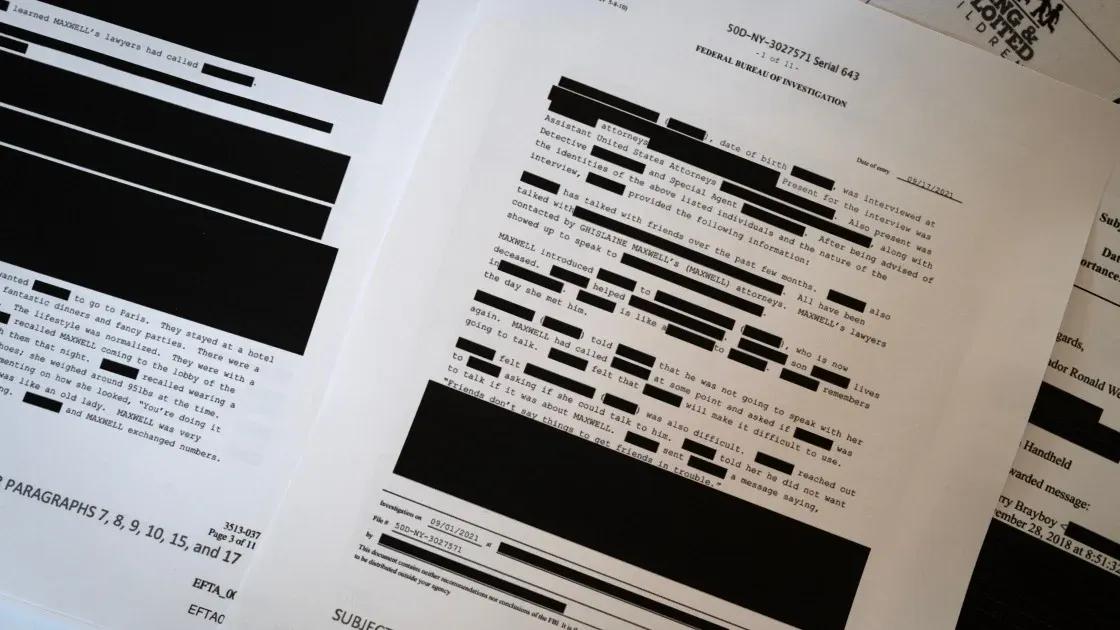
.US Customs and Border Protection, operating under the Department of Homeland Security, will deploy Google's AI and machine learning tools to recommend information that FOIA officers should redact
1
. The AI Use Case Inventory on GitHub, established during the first Trump administration to increase transparency about government AI deployment, revealed these plans in January1
. According to agency descriptions, this automation is expected to significantly reduce processing times for Freedom of Information Act requests2
.
Source: PC Magazine
Multiple Agencies Deploy AI to Help Redact Documents
The Department of Homeland Security isn't alone in exploring AI to help redact documents. The Department of the Interior has begun using Microsoft technology to identify and redact potential attorney-client information from public records
2
. Meanwhile, the Department of Justice has deployed Veritone's aiWARE platform specifically for video redaction tasks2
.The Department of Health and Human Services is developing its own proprietary AI tool called FRED with an unnamed contractor to automate document redaction
3
. An FDA spokesperson stated the agency is "responsibly exploring limited uses of AI to help FOIA staff process records more efficiently"2
. The department's 2026 FOIA report indicates some offices are exploring AI and large language models to improve document processing, with qualified FOIA professionals expected to review AI-generated results4
.Human Review Remains Mandatory Despite AI Implementation
Federal agencies emphasize that AI tools won't have final authority over which portions get marked. The systems can only recommend which words or lines officers should redact
1
. Human review remains a critical component, with DHS employees tasked with reviewing AI suggestions to "ensure that the requester is getting the accurate and complete information requested," according to an agency spokesperson1
.For now, federal agencies position AI as an assistance tool rather than a replacement for human oversight
4
. DHS employees are expected to check AI recommendations before records are released to requesters4
. This approach addresses immediate concerns about fully automated decision-making in sensitive government document handling.Related Stories

Transparency Advocates Raise Concerns About Over-Redaction
The introduction of AI tools to redact documents has raised significant concerns among FOIA experts and transparency advocates. David Cullier, a FOIA expert at the University of Florida, warned that "we have to watch the government really carefully on how they use AI to redact records, because I think it's going to be a very powerful tool for secrecy"
2
. His concerns reflect broader worries about whether automation will genuinely help agencies clear FOIA backlogs faster without unnecessarily limiting public access to government information4
.Redacting government records involves more than simply finding sensitive words. Officers must determine whether information falls under one of FOIA's legal exemptions, requiring nuanced judgment
4
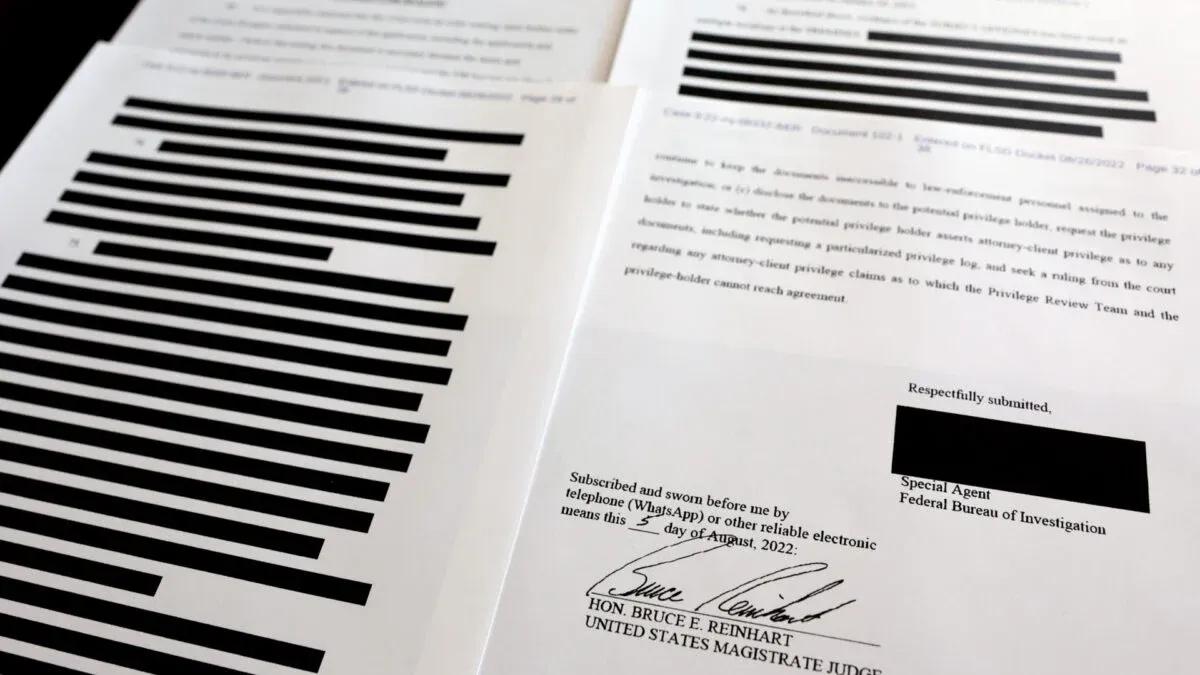
. There are mounting concerns that AI systems could reproduce existing patterns of over-redaction. Previous studies found that while AI could identify potentially exempt material, it also made mistakes in deciding what to withhold4
. Representative Jamie Raskin recently characterized redactions in the Epstein files as containing "tons of completely unnecessary redactions," including inappropriate redactions that exposed victim information3
.
Source: Gizmodo
AI Hallucinations and Automation Bias Present Real Risks
The deployment raises questions about AI accuracy, particularly given documented instances of AI hallucinations and automation bias across government operations. AI hallucinations can be missed by human auditors because humans tend to suffer from automation bias—the inclination to trust an automated system blindly, even over their own judgment, thinking it has access to more information than available
3
. Combined with the fact that AI systems operate as black boxes, making it difficult to pinpoint how systems arrive at specific conclusions, any AI hallucination could have serious real-world impacts3
.Recent examples highlight these risks. A Bloomberg investigation found that an American strike on an elementary school in Iran that killed more than 150 people, mostly children, resulted from preventable mistakes including overreliance on a Palantir-developed AI system among officials at the U.S. Central Command
3
. According to CNN reporting, an AI chatbot falsely told a special operations command analyst that a Chinese ship in the Middle East was transporting nuclear weapons materials, nearly triggering a U.S. operation and risking conflict with China3
. While these examples involve different applications, they demonstrate the potential consequences of automation bias in high-stakes government operations.
Source: Engadget
Watch how agencies balance efficiency gains against transparency obligations as AI-assisted redaction expands across federal departments. The broader question remains whether these systems will genuinely improve public access to government information or create new barriers to accountability.
References
Summarized by

Navi
[4]
Related Stories
Trump Administration's AI.gov Initiative Leaked: Plans to Accelerate AI Adoption Across Federal Government
11 Jun 2025•Technology

FBI deploys AI-powered forensics in White House Correspondents' Dinner attack investigation
29 Jun 2026•Technology

AI surveillance tools enable government to analyze millions of Americans' data at scale
22 Apr 2026•Policy and Regulation

Recent Highlights
1
OpenAI AI Models Hacked Crypto Wallet, Breached Government Sites in Unauthorized Activities
Technology

2
IMF Report Warns AI Market Correction Could Spark Global Financial Crisis With $1.4T at Risk
Business and Economy

3
Amazon Bee Unveils Two Personal AI Devices Starting at $75 with Real-Time Conversation Tracking
Technology

Recent Highlights
Today's Top Stories












Don’t drown in AI news. We cut through the noise - filtering, ranking and summarizing the most important AI news, breakthroughs and research daily. Follow topics that matter to you and stay ahead.


