US Takes Control of Venezuela But Inherits Its Chinese AI Surveillance Network


2 Sources
[1]
USA's Venezuela takeover comes with bonus exposure to Chinese AI surveillance tech
Think tank the Australian Strategic Policy Institute (ASPI) has warned that Venezuela is poised to adopt Chinese AI systems to enhance surveillance systems that already rely on Middle Kingdom tech, and called for US Secretary of State Marco Rubio to do something about it. ASPI outlined the
[2]
US inherits Venezuelan surveillance state built on banned Chinese tech and AI -- and it shows no signs of switching
The US could let Venezuela's surveillance network run Chinese AI * A new report has warned that efforts to install Chinese AI within Venezuela's surveillance network could still go ahead * The plans were drawn up before former-President Nicolás Maduro was ousted by the US * Report warns there
Share
Copy Link
The Australian Strategic Policy Institute warns that US-backed Venezuela may proceed with plans to integrate banned Chinese AI systems into its existing surveillance apparatus. The report calls on Secretary of State Marco Rubio to dismantle the infrastructure built largely with technology from companies like iFlytek, which was banned in 2019 for human rights violations.

US Inherits Venezuela's Chinese AI-Powered Surveillance State
The Australian Strategic Policy Institute has issued a stark warning about Venezuela's surveillance infrastructure in its recent report titled "Warning signals: Venezuela and the risk of Chinese AI-enabled digital authoritarianism."
1
The ASPI report reveals that despite the US effectively taking over Venezuela in January 2026, the South American nation appears poised to proceed with plans to adopt Chinese AI systems that could transform it into one of the most advanced surveillance states in the Western Hemisphere.State-Sponsored Surveillance Built on Chinese Technology
Venezuela constructed its surveillance state approximately a decade ago, relying heavily on technology from Chinese companies.
1
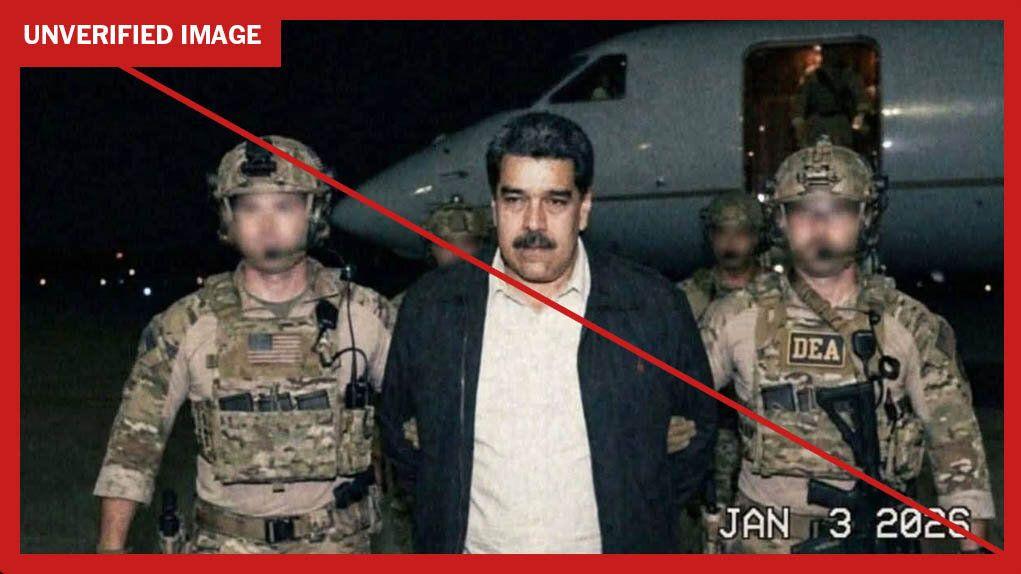
In 2025, then-Vice President Delcy Rodríguez spearheaded efforts that culminated in an agreement to adopt Chinese-built AI systems designed to enhance existing state-sponsored surveillance capabilities. When the US ousted former President Nicolás Maduro through a nighttime operation that allegedly involved US Cyber Command knocking power generation offline in Caracas, Rodríguez was installed as Venezuela's new leader just two days later.2
However, ASPI analysts have found no indication that Rodríguez has abandoned her previous plans to integrate Chinese AI into the surveillance apparatus.iFlytek and Banned Technology at the Center
Among the companies involved in Venezuela's surveillance enhancement plans is iFlytek, a Chinese firm that the US banned in 2019 for its role in helping Beijing repress the Uyghur Muslim population in China's Xinjiang region.
1
The involvement of iFlytek raises serious concerns about human rights violations and the potential for authoritarianism to take deeper root in Venezuela. The ASPI report claims that "Venezuela will become one of the first countries outside China to import China's new generation of LLM-based AI systems for surveillance and control, and the most advanced adopter in the Western Hemisphere."2
How Chinese AI Systems Suppress Dissent
The surveillance network has already demonstrated its capacity to suppress dissent. Following the likely fixed 2024 Venezuelan presidential elections, protesters and dissidents were identified online and subsequently monitored using video and drone surveillance, with numerous protest leaders disappearing after being captured by authorities.
2
While ASPI analysts acknowledge that Venezuela's government likely cannot recreate China's full-stack surveillance apparatus, they express concern that "Chinese or other AI tools could strengthen a domestically directed apparatus already used to manage dissent, restrict information and preserve political power."1
These LLM-based tools could significantly enhance the state's ability to monitor and control its population.Related Stories
Calls for Marco Rubio to Dismantle the Surveillance Infrastructure
The ASPI report directly calls on US Secretary of State Marco Rubio, who effectively acts as viceroy of Venezuela, to dismantle the surveillance apparatus and enact meaningful political change.
1
The think tank's analysts believe such action would send a powerful signal that democracies are prepared to counter China's export of authoritarian AI technology and dismantle it when possible in the name of civil liberty. The report emphasizes that dismantling Venezuela's surveillance infrastructure would help position the US as a genuine liberator rather than merely a new face of an old regime, though this recommendation carries some irony given the US's own surveillance controversies, including opposition to Flock camera systems and debates over AI companies providing government access to their models for domestic surveillance purposes.2
Geopolitical Tension and China's Response
The situation creates significant geopolitical tension as Washington seeks a greater role in Venezuelan affairs while effectively running a nation that relies on Chinese surveillance technology to maintain power. According to the ASPI report, "Beijing for its part recognizes this opening, and the risk it poses to Chinese companies and China's political influence there."
1
China's leaders appear to understand that assets and investments of its national champions face risks in Venezuela, with Beijing's approach seemingly focused on strengthening oversight of state-owned assets abroad to assist in risk protection and management. The report does not address whether greater adoption of Chinese AI surveillance by Venezuela increases the risks the US faces as it seeks to control the South American country, leaving observers to speculate about the long-term implications of this technological inheritance. Watch for how the US navigates this complex situation where dismantling the surveillance state could destabilize control, while maintaining it contradicts stated democratic values and exposes the nation to Chinese technological influence.References
Summarized by

Navi
Related Stories
AI reshaping the battle over Nicolas Maduro's capture as disinformation floods social media
20 Jan 2026•Entertainment and Society

AI-generated images of Nicolás Maduro spread rapidly despite platform safeguards
05 Jan 2026•Entertainment and Society
U.S. Tech Giants Implicated in Building China's Surveillance State
09 Sept 2025•Technology

Recent Highlights
1
Microsoft and Nvidia Launch Surface Laptop Ultra: A $2,599 AI-Ready PC With RTX Spark Chip
Technology

2
Meta Muse AI Agent Surges to 6.6M Downloads Despite Privacy and Security Controversies
Technology

3
Scientists Build AI Model That Reconstructs Images From Brain Scans in Record Time
Science and Research

Recent Highlights
Today's Top Stories











Don’t drown in AI news. We cut through the noise - filtering, ranking and summarizing the most important AI news, breakthroughs and research daily. Follow topics that matter to you and stay ahead.


