Trump Administration's Visa Crackdown on Chinese Students Threatens U.S. AI Research and Innovation


5 Sources
[1]
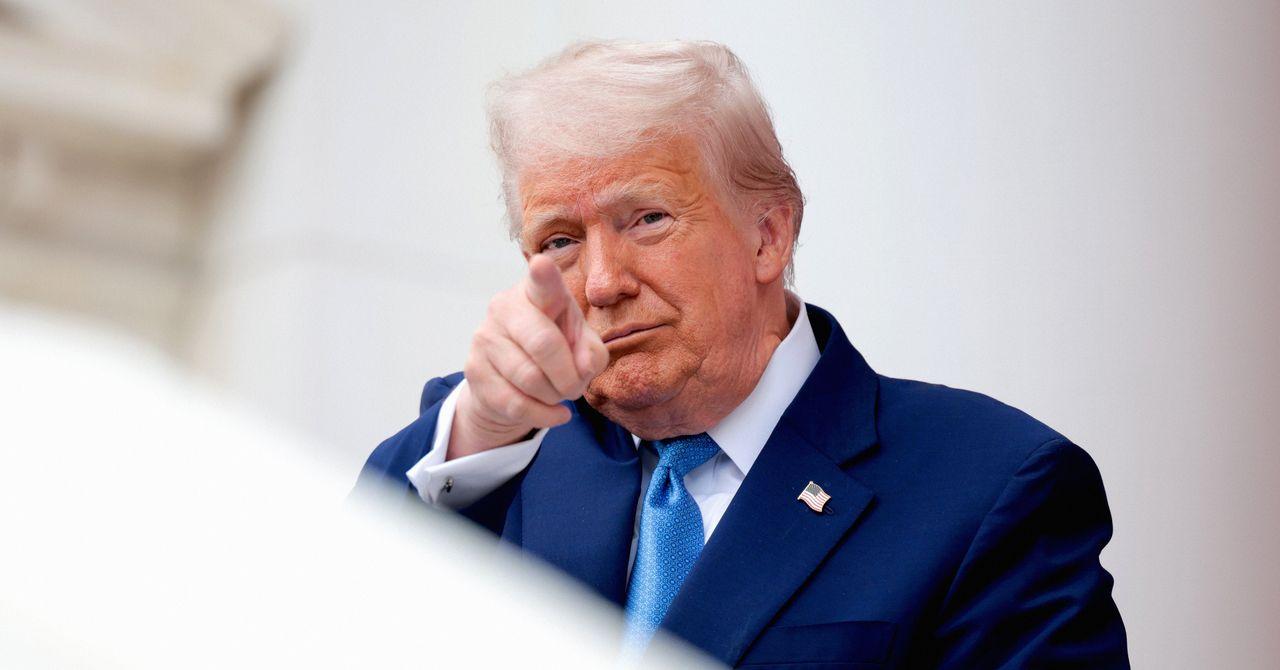
Trump's Crackdown on Foreign Student Visas Could Derail Critical AI Research
The US says it will "aggressively revoke" Chinese student visas and has paused interviews for all student visa applicants. Experts warn the moves could weaken American leadership in STEM. Secretary of State Marco Rubio said Wednesday that the US plans to "aggressively revoke" the visas of Chinese
[2]
Trump administration claims Chinese students 'exploit' U.S. universities
Beijing wants talented Chinese studying overseas to return home. But are Chinese students in the United States really a national security threat? A State Department pledge to revoke a record number of Chinese student visas has jolted U.S. higher education, reigniting debate over whether the
[3]
Rubio's move to revoke Chinese students' visas sparks condemnation
Secretary of State Marco Rubio appears before the Senate Committee on Appropriations on Tuesday in Washington. Matt McClain/The Washington Post via Getty Images hide caption News that the U.S. will "aggressively" begin revoking visas held by Chinese students reverberated through China as well as
[4]
Rubio says U.S. will "aggressively" revoke visas for many Chinese students
In the latest and most drastic move yet to curtail the numbers of international students studying in the U.S. the federal government will "aggressively" revoke visas from Chinese students and enhance scrutiny for future applicants, according to Secretary of State Marco Rubio. "Under President
[5]
Don't Close the Door on Chinese Talent. Ending Visas Will Hurt America More Than It Hurts China.
Secretary of State Marco Rubio's announcement last week that the Trump administration will "aggressively revoke" visas of Chinese students in the U.S. is the diplomatic equivalent of cutting off your nose to spite your face. In the last 25 years, more than 50,000 Chinese visa-holders who earned
Share
Copy Link
The Trump administration's plan to revoke visas for Chinese students, particularly those in STEM fields, could significantly impact U.S. technological leadership and AI research capabilities.
Trump Administration Targets Chinese Students' Visas
The Trump administration has announced plans to "aggressively revoke" visas for Chinese students, particularly those with connections to the Chinese Communist Party or studying in critical fields
1
. This move, coupled with a broader crackdown on international students, has sparked concerns among experts about potential negative impacts on American scientific research and technological leadership, especially in artificial intelligence (AI)1
2
.
Source: Wired
Potential Impact on U.S. AI Research and Innovation
Helen Toner, director of strategy at Georgetown University's Center for Security and Emerging Technology, warns that disrupting the flow of top talent from around the world into the U.S. could significantly hinder America's AI capabilities
1
. The U.S. has long benefited from its ability to attract highly skilled researchers and students globally, giving it a competitive edge over countries like China1
3
.International students, particularly from China and India, make up a substantial portion of STEM graduate programs in the U.S. In the 2021-2022 academic year, over 36% of STEM master's degrees and 46% of STEM PhDs were awarded to international students
1
. This talent pool has been crucial for maintaining U.S. technological dominance and driving innovation in fields like AI3
5
.Concerns from Academia and Industry
Vincent Conitzer, an AI specialist at Carnegie Mellon University, emphasizes that America's ability to attract top talent has been a longstanding asset for its domestic tech industry
1
. The new visa policies could deter talented students from choosing U.S. universities, potentially weakening the country's research capabilities and economic competitiveness2
5
.Several Trump allies, including Elon Musk, have argued that attracting the best engineers from around the world is essential for maintaining U.S. technological dominance
1
. However, more populist figures in the administration, such as policy chief Stephen Miller, advocate for reducing immigration levels, seemingly prioritizing this goal over potential economic and technological consequences1
2
.Related Stories

National Security Concerns vs. Economic Benefits
The Trump administration justifies these measures as necessary for national security, citing concerns about intellectual property theft and potential espionage
2
4
. However, critics argue that the broad scope of these restrictions risks casting suspicion on a much wider pool of students who are vital to research and funding at many top American institutions2
.
Source: NPR
A 2022 study by Georgetown University found that around 90% of Chinese nationals who came to the U.S. to study STEM fields between 2000 and 2015 stayed and worked in the U.S. after graduating, contributing significantly to scientific advancement in the country
3
. This retention of talent has been a crucial factor in maintaining U.S. leadership in emerging technologies like AI3
5
.Potential Long-term Consequences
Experts warn that the chilling effect on potential students could be enormous, potentially leading to a loss of soft power and talent that directly contributes to U.S. competitiveness
3
. The policy shift may also push talented students towards other countries, such as the UK, potentially reshaping the global landscape of scientific research and technological innovation2
5
.As tensions between the U.S. and China continue to escalate, particularly in areas of technological competition like AI and semiconductor development, the impact of these visa restrictions on America's ability to maintain its edge in critical fields remains a subject of intense debate and concern
4
5
.References
Summarized by

Navi
[2]
Related Stories
US-China Trade Tensions Escalate Over AI Chip Restrictions and Student Visa Threats
02 Jun 2025•Policy and Regulation

AI Doctoral Student's Visa Revoked Amid Broader Crackdown on International Students in the US
22 Apr 2025•Policy and Regulation

Trump's MAGA Coalition Divided Over H-1B Visas and AI Talent Acquisition
23 Dec 2024•Policy and Regulation

Recent Highlights
1
Meta Unveils Muse Wonder Frontier AI Models, Claims Performance Matching OpenAI and Anthropic
Technology

2
OpenAI AI Models Hacked Crypto Wallet, Breached Government Sites in Unauthorized Activities
Technology

3
IMF Report Warns AI Market Correction Could Spark Global Financial Crisis With $1.4T at Risk
Business and Economy

Recent Highlights
Today's Top Stories








Don’t drown in AI news. We cut through the noise - filtering, ranking and summarizing the most important AI news, breakthroughs and research daily. Follow topics that matter to you and stay ahead.


