Vinod Khosla Predicts AI Will Replace 80% of Jobs by 2030, Disrupting Fortune 500 Companies


3 Sources
[1]
Silicon Valley investor Vinod Khosla predicts AI will replace 80% of jobs by 2030
Tech entrepreneur and investor Vinod Khosla's prediction of AI automating 80% of high-value jobs by 2030 coincides with a reckoning for Fortune 500 companies. Khosla shared his predictions for the future in a wide-ranging interview on the Uncapped with Jack Altman podcast. As a venture capitalist
[2]
The 2030s Will See Fortune 500 Dying Like Never Before, Warns Vinod Khosla | AIM
By 2040, he believes society will enter an "era of abundance" where people will no longer need to work out of necessity. Venture capitalist Vinod Khosla has said artificial intelligence will be able to perform 80% of the most economically valuable jobs within the next five years, sparking
[3]
Vinod Khosla's dire warning: AI could wipe out 80% of jobs and crush Fortune 500 giants by 2030
Vinod Khosla predicts AI's rapid advancement will automate 80% of economically valuable jobs within five years, potentially eliminating the need for work by 2040. He anticipates a faster demise of Fortune 500 companies in the 2030s due to AI-driven disruption. Khosla also foresees AI transforming
Share
Copy Link
Silicon Valley investor Vinod Khosla forecasts massive job automation and economic shifts due to AI advancements, predicting an era of abundance by 2040.
AI's Impending Impact on Jobs and the Economy
Renowned Silicon Valley investor Vinod Khosla has made a series of bold predictions about the future of artificial intelligence (AI) and its impact on the global workforce and economy. In a recent interview on the 'Uncapped with Jack Altman' podcast, Khosla shared his vision of a rapidly changing world driven by AI advancements
1
.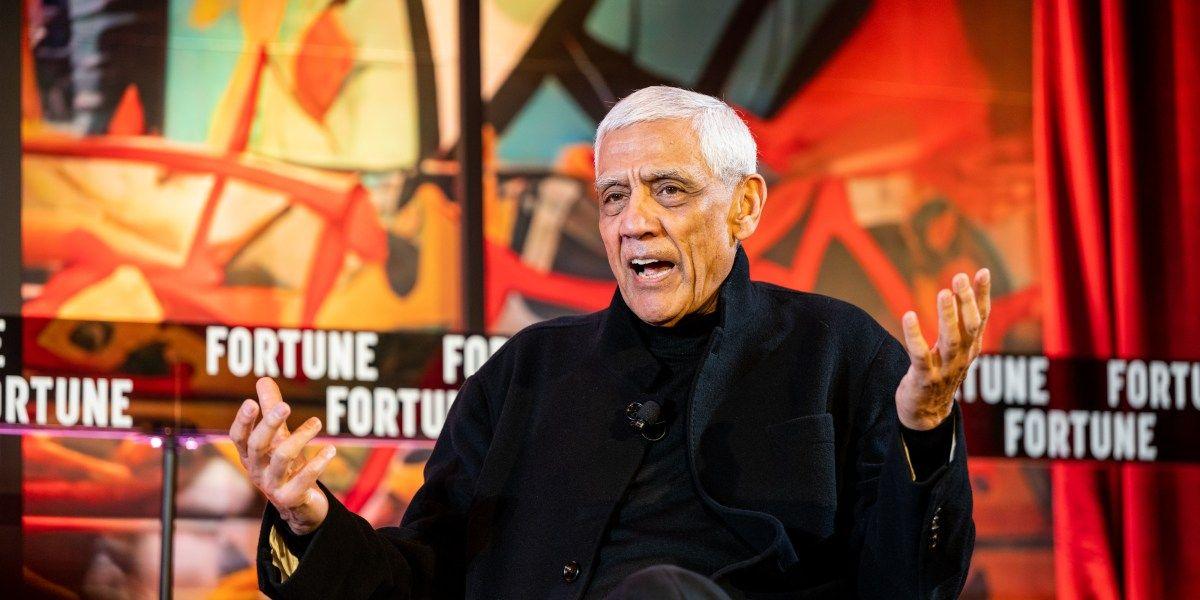
Source: Fortune
Massive Job Automation by 2030
Khosla, known for his early investments in companies like Square and Instacart, forecasts that AI will be capable of performing 80% of economically valuable jobs within the next five years. He states, "Almost certainly within the next five years, any economically valuable job humans can do, AI will be able to do 80% of it"
2
. This prediction encompasses a wide range of professions, with few exceptions such as specialized medical procedures like heart or brain surgery.Disruption of Fortune 500 Companies
The investor warns of unprecedented disruption in the business world, particularly for large corporations. Khosla predicts, "One of my predictions is that the 2030s will see a faster rate of demise of Fortune 500 companies than we've ever seen"
3
. He compares this coming transformation to shifts not seen since the 1960s, emphasizing the scale and pace of change as unprecedented in his four-decade career in venture capital.The Era of Abundance
Looking further ahead, Khosla envisions an "era of abundance" by 2040, where the need for work as we know it today may disappear. He explains, "The need to work will go away. People will work on things because they want to, not to pay their mortgage"
2
. This radical shift in the nature of work and economic structures could lead to significant changes in the social contract and value distribution systems.Related Stories

AI's Impact on Various Sectors
Khosla's predictions extend beyond the job market and corporate world:
-
Healthcare: He foresees AI revolutionizing medical expertise, potentially offering unlimited access to various medical specialties
3
. -
Robotics: Khosla predicts that "almost everybody in the 2030s will have a humanoid robot at home," starting with tasks like cooking
3
.

Source: ET
- Energy: He is "very bullish about energy," particularly fusion and super-hot geothermal, which he believes could make power "cheaper than natural gas"
3
.
Challenges and Considerations
While Khosla's predictions paint a picture of immense technological progress, he acknowledges the potential for "dystopic" effects. The transition to this AI-driven future may require significant adjustments in government policies, social structures, and economic systems. Khosla notes that responses to these changes will likely vary by country and culture
2
.As AI continues to advance at a rapid pace, Khosla's predictions serve as a wake-up call for businesses, policymakers, and individuals to prepare for a future where the nature of work and economic structures may be fundamentally different from what we know today.
References
Summarized by

Navi
Related Stories
Ex-Google Exec Warns: AI Will Displace Jobs Across All Levels, Including CEOs
05 Aug 2025•Business and Economy
Jack Dorsey cuts 4,000 jobs at Block, citing AI tools that 'can do more and do it better'
27 Feb 2026•Business and Economy

Block's 4,000-person layoff sparks debate: AI revolution or corporate cost-cutting in disguise?
05 Mar 2026•Business and Economy
Recent Highlights



Recent Highlights
Today's Top Stories



Don’t drown in AI news. We cut through the noise - filtering, ranking and summarizing the most important AI news, breakthroughs and research daily. Follow topics that matter to you and stay ahead.


