WhatsApp Introduces Native Support for Third-Party AI Agents With API Integration


5 Sources
[1]
WhatsApp will soon let users chat with third-party AI agents
WhatsApp is working on a new feature that will let users connect third-party AI agents to the app, chat with them, and give them instructions to carry out tasks on their behalf. Here are the details. WhatsApp working on third-party agent support When OpenClaw and similar platforms first exploded
[2]
WhatsApp to add native support for third-party AI agents
WhatsApp is developing native support for third-party AI agents, allowing users to connect bots directly to dedicated chats in the app, WABetaInfo reported. Once a bot is set up, WhatsApp generates an API key that users can use to connect an external agent to that chat, according to
[3]
WhatsApp Reportedly Rolling Out Third-Party AI Agent Chats to Android Users
* Each agent could have its own WhatsApp chat * Agents may only access their own conversations * Group chats may not support third-party agents WhatsApp is reportedly testing a feature that could let users connect third-party AI agents and bots directly to the messaging app. The functionality is
[4]
Meta tests AI agent chats on WhatsApp without E2EE
Meta is currently developing features that allow users to connect and communicate with AI agents on WhatsApp, according to WABetaInfo, which reports on the technical developments of WhatsApp based on its beta versions of the app. Some of the features: * Users can connect up to five AI agents for
[5]

WhatsApp may soon let users add third-party AI agents and bots to chats
Agent chats may not be end-to-end encrypted, meaning the agent developer could potentially access messages. WhatsApp is reportedly working on a new feature that may allow users to bring third-party AI agents and bots directly into messaging apps. The feature is spotted in WhatsApp beta for Android
Share
Copy Link
WhatsApp is rolling out native support for third-party AI agents, allowing users to connect up to five bots directly via API key. The feature launches for select Android users but raises privacy concerns as agent chats lack end-to-end encryption, unlike personal messages.
WhatsApp Enables Direct Integration of Third-Party AI Agents
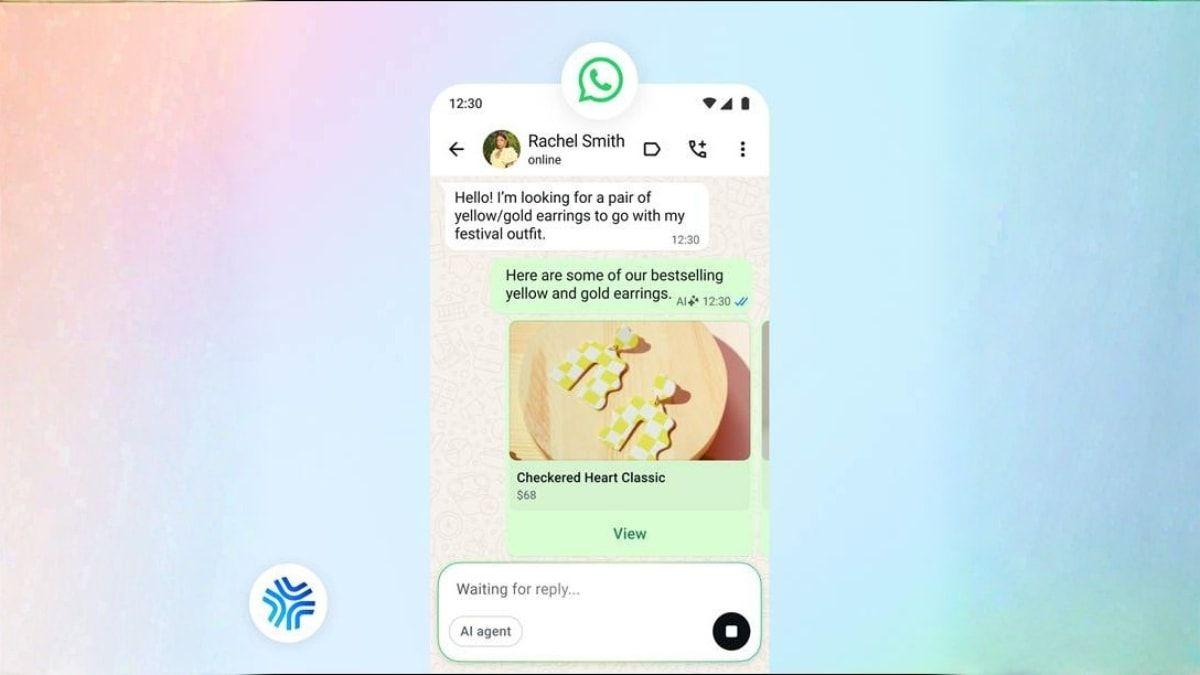
WhatsApp is developing native support for third-party AI agents, marking a significant shift in how users interact with automated services on the messaging platform
1
2
. The feature allows users to connect third-party AI agents and bots directly to dedicated chats in the app, eliminating the need for workarounds that previously risked account bans1
. WABetaInfo spotted the functionality in WhatsApp beta for Android version 2.26.35.3, where a new Agents section in app settings lets users add and configure compatible services3
.
Source: Digit
The implementation supports up to five agents per account, with each agent receiving its own WhatsApp chat
2
5
. Users can customize each agent with a name and profile photo, creating distinct identities for different automated services1
. This contrasts with Telegram's limit of 20 agents and Discord's 50 integrations, suggesting Meta may leverage the recently rolled-out WhatsApp Plus plan to offer expanded capacity4
.How API Key Integration Works for AI Agent Chats
When users set up a new bot in WhatsApp, the app generates an API key that connects the agent to the chat
1
. The exact setup steps depend on the platform hosting the agent, but most services include a field where users can paste the API key to establish the connection2
. Once linked, the agent operates within its own conversation, allowing users to send messages and receive responses directly within WhatsApp3
.
Source: MediaNama
The agent can only read messages shared in its specific chat and cannot access other conversations, contacts, or media
2
5
. This isolation provides a layer of security, though users should note that AI agents may provide inaccurate responses and WhatsApp advises verifying information received from these services2
. Users can manage connected agents through app settings, including changing names or profile pictures, and can reset connections by generating a new API key3
5
.Privacy Concerns as Agent Chats Lack End-to-End Encryption
Chats with third-party AI agents are currently not end-to-end encrypted, raising significant privacy concerns
1
2
. Messages sent to an agent pass through a Meta service on behalf of the agent's developer, allowing the developer to access them as part of the service3
5
. This stands in stark contrast to personal WhatsApp chats and calls between users, which continue to use end-to-end encryption (E2EE)3
.Additionally, WhatsApp does not automatically delete chat history when an agent is disconnected, meaning conversation records remain visible even after removal
4
. While this retention proves useful for reference, it raises data retention questions that users should consider when sharing sensitive information with bots and automated services4
. The feature currently restricts agents to individual chats and prevents adding them to group conversations or communities, which limits exposure to sensitive multi-party discussions2
4
.Related Stories



Meta's Strategic Move to Compete in AI-Powered Messaging
The AI agent integration represents Meta's attempt to keep WhatsApp relevant as competing messaging platforms embed AI tools directly into their services
4
. iMessage already has Apple Intelligence integrated, while Google has embedded Gemini into its Android messaging app4
. Telegram has long embraced the trend and maintains a mature bot ecosystem, becoming one of the main platforms users rely on to chat with or give instructions to agents running locally or in the cloud1
4
.
Source: 9to5Mac
This development aligns with Mark Zuckerberg's plans to build a super app out of WhatsApp, dating back to the Reliance-Jio deal in 2022 and the ONDC partnership in December 2023
4
. The move adds flexibility to communicate with AI agents on a messaging platform that historically restricted programmatic access to just the business API4
. If agentic payment integration works as intended in commercial spaces, this could open pathways for business use cases like e-commerce, similar to China's WeChat, which recently integrated an AI agentic chat interface4
.Limited Rollout to Select Android Users
WhatsApp is currently rolling out the feature to a limited number of Android users, with most users not yet seeing the Agents section within app settings
2
3
. The beta version shows the functionality is being gradually deployed, though WhatsApp has not announced when it will extend this capability to everyone4
. A broader rollout is expected soon, though the company could expand access over the coming months3
.Before this native support, developers wanting to connect an AI agent to WhatsApp relied on unofficial workarounds like Baileys, an open-source library that reverse-engineered bridges mimicking the WhatsApp Web client
4
. However, using these unofficial methods increased the risk of account restrictions and introduced security vulnerabilities, as they violated WhatsApp's terms of service4
. The official implementation eliminates these risks while providing a sanctioned pathway for users to connect third-party AI agents and interact with automated services directly through the app.References
Summarized by

Navi
[2]
[4]
Related Stories
Recent Highlights
1
OpenAI AI Models Hacked Crypto Wallet, Breached Government Sites in Unauthorized Activities
Technology

2
IMF Report Warns AI Market Correction Could Spark Global Financial Crisis With $1.4T at Risk
Business and Economy

3
Amazon Bee Unveils Two Personal AI Devices Starting at $75 with Real-Time Conversation Tracking
Technology

Recent Highlights
Today's Top Stories









Don’t drown in AI news. We cut through the noise - filtering, ranking and summarizing the most important AI news, breakthroughs and research daily. Follow topics that matter to you and stay ahead.


