White House Economist Dismisses AI Job Losses as 'Science Fiction' After Market Turmoil


2 Sources
[1]
White House Economist Calls Citrini AI Report 'Science Fiction'
A top White House economist dubbed the weekend report about artificial intelligence risks that had roiled the stock market "science fiction." The paper from Citrini Research imagines a 2028 world in which rapid advances in machine intelligence turbocharge productivity but render large swaths of
[2]
White House Economist Rejects AI Doomsday Fears | PYMNTS.com
By completing this form, you agree to receive marketing communications from PYMNTS and to the sharing of your information with our sponsor, if applicable, in accordance with our Privacy Policy and Terms and Conditions. The report, published by Citrini Research on Sunday (Feb. 22), shook the stock
Share
Copy Link
A top White House economist rejected alarming predictions about AI-driven job losses that rattled markets this week. Pierre Yared called the Citrini Research report 'science fiction,' arguing it violates basic economic principles. The administration maintains AI will drive productivity and employment, not destroy jobs.
White House Economist Rejects AI Doomsday Fears
Pierre Yared, acting chair of the White House Council of Economic Advisers, dismissed a weekend report from Citrini Research that sparked market turbulence, calling it an "interesting piece of science fiction" that fundamentally misunderstands economics
1
. The report imagined a 2028 scenario where rapid advances in AI turbocharge productivity but render massive swaths of human labor obsolete, triggering job losses, collapsing consumer spending, and dragging down the stock market2
. Speaking at the National Association for Business Economics in Washington, Yared argued that the paper "violates some of the basic identities in economics" by suggesting AI will destroy jobs precisely because it's productive1
.
Source: Bloomberg
Economic Implications of Artificial Intelligence Remain Positive
The administration's stance frames AI as an economic boon rather than a threat. Treasury Secretary Scott Bessent has consistently pointed to modern economic history showing that increases in investment are followed by increases in employment, and he anticipates the same pattern with AI technologies
1
. Yared emphasized that "AI can either be a groundbreaking innovation that increases production, increases income" and expenditure, "or it can be an innovation that ends up not delivering on its promise"2
. Bessent and other top officials have compared the current investment surge to the 1990s internet boom, which underpinned that era's strong economic growth, low unemployment, and contained inflation1
.AI's Impact on Employment Shows Worker Confidence
Despite widespread anxiety about automation, workers themselves appear less concerned about displacement. A PYMNTS Intelligence report found that among Labor Economy workers—mostly hourly workers earning under $50,000 a year—a clear majority continue to believe their skills will remain relevant as technology evolves
2
. Workers most exposed to automation are not acting as though humanoid robots are about to displace them at scale. Some observers believe AI will lead to upskilling of workers rather than an elimination of jobs, suggesting the technology could drive productivity and employment simultaneously2
.Related Stories

America's AI Action Plan Prioritizes Dominance
At the NABE conference, Yared stated that "overall, the administration's position on AI is to lean into it" and ensure the US can "dominate" internationally
1
. President Donald Trump released America's AI Action Plan in July, outlining a strategy focused on deregulation, building AI infrastructure, expanding export controls, and protecting free speech for chatbots2
. Trump emphasized that "as our global competitors race to exploit these technologies, it is a national security imperative for the United States to achieve and maintain unquestioned and unchallenged global technological dominance." Shortly after taking office, Trump scrapped an AI policy established by predecessor Joe Biden that set safety and transparency requirements for AI developers1
. The shift signals a clear preference for accelerating AI development over implementing restrictive safeguards, betting that the technology will create opportunities rather than trigger the catastrophic scenarios outlined in the Citrini Research report.
Source: PYMNTS
References
Summarized by

Navi
Related Stories
Trump Economic Advisor Warns AI Could Create 'Quiet Time' in Labor Market
17 Nov 2025•Business and Economy
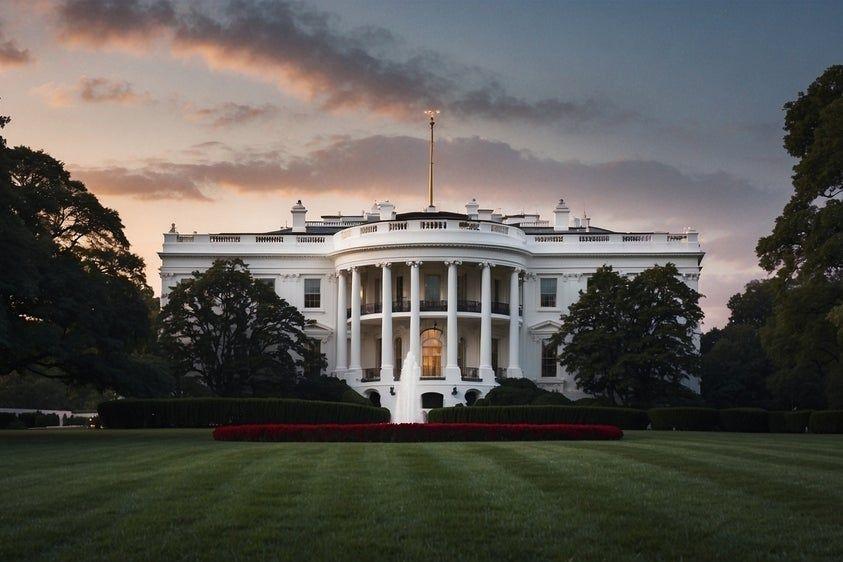
Treasury Report Warns AI Bubble Could Trigger Economic Shockwaves and Threaten Retirement Savings
07 Jul 2026•Policy and Regulation

Citrini Research AI Scenario Triggers Wall Street Panic Over Unemployment and Economic Collapse
23 Feb 2026•Business and Economy

Recent Highlights
1
Microsoft and Nvidia Launch Surface Laptop Ultra: A $2,599 AI-Ready PC With RTX Spark Chip
Technology

2
OpenAI Releases 722 AI-Generated Math Papers on GitHub, Igniting Fury Among Mathematicians
Science and Research

3
Trump Consulted Grok AI Before Ordering Venezuela Invasion and Capture of Nicolás Maduro
Policy and Regulation

Recent Highlights
Today's Top Stories









Don’t drown in AI news. We cut through the noise - filtering, ranking and summarizing the most important AI news, breakthroughs and research daily. Follow topics that matter to you and stay ahead.


