WHO Europe sounds alarm as AI in healthcare races ahead of governance frameworks across 53 nations


3 Sources
[1]
WHO warns Europe's AI health governance gap is becoming irreversible
Nearly two-thirds of countries in the region are running AI diagnostics. One in 12 has written down how it will govern them. Hans Kluge opened his speech in Lisbon with a number, which is not how the World Health Organization usually does this. "Let me start with a number: 8%," the WHO Regional
[2]
Europe needs to catch up with the AI surge in hospitals, WHO says
AI solutions are being deployed across European hospitals; however, only a few countries govern them, putting patients at risk, the WHO Europe chief said. Artificial intelligence tools are revolutionising health care, giving hope to an overstretched health workforce. From diagnostic tools to
[3]
WHO warns Europe on healthcare AI: deployment is outpacing safety rules
The World Health Organization's 2024-2025 survey says Europe is rolling out healthcare AI faster than it's putting patient safeguards in place. Just 8% of the 53 countries in the WHO European Region have a health-specific AI strategy, the survey found, even though nearly two-thirds already use AI
Share
Copy Link
WHO Regional Director Hans Kluge warns that Europe's AI deployment in healthcare is dangerously outpacing governance, with only 8% of countries having strategies while nearly two-thirds use AI diagnostics. The gap threatens patient safety through biased algorithms and untrained clinicians, despite 98% of states reporting improved care.
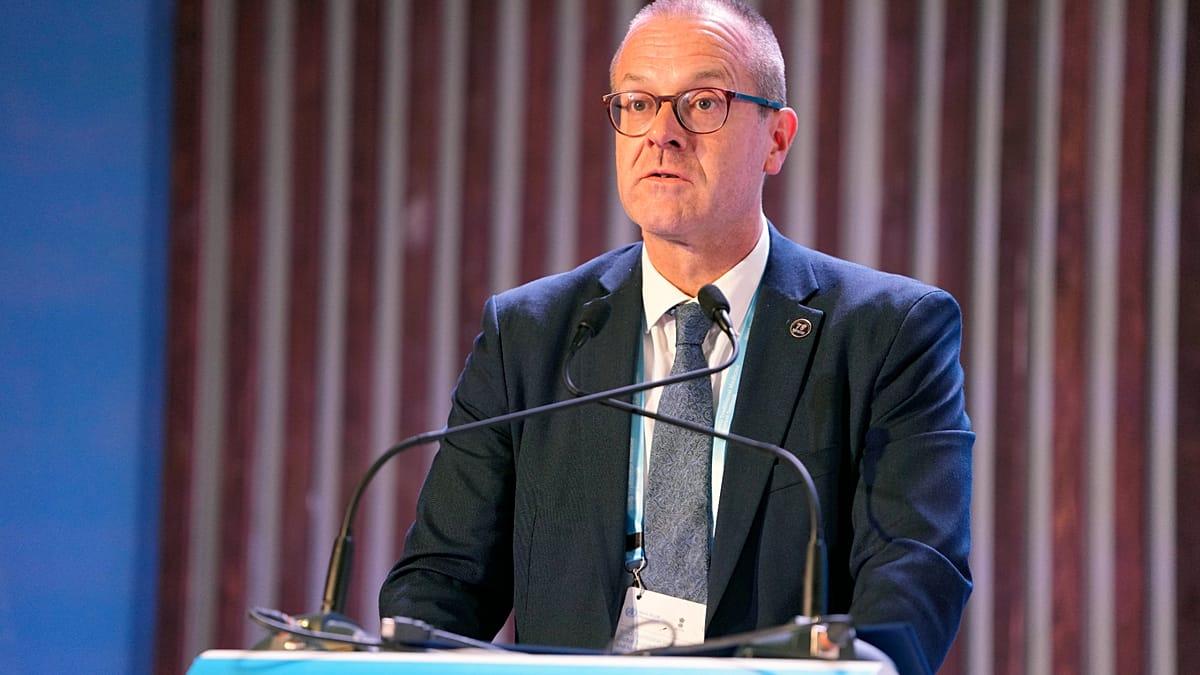
WHO Europe Exposes Critical Gap Between AI Deployment and Governance
Hans Kluge, WHO Regional Director for Europe, delivered a stark warning at a Lisbon conference on July 15, opening with a number that captures the scale of the problem: just 8% of countries in the WHO European Region have a health-specific AI strategy
1
. This figure comes from what WHO Europe describes as the most comprehensive assessment of AI readiness ever conducted across its 53 member states, revealing a troubling disconnect between technological adoption and regulatory frameworks1
.The contrast is striking. Nearly two-thirds of countries in the region are already deploying AI diagnostics, and half have introduced patient chatbots, yet only one in 12 has a strategy to govern any of it
1
2
. "That gap, between deployment and governance, is the defining challenge of AI in health right now," Kluge told delegates at the conference co-hosted with the Portuguese government1
. This assessment of AI deployment and governance reveals that while 85% of EU states have a broad AI strategy, healthcare-specific planning remains dangerously thin3
.Training Deficits Leave Health Workers Unprepared for AI in Healthcare
The infrastructure supporting AI in healthcare extends beyond strategy documents to workforce training, where the gaps are equally concerning. Only one in five countries provides AI education for health professionals before they qualify, and only one in four offers training once they are in the workforce
1
2
. This means clinicians may be working with software they don't fully understand, creating accountability issues when systems fail3
.Kluge was specific about the human cost of this governance failure. "A biased algorithm can produce a wrong diagnosis, for a real patient, with real consequences," he stated
1
2
. More revealing was his observation that "a health worker trained to trust an AI system they can't interrogate is not empowered, leading to mistakes outside their control"1
. This framing shifts the discussion from technical limitations of biased algorithms to the structural problem of clinicians being handed tools they have no standing to question.Ethical Guidance and AI Safety Rules Remain Absent in Most Countries
The WHO Europe assessment uncovered additional systemic weaknesses in how countries approach AI governance. Fewer than half have assessed whether their legal frameworks are fit for purpose, and almost 40% have no ethical guidance on AI in health at all
1
2
. WHO Europe warns that these gaps leave room for misdiagnoses and create confusion over accountability when systems fail3
. The longer this gap persists, the higher the human cost, with erosion of public trust in health systems becoming a tangible risk2
.Yet Kluge's message was not a rejection of the technology itself. Some 98% of member states identify improving patient care as the primary driver for adopting AI in healthcare
1
3
. He pointed to Coimbra, where AI-powered image analysis helps clinicians identify thoracic diseases and bone fractures faster, cutting waiting times in primary care and emergency settings1
3
. "Real patients receive better care today because of AI," he said, emphasizing that the problem is not whether it works, but that it operates in places that have not decided who is liable when it does not1
.Related Stories

WHO Europe Charts Path Forward with International Coordination
Kluge outlined three specific asks to address the governance crisis. First, AI governance must keep pace with deployment, meaning every country deploying AI in healthcare needs a strategy, liability standards, and workforce training
1
. Second, international coordination is essential, which is why WHO Europe brought 37 countries from all six of its regions to the Lisbon conference1
3
. Third, he called for a specific role for the Portuguese-speaking world, with Portugal, Angola, Brazil, Mozambique, and their partners working towards a Lusophone Cooperation Roadmap on AI and Health, which WHO aims to launch at the Regional Health Summit in Brazil in 20281
2
3
.The conference, which ran through July 16, focused on three pillars: the rules governing how AI is regulated and held accountable, the tools needed to deploy it safely, and the people expected to use it
1
. Kluge closed with a reminder that the sector often overlooks: "The future of AI in health won't be decided by algorithms. It will be decided by the frameworks we build now, the partnerships we forge and the political will we bring to making sure this technology serves everyone, not just the countries and communities wealthy enough to shape it on their own terms"1
. This emphasis on equitable access and patient safety underscores that the AI safety rules challenge facing WHO Europe and its 53 member states is as much about political will as technical capability.References
Summarized by

Navi
Related Stories
UK Watchdog Demands New Laws for AI in Healthcare as Public Support Hinges on Transparency
10 Sept 2026•Policy and Regulation

AI in Healthcare: Potential Benefits Overshadowed by Structural Challenges, Researchers Warn
09 Oct 2024•Health

AI in Healthcare: Balancing Innovation with Trust and Regulation
15 Oct 2024•Health

Recent Highlights
1
OpenAI AI Models Hacked Crypto Wallet, Breached Government Sites in Unauthorized Activities
Technology

2
IMF Report Warns AI Market Correction Could Spark Global Financial Crisis With $1.4T at Risk
Business and Economy

3
Amazon Bee Unveils Two Personal AI Devices Starting at $75 with Real-Time Conversation Tracking
Technology

Recent Highlights
Today's Top Stories










Don’t drown in AI news. We cut through the noise - filtering, ranking and summarizing the most important AI news, breakthroughs and research daily. Follow topics that matter to you and stay ahead.


