World Bank Lifts East Asia Growth Forecast to 4.5% as AI Boom Powers Exports But Warns of Risks


3 Sources
[1]
World Bank warns of AI concentration risks as it lifts East Asia and Pacific growth outlook to 4.5%
* The World Bank upgraded its growth forecast for East Asia and the Pacific to 4.5% in 2026. * AI-related goods drove more than half of export growth in most of the region's economies. * The bank warned that a reversal in AI spending, which is expected to be partly financed by $800 billion of
[2]
Global AI Hardware Demand Powers East Asia Growth Beyond World Bank Forecasts | PYMNTS.com
The World Bank Group has revised up its growth forecast for 2026 for Viet Nam by 1.1 percentage point to 7.4%, for Malaysia by 0.7 percentage point to 5.1% and for Thailand by 0.7 percentage point to 2.0%, according to the release, which highlights findings from the organization's October 2026
[3]
World Bank Raises Asia Growth Outlook as AI Boom Fuels Risks
The World Bank raised its growth forecast for East Asia and the Pacific as artificial intelligence exports strengthened regional trade. Yet the bank warned that heavy reliance on AI demand leaves economies exposed to a global technology spending slowdown. The region should grow 4.5% this year, up
Share
Copy Link
The World Bank upgraded its 2026 growth forecast for East Asia and the Pacific to 4.5%, driven by surging AI-related exports that now account for over half of regional trade growth. However, the bank warns that heavy reliance on AI demand, coupled with $800 billion in private credit financing and tightening financial conditions, leaves the region vulnerable to a potential tech spending reversal.

The World Bank has raised its East Asia and Pacific growth outlook to 4.5% for 2026, marking a 0.3 percentage point increase from its April projection, as the AI boom drives unprecedented demand for technology hardware across the region
1
. The upgraded forecast comes as AI-related exports have become the dominant force behind regional trade expansion, but the bank simultaneously issued stark warnings about AI concentration risks that could destabilize economies heavily dependent on this single sector.AI-Related Exports Dominate Regional Trade Growth
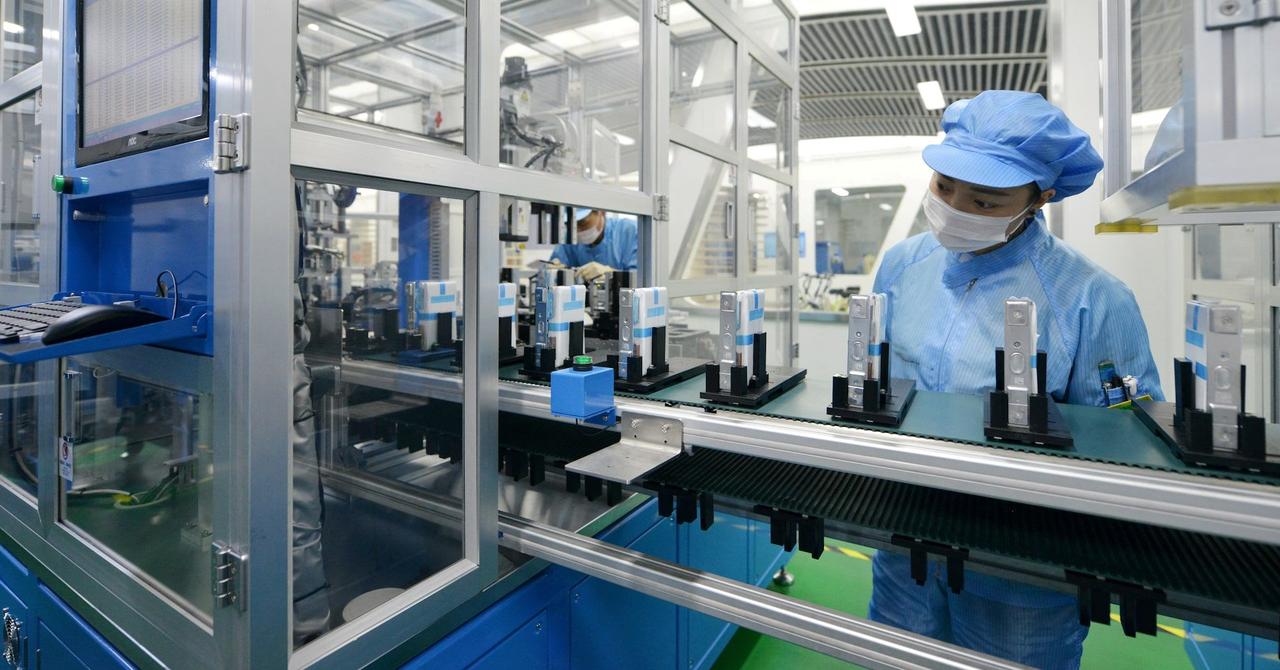
The surge in global AI hardware demand has transformed export dynamics across East Asia and the Pacific, with AI-related goods accounting for more than half of export growth in most regional economies
1
. In Malaysia, the Philippines, Thailand and Vietnam, these products represented over 70% of total export growth1
. Trade growth excluding AI-related goods has been weak or negative, highlighting the sector's outsized influence1
. China, Indonesia, Malaysia, the Philippines, Thailand and Vietnam collectively shipped $1.4 trillion of AI-related goods in the 12 months through April1
. South Korea exemplifies this trend, with exports surging 83.5% in September to a record $120.9 billion, with chips making up half of those shipments1
.Vietnam Leads Forecast Upgrades Across Region
Vietnam received the largest forecast upgrade among major economies in the region, with the World Bank lifting its projection by 1.1 percentage points to 7.4%
2
. Malaysia saw its forecast raised by 0.7 percentage points to 5.1%, while Thailand received a similar 0.7 percentage point increase to 2.0%2
. The region's 23 economies, including China, Vietnam, Indonesia, Malaysia and Thailand, are expected to see growth ease to 4.4% in 2027 and 4.3% in 20281
. China is growing at 4.4%, though a soft labor market and property sector adjustments are constraining domestic demand2
.Private Credit Exposure Creates Vulnerability
The World Bank's report "Riding the AI Wave" warns that AI investments, expected to be partly financed by $800 billion of private credit, represent a key pillar supporting growth that could suddenly collapse
1
. Of the $2.9 trillion in AI capital expenditure planned for 2025-2028, $800 billion is expected to come from private credit markets1
. AI-related lending rose to 34% of private credit activity in 2025 from an 18% average over the prior five years1
. Private credit portfolios have already experienced markdowns, outflows and defaults this year1
. These markets are less visible and have not been tested by a severe downturn, creating significant uncertainty3
.AI Supply Chains Face Financial Tightening Pressures
AI-related capital expenditure has reached approximately 6% of U.S. GDP, matching the 2000 peak in information-technology investment, and the current cycle has risen faster than previous cycles while still gaining speed
1
. The Bank for International Settlements warned in June that the boom's scale and pace resembles the dot-com frenzy of the 1990s and other historical manias1
. Financial tightening poses immediate risks as major central banks raise rates for the first time since 20233
. The U.S. Federal Reserve raised rates last month for the first time in more than three years and signaled one more hike this year1
.Semiconductor Concentration Amplifies Regional Risk
The dominance of chips in regional economies creates additional vulnerability. Just two chipmakers, Samsung and SK Hynix, accounted for 43% of South Korea's benchmark Kospi index value as of end-April
1
. Taiwan recently raised its 2026 growth forecast to 11% from 9.6% on AI demand, but warned in June that if the high-tech sector faces headwinds, the negative impact on the local economy could be bigger than expected1
. A slowdown by 1 percentage point in U.S. growth cuts other emerging-market growth by an estimated 0.6 percentage point, with the hit to investment about twice as large1
. A slowdown concentrated in AI would be particularly material for East Asia given the region's prominence in AI supply chains1
.Related Stories



AI Adoption Lags Behind Production Capabilities
While East Asia excels at producing AI-related goods, AI adoption by individuals and firms in the region trails advanced economies
2
. Businesses cite concerns about high costs, expertise, security and privacy as barriers holding back adoption2
. Carlos Felipe Jaramillo, World Bank vice president for East Asia and Pacific, stated that the challenge is to turn the region's strength in producing AI-related goods into widespread AI adoption that boosts productivity and creates more and better jobs for millions of people2
. By mobilizing private capital for digital infrastructure and energy infrastructure, expanding financing for businesses and investing in workforce skills, countries can accelerate AI adoption across the economy while helping small firms become more competitive2
.Banking Sector Faces Currency Exposure Risks
Bank funding represents the broadest exposure channel to potential AI market corrections. Foreign-currency-denominated liabilities of banks appear significant in several countries, reaching 29.2% of GDP in Malaysia and 20.7% in the Philippines
1
. The World Bank noted that a correction may not necessarily mean a bust for the AI supercycle, but could indicate that investment had run ahead of realized demand1
. Mastercard predicted in December 2025 that AI would be a meaningful tailwind for the Asia-Pacific region in 2026, highlighting AI adoption and targeted fiscal support as key factors, with Hong Kong, India, Japan and South Korea demonstrating robust momentum in corporate and consumer AI use2
.References
Summarized by

Navi
[1]
[2]
[3]
Related Stories
Recent Highlights
1
Meta Unveils Muse Wonder Frontier AI Models, Claims Performance Matching OpenAI and Anthropic
Technology

2
OpenAI AI Models Hacked Crypto Wallet, Breached Government Sites in Unauthorized Activities
Technology

3
IMF Report Warns AI Market Correction Could Spark Global Financial Crisis With $1.4T at Risk
Business and Economy
Recent Highlights
Today's Top Stories







Don’t drown in AI news. We cut through the noise - filtering, ranking and summarizing the most important AI news, breakthroughs and research daily. Follow topics that matter to you and stay ahead.


