7 Sources
[1]
Global AI wave revs up Asian factories, offsetting war-induced pain
TOKYO, July 1 (Reuters) - The global AI boom powered Asia's manufacturing sector in June, with brisk demand for technology-related goods offsetting the drag from the Iran war, private surveys showed on Wednesday, offering some relief for the region's export-reliant economies. Price pressures, however, remained elevated as supply shortages and shipping delays lengthened lead times, suggesting the energy shock tied to the Middle East conflict could intensify across the region in coming months. For now, the surveys underscore how the global AI investment wave is reshaping Asia's economic fortunes. Booming demand for chips, data-centre equipment and other technology goods provides a powerful engine for growth and acts as a critical buffer against mounting geopolitical and trade risks. China, Japan and South Korea saw factory activity expand in June on solid demand for chips, computers and other AI-related products, as well as stockpiling by firms seeking to guard against shortages and price rises from the Middle East conflict. China's RatingDog General Manufacturing Purchasing Managers' Index (PMI) hit 51.7 in June, expanding for a seventh straight month and exceeding the 50-mark separating growth from contraction, the private survey showed on Wednesday. It eased from 51.8 in May but exceeded analysts' forecast of 51.6. The finding aligned with an official survey released on Tuesday showing China's factory activity returned to expansion last month on robust export orders. "Overall, the manufacturing sector maintained a steady expansion in June, supported by sustained new order growth, easing cost pressures and improved labour market conditions," Yao Yu, founder at RatingDog, said on China's PMI. Japan's PMI also rose to 54.8 in June from 54.5 in the prior month, expanding for a sixth consecutive month with new orders growing at their fastest pace in more than two years. But input cost inflation stayed at a nearly four-year high in June, a sign of mounting price pressures that could crimp corporate margins and lead to broad-based inflation. South Korea's factory activity also expanded for the seventh consecutive month, though at a slower pace than in May on falling export demand. "Firms frequently reported that rising raw material prices, alongside difficulties sourcing and receiving inputs due to delays and shortages, weighed on sector performance," said Usamah Bhatti, economist at S&P Global Market Intelligence. Factory activity in most Asian emerging economies continued to expand. The index for the Philippines held steady at 50.9 in June from 50.8 in May, while that for Malaysia rose to 50.7 from 49.9 in May, the surveys showed. Taiwan and Vietnam also saw factory activity expand in June, the surveys showed. Reporting by Leika Kihara Editing by Shri Navaratnam Our Standards: The Thomson Reuters Trust Principles., opens new tab
[2]
China's factory activity expands in June with boost from tech exports
HONG KONG (AP) -- China's factory activity picked up pace in June, an official survey showed Tuesday, as demand for artificial intelligence hardware made exports robust. The official manufacturing purchasing managers index, or PMI, expanded to 50.3 from 50 in May, better than economists' expectations, according to the National Bureau of Statistics. That's despite worries over China's economy losing steam. On a 0 to 100 scale, a reading above 50 reflects expansion, while below 50 indicates contraction. The sub-index for new orders climbed to 51.2 in June from 49.9 in May, and the sub-index on production also expanded to 51.4 from 51.2. "China's economy has regained some momentum lately. But this remains heavily dependent on exports and AI-related tech," Julian Evans-Pritchard, head of China economics at Capital Economics, wrote in a Tuesday note. "External demand remains the main engine of growth for China's manufacturing sector." Huo Lihui, a chief statistician at the National Bureau of Statistics, said in a statement that the June data reflected that China's economic climate was warming. Some economists cautioned, however, that Chinese consumers have remained cautious after a years-long property sector downturn and domestic demand is still sluggish. Further policy support from the Chinese government this year to help boost domestic consumption and investment would be beneficial and could help avoid an increasingly unbalanced growth pattern, said Lynn Song, chief economist for Greater China at ING Bank. Chinese leaders have set an economic growth target of 4.5% to 5% for the whole of this year, with economists expecting the country is likely to meet that goal with the help of surging AI-related exports.
[3]
China factory activity grows faster than expected in June on tech export demand
China's manufacturing activity picked up faster than expected in June buoyed by strong demand for high-tech exports amid global AI boom. The official purchasing managers' index edged up to 50.3 in June, beating economists' forecast of 50.1, returning to the expansionary territory above the 50-point threshold. The index stood at 50 in May. The nonmanufacturing gauge, which tracks construction and services activity, rose to 50.2 from 50.1 in May, according to data released Tuesday by the National Bureau of Statistics. China's manufacturing engine has remained resilient this year, with surging investment in artificial intelligence offsetting the export drag from turmoil in the Middle East, even as domestic demand remains weak. The world's second-largest economy showed signs of recovery in June after two months of sluggish growth, with manufacturing activity and retail sales rebounding, according to China Beige Book, a private research firm that surveys 1,321 Chinese businesses. Exports remained a bright spot with U.S. importers rushing to bring forward shipments after President Donald Trump's meeting with Chinese leader Xi Jinping in May set relations on a steady footing. The frontloading also came ahead of the expiry of a 10% levy under Section 122 in July. The U.S. has yet to impose additional duties that could emerge from Washington's Section 301 probes targeting countries identified for overcapacity and forced labor practices.
[4]
AI hardware demand keeps Asia's factories humming as the Iran war bites
June surveys show orders for chips and data-centre kit offsetting a costly Middle East conflict, at least for now. Asia's factories grew again in June, and the global scramble for AI hardware is doing much of the lifting, according to survey data published this week. Brisk demand for chips, servers, and data-centre equipment kept order books full even as the Iran war pushed up energy costs and lengthened shipping times across the region. The pattern was clearest in China. The RatingDog General Manufacturing PMI came in at 51.7 in June, a seventh straight month of expansion above the 50 line that separates growth from contraction. High-tech manufacturing ran hotter still, posting a PMI of 53.5, well clear of the headline reading. That gap is the story in miniature, with AI-linked production outpacing the rest of the economy. Japan told a similar tale. Its manufacturing PMI rose to 54.8 from 54.5 the month before, a sixth consecutive month of growth, with new orders climbing at their fastest pace in more than two years. Smaller economies followed. The Philippines edged up to 50.9 from 50.8, while Malaysia climbed back into expansion at 50.7 from 49.9, and Taiwan and Vietnam also recorded growth. The through-line is hardware. The AI build-out has turned semiconductors, networking gear, and server components into an engine of demand that Asia is uniquely placed to feed. A PMI is a diffusion index, a monthly survey of purchasing managers on output, orders, employment, and prices. A print above 50 means more firms reported expansion than contraction, so the June readings describe direction rather than the size of any rebound. Read that way, the spread across the region matters as much as any single number. China, Japan, Taiwan, Vietnam, Malaysia, and the Philippines all pointing the same way suggests demand broad enough to survive a wobble in any one market. That build-out has been lucrative for China in particular, with export earnings running near $500m an hour and AI-related goods doing much of the heavy lifting. It is also why a single sector can now offset a war. Booming orders for technology goods are acting as a buffer against geopolitical and trade risk that would otherwise drag the numbers down. The buffer is not free of strain. Survey compilers flagged elevated price pressures, with supply shortages and shipping delays stretching lead times as the Middle East conflict fed through to costs. Economists warned that the energy shock tied to the conflict could intensify across the region in the coming months. A PMI reading captures momentum, not durability, and momentum can turn quickly when input costs keep rising. There is also a concentration risk buried in the good news. Growth leaning this heavily on one demand cycle leaves factories exposed if AI spending cools or export controls tighten. Those controls are already reshaping supply chains. Washington's curbs have pushed China's AI chip effort away from GPUs toward custom silicon, a shift that changes what the region's fabs are asked to build. Enforcement is tightening too, with customs officers in the region intercepting shipments suspected of dodging restrictions, including a $13m AI chip seizure in Malaysia bound for re-export. Each new control adds friction, and friction shows up eventually in the same lead-time and price data the June surveys already flagged. The demand is real, but so is the cost of moving the goods that satisfy it. For manufacturers, the calculus is straightforward. As long as data centres keep ordering, the lines keep running, and the war stays a cost rather than a shutdown. Whether that holds through the second half of the year is the open question. June was strong, but the same reports that celebrated the AI wave also flagged the bill arriving behind it. For now, Asia's factory floors are betting on chips to carry them through, and the June numbers suggest the bet is paying off.
[5]
China's factory activity expands in June on high-tech exports
BEIJING, June 30 (Reuters) - China's factory activity returned to expansion in June, an official survey showed on Tuesday, driven by strong high-tech manufacturing exports linked to the AI boom, even as shipments of other goods remained weak alongside subdued domestic demand. The official manufacturing purchasing managers' index (PMI) rose to 50.3 in June from 50.0 in May, beating the forecast in a Reuters poll of economists and above the 50-mark separating growth from contraction, according to a survey by the National Bureau of Statistics (NBS). The non-manufacturing PMI, which includes services and construction, improved to 50.2 versus 50.1 in May, while the composite PMI came in at 50.6 compared with 50.5 a month earlier. Weakness in the property market, employment and consumer spending continues to dampen growth, leaving China reliant on global demand to absorb goods produced by its industrial sector. There is enormous international demand for semiconductors powering data centres and advanced electronics, playing to China's manufacturing strengths. But there does not seem to be much demand for anything else. Exports of furniture, for example, grew just 1.9% in value terms year-on-year, according to the latest trade data for May, while shipments of automated data processing equipment jumped 60% over the same period. Conditions are no better on the home front, with retail sales for May falling for the first time in over three years, according to the most recent data, and new home prices declining at a faster pace. In the latest sign that the $20 trillion economy is not firing on all cylinders, China's central bank instructed some commercial banks to increase their lending this month, people familiar with the matter said on Friday. Xu Tianchen, senior economist at the Economist Intelligence Unit, which returned the highest forecast in a Reuters poll of 50.4, said there had been signs of renewed trade front-loading in June, as exporters accelerated shipments bound for the U.S. ahead of new Section 301 tariffs taking effect from late July. With signs that front‑loading triggered by Middle East‑driven price increases is fading, input costs rising and overseas buyers running down inventories as they wait for a ceasefire, Chinese manufacturers need the world's top consumer market to re-open for business. A closely watched meeting in May between U.S. President Donald Trump and Chinese leader Xi Jinping, however, produced no meaningful breakthroughs, whether on tariffs or Beijing using its influence over Tehran to end the Iran war. Reporting by Joe Cash; Editing by Jacqueline Wong Our Standards: The Thomson Reuters Trust Principles., opens new tab
[6]
AI Boom Continues to Fuel Asia Factory Activity But Divide Is Widening
Gauges of factory activity in Asia largely rose to close out the first half of the year, driven by a global surge in artificial-intelligence hardware demand. However, mounting cost pressures and disparities in the AI boom cloud the outlook. S&P Global purchasing managers indexes released Wednesday showed that manufacturing output sped up in major export hubs last month, including Taiwan, Japan and Vietnam. "Manufacturing across much of Asia continues to expand at a brisk pace," said Frederic Neumann, HSBC's chief Asia economist. Undeterred by energy price spikes in recent months and commodity supply disruptions, manufacturers are "riding the wave" of booming AI hardware demand and record trade levels, he said. Japan's manufacturing PMI logged its best quarterly performance since the first quarter of 2014, climbing to 54.8 in June from 54.5 in May as new order growth hit a new high since January 2022. Yet, underlying risks remain. Growth is still partly driven by defensive stockpiling due to the Middle East war, and inflationary pressures remain intense, said Annabel Fiddes, economics associate director at S&P Global Market Intelligence. Taiwan firms reported the sharpest production increase in nearly five years. However, stocks of finished goods expanded at its second-quickest pace in over 15 years as cost pressures and supplier delays remain substantial. "Firms plan to protect themselves against any further price hikes and shortages, particularly with demand for AI and semiconductors surging globally," said Fiddes. In contrast, South Korea manufacturers saw the softest rise in new orders so far this year, with material shortages and higher costs limiting production growth, dragging its PMI down to 52.1 in June from 54.8 in May. While benefiting exporters and select manufacturers, the boom in AI hardware demand has also led to an uneven expansion, with consumer spending often more sluggish due to the rising cost of living, HSBC's Neumann said. "Economies like Indonesia that are far less exposed to the AI hardware sector have seen growth slow," he said. The country's PMI reading fell into contractionary territory at 46.9 in June from 50.0 in May. Southeast Asia firms had a more cautious 12-month outlook for output as confidence slipped to a three-month low, said Maryam Baluch, economist at S&P Global Market Intelligence. Headline PMI for the region fell to an 11-month low in June. Still, the aggressive data-center buildout in the U.S. and elsewhere is benefiting economies such as Japan, Malaysia, Singapore, Vietnam and mainland China, which supply key equipment like cooling systems, cabling and power, Neumann said. "A key question for Asia is how long the AI hardware boom might endure, with recent financial market volatility raising concerns that funding for expansion might become more limited," Neumann said.
[7]
China factory activity returns to expansion riding AI global boom
BEIJING, June 30 (Reuters) - China's factory activity returned to expansion in June, driven by demand for chips, computers and other AI-related products, as robust export orders and front-loading to the United States to get ahead of tariffs offset weakness elsewhere in the economy. The data suggest global AI investment is providing an important cushion for manufacturers in China's $20 trillion economy, even as disruption from the Middle East conflict and a prolonged property slump continue to weigh on broader growth. The official manufacturing purchasing managers' index (PMI) rose to 50.3 in June from 50.0 in May, according to a survey by the National Bureau of Statistics (NBS). It beat a median forecast of 50.0 in a Reuters poll. "Exports to meet international demand for chips and other AI-related products, as well as front-loading to get ahead of new U.S. Section 301 tariffs due late July and improved domestic demand due to lower upstream costs underpinned the improvement," said Dan Wang, China director of consultancy Eurasia Group. The number of domestic infrastructure projects ticked up over the last month too, she added. The sub-index for new export orders returned to expansion in June, rising to 50.1 from 48.6, while the production and overall new orders gauges edged up to 51.4 and 51.2 from 51.2 and 49.9, respectively. Factory gate prices slipped to 48.2 from 51.9 in May, however, following five months of expansion, with employment also continuing to trend downward. "The export strength is set to continue, driven by global AI investment demand," said Xu Tianchen, senior economist at the Economist Intelligence Unit. "Second, more policy easing will come." "For example, fiscal spending has lagged behind budget arrangements, and it should accelerate in the coming months. There is also room for monetary easing," he added. The non-manufacturing PMI, which includes services and construction, improved to 50.2 versus 50.1 in May, while the composite PMI came in at 50.6 compared with 50.5 a month earlier. AI BOOM OR BUST Weakness in the property market, employment and consumer spending continues to dampen growth, leaving China reliant on global demand to absorb goods produced by its industrial sector. There is enormous international demand for semiconductors powering data centres and advanced electronics, playing to China's manufacturing strengths. But there does not seem to be much demand for anything else. Exports of furniture, for example, grew just 1.9% in value terms year-on-year, according to the latest trade data for May, while shipments of automated data processing equipment jumped 60% over the same period. Julian Evans-Pritchard, head of China Economics at Capital Economics, concurred that the improvement "remains heavily dependent on exports and AI-related tech," and warned that "despite the improvement in activity, the manufacturing sector appears to be slipping back into deflation." In the latest sign the Chinese economy is not firing on all cylinders, the central bank instructed some commercial banks to increase their lending this month, people familiar with the matter said on Friday. With signs that front-loading triggered by Middle East-driven price increases is fading, input costs rising and overseas buyers running down inventories as they wait for a ceasefire, Chinese manufacturers need the world's top consumer market to reopen for business. A closely watched meeting in May between U.S. President Donald Trump and Chinese leader Xi Jinping, however, produced no meaningful breakthroughs, whether on tariffs or Beijing using its influence over Tehran to end the Iran war. (Reporting by Joe Cash; Editing by Jacqueline Wong)
Share
Copy Link
China's manufacturing sector expanded for the seventh straight month in June, driven by surging demand for AI hardware including chips and data-center equipment. The official PMI reached 50.3, exceeding forecasts despite weak domestic consumption and rising costs from the Iran war. High-tech exports are now the primary engine keeping Asia's factories running.
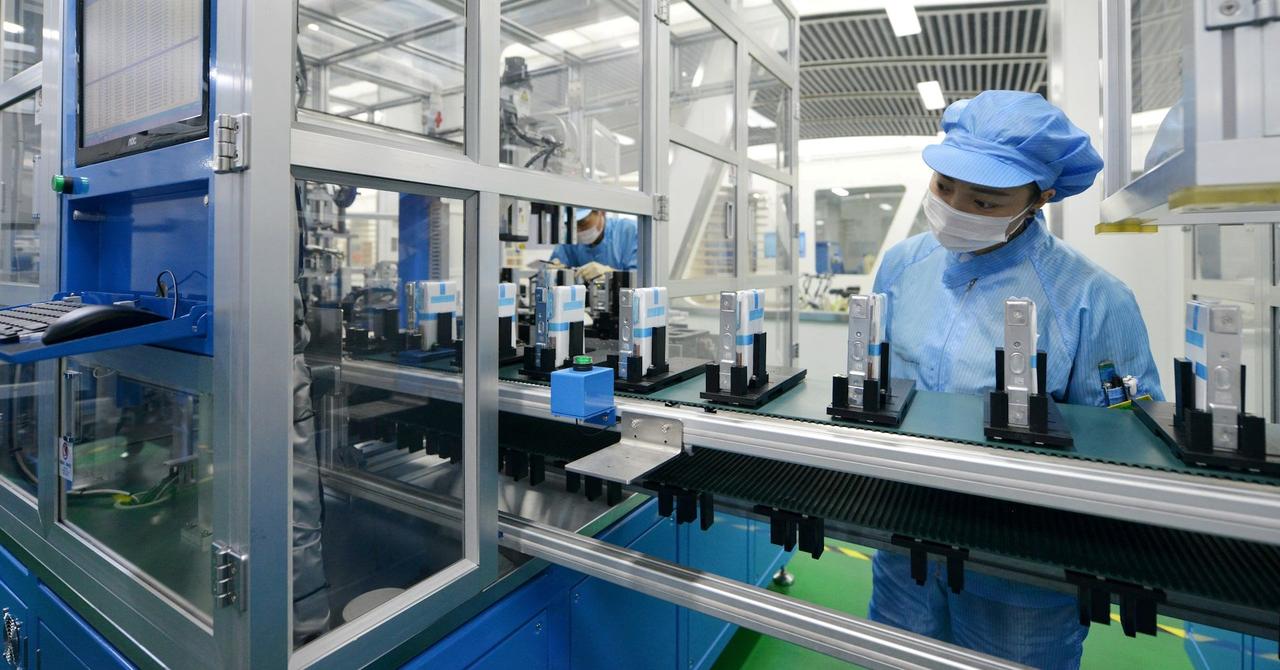
China factory activity returned to expansion in June, with the official manufacturing Purchasing Managers' Index (PMI) rising to 50.3 from 50.0 in May, beating economist forecasts of 50.1 and marking a seventh consecutive month above the 50-mark that separates growth from contraction
2
3
. The expansion in factory activity was driven primarily by AI demand for semiconductors, servers, and data-center equipment, with high-tech manufacturing posting a PMI of 53.5, significantly outpacing the headline reading4
.
Source: Reuters
The RatingDog General Manufacturing PMI hit 51.7 in June, easing slightly from 51.8 in May but exceeding analyst forecasts of 51.6
1
. This performance reflects how the global AI wave is reshaping China's manufacturing sector, with brisk orders for chips and automated data processing equipment acting as a critical buffer against mounting geopolitical risks and weak domestic consumption.High-tech exports linked to the AI boom have become the main engine of growth for China's manufacturing sector, even as shipments of other goods remained weak
5
. The sub-index for new orders climbed to 51.2 in June from 49.9 in May, while the production sub-index expanded to 51.4 from 51.22
.
Source: Reuters
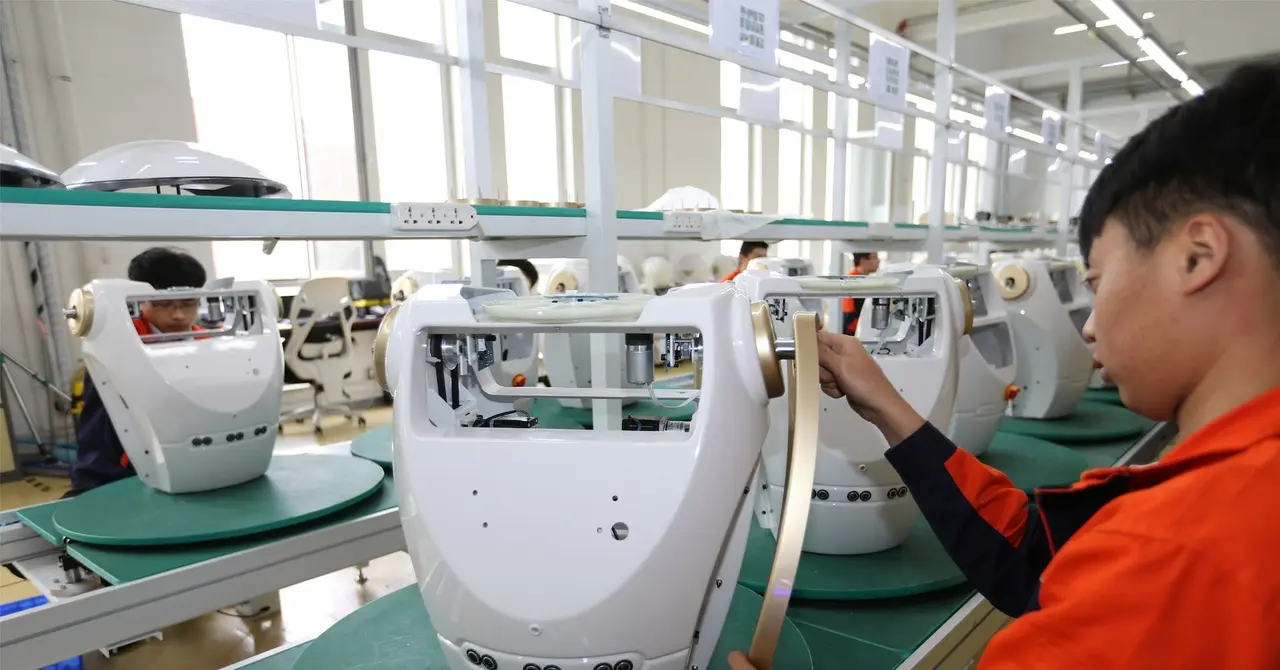
The contrast in export performance is striking. Shipments of automated data processing equipment jumped 60% year-on-year in May, while exports of furniture grew just 1.9% in value terms over the same period
5
. This disparity underscores how AI-driven demand for technology goods is creating an unbalanced growth pattern, with enormous international demand for semiconductors powering data centres playing to China's manufacturing strengths.The surge in AI hardware demand extended beyond China, with Japan's PMI rising to 54.8 in June from 54.5 the previous month, marking a sixth consecutive month of expansion with new orders growing at their fastest pace in more than two years
1
. South Korea's factory activity also expanded for the seventh consecutive month, though at a slower pace than in May.Smaller Asian economies followed the trend. The Philippines held steady at 50.9 in June from 50.8 in May, while Malaysia climbed back into expansion at 50.7 from 49.9
4
. Taiwan and Vietnam also saw factory activity expand, demonstrating how surging demand for AI hardware is keeping order books full across the region despite elevated costs from the Iran war.Related Stories
Despite the strength in exports, domestic demand continues to weigh on China's economic recovery. Retail sales fell for the first time in over three years in May, while new home prices declined at a faster pace
5
. Chinese consumers have remained cautious after a years-long property sector downturn, leaving the $20 trillion economy heavily dependent on external demand.Julian Evans-Pritchard, head of China economics at Capital Economics, noted that "China's economy has regained some momentum lately. But this remains heavily dependent on exports and AI-related tech"
2
. Lynn Song, chief economist for Greater China at ING Bank, suggested that further policy support from the Chinese government to boost domestic consumption and investment would be beneficial to avoid an increasingly unbalanced growth pattern.While AI demand provides a powerful buffer, price pressures remained elevated as supply shortages and shipping delays lengthened lead times, suggesting the energy shock tied to the Iran war could intensify across the region in coming months
1
. Input cost inflation in Japan stayed at a nearly four-year high in June, a sign of mounting price pressures that could crimp corporate margins.U.S. tariffs also loom as a concern. Exporters accelerated shipments bound for the U.S. ahead of new Section 301 tariffs taking effect from late July, with front-loading contributing to June's strong performance
5
3
. A May meeting between U.S. President Donald Trump and Chinese leader Xi Jinping produced no meaningful breakthroughs on tariffs, leaving supply chain uncertainty in place.There is also concentration risk buried in the positive data. Growth leaning this heavily on one demand cycle leaves factories exposed if AI spending cools or export controls tighten
4
. Washington's curbs have already pushed China's AI chip effort away from GPUs toward custom silicon, reshaping what the region's fabs are asked to build. Whether the AI-driven momentum holds through the second half of 2026 remains the critical question for Asia's export-reliant economies.Summarized by
Navi
26 Mar 2026•Business and Economy

07 May 2026•Business and Economy
29 Apr 2026•Business and Economy

1
Policy and Regulation

2
Policy and Regulation

3
Policy and Regulation