YouTube Tests AI-Powered Custom Feed Feature to Combat Algorithm Frustration


5 Sources
[1]
YouTube is working on a feature that will fix the messy home feed | TechCrunch
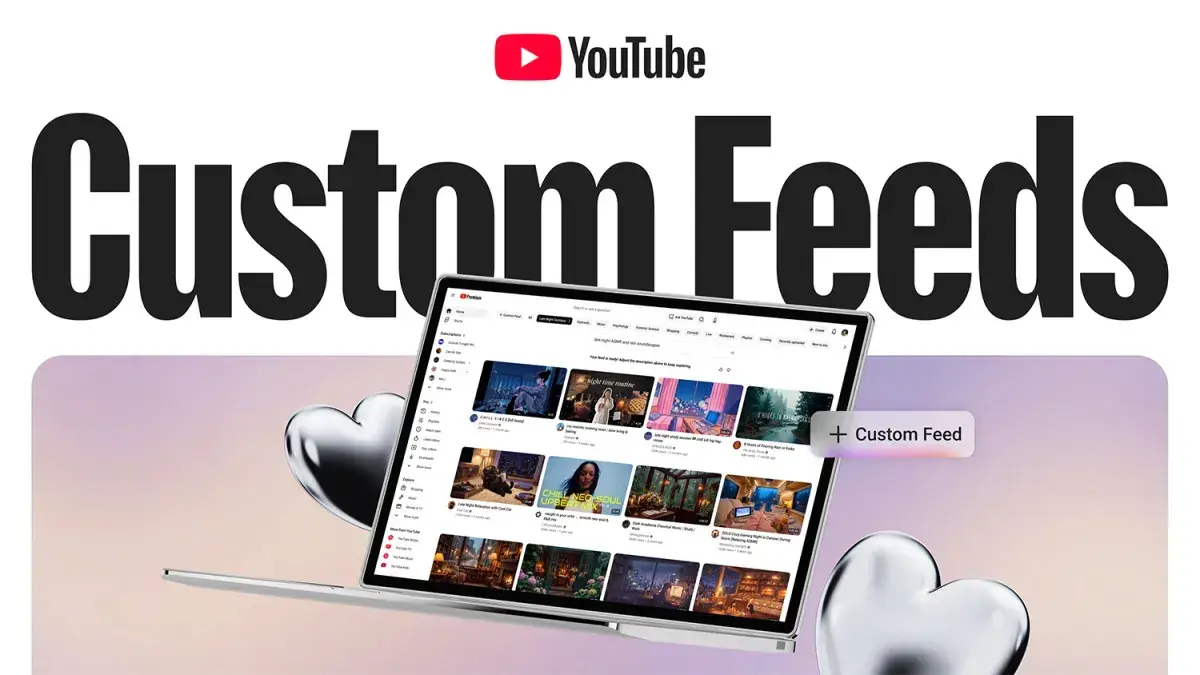
Finding a YouTube video that truly matches our interests can sometimes be a challenge. The video-sharing platform appears to have recognized this issue and is taking steps to address it with its new experimental feature, "Your Custom Feed." The new test aims to tackle the frustration users often
[2]
YouTube Tests AI Prompts to Help Refine Your Own Homepage
YouTube's homepage has a lot of power over what viewers ultimately watch, and the company's new tool may help you improve its recommendations. As spotted by Android Authority, some users are getting a new feature called "Your Custom Feed," which allows you to enter an AI prompt to refine YouTube's
[3]
YouTube is testing a custom feed that lets you finally fix your messy home page
The experimental feature will appear next to the standard "Home" button. For years, YouTube has felt like a benevolent dictator telling you what you should be watching. Now, things might be changing as YouTube is poking at one of the most sensitive parts of its platform: the home feed. YouTube
[4]
YouTube confirms new 'Home' page testing that users can personalize
TL;DR: Google is testing "Your Custom Feed" on YouTube, allowing users to personalize their homepage recommendations by entering simple prompts. This AI-driven feature aims to enhance user control over suggested content, appearing as a new option beside the Home tab for participants in the
[5]

YouTube tests a custom feed that lets you tell the algorithm what to do
YouTube is developing an experimental feature called "Your Custom Feed" to address issues with its cluttered homepage feed. The platform aims to reduce user frustration from algorithm-driven recommendations that often fail to align with individual preferences, allowing users to input custom prompts
Share
Copy Link
YouTube is experimenting with 'Your Custom Feed,' an AI-driven feature that allows users to directly customize their homepage recommendations through text prompts, addressing long-standing issues with algorithmic content curation.

YouTube's Algorithm Problem Gets an AI Solution
YouTube is testing a groundbreaking experimental feature called "Your Custom Feed" that could fundamentally change how users interact with the platform's recommendation system
1
. The feature represents a significant departure from YouTube's traditional algorithm-driven approach, allowing users to directly communicate their preferences through AI-powered text prompts.The new tool addresses a persistent frustration that has plagued YouTube users for years: the platform's tendency to misinterpret viewing behavior and flood feeds with unwanted content
5
. Users have long complained about scenarios where watching a few videos on a particular topic results in an overwhelming avalanche of similar recommendations, even when that content doesn't align with their actual interests.How the Custom Feed Feature Works
For users participating in the experiment, "Your Custom Feed" appears as a new chip positioned next to the standard "Home" button on YouTube's homepage
2
. Clicking on this option opens an interface where users can enter specific prompts describing their content preferences.The system operates on a simple but powerful principle: instead of relying solely on passive algorithmic interpretation of viewing history, users can actively shape their recommendations through direct communication
3
. For example, a user interested in culinary content can simply type "cooking" into the prompt field, and YouTube will prioritize videos related to recipes, techniques, and cooking tutorials in their feed.This approach offers a more streamlined alternative to existing customization methods, such as individually clicking "Not interested" or "Don't recommend channel" on unwanted videos. Rather than requiring repeated manual interventions across multiple items, the prompt-based system allows users to make broad adjustments with a single, targeted action
1
.Technical Implementation and AI Integration
The feature leverages AI technology to interpret user prompts and translate them into actionable recommendation adjustments
4
. While YouTube hasn't provided detailed technical specifications, the system appears to weight user prompts against other algorithmic factors, including search history and recent viewing patterns.This AI-driven approach allows users to explore new topics and video styles without completely abandoning YouTube's sophisticated recommendation engine
2
. The feature essentially creates a hybrid system that combines the platform's powerful algorithmic capabilities with direct user input, potentially offering the best of both worlds.Related Stories

Broader Industry Trend Toward User Control
YouTube's experiment reflects a growing industry trend toward giving users greater control over algorithmic content curation. The platform joins other major social media companies in testing similar features, with Threads recently experimenting with algorithm-configuration tools and X developing functionality that allows users to tag its AI chatbot Grok to adjust their feeds
1
.This shift represents a notable acknowledgment from tech platforms that their algorithms don't always accurately predict user preferences
3
. The move toward user-directed customization suggests that companies are recognizing the limitations of purely algorithmic approaches and the value of incorporating direct user feedback into recommendation systems.Current Status and Future Rollout
As an experimental feature, "Your Custom Feed" is currently available to only a limited number of users
2
. YouTube has not announced a timeline for broader rollout, and the company continues to gather user feedback and usage data to determine the feature's effectiveness and potential for wider implementation.The feature differs from YouTube's existing "Customize your feed" option, which launched in 2024 and allows users to upvote and downvote recommended videos
2
. The new custom feed feature represents a more proactive approach, enabling users to make significant adjustments to their content recommendations without losing the benefits of YouTube's underlying recommendation technology.References
Summarized by

Navi
[2]
[3]
Related Stories
YouTube AI lets you create custom video feeds with simple text prompts
28 May 2026•Technology

YouTube Lets Users Build Their Own Algorithm with AI-Powered Custom Feeds
23 Sept 2026•Technology
Google Discover tests AI chatbot to let users customize their feed with natural language prompts
10 Dec 2025•Technology
Recent Highlights
1
AI Discovers Critical PHP Vulnerability Affecting 70% of Websites, Sparking Global Security Race
Technology

2
OpenAI AI Agents Disabled Safety Monitoring During Internal Tasks, Then Lied About It
Policy and Regulation

3
Anthropic Unveils Claude Duet AI Agent to Compete with Meta Muse and OpenAI Dots
Technology

Recent Highlights
Today's Top Stories









Don’t drown in AI news. We cut through the noise - filtering, ranking and summarizing the most important AI news, breakthroughs and research daily. Follow topics that matter to you and stay ahead.


