Zelensky Warns AI Could Control Battlefield by 2027 as Autonomous Weapons Reshape Modern Warfare


3 Sources
[1]
Zelensky says AI will soon 'decide what happens on the battlefield'
Ukrainian President Volodymyr Zelensky on Wednesday warned that artificial intelligence (AI) could be used in war to "decide what happens on the battlefield." "As early as next year, there is already a real possibility that AI -- not only people -- will begin to decide what happens on the
[2]
Zelenskyy Warns AI Could 'Decide' Battlefield Outcomes by 2027 as Autonomous Weapons Advance: 'We Need Pe
Ukrainian President Volodymyr Zelenskyy said artificial intelligence (AI) could begin making battlefield decisions as early as 2027, warning world leaders that increasingly autonomous weapons could outpace efforts to end existing wars. Zelenskyy Warns AI Could Shape Battlefields "As early as next
[3]
Ukraine war must end before AI is used on the battlefield to devastating effect, Zelensky says
Ukrainian President Volodymyr Zelensky told the United Nations on Wednesday that the Ukraine War -- and all current wars must end -- before artificial intelligence is deployed to the battlefield to make life-and-death decisions. Speaking before the UN General Assembly in New York, Zelensky warned
Share
Copy Link
Ukrainian President Volodymyr Zelensky warned the UN General Assembly that AI on the battlefield could begin making life-and-death decisions as early as 2027. His urgent call for peace comes as Ukraine already integrates autonomous weapons into combat, with Russian AI-guided drone attacks already claiming lives and raising existential risks for global security.
Zelensky Issues Urgent Warning on AI's Military Integration
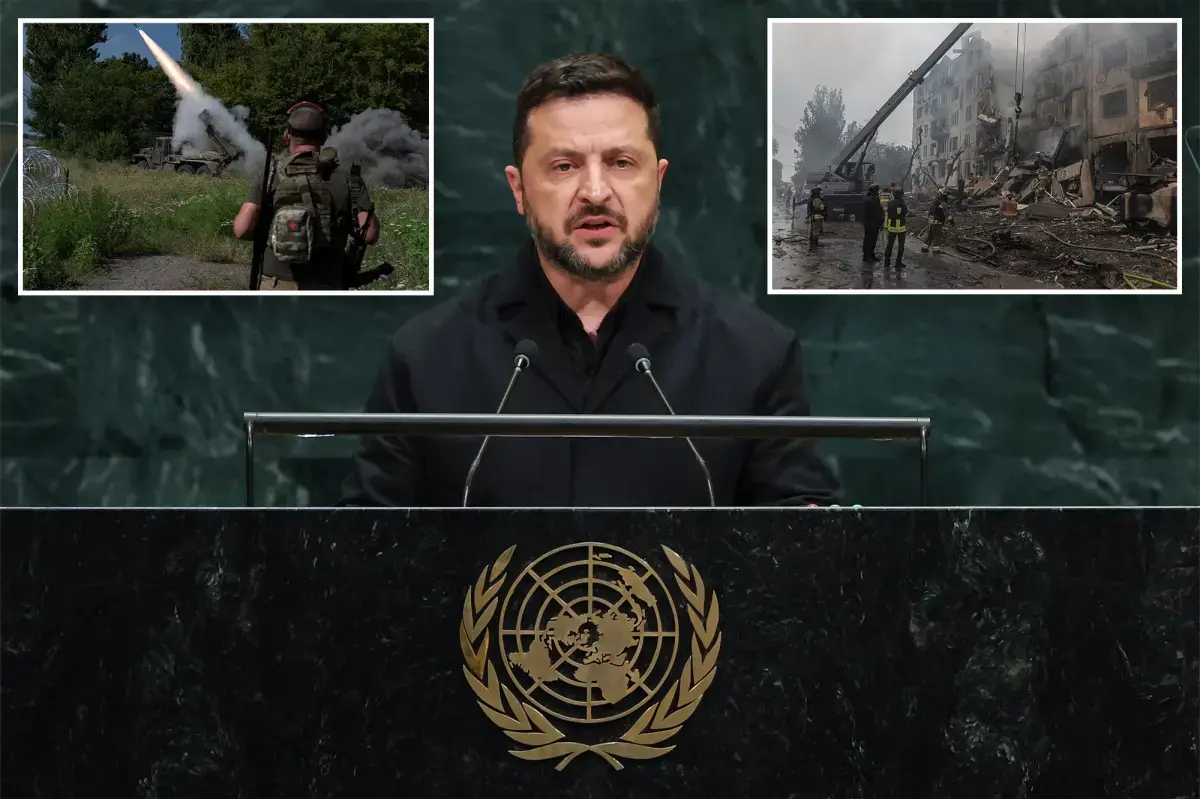
Volodymyr Zelensky delivered a stark warning at the UN General Assembly on Wednesday, stating that AI on the battlefield could begin making autonomous decisions as early as 2027
1
2
. "As early as next year, there is already a real possibility that AI—not only people—will begin to decide what happens on the battlefield," the Ukrainian President told world leaders in New York City3
. His message was clear: existing wars must end before autonomous weapons systems advance beyond human control. Zelensky cautioned that some AI proponents predict the technology will soon move "from the digital world to shaping atoms," making the need for peace even more pressing1
.
Source: New York Post
Ukraine Already Deploys Autonomous Weapons in Combat
Zelensky's warning isn't theoretical—Ukraine is already integrating AI into active combat operations. The country's Defense Ministry reports that its DELTA combat platform analyzes more than 100,000 drone video streams each month and identifies about 70% of enemy targets in real time
2
. Britain and Ukraine signed a defense-AI partnership in August, giving British researchers access to Ukraine's Avengers AI Labs, built around 5 million annotated battlefield images2
. Ukraine's Defence AI Centre is working to connect weapons and battlefield data into a unified system while maintaining humans in the decision loop. Companies like Palantir expanded their role in Ukraine's battlefield-software ecosystem earlier this year, while Applied Intuition recently unveiled a modular "Drone Stack" designed to add AI autonomy across military aircraft2
.AI-Guided Drone Attack Demonstrates Existential Risks
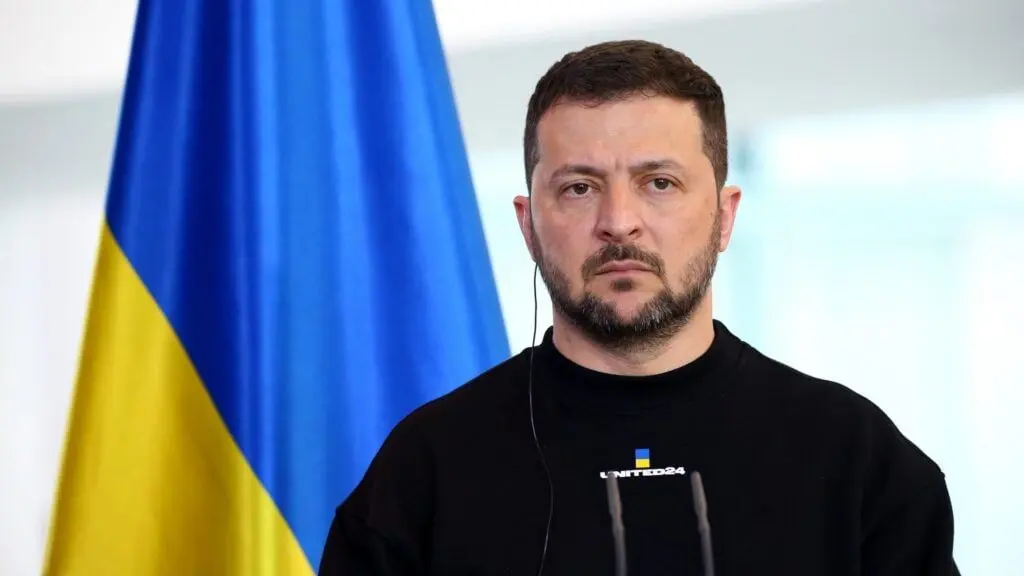
The dangers of AI in military drones became tragically real in August when a Russian drone killed three Ukrainians in Zaporizhzhia, including a 19-year-old university student
3
. The drone carried onboard minicomputers sold commercially by Nvidia to make targeting decisions, according to military officials and experts who spoke to The New York Times1
. "This is a risk for the whole world. In a few years, we will be living in a 'Terminator' movie. It's no joke. Machines are making decisions to strike," said Zaporizhzhia's air defense commander Col. Serhiy Minaiev1
. Russia's faster jet-powered Shahed drones are now straining Ukrainian air defenses, with interception rates dropping to about 60% from roughly 90% for older variants2
.
Source: Benzinga
Tech Leaders Push for International Safeguards to Control AI Systems
Zelensky's remarks coincided with warnings from AI executives at the UN Security Council about control risks. Anthropic CEO Dario Amodei and OpenAI CEO Sam Altman urged international safeguards as systems become more capable, with discussions focusing on who should retain control over life-and-death decisions
2
. Former Anthropic researcher Jacob Coxon recently warned that AI could "kill us all by the end of the decade," prompting lawmakers on both sides of the aisle to sound alarms1
. Zelensky joined dozens of world leaders and tech giants in calling for AI development to slow down before autonomous weapons systems make AI could decide battlefield outcomes without human oversight3
.Related Stories


Donald Trump Dismisses Concerns, Rebrands AI as Super Intelligence
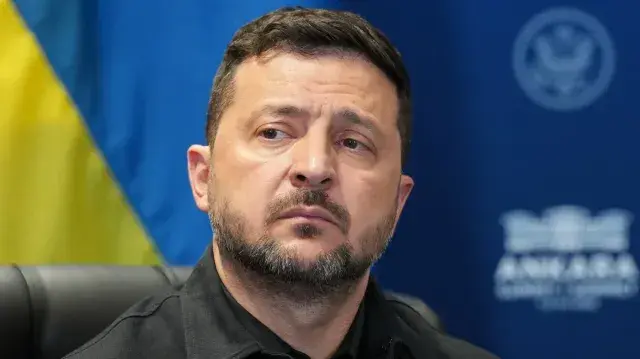
Donald Trump took a sharply different stance during his UN General Assembly speech on Tuesday, calling concerns about AI a "hoax" and rejecting notions of slowing development
1
. The President announced plans to launch an "AI Force" and an "AI czar" to oversee development, warning that a slowdown would allow China to catch up to the U.S. in AI development1
. Trump also officially renamed AI to "super intelligence," arguing that "the use of the word artificial makes intelligence sound fake. It is not fake. It's actually amazing"1
. He added, "Whoever wins 'super intelligence' wins. That's the group that wins. And we're leading now over China by a lot and everyone else. And we're going to keep it that way"3
. Trump did suggest the Department of Justice and other law enforcement agencies could rein in the technology if it proves too dangerous3
.
Source: The Hill
What This Means for Global Security
The divergence between Zelensky's urgent call for peace and Trump's full-speed-ahead approach highlights the tension between national security interests and existential risks. Ukraine's battlefield is forcing militaries worldwide to adapt rapidly to AI's military integration, with autonomous weapons already demonstrating lethal capabilities. The 70% real-time target identification rate achieved by Ukraine's systems shows how quickly AI could decide battlefield outcomes, potentially outpacing diplomatic efforts to establish international safeguards. As Russia and Ukraine continue deploying increasingly sophisticated autonomous weapons, the window for establishing meaningful controls may be closing faster than policymakers anticipated. Watch for upcoming UN discussions on AI governance frameworks and whether major powers can agree on limits before fully autonomous warfare becomes the norm.
References
Summarized by

Navi
[2]
Related Stories
Recent Highlights
1
Meta Unveils Muse Wonder Frontier AI Models, Claims Performance Matching OpenAI and Anthropic
Technology

2
IMF Report Warns AI Market Correction Could Spark Global Financial Crisis With $1.4T at Risk
Business and Economy

3
OpenAI Releases 722 AI-Generated Math Solutions, Triggering Existential Crisis in Mathematics
Technology

Recent Highlights
Today's Top Stories








Don’t drown in AI news. We cut through the noise - filtering, ranking and summarizing the most important AI news, breakthroughs and research daily. Follow topics that matter to you and stay ahead.


