Share
Linkedin
Twitter
Facebook
Whatsapp
Copy Link
A global memory chip shortage driven by AI data center demand is forcing manufacturers to prioritize high-margin AI components over consumer electronics, leading to supply constraints and potential price increases for smartphones, laptops, and cars in 2025-2026.
SK Hynix has increased its investment in South Korea's Yongin semiconductor cluster from $85 billion to $410 billion to meet soaring demand for DRAM chips driven by AI applications. The expanded facility will feature four massive fabs with 50% larger clean rooms.
Arm integrates with Nvidia's NVLink Fusion technology, allowing hyperscalers to build custom AI servers combining Arm-based Neoverse CPUs with Nvidia GPUs. This partnership expands options for AI infrastructure while strengthening both companies' positions in the data center market.
Karnataka state government unveils KEO, an affordable AI-powered personal computer built on open-source architecture, designed to democratize computing access for schools, startups, and rural communities across India.
US-based cloud services provider GMI Cloud will build a massive AI data center in Taiwan by March 2026, featuring 7,000 Nvidia Blackwell GB300 GPUs capable of processing 2 million tokens per second. The facility represents a significant investment in Asia-Pacific AI infrastructure.
Samsung Electronics announces a massive five-year investment plan totaling $310 billion, including a new AI memory chip production line at its Pyeongtaek plant set to begin operations in 2028, as the company pivots from weak consumer electronics demand to capitalize on the AI boom.
Samsung pledges $310 billion over five years including new AI chip production lines, while Hyundai commits $86 billion through 2030 for AI and autonomous vehicle development. The investments come as South Korea balances domestic manufacturing with $350 billion US commitments under a new trade agreement.
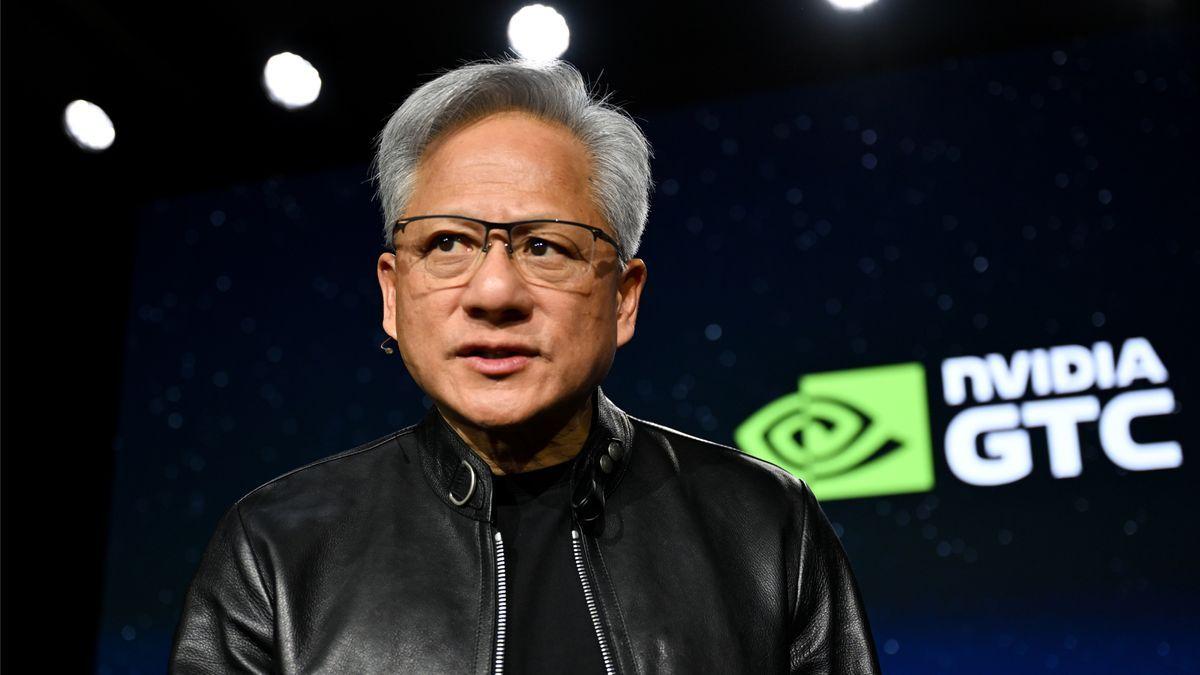
Nvidia delivered record-breaking Q3 results with $57 billion in revenue, driven by unprecedented demand for AI chips. CEO Jensen Huang dismissed AI bubble concerns while the company projects continued growth with $65 billion forecasted for Q4.
Aalto University researchers have developed single-shot tensor computing using light waves, potentially revolutionizing AI hardware by performing complex calculations at light speed with significantly reduced power consumption.
A Shanghai-based AI startup successfully obtained access to restricted Nvidia Blackwell GPUs by renting compute power from an Indonesian telecommunications company, exploiting a legal loophole in U.S. export controls.
The White House is opposing the GAIN AI Act that would restrict Nvidia's AI chip exports to China, while Amazon and Microsoft support the legislation. The bill would require chipmakers to prioritize US customers before exporting to countries of concern.
Major Bitcoin mining company Bitfarms announces complete exit from cryptocurrency mining by 2027, converting its 341MW infrastructure to AI data centers following $46 million quarterly losses. The move reflects broader industry trend as miners seek more profitable AI opportunities.
AMD announces December 10 as the official launch date for FSR Redstone, its next-generation AI-enhanced upscaling technology designed to compete with NVIDIA's DLSS. The suite includes four AI-powered features targeting improved ray tracing and frame generation for RDNA 4 GPUs.
Chinese search giant Baidu announces new AI training and inference accelerators, including the M100 and M300 chips, alongside rack-scale systems designed to reduce reliance on Western semiconductors amid escalating US-China tech tensions.
Qualcomm unveils ruggedized industrial processors featuring custom Oryon CPU architecture and 45 TOPS AI performance for smart manufacturing applications. The chipsets target harsh environments while enabling edge AI workloads in factories and industrial automation systems.
Don’t drown in AI news. We cut through the noise - filtering, ranking and summarizing the most important AI news, breakthroughs and research daily. Follow topics that matter to you and stay ahead.