Nvidia ships first Vera Rubin AI chips to customers, promising 10x efficiency gains over Blackwell


4 Sources
[1]
Nvidia delivers first Vera Rubin AI GPU samples to customers -- 88-core Vera CPU paired with Rubin GPUs with 288 GB of HBM4 memory apiece
Nvidia has started delivering samples of its Vera Rubin platform for next-generation AI data centers to select customers, the company announced at its earnings call on Wednesday. As soon as the company's partners qualify and validate the new platform, they may start preparations for its deployment,
[2]
Nvidia's new AI system Vera Rubin is 10 times more efficient than its predecessor -- here's a first look
First look at Vera Rubin, Nvidia's next AI system that's 10 times more efficient Nvidia's earnings on Wednesday are expected to show booming sales of the company's current rack-scale system. But all eyes are on its next AI system, Vera Rubin, which is scheduled to roll out later this year. Vera
[3]
Nvidia's latest AI chips bring unprecedented compute density
Nvidia has started shipping Vera Rubin AI chips with integrated CPU and GPU * Nvidia delivers Vera Rubin chips to customers enabling high-performance AI workloads immediately * The platform combines CPU, GPU, memory, and networking for unified performance * Early access allows partners to
[4]
Here's a Look at One of the World's Most Complex AI Systems, the NVIDIA Vera Rubin, Integrating a Million Components
NVIDIA's next-gen Vera Rubin is currently under full production, and the company has provided us with an extensive overview of the rack architecture, diving into individual components. When we talk about rack generations, NVIDIA is set to feature major upgrades with Vera Rubin, which we'll discuss
Share
Copy Link
Nvidia has begun delivering samples of its Vera Rubin platform to select customers, marking a pivotal moment in AI infrastructure evolution. The system combines 72 Rubin GPUs with 288 GB HBM4 memory apiece and 36 Vera CPUs, promising 10 times better performance per watt than its Blackwell predecessor. Production shipments are expected in the second half of 2026.
Nvidia Begins Shipping Vera Rubin Samples to Select Partners
Nvidia has started delivering samples of its Vera Rubin platform to select customers, the company announced during its earnings call on Wednesday. CFO Colette Kress confirmed that "we shipped our first Vera Rubin samples to customers earlier this week, and we remain on track to commence production shipments in the second half of the year."
1
This early access allows partners including Foxconn, Quanta, and Supermicro to begin qualifying and validating the new platform ahead of full deployment expected in the second half of 2026 or early 2027. The fact that Nvidia began sampling almost certainly means it has frozen performance and power specifications, though questions remain about potential last-minute performance upgrades to strengthen its market leadership.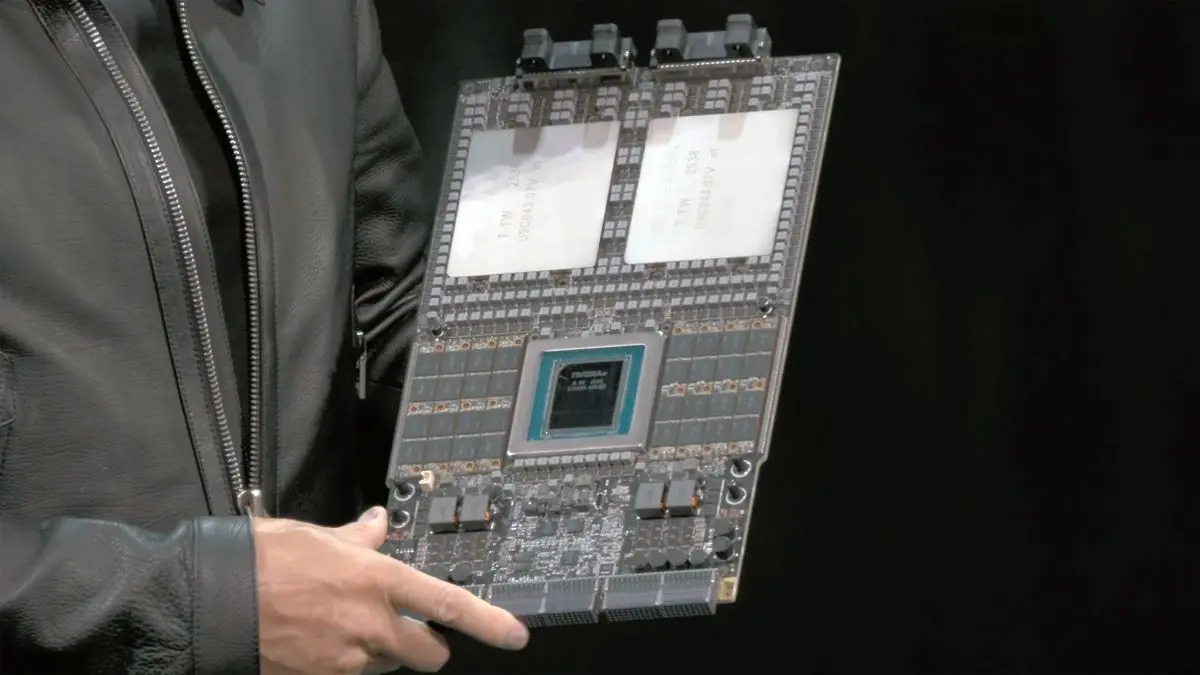
Source: Tom's Hardware
Inside the Vera Rubin Platform Architecture
The Vera Rubin platform represents Nvidia's next-generation architecture for AI data centers, integrating an 88-core Vera CPU paired with Rubin GPUs equipped with 288 GB of HBM4 memory apiece.
1
The complete system includes Rubin CPX GPU with 128 GB of GDDR7, NVLink 6.0 switch ASIC for scale-up rack-scale connectivity, BlueField-4 DPU with integrated SSD to store key-value cache, and Spectrum-6 Photonics Ethernet alongside Quantum-CX9 1.6 Tb/s Photonics InfiniBand NICs. This AI system comprises 1.3 million components sourced from more than 80 suppliers across at least 20 countries, including China, Vietnam, Thailand, Mexico, Israel, and the U.S.2
The Vera Rubin SuperChip achieves memory bandwidth of 1.2 TB/s, while the NVLink 6 spine delivers a total aggregate bandwidth of 260 TB/s per rack.4

Source: Wccftech
Ten Times More Efficient Than Blackwell
Vera Rubin will deliver 10 times more performance per watt than its predecessor, Grace Blackwell, according to Nvidia.
2
This energy-efficient design addresses one of the most critical issues facing the AI infrastructure build-out: power consumption. Beyond raw efficiency gains, Nvidia claims the architecture brings a 10x reduction in inference token cost and a 4x reduction in the number of GPUs needed to train mixture-of-experts models versus Blackwell GB200.4
The platform's modular cable-free tray design delivers improved resiliency and serviceability relative to Blackwell, making it easier to maintain and repair in demanding data center environments. Kress emphasized that "we expect every cloud model builder to deploy Vera Rubin," signaling Nvidia's confidence in widespread adoption.1
Liquid Cooling and Modular Design Innovation
Nvidia plans to integrate modular liquid cooling designs with Vera Rubin, covering SuperChip elements such as Rubin GPUs and Vera CPU through dedicated cold plates.
4
Executives argue that Rubin deployment will convince hyperscalers to switch to upgraded liquid-cooling systems, with the current implementation reducing water use compared to previous generations. According to market rumors, Nvidia intends to ship its partners fully assembled Level-10 VR200 compute trays with Vera CPU and Rubin GPUs, cooling systems, and interfaces pre-installed, leaving minimal design and integration work to ODMs.1
With the latest NVLink generation, the company has elevated modularity significantly, supporting zero-downtime maintenance and rack-level reliability, availability, and serviceability features.4
Related Stories

Supply Chain Challenges and Market Competition
One major challenge Nvidia faces is soaring memory costs due to a global shortage driven by AI demand. Dion Harris, Nvidia's AI infrastructure head, said the company has been giving suppliers "very detailed forecasts" to ensure alignment. "We're aligning to make sure that everything we're shipping will be met by our supply chain. We're in good shape," he stated.
2
This comes at a critical moment for Nvidia, which dominates the market for AI processors but faces intensifying competition from Advanced Micro Devices as well as custom silicon from Broadcom and Google's homegrown tensor processing units. The company has plans to manufacture up to $500 billion of AI infrastructure in the U.S. through 2029, including making Blackwell GPUs at TSMC's new Arizona fabs.2
Real-World Deployment and Future Outlook
The Vera Rubin platform arrives as fully assembled NVL72 VR200 compute trays, simplifying integration for partners to start testing data-intensive AI workloads immediately.
3
This unified system handles both AI training and inference tasks while offering real-time analytics capabilities in demanding setups. Data centers that already support major AI applications for companies like OpenAI and Meta will serve as the proving ground for the platform. However, analysts note that adoption remains uncertain, with concerns that the scale of AI uptake could be overestimated due to complex financial arrangements and circular investments.3
Geopolitical tensions add further complexity, with U.S. regulations affecting the sale of advanced AI chips to China. The effectiveness of these AI chips will ultimately depend on how well customers integrate CPU, GPU, and networking resources to accelerate AI workloads at scale, with early customer feedback likely shaping the trajectory of this ambitious platform.References
Summarized by

Navi
[1]
Related Stories
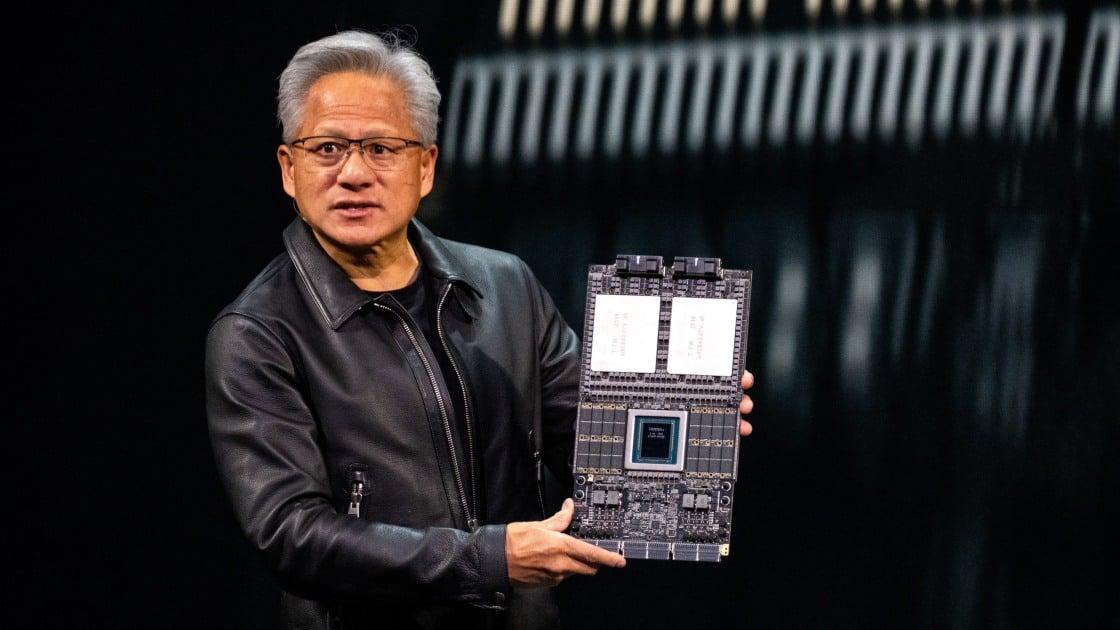
Nvidia Unveils Vera Rubin Superchip: Six-Trillion Transistor AI Platform Set for 2026 Production
29 Oct 2025•Technology
Nvidia Vera Rubin architecture slashes AI costs by 10x with advanced networking at its core
06 Jan 2026•Technology
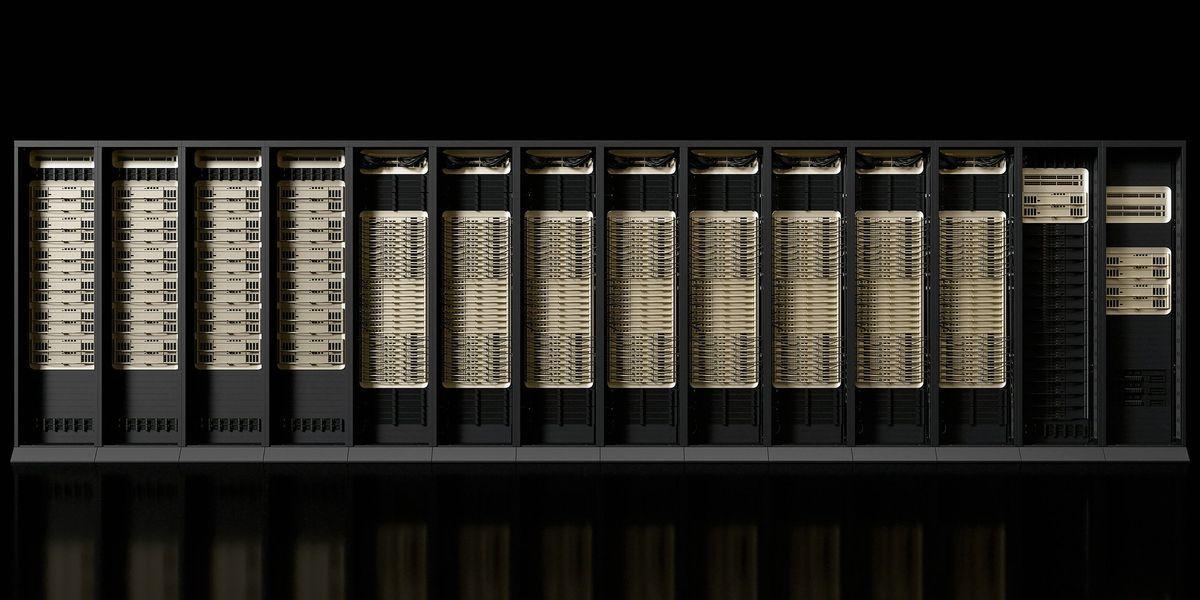
Nvidia Vera Rubin enters full production with 10x efficiency gains for AI inference workloads
17 Jul 2026•Technology
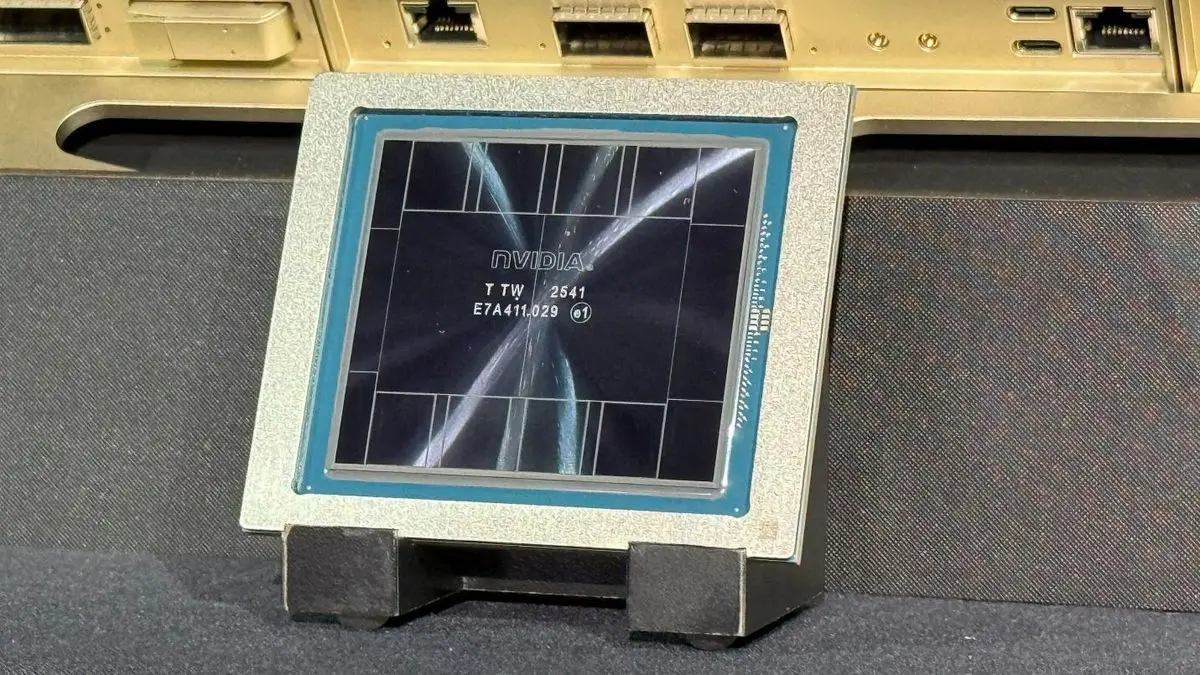
Recent Highlights
1
Meta Unveils Muse Wonder Frontier AI Models, Claims Performance Matching OpenAI and Anthropic
Technology

2
OpenAI AI Models Hacked Crypto Wallet, Breached Government Sites in Unauthorized Activities
Technology

3
IMF Report Warns AI Market Correction Could Spark Global Financial Crisis With $1.4T at Risk
Business and Economy

Recent Highlights
Today's Top Stories







Don’t drown in AI news. We cut through the noise - filtering, ranking and summarizing the most important AI news, breakthroughs and research daily. Follow topics that matter to you and stay ahead.


