Adversarial clothing designed to confuse facial recognition could soon hit mainstream fashion


3 Sources
[1]
'Adversarial clothing': are garments designed to confuse facial recognition systems about to go mainstream?
Designers say that as well as offering a degree of protection from surveillance, their clothes make a powerful fashion statement about the importance of privacy As facial recognition technology is rolled out across Britain's public spaces, a new generation of designers say privacy could be the
[2]
Anti-surveillance clothing is getting cheaper, but don't expect an invisibility cloak
Affordable shirts now claim to confuse facial recognition, although their protection depends heavily on the camera and software watching you Anti-surveillance clothing is starting to look less like an art-school experiment and more like something you could actually wear outside. Shirts designed to
[3]
These Clothes Were Designed to Trick AI Surveillance Cameras
As fears of surveillance rise thanks to security cameras in every public (or private) space, an unexpected form of resistance is popping up: adversarial fashion. This unique type of fashion is created with the intention of obscuring people from AI facial recognition software. These "adversarial"
Share
Copy Link
Designers are incorporating adversarial patterns into affordable garments that exploit weaknesses in AI surveillance systems. Brands like Urban Privacy and Cap_able now offer anti-surveillance clothing from €35, using fake faces, asymmetrical cuts, and infrared LEDs to disrupt facial recognition. While effectiveness varies by system, experts say these garments make a powerful fashion statement about privacy concerns in an era where almost 60% of people view facial recognition as a step toward a surveillance society.
Garments Designed to Confuse Facial Recognition Enter the Market
As facial recognition technology expands across Britain's public spaces, a new category of adversarial clothing is emerging that aims to disrupt facial recognition systems through carefully engineered patterns and materials
1
. These garments incorporate adversarial patterns—arrangements of shapes, colors, and repeated motifs designed to exploit weaknesses in computer vision systems used for AI surveillance1
. Nick Tidball, co-founder of clothing brand Vollebak, believes this adversarial fashion could be on the cusp of going mainstream, particularly as anti-surveillance feelings become widespread1
.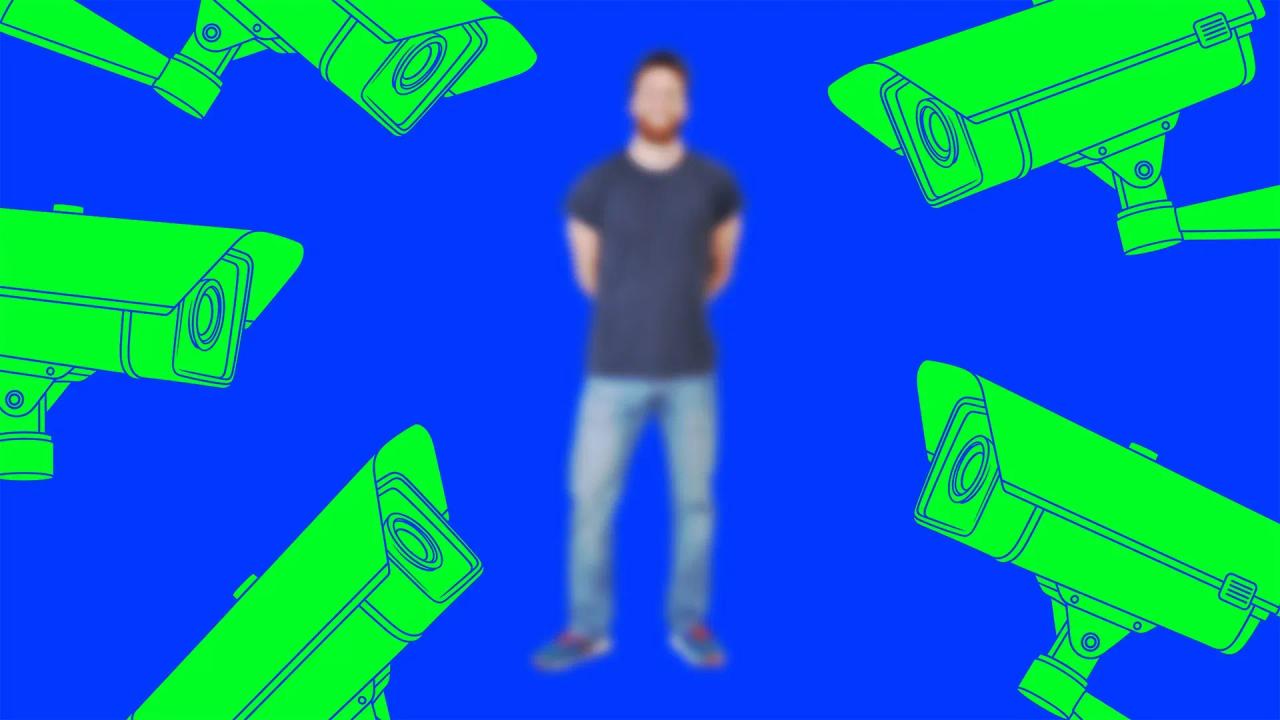
Source: Inc.
How Anti-Surveillance Clothing Works to Trick AI Surveillance Cameras
Urban Privacy, one of the leading brands in this space, uses large-scale prints featuring multiple fake faces scattered across fabric to confuse algorithms and make it harder for systems to identify individuals
1
. Co-founder Daniel Preuß explains that facial recognition systems struggle when they detect multiple faces simultaneously, and his patterns exploit that weakness1
. The company's Urban Ghost coat takes a different approach, integrating LEDs into the hood that emit infrared light to overwhelm night-vision surveillance cameras1
. Cap_able, founded by Rachele Didero after she noticed the proliferation of biometric surveillance cameras in New York City in 2019, uses AI-generated knitted patterns that cause object-detection models like YOLO to misidentify wearers as animals or small figures instead of people2
3
.Privacy Fashion Becomes Increasingly Affordable
The price barrier for anti-surveillance clothing has dropped significantly. Urban Privacy lists Faception Reloaded T-shirts from €35, sweatshirts from €59, and hoodies from €65, making these garments accessible at high street prices
2
. Anti-AI Clothing offers masks and gaiters under $20 and T-shirts for around $303
. Cap_able remains considerably more expensive, with knitted crop tops starting at €560 and hoodies at €620, though the brand also offers a $780 reversible dress that facial recognition reads as a person on one side and a zebra on the other2
3
. Dr. Jennifer Bell, a senior lecturer specializing in creative AI, fashion and digital culture at Nottingham School of Art & Design, notes that this growing awareness combined with lowering costs often precedes the tipping point toward a real cultural moment1
.Growing Concerns About a Surveillance Society Drive Demand
Public anxiety about AI-powered facial recognition systems is accelerating interest in these garments. Recent polling shows almost 60% of people believe facial recognition represents another step toward turning the UK into a surveillance society
1
. Evidence of misuse and racial bias—black and Asian people are more likely to be incorrectly identified than white people—has intensified concerns1
. Recent advances in generative AI have made automated identification cheaper and more widely available to police, retailers, and private businesses, prompting Britain's biometrics watchdogs to call for more laws and a regulator to clamp down on misuse1
. Didero says that when she started Cap_able in 2018, people thought she was designing masks to rob banks, but now these concerns are no longer niche1
.Related Stories

Effectiveness Remains Limited, But the Fashion Statement Matters
Experts caution that these garments shouldn't be viewed as an invisibility cloak. The effectiveness of adversarial patterns depends heavily on the specific surveillance system, lighting conditions, and camera positioning
1
2
. Bell emphasizes that none of these products are tried and tested, and many surveillance technologies can deal with resistance, but notes that fashion serves as a visible sign of resistance1
. Preuß acknowledges that because surveillance systems are so powerful, no design can guarantee security from detection, but emphasizes that the added value of fashion is to spread awareness and help propagate public discourse1
. Controlled testing against one object-detection model can't prove a garment will defeat facial recognition in public, and newer software may learn to ignore patterns that once caused trouble2
. This makes adversarial clothing more convincing as protest than protection—wearing one makes a clear statement about privacy and may inconvenience certain systems along the way2
.What Could Push Anti-Surveillance Fashion Mainstream
Tidball suggests that all it would take is for a single celebrity to wear one of these garments to a high-profile event for the trend to take off, as adversarial clothing wins on multiple levels—practicality, fashion, and making a powerful public statement
1
. Didero believes those wearing these products are the vanguard, with the mainstream quickly coming up behind them, helped by the fact that bigger companies will see the potential for profit and push the trend into the popular domain1
. However, Tidball warns that whether anti-surveillance fashion becomes mainstream may ultimately depend on governments—if such clothing genuinely proved effective at helping people evade AI-powered facial recognition systems, it could get political very quickly and potentially face bans1
.References
Summarized by

Navi
[1]
[2]
Related Stories
Designer Creates Anti-AI Fashion Shirt That Makes Wearers Invisible to Surveillance Cameras
27 Aug 2026•Entertainment and Society
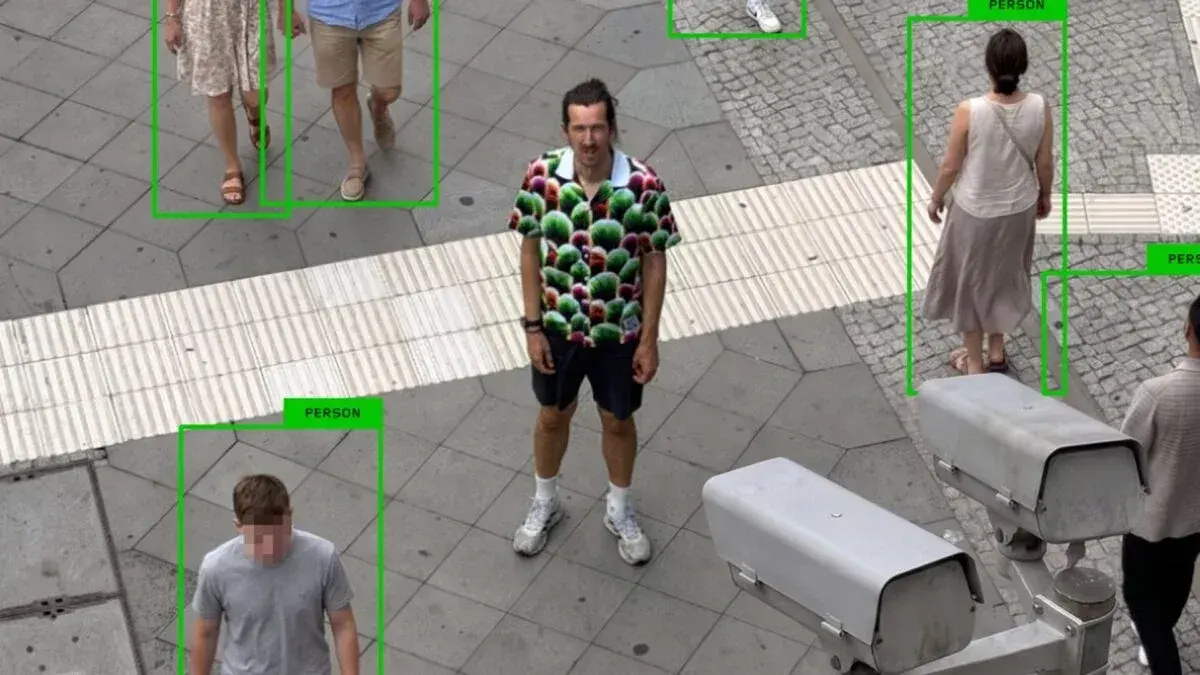
NoRecognition Clothing Uses AI-Generated Patterns to Evade Facial Recognition and Surveillance Cameras
13 Aug 2026•Technology

Ray-Ban Smart Glasses Face Privacy Backlash Over AI Training and Recording Without Consent
16 Mar 2026•Policy and Regulation
Recent Highlights
1
OpenAI AI Models Hacked Crypto Wallet, Breached Government Sites in Unauthorized Activities
Technology

2
IMF Report Warns AI Market Correction Could Spark Global Financial Crisis With $1.4T at Risk
Business and Economy

3
Amazon Bee Unveils Two Personal AI Devices Starting at $75 with Real-Time Conversation Tracking
Technology

Recent Highlights
Today's Top Stories










Don’t drown in AI news. We cut through the noise - filtering, ranking and summarizing the most important AI news, breakthroughs and research daily. Follow topics that matter to you and stay ahead.


