AI's Dual Impact on India's Job Market: Disruption and Creation in Tech Sector


4 Sources
[1]
India's IT layoffs spark fears that AI is hurting jobs in a sector critical to its economy
India could risk "getting stuck in the middle-income trap" if its economy doesn't adapt, she added. India's IT sector is facing job cuts, and analysts are wary about what the impact of artificial intelligence might mean for an industry critical to the country's broader economy. The country's
[2]
Agentic AI to Create 3 Mn New Tech Jobs in India in 5 Years, Says ServiceNow | AIM
The study identified key actions taken by leading companies -- called "AI Pacesetters" -- to move forward India is on the brink of a major workforce shift, with agentic AI expected to transform over 10.35 million jobs by 2030, according to the ServiceNow AI Skills Research 2025, released in
[3]
Jobs at Risk: AI's reality check - The Economic Times
AI is putting white-collar roles at risk and darkening the dreams of India's aspirational youth. Recruitment firms report job erosion across sectors as AI replaces repetitive tasks. While some new jobs will emerge, a significant skills shift is expected, impacting 38% of core skills in
[4]
AI to impact 1.8 crore jobs in manufacturing, retail, education sectors by 2030: Report - The Economic Times
Manufacturing jobs will bear the highest impact with 80 lakh workers to be affected, closely followed with retail with 76 lakh jobs to be impacted and education jobs impact is pegged at 25 lakh over the next five years, as per the report by Servicenow.Manufacturing, retail and education sectors are
Share
Copy Link
AI is reshaping India's job market, particularly in the IT sector, causing layoffs but also creating new opportunities. The transformation is expected to impact millions of jobs across various industries by 2030.
AI's Disruptive Impact on India's IT Sector
India's IT sector, a critical component of the country's economy, is facing significant disruption due to the rapid advancement of artificial intelligence (AI). Tata Consultancy Services (TCS), India's largest private sector employer, recently announced plans to cut 12,000 jobs, primarily from middle and senior management levels
1
. While TCS attributes this to "limited deployment opportunities and skill-mismatch" rather than AI directly, the move has sparked concerns about AI's broader impact on the industry1
.
Source: CNBC
The Scale of AI-Driven Transformation
According to the ServiceNow AI Skills Research 2025, agentic AI is expected to transform over 10.35 million jobs in India by 2030
2
. This transformation is set to create more than 3 million new tech jobs over the next five years, marking one of the largest workforce transitions in the world2
4
. The impact will be most significant in sectors such as:- Manufacturing: 8 million jobs affected
- Retail: 7.6 million jobs impacted
- Education: 2.5 million roles redefined
2
4
AI Adoption and Company Strategies
Indian companies are moving faster in AI adoption compared to their Asia-Pacific counterparts. About 25% of Indian enterprises are already in the advanced transformation phase, ahead of Singapore (20%) and Australia (21%)
2
. Leading companies, termed "AI Pacesetters," are taking key actions such as:- Developing a clear AI vision
- Investing in skilled talent
- Building strong governance
- Scaling AI tools like Agentic AI
2
Emerging Job Roles and Skills

Source: ET
The AI Maturity Index reveals that Indian enterprises are increasingly investing in future-focused roles to strengthen their AI capabilities. The most in-demand positions include:
- AI Configurators (66% of companies hiring)
- Data Scientists (65%)
- Experience Designers (57%)
2
Challenges and Concerns
Despite the potential for job creation, there are significant challenges:
- Data security is cited as the biggest concern by 30% of Indian businesses
- 26% of organizations are unsure about future skill requirements
2
- The World Economic Forum's 2025 Future of Jobs report predicts that 38% of existing core skills in India are expected to change
3
Related Stories



Impact on Traditional Job Roles
Source: ET
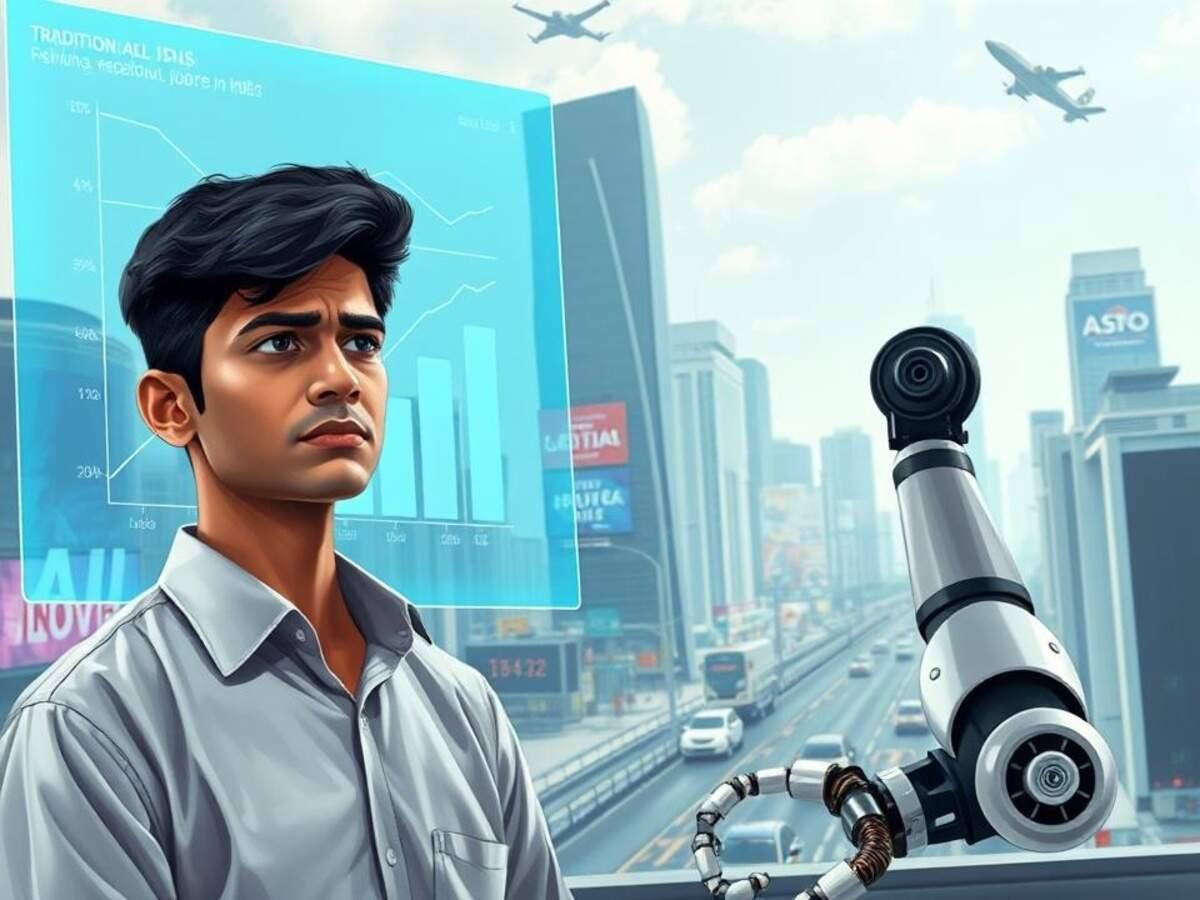
AI is already replacing repetitive tasks across various sectors:
- Customer service agents
- Data entry operators
- Invoice processors
- Junior audit staff
3
The BPO and KPO sectors, traditionally large employment engines in India, are under pressure. Voice-based customer service, chat support, transcription, and data-cleaning roles are at risk due to AI-powered co-pilots and conversational bots
3
.Long-term Economic Implications
The AI-driven transformation of India's job market could have far-reaching consequences:
- Higher entry barriers for young people entering the workforce
- Potential urban unemployment clusters, particularly in cities with high concentrations of BPO/KPO jobs
- Enhanced income inequality
3
As India navigates this technological shift, there is a pressing need for strategic foresight, structured cross-functional reskilling pathways, and a focus on developing AI-ready talent to maintain its competitive edge in the global digital economy
2
4
.References
Summarized by

Navi
Related Stories
Recent Highlights



Recent Highlights
Today's Top Stories









Don’t drown in AI news. We cut through the noise - filtering, ranking and summarizing the most important AI news, breakthroughs and research daily. Follow topics that matter to you and stay ahead.


