AI job shock threatens India's economy as IT jobs face automation and real estate slumps


4 Sources
[1]
India's Real Estate Will Meet the Reality of Agentic AI
The outsourcing industry, India's largest white-collar employer, is a juggernaut that has all but stopped moving. The dollar revenue at the top five software-services exporters has grown slower than 3% for 10 straight quarters -- a shadow of the double-digit expansion in the previous two decades.
[2]
AI job shock risks throttling India's consumption
MUMBAI, April 30 (Reuters Breakingviews) - The jobs crisis stirring in India's vast outsourcing industry spells trouble for the country's $4 trillion consumption-led economy. With the gap between household income and spending already widening, the consequences of the churn on finance and markets
[3]
Inside India newsletter: AI is exposing cracks in India's growth story as it hits high-paying IT jobs
Over the past two decades, India's IT sector has been driving a consumption boom that has in many ways anchored the India growth story. But as AI forces IT companies to shift away from volume hiring, it exposes a critical gap that risks hampering economic growth: a lack of quality jobs. Few global
[4]
India's Real Estate Will Meet the Reality of Agentic AI: Andy Mukherjee
India's IT slowdown, driven by AI-driven automation and shrinking outsourcing demand, is beginning to hit real estate, mortgages, and employment in tech-heavy cities. With firms like Infosys Ltd. and HCL Technologies Ltd. tightening hiring, banks are rethinking underwriting norms as job risks
Share
Copy Link
India's outsourcing industry faces an existential crisis as AI-driven automation threatens 15 million IT jobs. The top five software exporters shed 85,000 employees in 36 months while revenue growth slowed to under 3% for 10 straight quarters. Banks are now rethinking mortgage underwriting as cities like Bengaluru witness sluggish real estate sales and rising inventories.
AI Threatens India's Outsourcing Industry and High-Paying IT Jobs
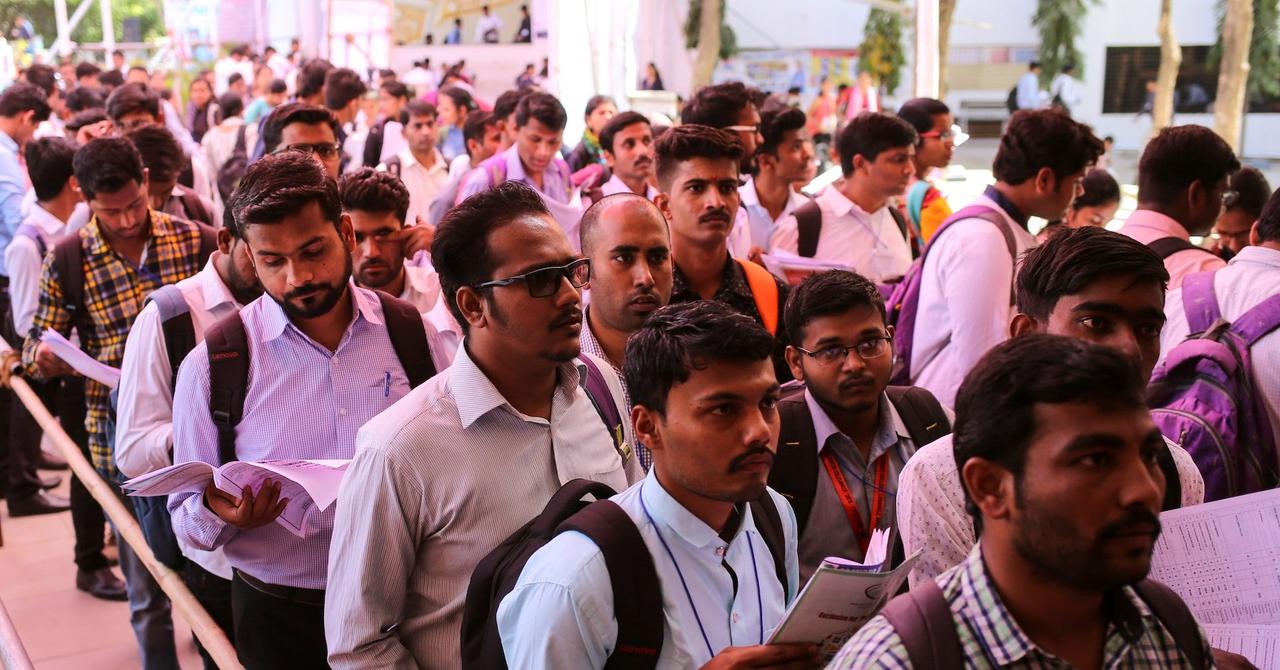
India's outsourcing industry, the nation's largest white-collar employer, confronts an unprecedented challenge as AI reshapes the economics of software services. The top five software-services exporters have recorded dollar revenue growth slower than 3% for 10 straight quarters, a stark contrast to the double-digit expansion that defined the previous two decades
1
. This slowdown marks a fundamental shift in India's growth story, which has long relied on its vast talent pool to drive economic expansion.The numbers paint a sobering picture of job displacement due to AI. Over the past 36 months, the top five firms have shed a net 85,000 employees
1
. Oracle laid off 10,000 workers, representing one-fifth of its India workforce in March, while Amazon let go of 500 people in January2
. One global bank executive told Reuters their workforce in India could shrink by one-third within just one or two years2
. Models like Claude and Mythos fix bugs and write code at a fraction of human cost, making the shift from labor arbitrage to tech arbitrage inevitable1
.
Source: Reuters
Impact on Real Estate and Mortgage Underwriting
Cities like Hyderabad, Pune and Bengaluru, where knowledge workers account for a significant share of homebuyers, are witnessing sluggish sales and rising inventories of unsold apartments
1
. Investors who bought under-construction properties hoping to rent them to software engineers are finding few takers, exposing the vulnerability of real estate markets built on the assumption of steady IT sector growth.
Source: Bloomberg
Banks are responding to this automation risk by rethinking their lending practices. Canara Bank's economics research team has proposed innovative mortgage underwriting approaches: mandating a lower loan-to-value ratio of 60% versus the standard 80% for borrowers susceptible to automation risk, including intellectual property or proprietary data as supplementary collateral for corporate lending, and requiring corporate borrowers undergoing AI-led restructuring to divert a percentage of labor cost savings into a debt-service reserve account
1
. These measures reflect growing lending risks as credit portfolios face exposure to stagnating salaries and outright job losses in a customer group previously treated as low-risk.AI Job Shock Threatens India's Consumption-Driven Economy
The crisis in India's outsourcing industry spells trouble for the country's $4 trillion consumption-led economy
2
. Global capability centres and the IT sector employ up to 15 million people who anchor India's middle class, according to Bernstein analysts who wrote an open letter to Prime Minister Narendra Modi warning of the deepening employment crisis2
.While this represents a small fraction of India's 616-million-strong workforce, the AI-vulnerable cohort accounts for a sizeable chunk of the employed within the rising middle class
2
. The top 140 million Indians who each earn roughly $15,000 per annum drive two-thirds of discretionary spending2
. A potential 30% workforce reduction over the next two years could shrink this top consuming class by about 5 million to 135 million, reducing total spending power by roughly $75 billion annually2
.Related Stories

AI Deflation and the Demographic Dividend at Risk
The phenomenon of "AI deflation" describes the slowing revenue growth at Indian IT firms that typically employ fresh graduates. Annual revenue in U.S. dollar terms at industry leader Tata Consultancy Services shrunk for the year ended March 2026, marking the first decline since the $97 billion company's initial public offering in 2004
2
. Bengaluru-based Infosys forecast a much slower pace of sales increase than analysts expected, and its stock fell nearly 7% despite announcing a collaboration to combine OpenAI's technology with its own agentic service1
.This threatens India's economy in ways that extend beyond immediate job losses. For the past two decades, outsourcing generated a million middle-class jobs every year and drove ancillary employment in real estate, retail, and services
1
. The consumption boom fueled by these white collar jobs has been central to India's economic expansion. Without job creation, India's consumption-led economy will struggle to grow, limiting investment demand at a time when the export growth-led model is at risk globally3
.The Shift Away from AI-Exposed Employment
The $315 billion Indian information technology industry will have to shrink its 6-million-strong workforce to protect margins
1
. In a survey of hiring intentions across 20 cities, only 38% of IT firms and 32% of business process outsourcing units wanted to expand payrolls between April and September, compared to 78% of employers in healthcare and pharmaceuticals and 70% of firms in manufacturing, engineering and infrastructure1
.Yet India has struggled to raise the share of manufacturing in the economy to shift labor from farm to factories, and close to 45% of India's workforce continues to depend on agriculture, which only contributes 15%-16% of GDP
3
. The AI boom now poses a threat to jobs in both manufacturing and services, challenging the demographic dividend that was supposed to power India's economy. As the cost of artificial intelligence plummets toward the price of electricity, contract values for outsourcing will deflate, and suppliers managing software quality with 2,000 employees will soon be expected to do it with 500 and AI1
. The ripple effects will extend to India's vast gig economy servicing the middle class, potentially hitting earnings of carmakers, consumer groups and financial services providers that account for nearly 62% of the benchmark Nifty 50 index2
.References
Summarized by

Navi
Related Stories
India's back office built the world's tech hub. Artificial intelligence is now shrinking it.
27 Feb 2026•Business and Economy
AI's Dual Impact on India's Job Market: Disruption and Creation in Tech Sector
31 Jul 2025•Business and Economy

AI Bubble Fears Intensify as Tech Giants Commit $1.5 Trillion to Infrastructure
22 Dec 2025•Business and Economy

Recent Highlights
1
Microsoft and Nvidia Launch Surface Laptop Ultra: A $2,599 AI-Ready PC With RTX Spark Chip
Technology

2
OpenAI Releases 722 AI-Generated Math Papers on GitHub, Igniting Fury Among Mathematicians
Science and Research

3
Trump Consulted Grok AI Before Ordering Venezuela Invasion and Capture of Nicolás Maduro
Policy and Regulation

Recent Highlights
Today's Top Stories










Don’t drown in AI news. We cut through the noise - filtering, ranking and summarizing the most important AI news, breakthroughs and research daily. Follow topics that matter to you and stay ahead.


