AI Agents Promise Billions Users, But 30 Homes Demolished and Power Bills Soar in $145 Billion Push


2 Sources
[1]
The real cost of AI agents: demolished homes, rising power bills, and a $145 billion spending spree
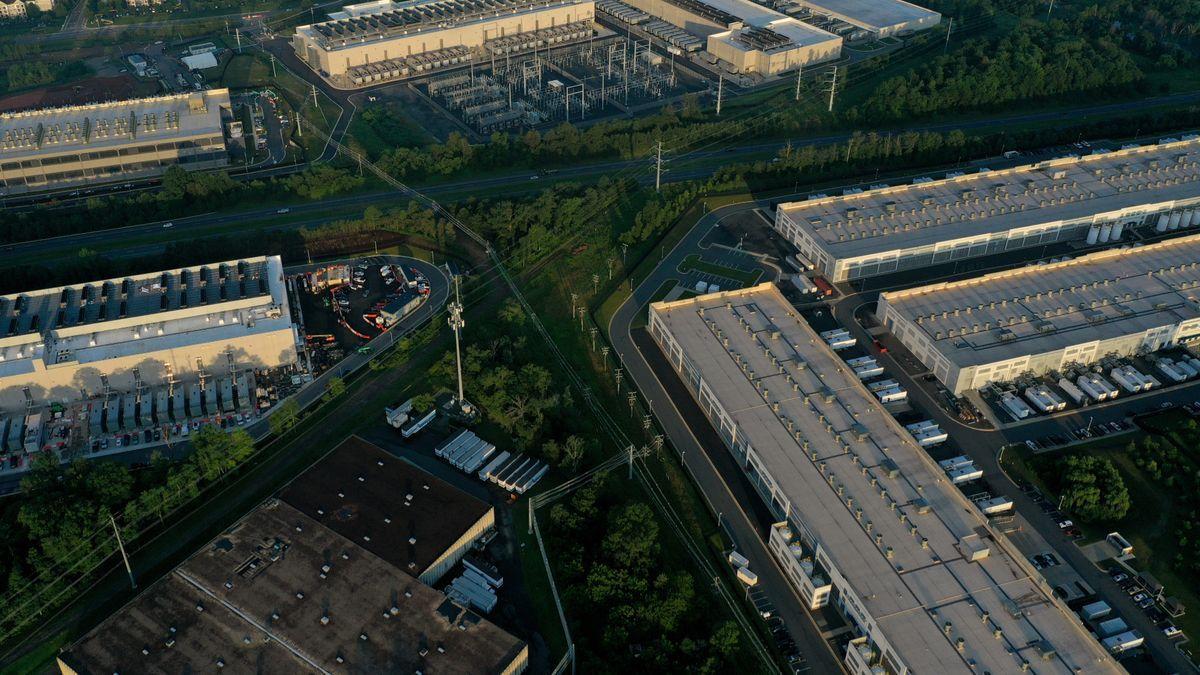
Georgia Power is demolishing homes for AI data centre power lines as Big Tech promises everyone an AI agent Georgia Power is using eminent domain to seize more than 330 properties across Coweta and Fayette counties to build a 35-mile transmission line for its Project Wansley expansion. Between 20
[2]
Is bulldozing homes, seizing land, harming the climate, and replacing workers really worth everyone having an AI agent?
There are a lot of sacrifices being made to usher in the latest technological age. Jobs, businesses, even whole industries are at risk of disappearing. Now we can add homes to the list - as new electricity infrastructure for data centers in the state of Georgia means 30 homes are to be bulldozed
Share
Copy Link
Georgia Power is using eminent domain to seize over 330 properties and demolish up to 30 homes to build transmission lines for AI data centers. Mark Zuckerberg envisions billions using personal AI agents within five years, but Meta's $130-145 billion spending spree is raising electricity costs nationwide and sparking community protests across 42 states.
Georgia Power Seizes 330 Properties for AI Infrastructure Expansion
Georgia Power is exercising eminent domain to acquire more than 330 properties across Coweta and Fayette counties, with between 20 and 30 homes slated for demolition to accommodate a 35-mile transmission line for its Project Wansley expansion
1
. The $16 billion grid expansion represents one of the largest infrastructure projects in Georgia's history, with roughly 80 percent of the new generating capacity dedicated to serving AI data centers1
. Residents in the transmission line's path report that compensation offers from Georgia Power run approximately $100,000 below their properties' market value, though the utility maintains that condemnation represents less than one percent of total land acquisitions1
. The bulldozing homes controversy highlights the tangible societal costs being imposed on communities to support AI expansion, even as many affected residents will likely never use the AI agents these facilities are designed to power2
.
Source: TechRadar
Mark Zuckerberg's Vision for Billions of Personal AI Agents
Two days before the demolition plans drew national attention, Mark Zuckerberg predicted on Meta's earnings call that within five years, billions of people would each have a personal AI agent handling their finances, health, and relationships
1
. These AI agents would be "working on your behalf 24/7 to achieve your goals in whatever the domain is that you care about," managing everything from household budgets to personal relationships2
. Meta already runs AI agents for more than a million business users on WhatsApp and Messenger, demonstrating early-stage deployment of this technology1
. However, no personal AI agent currently on the market can reliably manage a household budget or the full spectrum of daily life that Zuckerberg described, revealing a significant gap between vision and present capability1
.Meta's $130-145 Billion Spending Spree and Collapsing Cash Flow
Meta posted revenue of nearly $61 billion in the second quarter of 2026, up 28 percent year over year, but its free cash flow collapsed 91 percent to $784 million as capital expenditure surged
1
. The company has guided investors toward total spending of $130 billion to $145 billion this year, with most directed toward AI infrastructure development1
. Meta's stock fell nearly ten percent after the Q2 results, signaling investor concern over collapsing cash flow despite promises of transformative AI agents in every pocket1
. The real cost of AI agents extends beyond Meta's balance sheet, as Meta's Reality Labs division has lost roughly $88 billion since 2021 on a metaverse bet that has yet to produce a mass-market product, complicating forecasts about AI agent success1
.Rising Electricity Costs Hit Communities Nationwide
Power bills are climbing sharply in factory towns with no connection to AI development. In the PJM grid region spanning from New Jersey to Illinois, capacity charges jumped more than tenfold in a single auction cycle, driven largely by AI data centers demand
1
. Industrial electricity prices rose 31 percent in Pennsylvania and 26 percent in Ohio in one year, against a seven percent national average1
. Many US electricity providers have increased bills as a way to pay for infrastructural upgrades to provide new connections for AI data centers, adding financial burden to households already facing economic pressure2
. The seizure of land and rising electricity costs represent tangible impacts on ordinary citizens funding an AI infrastructure buildout far beyond anything currently seen2
.Related Stories
Community Backlash Spreads Across 42 States
Data center protests have spread to 42 US states, with more than 140 rallies coordinated in a single day of action by a coalition that cuts across political lines
1
. Community backlash has successfully blocked or delayed tens of billions of dollars in planned construction, demonstrating organized resistance to AI expansion at the expense of local communities1
. Environmental harm compounds community concerns, as air quality worsens with more gas-burning turbines powering up to meet demand for electricity to support AI data centers. For families in Coweta County facing demolition orders, the promise of a personal AI agent in five years remains abstract while a 500-kilovolt power line cutting through their properties represents immediate, concrete loss1
.Job Displacement and the Future of Work
Businesses are adopting AI technology primarily to cut labor costs, with promises of maintained or improved productivity levels alongside skyrocketing profits from significantly reduced operating expenses. Job displacement is hitting entry-level positions and administrative work that traditionally served as pathways into new industries, with AI simultaneously replacing existing workers while shutting them out from career transitions. Many workplaces are implementing AI interviewers that remove human interaction from the job-seeking process, compounding employment challenges during this technological shift. This threat to workers may catalyze a revitalization of labor unions, as collective organization remains one area where AI agents cannot diminish worker power.
References
Summarized by

Navi
[1]
Related Stories
Trump's AI Push Clashes with Clean Energy Cuts, Raising Concerns Over Data Center Boom and Electricity Costs
24 Jul 2025•Policy and Regulation

AI Data Centers Spark Land Rush and Political Battles as Big Tech Seeks 85 Gigawatts by 2030
05 Mar 2026•Business and Economy

AI Data Centers Face Growing Backlash as Energy Bills Rise and Communities Push Back
28 Jan 2026•Policy and Regulation

Recent Highlights



Recent Highlights
Today's Top Stories



Don’t drown in AI news. We cut through the noise - filtering, ranking and summarizing the most important AI news, breakthroughs and research daily. Follow topics that matter to you and stay ahead.


