AI and Innovation Revolutionize Mining Industry to Meet Copper Demand


2 Sources
[1]
A quiet revolution is unfolding in the mining sector
LONDON, Aug 29 (Reuters) - The world is going to need a lot of copper and other critical metals if it is going to pivot away from fossil fuels. But can the mining industry deliver? The challenges are huge. Ore grades at existing copper mines are steadily falling, big new discoveries are becoming
[2]
A quiet revolution is unfolding in the mining sector
The mining industry is reinventing itself with AI, bio-tech, and waste re-mining to tackle falling ore grades and soaring demand for copper. From Hindustan Zinc to BHP, innovations promise cleaner, more efficient production, offering hope the world won't run out of copper after all. The world is
Share
Copy Link
The mining industry is undergoing a quiet revolution, leveraging AI, biotechnology, and innovative waste management techniques to address challenges of falling ore grades and increasing demand for critical metals like copper.
The Challenge of Meeting Copper Demand
The global shift away from fossil fuels has created an unprecedented demand for copper and other critical metals. However, the mining industry faces significant challenges in meeting this demand. Ore grades at existing copper mines are declining, new discoveries are becoming scarce, and development times for new mines can extend up to a decade
1
2
.Innovative Solutions: Re-mining and Waste Reduction
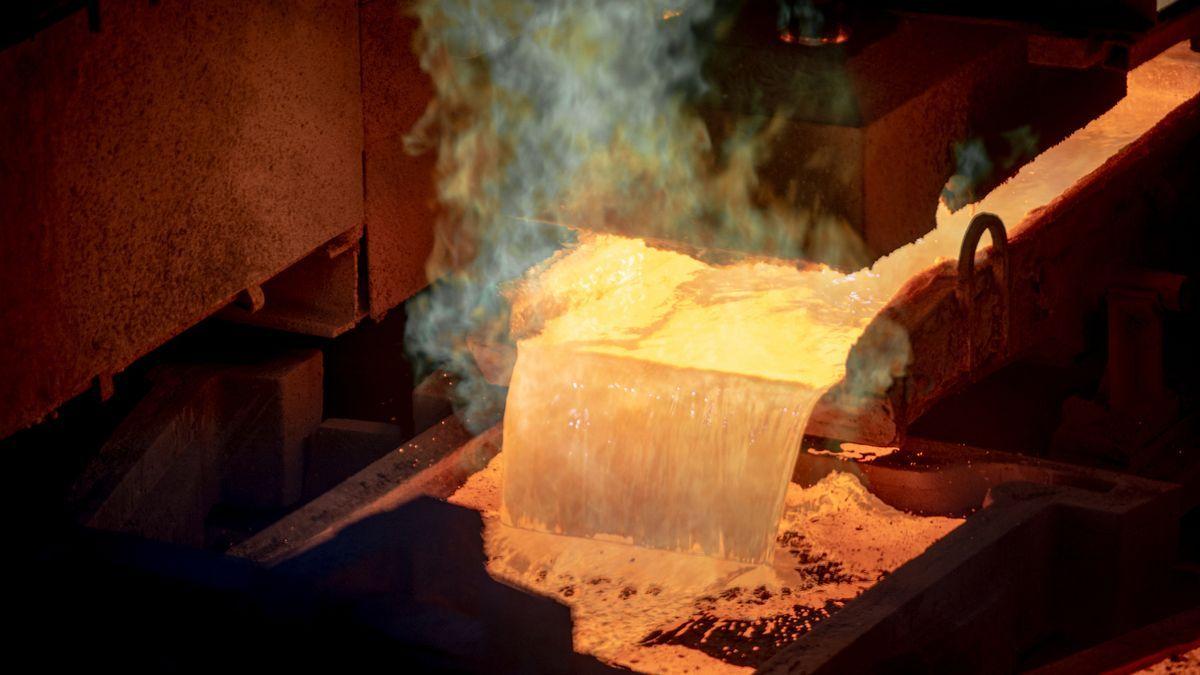
To address these challenges, the mining industry is turning to innovative solutions that increase efficiency and reduce waste. One promising approach is the re-mining of tailings ponds, which contain vast amounts of previously discarded metal. Between 1910 and 2010, approximately 100 million tons of copper never made it to market and now lies in these waste repositories
1
2
.Several companies are exploring the potential of re-mining:
- Rio Tinto has successfully extracted critical metals like scandium and tellurium from waste streams
1
2
. - Hudbay Minerals is evaluating the re-mining of tailings at the Flin Flon site in Canada
1
2
. - Hindustan Zinc is investing $438 million to process 10 million tons of tailings annually at its Rampura Agucha mine
1
2
.
In addition to re-mining, companies are focusing on reducing waste production. Glencore Technology has improved its ISAMill grinder to handle coarser particle sizes, reducing water usage and tailings waste
1
2
. The company's Albion Process for leaching can achieve copper recovery rates of over 99% and reduce operating costs by up to a third1
2
.Biotechnology in Mining
Biotechnology is also playing a role in revolutionizing the mining industry. Allonnia, a bio-ingenuity company, has developed D-Solve technology that uses microbes to selectively extract impurities from concentrates. In laboratory tests, this technology has shown the potential to improve nickel grades by 18% and reduce magnesium impurities by 40%
1
2
.Related Stories


Artificial Intelligence: The Game Changer
Artificial Intelligence (AI) is emerging as a transformative force in the mining industry, integrating and optimizing various innovations. Major mining companies like Rio Tinto and BHP are already using AI for autonomous haulage systems and predictive maintenance
1
2
.Generative AI, combined with "digital twin" technology, is being employed by BHP at its South Australian copper mine and the Escondida mine in Chile. These AI models inform blasting and blending strategies, identify challenging ore characteristics, and support mill control
1
2
.Freeport-McMoRan, in partnership with McKinsey, has implemented AI to boost production at its North American operations. When trialed at the Baghdad mine in Arizona, this AI integration led to a 5%-10% increase in copper production. The company projects that rolling out this technology across its American operations could increase output by 90,000 tons annually – equivalent to building a new processing plant at a fraction of the cost and time
1
2
.
Source: ET
The Promise of a Cleaner, More Efficient Future
The mining industry, often criticized for its environmental impact and inefficiency, is rapidly modernizing. By combining innovations in traditional processing with new technologies like bio-engineering and AI, the sector is moving towards cleaner and more efficient operations
1
2
.This quiet revolution, unfolding in laboratories, pilot plants, and data centers worldwide, offers hope that the increasing demand for copper and other critical metals can be met sustainably. As the industry continues to evolve, it may well prove that the world isn't going to run out of copper after all
1
2
.References
Summarized by

Navi
Related Stories
Recent Highlights
1
Microsoft and Nvidia Launch Surface Laptop Ultra: A $2,599 AI-Ready PC With RTX Spark Chip
Technology

2
Meta Muse AI Agent Surges to 6.6M Downloads Despite Privacy and Security Controversies
Technology

3
Scientists Build AI Model That Reconstructs Images From Brain Scans in Record Time
Science and Research

Recent Highlights
Today's Top Stories






Don’t drown in AI news. We cut through the noise - filtering, ranking and summarizing the most important AI news, breakthroughs and research daily. Follow topics that matter to you and stay ahead.


