3 Sources
[1]
Copper up 9% since Iran war, near January peak. Will AI boom, shortage propel red metal to new highs?
Copper prices are surging, driven by a confluence of factors including geopolitical tensions, structural supply shortages, and booming AI-driven demand. The metal is increasingly viewed as a strategic commodity for the AI era, with markets anticipating a prolonged supply crunch due to underinvestment and long lead times for new mining projects. Copper prices are rising at a pace that is forcing global markets to rethink the future of industrial commodities. What was once a metal tied largely to construction cycles and manufacturing demand is now being reshaped by artificial intelligence, geopolitical tensions, electrification and deep structural supply shortages. On Thursday, copper prices on the London Metal Exchange climbed more than 1% to $14,153 per metric tonne, inching closer to the record peak of $14,527 touched in January this year. Since tensions escalated around Iran and the Strait of Hormuz, copper prices have already surged 9%, while year-to-date gains are now approaching 15%. But increasingly, traders believe this is not merely another short-lived commodity spike. Markets are beginning to price in a future where copper becomes one of the most strategically important raw materials of the AI era. So what exactly is driving this explosive move? Copper is no longer behaving like a conventional industrial metal. It is rapidly emerging as a strategic commodity sitting at the centre of the next global technological and energy cycle. The current rally is being fuelled by a rare convergence of geopolitical disruptions, structural supply shortages, AI-led demand growth and years of underinvestment in global mining capacity. Prices are now trading near historic highs as markets begin to factor in not just a temporary shortage, but the possibility of a prolonged structural supply crunch. One of the lesser-discussed yet crucial triggers behind the rally is the growing shortage of sulfuric acid linked to the Iran conflict and disruptions around the Strait of Hormuz. Sulfuric acid plays a critical role in copper extraction and refining, especially in heap leaching operations. Nearly half of the world's seaborne sulfur supply originates from the Middle East, and shipping disruptions have significantly tightened global availability. Adding to the pressure, China has imposed restrictions on sulfur and sulfuric acid exports to protect domestic industries, further worsening shortages across global markets. "The impact is now being felt across major copper-producing nations such as Chile, Peru and Indonesia. Several large mining operations are already grappling with lower output, operational disruptions and rising refining costs," Ponmudi R, CEO of Enrich Money, said. He added that delays in the recovery of Indonesia's Grasberg mine, declining global ore grades, fuel supply challenges in Peru and weaker Chilean production are collectively placing additional strain on an already stretched supply chain. At the same time, the AI boom is fast turning into one of the biggest long-term copper demand stories the market has seen in decades. Every AI data centre, semiconductor fabrication facility, hyperscale cloud infrastructure project, electric vehicle ecosystem and renewable energy grid expansion requires enormous amounts of copper. Markets had previously underestimated the scale of copper demand tied to AI infrastructure. Investors are now increasingly viewing copper as one of the foundational metals powering the AI revolution. What makes the current setup particularly powerful is the inability of supply to respond quickly. Copper mining projects typically take more than 15 years to move from discovery to production. Ore grades continue to decline globally, environmental approvals have become more difficult, and the pace of major new discoveries has slowed considerably. The International Energy Agency has already warned that copper could face a major structural supply deficit by 2035 if current trends continue. "Further upping the demand ante is the fact that China remains the largest copper consumer globally. A recovery in infrastructure spending, grid investment, EV manufacturing and industrial activity has tightened the physical market again," Nirpendra Yadav, Commodity Analyst at Bonanza Portfolio, said. Will the world run out of copper? The world may also be heading toward a serious copper shortage as power demand rises sharply, partly due to the rapid proliferation of AI data centres. That warning was highlighted in the government's Economic Survey 2025-26. The scale of copper required for green and high-tech infrastructure is staggering. For instance, a single 1 GW wind turbine requires 2,866 tonnes of copper. At a typical ore yield of 0.6%, that translates into the processing of roughly 477,667 tonnes of ore, enough to fill 1,194 truckloads assuming each truck carries 400 tonnes. The Economic Survey noted that this estimate only considers copper-bearing ore and excludes waste rock, overburden, rejected material and processing losses. In actual mining operations, the total material moved per GW of wind power could easily exceed 1-2 million tonnes, underlining the immense logistical and environmental intensity involved in copper production. Where are prices headed? From a technical perspective, copper has now entered a strong bullish momentum phase after breaking above key resistance levels near $13,000-13,500 per tonne on the LME. As long as geopolitical tensions remain elevated and sulfuric acid shortages persist, prices are likely to stay structurally firm despite periods of heightened volatility. Immediate resistance is now seen near the historic $14,500 zone, while support has shifted higher toward the $13,200-13,500 range. That said, after such a sharp rally, near-term corrections and phases of profit booking remain highly likely, as commodity rallies rarely move in a straight line. Investors should therefore avoid aggressively chasing vertical spikes. Instead, healthy corrections could offer accumulation opportunities in quality copper-related themes, mining companies, industrial metals ETFs and fundamentally strong metal stocks. (Disclaimer: Recommendations, suggestions, views and opinions given by the experts are their own. These do not represent the views of The Economic Times)
[2]
Something Historic Is Lifting Commodities To Records. Not Hormuz - Amazon.com (NASDAQ:AMZN), United State
Something Historic Is Quietly Lifting Commodities To Records -- And It's Not Hormuz An index of commodities excluding energy has just soared to a fresh record high, surpassing the prior peak set in 2011 and signaling that the raw materials rally extends far beyond the crude oil disruption at the Strait of Hormuz. The Bloomberg Commodity Index ex-Energy topped 155 levels this week, breaking out above its 2011 high and sitting roughly 13% above its 40-week moving average. The index tracks industrial metals, precious metals, and the agricultural sector -- everything that ends up inside a power cable, a solar panel, a data center cooling loop, or a fertilizer bag. It is a record set without crude oil. The move is structural. And it is wired directly into the AI race. "While energy markets have captured most of the attention since the start of the Iran conflict, strength across the broader commodity complex has been equally notable this year," said Adam Turnquist, chief technical strategist for LPL Financial, in an emailed note. Copper Is The Tell Turnquist flagged the breakout in a research note on Tuesday and linked it to a list of drivers that bear little resemblance to the 2011 emerging-market reflation trade. Tight supply. Chinese silver export restrictions. Solar. AI data centers. Electric vehicles. Lithium carbonate has more than doubled this year due to accelerating demand for batteries and energy storage. Copper has climbed to record highs on what Turnquist called "rising consumption tied to AI data center buildouts and electrification trends." Copper futures on COMEX -- as closely tracked by the United States Copper Index Fund ETV (NYSE:CPER) -- traded above $6.64 a pound on Wednesday, a fresh all-time high. London Metal Exchange copper hit $14,196.50 per ton, within touching distance of its $14,527.50 record. The metal is up roughly 16% year-to-date and 43% year-over-year, sitting on its eighth straight day of gains. The supply shock is real. The Hormuz closure has fractured the seaborne sulfuric acid trade. Turns out, sulfuric acid is what copper miners use in heap leaching to extract metal from ore. The Middle East supplies nearly half the world's seaborne sulfuric acid market. Chilean copper production already fell by roughly 6% in the first quarter of 2026 compared with the prior year. China has banned sulfuric acid exports through at least December. But the demand side is where the AI story lives. A 'New Era' For Copper Kathleen Quirk, president and CEO of Freeport-McMoRan Inc., spoke at Bank of America's Global Metals, Mining & Steel conference in Miami this week and described copper as now in a "new era" tied to electricity demand -- electrification, AI data centers, and grid investment. Quirk said Freeport acquired Phelps-Dodge in 2007 and has been positive on copper ever since, originally betting on China urbanization. What changed is the demand pile-up. "FCX sees itself as well-positioned both in terms of current production and the greenfield pipeline," according to Bank of America analyst Jason Fairclough. Freeport is not alone. Citi strategists wrote in a note Monday that "practically all copper demand growth since 2022 has come from energy transition and AI related sources." The math behind the AI demand line is unsubtle. An AI data center consumes up to three times more copper than a traditional data center, with hyperscale facilities pulling as much as 50,000 tons each. By 2030, AI-related copper consumption could exceed 500,000 metric tons annually, nearly 2% of current global mine output. Mine supply growth for 2026 is estimated at 1.4%. Silver Is Running Even Harder Silver - as closely tracked by the iShares Silver Trust (NYSE:SLV) - is up 166% year-over-year and 23% year-to-date, trading near $87.85 an ounce. The driver is not Fed-cut speculation. It is industrial demand. Roughly 60% of silver consumption is now industrial. Solar photovoltaic panels alone are projected to absorb 120 to 125 million ounces of silver in 2026. AI hardware, electric vehicles, power electronics, and high-density data center components are adding to the load. The Silver Institute is projecting a 67 million-ounce supply shortfall this year, the fifth consecutive deficit. Tight Chinese export restrictions announced earlier this year have made the squeeze worse. Platinum is up 119% year-over-year. Lithium carbonate is up 189%. Cobalt hydroxide is up 88%. These are not safe-haven trades. They are bottleneck trades on the materials that get poured into the semiconductor supply chain, the grid, and battery storage that backs up AI compute farms. What This Means For Investors The macro chain reads cleanly: AI capex is accelerating. AI capex requires unprecedented quantities of copper, silver, aluminum, and rare earths. Supply is constrained by Hormuz, by structural underinvestment, by Chinese export curbs, and by depleting ore grades. Prices rise. Input costs across manufacturing, construction, transportation, and food production move with them. Turnquist warned that if the breakout holds, "rising prices across industrial metals, precious metals, and agricultural commodities -- not just oil -- could create broader inflationary pressures by lifting input costs across manufacturing, construction, transportation, and food production. That dynamic could make it more difficult for inflation to moderate in the months ahead, even if energy prices eventually stabilize." U.S. producer prices rose 1.4% in April, the largest monthly gain since March 2022, with the headline index up 6.0% year-over-year, the highest since December 2022. If AI is the new electricity, then copper is the new oil. Silver is the new conductor. Lithium is the new gasoline. And the companies racing to build out the physical layer of the AI economy -- Nvidia Corp. (NASDAQ:NVDA), the hyperscalers, the chip fabs, the utilities -- are all bidding for the same finite pile of raw materials. Image: Shutterstock Market News and Data brought to you by Benzinga APIs To add Benzinga News as your preferred source on Google, click here.
[3]
Copper: The Drivers Behind the New Record Highs
Copper hit new record highs this week around $14,700 per tonne, extending its year-to-date rally to +17% and over 40% year-on-year. This surge is primarily fueled by three catalysts: robust Chinese demand, growing requirements for power grids and data centers, and mining supply that is struggling to keep pace. China, the world's largest copper consumer, released manufacturing PMIs for April that exceeded expectations. The official PMI came in at 50.3 points, against 50.1 expected, while the private RatingDog/S&P Global PMI, which is more representative of private and export-oriented firms, reached 52.2 points versus the 51.0 forecast, suggesting stronger industrial demand. Beyond this cyclical improvement, demand remains supported by structural factors such as investments in power grids, renewables, and electric vehicles. In parallel, data centers are becoming a new consumption driver for the red metal. While artificial intelligence does not consume copper directly, it requires significantly denser electrical infrastructure, involving more cabling, transformers, cooling systems, distribution equipment, and internal connections. According to S&P Global, data centers dedicated to training AI models can require approximately 47 tonnes of copper per megawatt of installed capacity, compared to 30 to 40 tonnes for conventional data centers -- an increase of about 34% relative to the midpoint of that range. The same organization estimates that global copper demand could rise from approximately 28 million tonnes in 2025 to over 42 million tonnes by 2040, an increase of nearly 50%, or roughly 2.7% per year, should the needs related to grids, electrification, and new digital infrastructure be confirmed. Faced with this rising demand, supply remains constrained by long mining development lead times and the difficulty of rapidly replacing existing deposits. Tensions are further exacerbated by current supply constraints on sulfuric acid, an input used in processing certain copper ores, whose limited availability can hamper production in some regions. The market is currently near equilibrium, but the gap could widen in the longer term, as S&P Global estimates that global production will peak at around 33 million tonnes as early as 2030. Without an acceleration in mining investment and recycling, a potential deficit of 10 million tonnes by 2040 would leave the market facing a brutal adjustment, with higher prices serving to ration available copper and displace the least profitable uses.
Share
Copy Link
Copper prices have surged to record highs near $14,700 per tonne, driven by the AI boom's insatiable demand for data center infrastructure. With a potential 10 million tonne deficit looming by 2040 and mining supply struggling to keep pace, markets are pricing copper as a strategic commodity for the AI era. Geopolitical tensions and sulfuric acid shortages are intensifying the supply crunch.
Copper prices have climbed to new record highs this week, reaching approximately $14,700 per tonne on the London Metal Exchange and extending year-to-date gains to 17%
3
. The red metal has surged over 40% year-on-year, with Thursday's session alone pushing prices above $14,153 per metric tonne, inching closer to the January peak of $14,5271
. Since geopolitical tensions escalated around Iran and the Strait of Hormuz, copper prices have already jumped 9%, signaling that markets are no longer treating this as a conventional commodity cycle1
.
Source: ET
The Bloomberg Commodity Index ex-Energy topped 155 levels this week, breaking above its 2011 high and sitting roughly 13% above its 40-week moving average
2
. This record was set without crude oil, underscoring that the move is structural rather than purely energy-driven.The AI boom has transformed copper from an industrial metal into a strategic commodity sitting at the center of the next technological cycle. AI data centers consume up to three times more copper than traditional facilities, with hyperscale operations requiring as much as 50,000 tons each
2
. According to S&P Global, data centers dedicated to training AI models require approximately 47 tonnes of copper per megawatt of installed capacity, compared to 30 to 40 tonnes for conventional facilities—representing a 34% increase3
.
Source: Market Screener
By 2030, AI-related copper consumption could exceed 500,000 metric tons annually, nearly 2% of current global mine output
2
. Citi strategists noted that "practically all copper demand growth since 2022 has come from energy transition and AI related sources"2
. This demand surge extends beyond data centers to encompass electrification, power grids, electric vehicles, and renewable energy infrastructure.Mining supply is struggling to meet accelerating demand, creating what experts warn could become a prolonged structural deficit. S&P Global estimates that global copper demand could rise from approximately 28 million tonnes in 2025 to over 42 million tonnes by 2040—an increase of nearly 50%, or roughly 2.7% annually
3
. However, global production is projected to peak at around 33 million tonnes as early as 2030, potentially leaving a deficit of 10 million tonnes by 20403
.Copper mining projects typically take more than 15 years to move from discovery to production, and ore grades continue to decline globally
1
. The International Energy Agency has warned that copper could face a major structural supply deficit by 2035 if current trends continue1
. Mine supply growth for 2026 is estimated at just 1.4%, far below the pace needed to satisfy emerging demand2
.Related Stories
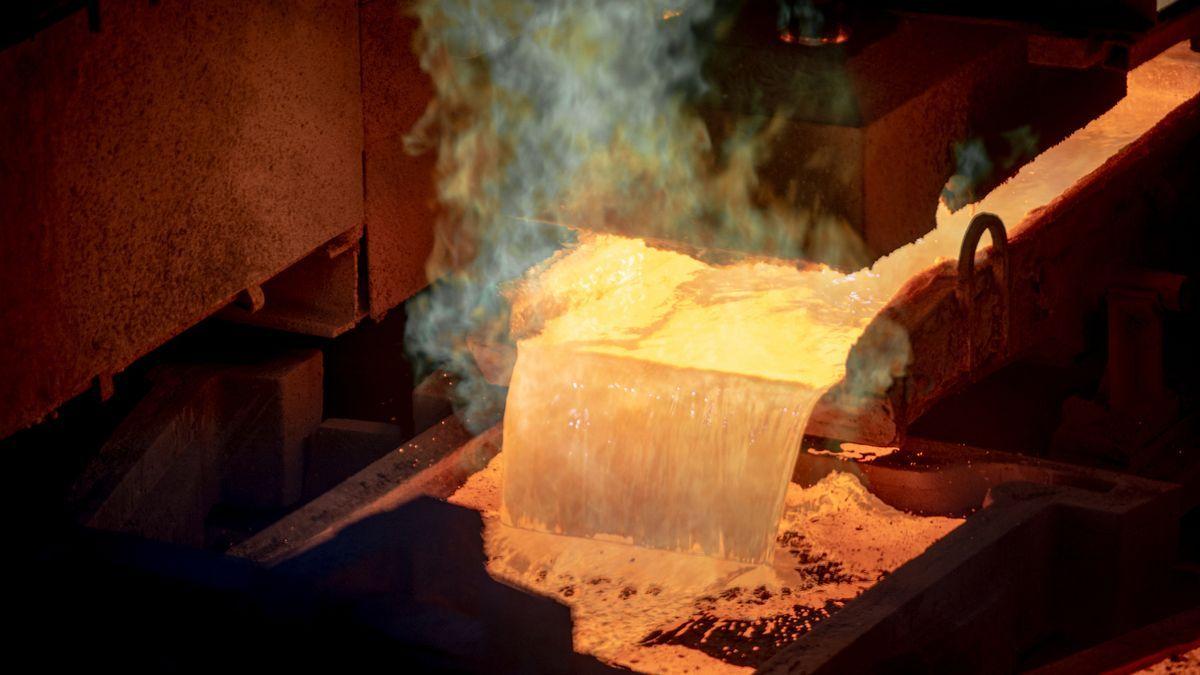
Geopolitical tensions around the Strait of Hormuz have created an often-overlooked supply constraint: sulfuric acid shortages. Sulfuric acid plays a critical role in copper extraction and refining, especially in heap leaching operations. Nearly half of the world's seaborne sulfur supply originates from the Middle East, and shipping disruptions have significantly tightened global availability
1
.China has imposed restrictions on sulfur and sulfuric acid exports to protect domestic industries, further worsening shortages across global markets
1
. Chilean copper production already fell by roughly 6% in the first quarter of 2026 compared with the prior year2
. Major copper-producing nations including Chile, Peru, and Indonesia are grappling with lower output, operational disruptions, and rising refining costs1
.Chinese demand remains a critical factor driving copper prices higher. China released manufacturing PMIs for April that exceeded expectations, with the official PMI reaching 50.3 points against 50.1 expected, while the private RatingDog/S&P Global PMI hit 52.2 points versus the 51.0 forecast
3
. As the world's largest copper consumer, China's recovery in infrastructure spending, grid investment, EV manufacturing, and industrial activity has tightened the physical market1
.
Source: Benzinga
Kathleen Quirk, president and CEO of Freeport-McMoRan Inc., described copper as now in a "new era" tied to electricity demand—encompassing electrification, AI data centers, and grid investment
2
. Without an acceleration in mining investment and recycling efforts, markets face a brutal adjustment where higher prices will serve to ration available copper and displace the least profitable uses3
. The scale of copper required is staggering: a single 1 GW wind turbine requires 2,866 tonnes of copper, translating into processing roughly 477,667 tonnes of ore1
. Investors are increasingly viewing copper as one of the foundational metals powering the AI revolution, with commodities across the board reflecting this structural shift in global demand patterns.Summarized by
Navi
[2]
[3]
1
Technology

2
Technology

3
Policy and Regulation