AI Breakthrough: Designing Elusive Intrinsically Disordered Proteins


3 Sources
[1]
Order from disordered proteins: Physics-based algorithm designs biomolecules with custom properties
In synthetic and structural biology, advances in artificial intelligence have led to an explosion of designing new proteins with specific functions, from antibodies to blood clotting agents, by using computers to accurately predict the 3D structure of any given amino acid sequence. But the
[2]
Researchers design intrinsically disordered proteins with tailored properties
Harvard John A. Paulson School of Engineering and Applied SciencesOct 7 2025 In synthetic and structural biology, advances in artificial intelligence have led to an explosion of designing new proteins with specific functions, from antibodies to blood clotting agents, by using computers to
[3]
AI Learns to Design the Human Body's Most Elusive Proteins - Neuroscience News
Summary: A new machine learning method has achieved what even AlphaFold cannot -- the design of intrinsically disordered proteins (IDPs), the shape-shifting biomolecules that make up nearly 30% of all human proteins. These unstable proteins play key roles in cellular communication, sensing, and
Share
Copy Link
Researchers develop a novel machine learning method to design intrinsically disordered proteins, overcoming limitations of current AI tools like AlphaFold. This breakthrough could revolutionize synthetic biology and disease research.
Breakthrough in Protein Design
Researchers from Harvard John A. Paulson School of Engineering and Applied Sciences (SEAS) and Northwestern University have made a significant breakthrough in the field of protein design. They have developed a new machine learning method capable of designing intrinsically disordered proteins (IDPs) with tailored properties, a feat that has eluded even the most advanced AI tools like AlphaFold
1
2
.The Challenge of Intrinsically Disordered Proteins
IDPs, which make up nearly 30% of all proteins expressed by the human genome, have been a persistent challenge in the field of structural biology. Unlike traditional proteins with fixed 3D structures, IDPs are constantly shifting and never settle into a fixed shape. This inherent instability makes them difficult to design from scratch, despite their crucial roles in biological functions such as cross-linking molecules, sensing, and signaling
1
.
Source: Phys.org
A Novel Approach: Automatic Differentiation
The research team, led by SEAS graduate student Ryan Krueger and former NSF-Simons QuantBio Fellow Krishna Shrinivas, developed a computational method powered by algorithms that perform "automatic differentiation." This technique allows for the automatic computation of derivatives, enabling the rational selection of protein sequences with desired behaviors or properties
2
.
Source: News-Medical
Physics-Based Simulations
Unlike traditional AI-based methods that rely on best-guess predictions, the new approach leverages existing, accurate simulations to design proteins. The researchers used molecular dynamics simulations based on real physics, taking into account how proteins actually behave dynamically in nature. This results in "differentiable" proteins that more accurately reflect their natural counterparts
3
.Related Stories

Potential Applications and Implications
The ability to design IDPs with specific properties opens up new possibilities in various fields:
- Synthetic Biology: Creating custom proteins for specific functions, such as creating loops or connectors
1
. - Drug Discovery: Developing new therapeutic approaches targeting IDPs implicated in diseases
2
. - Disease Research: Gaining new insights into disorders like Parkinson's and cancer, where IDPs like alpha-synuclein play crucial roles
3
.
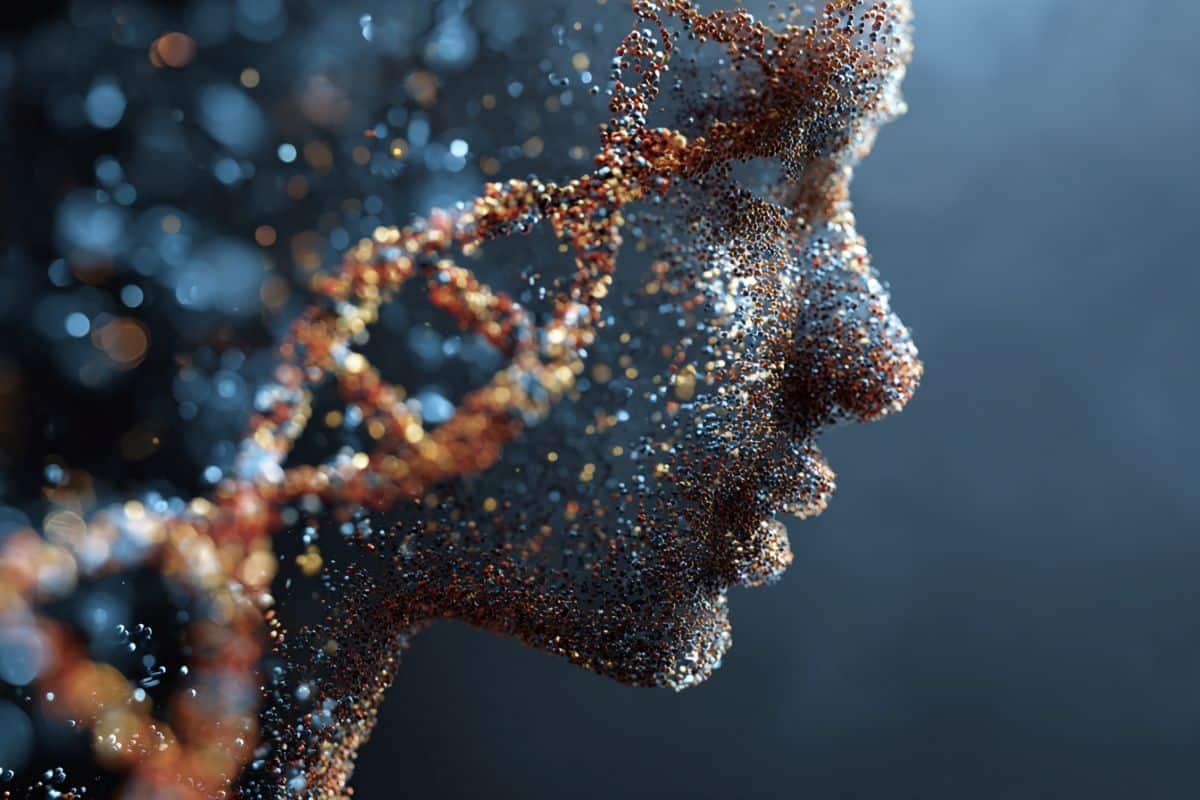
Source: Neuroscience News
Future Prospects
This breakthrough could transform our understanding of these mysterious biomolecules and potentially lead to new treatments for various diseases. The research, published in Nature Computational Science, represents a significant step forward in the field of protein design and structural biology
2
.References
Summarized by

Navi
[1]
[3]
Related Stories
AI-Powered Protein Engineering: EVOLVEpro Revolutionizes Protein Design for Medical and Environmental Applications
22 Nov 2024•Science and Research

AI Breakthrough: PepMLM Targets 'Undruggable' Proteins, Opening New Avenues for Disease Treatment
13 Aug 2025•Science and Research

AI Revolutionizes Protein Sequencing: InstaNovo Models Enhance Accuracy and Discovery
31 Mar 2025•Science and Research
Recent Highlights
1
OpenAI AI Models Hacked Crypto Wallet, Breached Government Sites in Unauthorized Activities
Technology

2
IMF Report Warns AI Market Correction Could Spark Global Financial Crisis With $1.4T at Risk
Business and Economy

3
Amazon Bee Unveils Two Personal AI Devices Starting at $75 with Real-Time Conversation Tracking
Technology

Recent Highlights
Today's Top Stories












Don’t drown in AI news. We cut through the noise - filtering, ranking and summarizing the most important AI news, breakthroughs and research daily. Follow topics that matter to you and stay ahead.


