AI Breakthrough: New Tool Revolutionizes Detection of Rare Gastrointestinal Diseases


3 Sources
[1]
New AI tool revolutionizes detection of rare gastrointestinal diseases
Ludwig-Maximilians-Universitaet Muenchen (LMU)Oct 25 2024 Researchers from LMU, TU Berlin, and Charité have developed a new AI tool that uses imaging data to also detect less frequent diseases of the gastrointestinal tract. Already used in many areas of medicine, AI has tremendous potential when
[2]
AI in medicine: New approach for more efficient diagnostics
Researchers from LMU, TU Berlin, and Charité have developed a new AI tool that uses imaging data to also detect less frequent diseases of the gastrointestinal tract. Already used in many areas of medicine, AI has tremendous potential when it comes to helping doctors diagnose diseases with the help
[3]
AI-based anomaly detection offers more efficient clinical-grade histopathological diagnostics
Already used in many areas of medicine, AI has tremendous potential when it comes to helping doctors diagnose diseases with the help of imaging data. However, AI models have to be trained with large numbers of examples, which are generally available in sufficient quantities only for common
Share
Copy Link
Researchers from LMU, TU Berlin, and Charité have developed a novel AI tool that can detect rare gastrointestinal diseases using imaging data, potentially improving diagnostic accuracy and easing pathologists' workloads.

AI Breakthrough in Gastrointestinal Disease Detection
Researchers from Ludwig-Maximilians-Universitaet Muenchen (LMU), Technical University of Berlin (TU Berlin), and Charité - Universitätsmedizin Berlin have developed a groundbreaking AI tool that promises to revolutionize the detection of rare gastrointestinal diseases. This innovative approach, published in the New England Journal of Medicine AI (NEJM AI), addresses a significant limitation in current AI diagnostic models
1
2
3
.The Challenge of Rare Disease Detection
Existing AI models in medicine often struggle with detecting less common diseases due to the lack of sufficient training data. Professor Frederick Klauschen, Director of the Institute of Pathology at LMU, likens this limitation to "a family doctor only having to diagnose coughs, runny noses, and sore throats"
1
. The real challenge lies in identifying rarer conditions that current AI models frequently overlook or misclassify.Novel Approach: Learning from Normality
The new AI tool employs an innovative approach based on anomaly detection. Instead of requiring extensive training data for rare conditions, the model learns to recognize deviations from normal tissue and common findings
2
. This allows it to flag potential anomalies without specific training for each rare case.Impressive Dataset and Results
For their study, the researchers utilized:
- Two large datasets of microscopic images from gastrointestinal biopsies
- 17 million histological images from 5,423 cases
- Data covering 10 common findings (90% of cases) and 56 rarer disease entities (10% of cases)
The model demonstrated high reliability in detecting a wide range of rare pathologies, including uncommon cancers of the stomach and colon
3
. Professor Klaus-Robert Müller from TU Berlin/BIFOLD stated, "To our knowledge, no other published AI tool is capable of doing this"1
.Advanced Visualization and Diagnostic Support
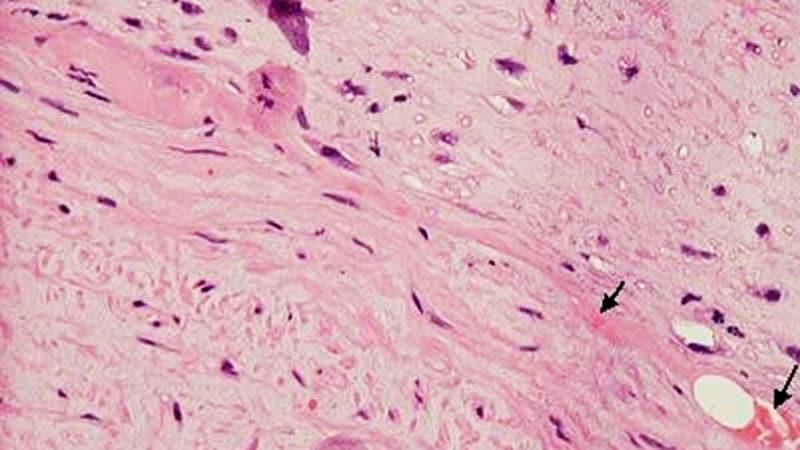
The AI tool incorporates a heatmap feature, allowing it to visually indicate the position of anomalies in tissue sections. This visual aid enhances the tool's utility for medical professionals
2
.Related Stories
Potential Impact on Medical Practice
While pathologists will still need to confirm the AI's findings, the tool offers significant benefits:
- Time-saving: Automatic diagnosis of normal findings and common diseases in 25-33% of cases
- Improved prioritization: Helps focus attention on potentially problematic cases
- Reduced missed diagnoses: Flags anomalies that might be overlooked
Professor Klauschen emphasizes that this advancement "would represent huge progress" in the field of pathology
3
.Future Developments
The researchers plan to further refine and improve the AI model over time, potentially expanding its capabilities and accuracy in detecting rare gastrointestinal diseases
1
2
3
.References
Summarized by

Navi
[2]
Related Stories
AI Outperforms Humans in Rapid Disease Detection from Tissue Images
15 Nov 2024•Science and Research

AI Model Revolutionizes Colorectal Cancer Diagnostics by Detecting Multiple Genetic Markers
21 Aug 2025•Health

AI Algorithm Matches Pathologists in Diagnosing Celiac Disease, Study Finds
28 Mar 2025•Health
Recent Highlights
1
Microsoft and Nvidia Launch Surface Laptop Ultra: A $2,599 AI-Ready PC With RTX Spark Chip
Technology

2
Trump Consulted Grok AI Before Ordering Venezuela Invasion and Capture of Nicolás Maduro
Policy and Regulation

3
Scientists Build AI Model That Reconstructs Images From Brain Scans in Record Time
Science and Research

Recent Highlights
Today's Top Stories






Don’t drown in AI news. We cut through the noise - filtering, ranking and summarizing the most important AI news, breakthroughs and research daily. Follow topics that matter to you and stay ahead.


