Anthropic's $1.5 trillion IPO is now a public test of whether AI economics hold up


6 Sources
[1]
With the biggest IPO of all time, Anthropic's 'good guy' reputation is on the line
Today is a new beginning for Anthropic: a years-in-the-making IPO that beat out SpaceX for most valuable of all time, having raised $81.3 billion and set an important precedent for the other public AI lab debuts to come. But it's not simply a financial milestone. Anthropic was founded on the idea
[2]
Anthropic completes its IPO and joins the ranks of the most valuable corporations
The company behind the Claude chatbot is valued at roughly $1.5 trillion. Its stock offering may for now settle jitters about the sustainability of the AI boom. Artificial intelligence start-up Anthropic finalized its initial public offering Wednesday, turning the six-year-old AI pioneer into one
[3]
Anthropic's IPO signals a new (old) tech era
Why it matters: The companies that AI was supposed to disrupt are among the biggest financial beneficiaries of its rise. Catch up quick: Amazon and Google each invested in Anthropic when it was private, and their shares will convert to a special nonvoting class of stock when the AI company starts
[4]
Amazon and Google will own nearly 30% of Anthropic after today's IPO, netting a roughly $260 billion paper windfall
Amazon and Google spent the last three years building AI models to compete with Anthropic. As of Thursday morning, they also own 28% of it. When Anthropic starts trading on the Nasdaq under the ticker ANT, Amazon will hold 14.6% of the Claude maker and Google 13.4%, according to Anthropic's final
[5]

Anthropic Raises A Whopping $81 Billion In Record IPO
Anthropic is the first major frontier AI model developer to go public. Nov 18 (Reuters) - Anthropic has raised $81.3 billion in the largest stock-market debut on record after upsizing its offering, valuing the Claude chatbot maker at $1.5 trillion in a deal that defies concerns about the AI trade
[6]

Anthropic raises record $81.3 billion in historic IPO, reaches $1.5 trillion valuation
Anthropic has raised $81.3 billion in the largest stock-market debut on record after upsizing its offering, valuing the Claude chatbot maker at $1.5 trillion in a deal that defies concerns about the AI trade and tech fundraising prospects. The first major frontier AI model developer to go public,
Share
Copy Link
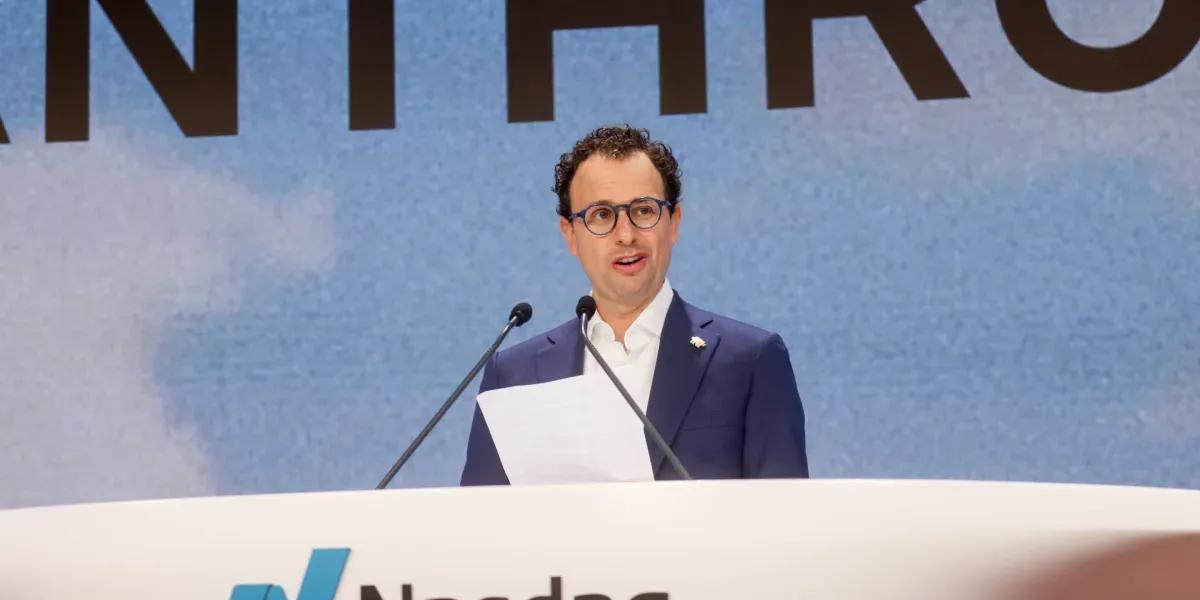
Anthropic completed the largest stock-market debut in history on Wednesday, raising $81.3 billion in an IPO that arrives as a test of investor confidence in the AI boom
5
6
1
. The same day, a coalition of safety researchers and academics issued a statement alleging that the company behind Claude is not a safe AI company1
.
Source: Fortune
Priced above range
The maker of the Claude chatbot priced its shares at $83, above the $70 to $78 range it had marketed, after upsizing the offering about 19% to 980 million shares
5
6
. That demand pushed its fully diluted valuation, which counts stock options, employee shares and other claims on the company, to about $1.5 trillion. Counting only shares outstanding, it is about $1.1 trillion. Either figure puts the six-year-old frontier lab among the roughly dozen most valuable companies in the world, by one outlet's count2
5
6
3
.
Source: Washington Post
It is the first major frontier AI developer to go public
5
6
1
. It beat the previous record holder, Elon Musk's SpaceX, whose June debut was led by the same two banks, Goldman Sachs and Morgan Stanley5
6
.The debut arrives amid pressure on AI-linked stocks and the abrupt departure of Nvidia's Jensen Huang
5
6
. US futures rose on the news while Asian tech shares stayed weak5
6
.The economics under the record
The filing behind the IPO shows a business growing fast and spending faster, per its figures. Its annualized revenue run rate reached $81 billion on October 31, up $10 billion in a month, per the filing
5
6
. Third-quarter revenue rose 47% from the prior quarter to $16.96 billion5
6
. The customer base has widened too: 11,900 customers now spend at least $100,000 a year, up from about 1,500 at the end of last year5
6
.But the same quarter flipped to an operating loss of $567 million, after an operating profit the quarter before. The larger $23.3 billion net loss mostly reflects accounting charges on convertible bonds rather than the cost of running the business
5
6
. Compute is the bill that keeps growing: nearly $9 billion in the first half of 2026, almost four times a year earlier, plus another $5 billion in the third quarter5
6
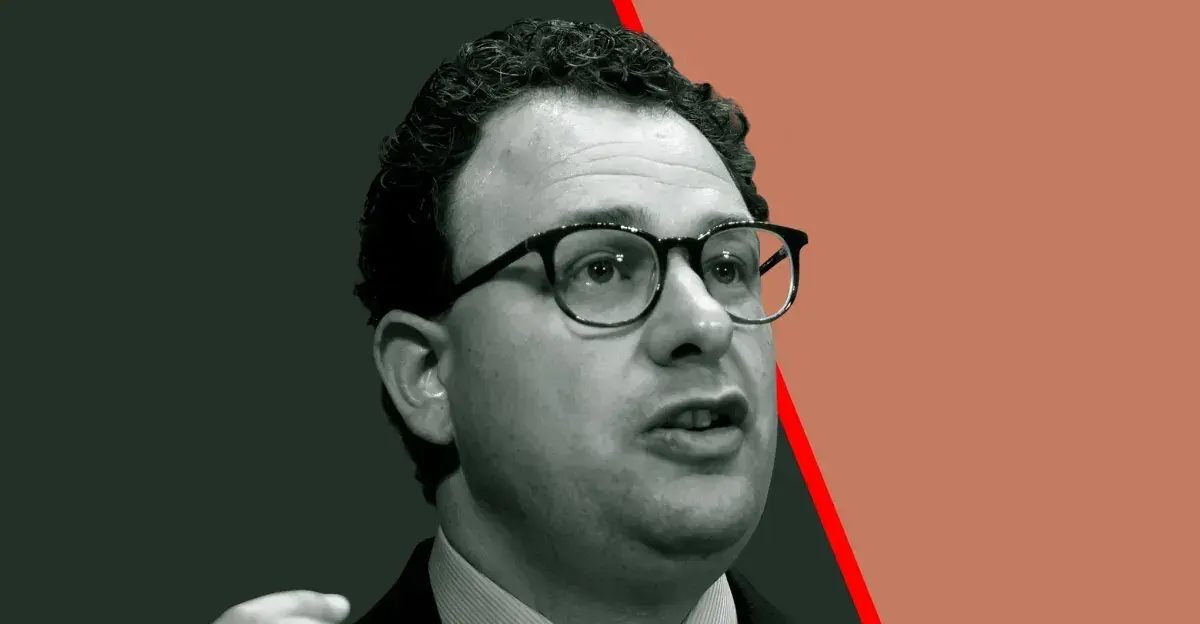
.CEO Dario Amodei, speaking with Jamie Dimon last Friday, named the dilemma: "Compute is the deepest business dilemma that the company faces. If you buy too much, of course you can financially overextend yourself. If you buy too little, then you can't support inference for customers, and even more importantly ... you can't do the R&D."
1
Source: The Verge
The company has committed to nearly $900 billion of computing purchases from partners including Amazon and Google, and its own filing warns what happens if the financing behind them wobbles: "If such financing or support becomes unavailable or more costly, contracted capacity may be delayed, repriced, reduced, or not delivered."
5
6
Related Stories

Who owns it, and who checks it
Anthropic's two biggest cloud suppliers are now its largest shareholders. Together they will hold roughly 28% of the company in shares that carry no votes, per the final prospectus
3
4
. Per Fortune's arithmetic at the IPO price, their combined paper gain is roughly $260 billion, more than triple what the IPO itself raised4
.The ties run deeper than shares. Anthropic has committed at least about $121.3 billion to Google and $110 billion to Amazon over the coming years, payable regardless of how much it actually uses
4
. And about 44% of its revenue in the year's first nine months flowed through cloud marketplaces run by Amazon, Google and Microsoft, up from 11% in 20234
. The filing notes those clouds see Anthropic's pricing and may favor their own compute needs4
. The prospectus concedes the point itself, describing partners that "simultaneously serve as our investors, customers, distribution partners, and competitors" and conflicts the company says are hard to fully predict or manage3
4
.Regulators have looked at this structure before. An FTC staff report warned in January 2025 that such deals could raise switching costs
3
4
. Months later, the Justice Department abandoned its effort to force Google to sell its AI investments, after Anthropic argued in court that a forced sale would damage competition3
4
. Columbia law professor Tim Wu argues the real risk is platforms and labs cooperating rather than competing: "We need the AI industries and the tech platforms to be fighting with each other, not cooperating."3
Anthropic is a Public Benefit Corporation, but its founders retain control through a special-class share. Its Long-Term Benefit Trust appoints four of seven board members, short of a majority
1
4
. "Neither the Trust or the trustees have any decisionmaking authority ... over day to day decisions," said Hamza Chaudhry of the Future of Life Institute. "So I do not have strong hopes for the LTBT being a key mechanism for governance after they go public."1
The company's stated rationale for the pace is that safety requires being at the frontier. Policy chief Sarah Heck put it in September: "You can't do safety from second place."
1
The Center for AI Safety statement, signed by figures from Hugging Face and Harvard, alleges the opposite: that Anthropic uses safety branding to court investors while weakening pledges and lobbying for favorable rules1
. Several former safety employees have broken publicly with the company, including its former head of safeguards research, who left in February1
. Anthropic did not reply when asked for comment1
.The listing now puts all of it on public display, quarter by quarter. As Minotaur Capital portfolio manager Armina Rosenberg put it before the debut: "But one listing won't settle the debate. There's a genuine wall of worry right now, and it'll take a few things to climb it. Once Anthropic reports publicly, it becomes one of the clearest tests of whether the economics of AI are holding up."
5
References
Summarized by

Navi
[2]
Related Stories
Anthropic IPO Targets $1.4 Trillion Valuation Despite AI Market Uncertainty
10 Nov 2026•Business and Economy
Anthropic IPO Pressured by Stalling AI Spending and Ballooning $895B Compute Costs
03 Nov 2026•Business and Economy
Anthropic IPO Filing Warns AI Could Blackmail Humans, Become Sentient, Pose Existential Threats
26 Oct 2026•Business and Economy

Recent Highlights


Recent Highlights
Today's Top Stories








Don’t drown in AI news. We cut through the noise - filtering, ranking and summarizing the most important AI news, breakthroughs and research daily. Follow topics that matter to you and stay ahead.


