AI Breakthroughs in Decoding Animal Communication: A Step Towards Interspecies Dialogue


2 Sources
[1]
AI could help us "translate" the language of animals - Softonic
The use of AI could expand the vocabularies we know of animals Shane Gero, a biologist specializing in cetaceans from Carleton University in Canada, has been researching whale communication for over 20 years. According to his work, sperm whales have specific sounds that identify their families and
[2]
The Dr. Dolittle Dream Team: Can We Talk To Animals Using AI?
For centuries, humans have dreamt about talking to animals. From the tales of Dr. Dolittle to scientific studies on animal behavior, there has always been a desire to know what animals are saying. With advancements in AI, this may soon be the case. Researchers are now using AI to decode animal
Share
Copy Link
Recent AI-powered studies have made significant progress in understanding and translating animal communication, bringing us closer to the possibility of interspecies dialogue. This development has implications for conservation efforts and our understanding of animal cognition.

AI Advances in Decoding Animal Communication
Recent developments in artificial intelligence (AI) are bringing us closer to understanding and potentially "translating" animal communication. This breakthrough could revolutionize our interaction with various species and significantly impact conservation efforts.
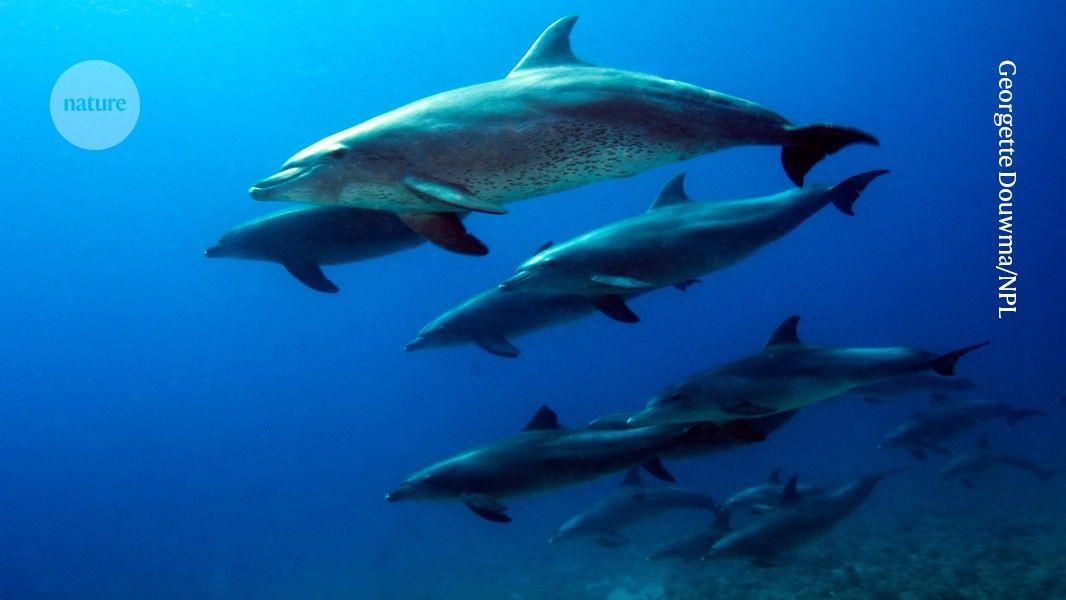
Sperm Whale Communication Studies
Shane Gero, a cetacean biologist from Carleton University, has been studying whale communication for over two decades. His research reveals that sperm whales use specific sounds to identify their families and employ "dialects" based on their location
1
. The CETI Project (Cetacean Translation Initiative), founded by David Gruber, focuses on decoding the acoustic communication of sperm whales1
.AI's Role in Analyzing Animal Sounds
AI has proven instrumental in efficiently analyzing animal sounds, allowing researchers to identify complete conversations and subtle variations. Gero's work, funded by the CETI Project, has collected data from more than 30 sperm whale families in the Caribbean. These whales use sound clicks called "codas" to communicate, with each group having unique diets, behaviors, and dialects
1
.Expanding to Other Species
The application of AI in animal communication studies extends beyond whales:
-
African Elephants: Behavioral ecologist Mickey Pardo has demonstrated that African elephants emit unique sounds that could be names. AI models showed these sounds have a 27.5% accuracy in identifying individuals
1
. -
Common Marmosets: Neuroscientist David Omer found that tamarins from the same family share acoustic characteristics when "naming" each other
1
. -
Crows: Machine learning tools are mapping crow calls, potentially exploring animal self-awareness
1
.
The Earth Species Project
The Earth Species Project (ESP), founded by technologists, is at the forefront of this research. Using machine learning, ESP aims to understand animal communication across various species. Katie Zacarian, CEO of ESP, believes we are on the verge of applying human language advances to animal communication
2
.Related Stories


Challenges and Future Prospects
Despite these advancements, translating animal sounds remains a significant challenge. David Gruber cautions against assuming that technology developed for one species can be directly applied to others
1
. However, the potential of AI in this field is immense, not only for deciphering existing patterns but also for potentially expanding animal vocabularies.Implications for Conservation and Interspecies Communication
The ultimate goal of these studies goes beyond mere understanding. Researchers hope to use this knowledge to promote species conservation and potentially enable two-way communication between humans and animals
2
. This could lead to unprecedented insights into animal cognition and behavior, fundamentally changing our relationship with the natural world.References
Summarized by

Navi
[2]
Related Stories
Recent Highlights
1
Meta Unveils Muse Wonder Frontier AI Models, Claims Performance Matching OpenAI and Anthropic
Technology

2
IMF Report Warns AI Market Correction Could Spark Global Financial Crisis With $1.4T at Risk
Business and Economy

3
OpenAI Releases 722 AI-Generated Math Solutions, Triggering Existential Crisis in Mathematics
Technology

Recent Highlights
Today's Top Stories







Don’t drown in AI news. We cut through the noise - filtering, ranking and summarizing the most important AI news, breakthroughs and research daily. Follow topics that matter to you and stay ahead.


