AI mammography screening cuts aggressive breast cancer diagnoses by 12% in landmark trial


7 Sources
[1]
AI-assisted mammograms cut risk of developing aggressive breast cancer
Interval cancers are aggressive tumours that grow during the interval after someone has been screened for cancer and before they are screened again, and AI seems to be able to identify them at an early stage People who are screened for breast cancer by AI-supported radiologists are less likely to
[2]
Is AI Better Than Radiologists at Interpreting Mammograms?
A commercially available artificial intelligence (AI) system can improve upon human-only mammogram screening but not replace radiologist readings, suggested the findings of a new study. Final results of the Mammography Screening with Artificial Intelligence (MASAI) trial, published in The Lancet,
[3]
AI-supported mammography screening results in fewer aggressive and advanced breast cancers
Artificial intelligence (AI)-supported mammography identifies more cancers during screening and reduces the rate of breast cancer diagnosis by 12% in the years following, finds the first randomized controlled trial of its kind. The trial involved over 100,000 Swedish women, and its results are
[4]
AI use in breast cancer screening cuts rate of later diagnosis by 12%, study finds
Swedish study of 100,000 women found higher rate of early detection, suggesting potential to support radiologists The use of artificial intelligence in breast cancer screening reduces the rate of a cancer diagnosis by 12% in subsequent years and leads to a higher rate of early detection, according
[5]

AI helps doctors spot breast cancer in scans: world-first trial
Paris (France) (AFP) - Artificial intelligence helps doctors spot more cases of breast cancer when reading routine scans, a world-first trial found Friday. The results suggest countries should roll out programmes taking advantage of AI's scanning power to ease the workload of short-staffed
[6]

AI-assisted mammograms result in fewer aggressive and advanced breast cancers, study suggests
The AI was trained and tested with more than 200,000 breast exams from various institutions in more than 10 countries. AI-supported mammography results in fewer aggressive and advanced breast cancers, according to a study. It detected more women with clinically relevant cancers and the authors
[7]

AI-Assisted Mammograms Catch More Hard-To-Detect Breast Cancers, Clinical Trial Shows
By Dennis Thompson HealthDay ReporterFRIDAY, Jan. 30, 2026 (HealthDay News) -- Artificial intelligence (AI) can help reduce the number of breast cancers found between mammogram screenings, clinical trial results show. There was a 12% reduction in cancer diagnoses in the years following
Share
Copy Link
A groundbreaking Swedish trial involving over 100,000 women shows AI-supported mammography screening reduces interval cancers by 12% and detects 29% more cases than standard screening. The MASAI trial demonstrates AI can support radiologists in early detection while cutting workload by 44%, without increasing false positives.

AI-Supported Mammography Delivers Breakthrough Results in Breast Cancer Detection
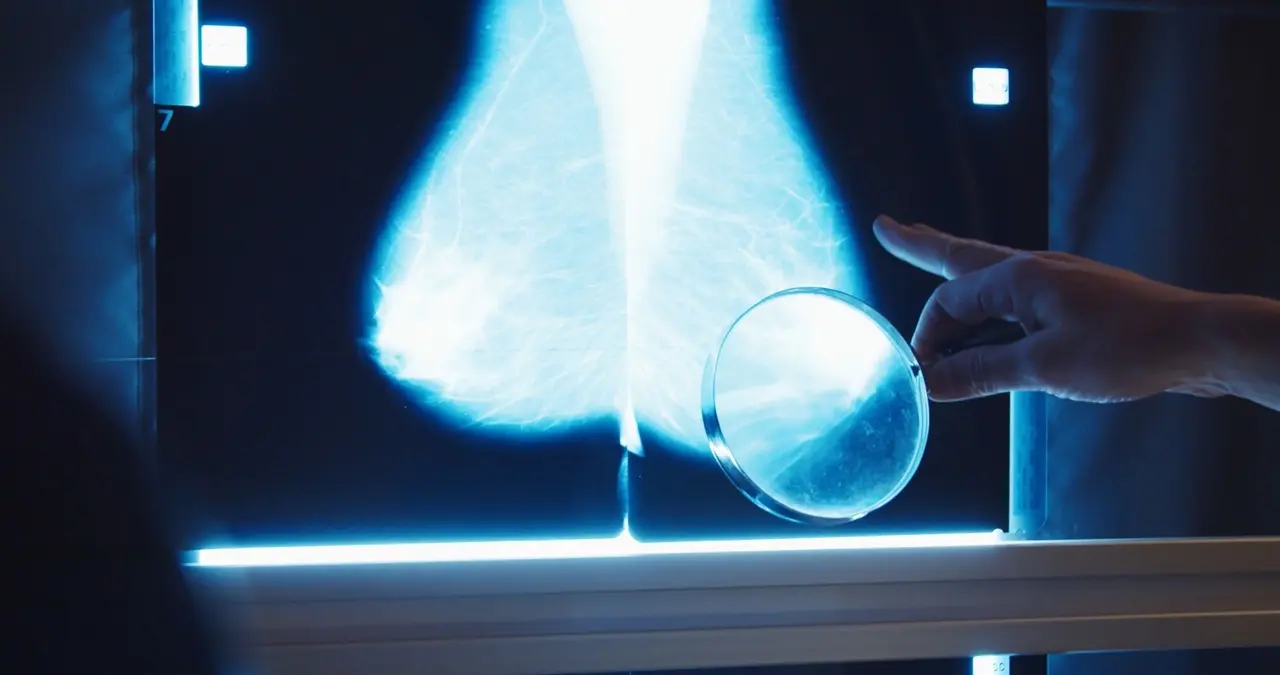
The first randomized controlled trial evaluating AI in mammography screening has revealed that AI-supported mammography significantly improves breast cancer detection while reducing aggressive interval cancers. The MASAI trial, conducted across four sites in Sweden between April 2021 and December 2022, enrolled 105,934 women and compared AI-assisted screening against the European standard of double reading by radiologists
1
2
.Kristina Lång from Lund University, the study's lead author, described the findings as "extremely thrilling," noting this marks the largest trial to date examining AI use in cancer screening
3
. Published in The Lancet, the results demonstrate that AI can enhance early detection of clinically relevant breast cancers and may improve outcomes for women participating in screening programs2
.How AI-Supported Mammography Works in Practice
The AI system, developed by biotech firm ScreenPoint Medical and trained on more than 200,000 mammography examinations from 10 countries, analyzes scans and assigns a risk score ranging from 1 to 10 based on visual patterns
1
5
. Scans receiving scores of 1 to 9 are assessed by one experienced radiologist, while those scoring 10—indicating cancer is most likely present—receive double reading by two radiologists. The AI also highlights suspicious areas to support radiologists in their analysis3
.This approach stands in contrast to standard European screening, where each mammogram is assessed by two radiologists without AI assistance. The trial participants underwent digital breast tomosynthesis, also known as pseudo-three-dimensional mammography
2
.Interval Cancers Reduced by 12% with AI Support
Interval cancers—aggressive tumors that develop rapidly between screening appointments—pose a significant challenge in breast cancer screening. These cancers tend to be particularly aggressive and more likely to spread elsewhere in the body
1
. During the two-year follow-up period, the AI-supported group experienced 1.55 interval cancers per 1,000 women compared to 1.76 per 1,000 in the standard screening group, representing a 12% reduction3
.Jessie Gommers, first author and PhD student at Radboud University Medical Centre in the Netherlands, explained that interval cancer rates serve as an important measure reflecting both screening program effectiveness and test performance. "Interval cancers are often more aggressive and are associated with poorer outcomes than cancers detected at screening," Gommers noted
2
.Cancer Detection Increases Without Rising False Positives
The trial found AI support increased cancer detection by 29% compared to standard screening—a remarkable improvement that didn't come at the cost of accuracy
2
. In the AI-supported group, 81% of cancer cases were detected at screening versus 74% in the control group, a 9% increase3
4
.Critically, false positives remained similar in both groups at 1.5% for the AI-supported arm and 1.4% for standard screening
2
3
. This indicates AI-supported screening didn't increase unnecessary recalls, which can cause anxiety and additional diagnostic procedures for women. The AI-supported group also showed 16% fewer invasive cancers, 21% fewer large tumors, and 27% fewer aggressive sub-type cancers2
4
.Radiologist Workload Reduced by 44% While Maintaining Human Oversight
Previously published interim results from the MASAI trial revealed that AI-supported screening reduced radiologist workload by 44%—a significant benefit given widespread staffing pressures in healthcare
2
5
. However, researchers emphasize that AI serves as a support tool for radiologists rather than a replacement. Lång stressed that women participating in screening want "a human in the loop," and she agrees with this approach1
.Final recall decisions remained entirely with radiologists, with AI helping them avoid overlooking suspicious regions
2
. Gommers noted that while the study doesn't support replacing healthcare professionals with AI, the results justify using AI to ease substantial pressure on radiologists, enabling these experts to focus on other clinical tasks and potentially shorten waiting times for patients3
.Related Stories



Implementation Requires Caution and Continuous Monitoring
Despite the promising results, Lång cautioned that introducing AI in healthcare must be done carefully. "Introducing AI in healthcare must be done cautiously, using tested AI tools and with continuous monitoring in place to ensure we have good data on how AI influences different regional and national screening programmes and how that might vary over time," she stated
4
.The study has limitations that warrant further research. It was conducted in southwest Sweden using a single AI system, so additional research in diverse populations and with other AI tools is needed
2
. The trial didn't assess whether AI-supported screening performs better in certain ethnic groups, though ongoing trials in the UK will help address this question1
. Fiona Gilbert at the University of Cambridge noted that countries need to see the impact on their own populations, where people are screened at different frequencies and represent different ethnicities1
.What This Means for Breast Cancer Screening Programs
With more than 2.3 million women diagnosed with breast cancer globally in 2022, according to the World Health Organization, and breast cancer remaining the leading cause of death in women aged 35 to 50, improvements in screening could save significant numbers of lives
4
5
.Lång expects the AI approach to be rolled out across southwest Sweden within a few months based on these results
1
. However, it will likely take about five years for other countries to complete similar trials justifying broader implementation. Cost-effectiveness also needs establishment, though some estimates suggest AI assistance may be worth investing in if it cuts interval cancer rates by at least 5%—a threshold this trial exceeded1
.Simon Vincent, chief scientific officer at Breast Cancer Now, emphasized the significance: "This first trial underlines the huge potential of AI to support radiologists in breast cancer screening. Screening is a vital tool for early detection, and the sooner the disease is found, the better chance of successful treatment"
4
. Trials launched in the UK will be important in determining the safest and most effective way to use these tools to find more cancers early.References
Summarized by

Navi
[3]
Related Stories
Recent Highlights



Recent Highlights
Today's Top Stories








Don’t drown in AI news. We cut through the noise - filtering, ranking and summarizing the most important AI news, breakthroughs and research daily. Follow topics that matter to you and stay ahead.


