AI Revolutionizes Breast Cancer Detection: New Tools Predict Risk and Catch Missed Tumors


3 Sources
[1]
AI tool identifies women at high risk of interval breast cancer
In a study of more than 100,000 screening mammograms, researchers demonstrated the potential of an AI tool to help identify women at higher risk of developing interval breast cancer, which is breast cancer that is diagnosed between regular screening mammograms. Results of the new study were
[2]
AI mammogram readings are already helping doctors detect breast cancer
Companies help fuel breast cancer research as proposed cuts to federal funding loom When a radiologist reviewed Deirdre Hall's mammogram images last summer, everything seemed fine. There were no shadows or lumps or irregular patches that could signal cancer. The doctor gave it a second look for
[3]
EXCLUSIVE: 'Revolutionary' AI-Powered Mammograms Can Predict Breast Cancer Risk
Routine mammograms are the mainstay of breast cancer screening. But, with a new type of analysis powered by artificial intelligence, doctors may be able to also predict whether or not you'll develop breast cancer in the next few years. The technology, called Clairity Breast, is the first of its
Share
Copy Link
Breakthrough AI technologies are transforming breast cancer screening by predicting future cancer risk and identifying tumors that radiologists might miss. Multiple studies show promising results for AI-powered mammogram analysis in improving early detection.
AI Tools Identify High-Risk Women for Interval Breast Cancer
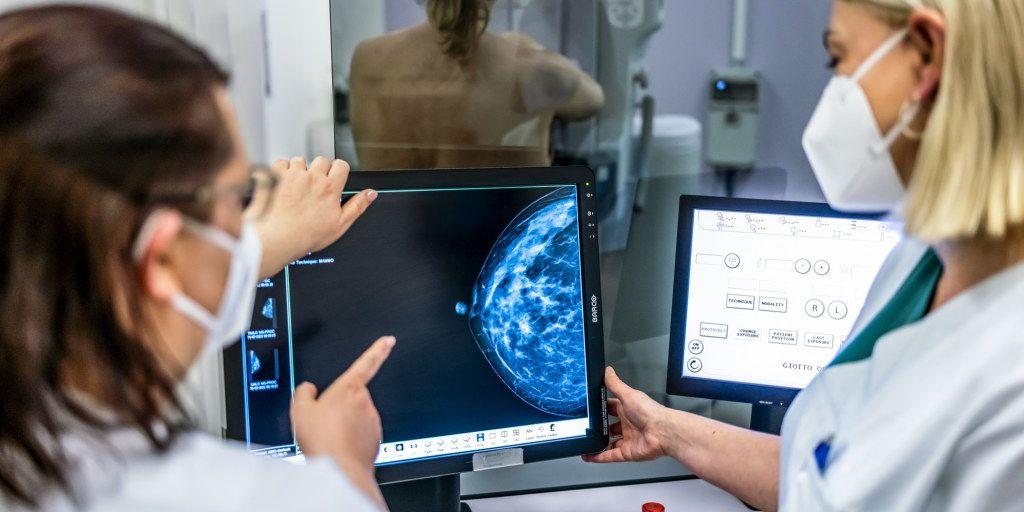
Researchers at the University of Cambridge have demonstrated the potential of artificial intelligence to identify women at higher risk of developing interval breast cancer—cancers that emerge between regular screening mammograms. In a comprehensive study of 134,217 screening mammograms from women aged 50-70, the AI tool Mirai successfully predicted interval cancers with remarkable precision
1
.
Source: NBC
The study, published in Radiology, revealed that AI could identify 42.4% of interval cancers by focusing on the top 20% of risk scores. "Interval cancers generally have a worse prognosis compared with screen-detected cancers, because they tend to be either larger or more aggressive," explained co-author Professor Fiona J. Gilbert from the University of Cambridge
1
.Real-World Success Stories in Cancer Detection
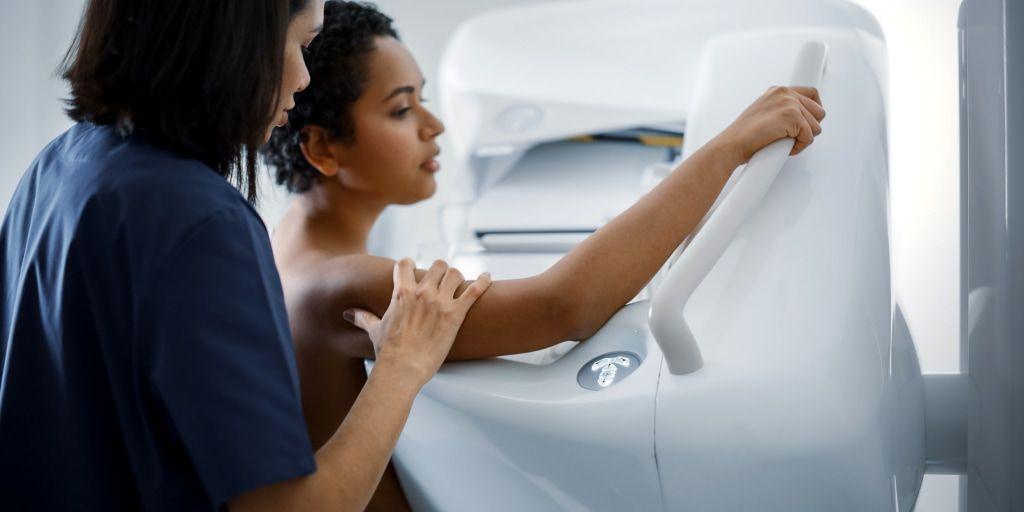
The practical impact of AI-assisted mammogram reading is already saving lives in clinical settings. Deirdre Hall, a 55-year-old respiratory therapist, experienced this firsthand when AI software flagged a suspicious area in her mammogram that radiologists had initially deemed normal. The AI's intervention led to the discovery of four Stage 1 cancerous tumors that would have otherwise been missed
2
.
Source: TODAY.com
"This would have been completely missed without the AI," said Dr. Sean Raj, chief medical officer at SimonMed Imaging, where Hall received her screening. The case highlights how AI can detect cancers camouflaged by dense breast tissue, which affects approximately 40% of U.S. women and makes mammogram interpretation particularly challenging
2
.FDA-Approved Predictive Technology Enters Market
Clairity Breast has become the first AI technology of its kind to receive FDA authorization for predicting breast cancer risk. Unlike traditional risk assessment methods that rely on family history and genetic factors, Clairity analyzes mammogram images to generate a probability score for developing breast cancer within the next five years
3
.Dr. Connie Lehman, founder of Clairity and chief of breast imaging at Massachusetts General Hospital, explained that "the computer can learn the patterns in a mammogram in a woman that will develop breast cancer in the next five years and distinguish those from women that will not" .
Related Stories


Performance Metrics and Clinical Implementation
Studies demonstrate varying but promising accuracy rates for AI mammogram analysis. The Lunit software used in Hall's case achieved 88.6% accuracy in identifying cancers, according to a 2024 JAMA Oncology study of over 8,800 women in Sweden. However, the technology also produced false positives 7% of the time, compared to the typical 10% false positive rate for standard mammograms
2
.At UC San Francisco, researchers have used AI to dramatically reduce diagnosis timelines, cutting the average time from mammogram to biopsy by 87%—from 73 days to just nine days for cancer patients
2
.Widespread Adoption Across Medical Centers
Major academic medical centers are increasingly integrating AI into their breast imaging programs. Institutions including MD Anderson Cancer Center, Mount Sinai Hospital, University of Pennsylvania's Perelman Center, and MedStar Health have adopted AI-assisted mammogram reading
2
.
Source: Medical Xpress
"The nice thing about AI is that it doesn't get tired," noted Dr. Lisa Abramson, associate professor of radiology at Mount Sinai. "It's not going to replace the job or the expertise of radiologists, but I think it's only going to enhance our ability to detect more and more breast cancers"
2
.References
Summarized by

Navi
[1]
Related Stories
Recent Highlights



Recent Highlights
Today's Top Stories









Don’t drown in AI news. We cut through the noise - filtering, ranking and summarizing the most important AI news, breakthroughs and research daily. Follow topics that matter to you and stay ahead.


