Nvidia's $20B Groq bet and Vera Rubin platform reveal how AI inference is splitting the GPU era


3 Sources
[1]
Jensen Huang discusses the economics of inference, power delivery, and more at CES 2026 press Q&A session -- 'You sell a chip one time, but when you build software, you maintain it forever'
Developing chips for AI data centers is a complicated business. When Nvidia CEO Jensen Huang spoke at Nvidia's CES 2026 keynote, the conversation stretched across Rubin, power delivery, inference economics, open models, and more. Following this, Tom's Hardware had the opportunity to sit down and
[2]
A deeper look at the tightened chipmaking supply chain, and where it may be headed in 2026 -- "nobody's scaling up," says analyst as industry remains conservative on capacity
We sit down with two high-profile analysts to get some answers about where the chipmaking industry might be headed next. From memory shortages to rising GPU prices, 2025 seemed like a year of significant scarcity in the supply chain for all things semiconductors. But what does the future hold for
[3]
The end of the general-purpose GPU: Why Nvidia's $20B Groq bet is a survival play for the disaggregated era
Nvidia's $20 billion strategic licensing deal with Groq represents one of the first clear moves in a four-front fight over the future AI stack. 2026 is when that fight becomes obvious to enterprise builders. For the technical decision-makers we talk to every day -- the people building the AI
Share
Copy Link
Nvidia CEO Jensen Huang outlined a major strategic shift at CES 2026, emphasizing serviceability and inference economics while announcing a $20 billion Groq licensing deal. The move signals the end of one-size-fits-all GPUs as AI inference workloads split into prefill and decode phases, with the Vera Rubin platform designed for modular maintenance and continuous operation in constrained power environments.
Nvidia Shifts Focus to AI Inference Economics and System Uptime
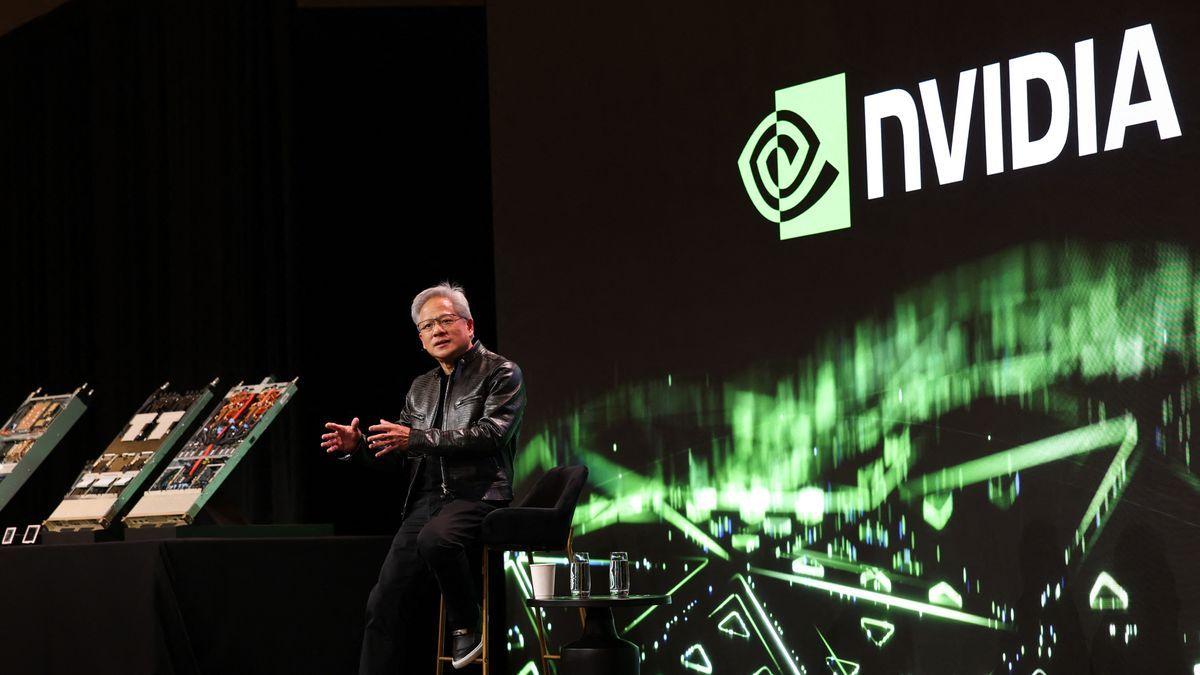
Nvidia CEO Jensen Huang used CES 2026 to signal a fundamental shift in how the company approaches AI deployment, moving beyond raw performance metrics to emphasize serviceability, power delivery, and the economics of keeping systems productive. During a press Q&A session in Las Vegas, Huang spent considerable time discussing downtime and maintenance rather than traditional benchmarks, reflecting the realities facing hyperscalers operating million-dollar racks at scale
1
.The conversation comes as AI inference has surpassed training in total data center revenue for the first time, according to Deloitte, marking what industry observers call the "Inference Flip"
3
. This transition is forcing Nvidia to rethink its approach to hardware architecture and market positioning.Vera Rubin Platform Targets Modular Serviceability
The Vera Rubin platform represents Nvidia's answer to a costly operational problem: when components fail in current Grace Blackwell systems with 72 GPUs and nine switch trays, entire racks worth approximately $3 million go offline during repairs. "When we replace something today, we literally take the entire rack down. It goes to zero," Huang explained during the Q&A
1
.
Source: Tom's Hardware
Vera Rubin's tray-based architecture breaks racks into modular, serviceable units that can be replaced without shutting down the entire system. Assembly time drops from two hours per node to five minutes, and the platform eliminates 43 cables while achieving 100% liquid cooling. "You literally pull out the NVLink, and you keep on going," Huang said, emphasizing that software updates can occur while systems remain operational
1
.The $20 Billion Groq Deal and Disaggregated Architecture
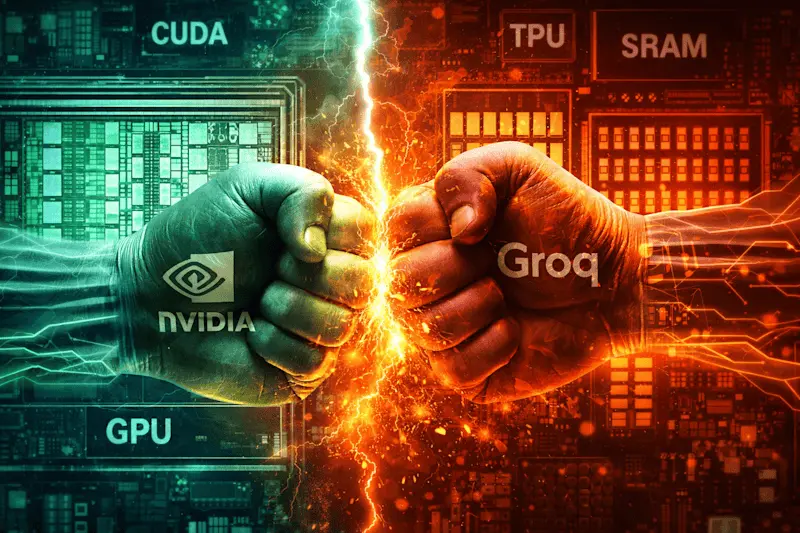
Nvidia's $20 billion strategic licensing deal with Groq marks a recognition that the general-purpose GPU era for AI inference is ending. The AI inference landscape is fragmenting into two distinct phases: prefill and decode, each requiring different hardware optimizations
3
.
Source: VentureBeat
The prefill phase ingests massive context windows—potentially 100,000 lines of code or hours of video—and is compute-bound, playing to Nvidia's traditional GPU strengths. The decode phase generates tokens one at a time and is memory-bandwidth bound, where Groq's SRAM-based language processing unit excels. According to Michael Stewart of Microsoft's M12 fund, moving data in SRAM requires just 0.1 picojoules compared to 20 to 100 times more energy for DRAM-to-processor transfers
3
.The Rubin CPX component will handle prefill workloads using 128GB of GDDR7 memory instead of expensive High Bandwidth Memory (HBM), while Groq-licensed silicon will serve as the high-speed decode engine. This disaggregated era approach allows Nvidia to maintain its CUDA software ecosystem dominance while addressing specialized inference workloads
3
.Related Stories

Chipmaking Supply Chain Faces Structural Tightness
The semiconductor market is experiencing what analyst Ben Bajarin calls a "gigacycle," with global revenues projected to climb from roughly $650 billion in 2024 to over $1 trillion by decade's end. Yet capacity constraints remain acute, particularly in memory. "If you look at the forecasts for wafer capacity or substrate capacity, nobody's scaling up," Bajarin cautioned
2
.
Source: Tom's Hardware
AI accelerators represented less than 0.2% of wafer starts in 2024 yet generated roughly 20% of semiconductor revenue, creating unprecedented concentration. The chipmaking supply chain faces particular pressure from HBM production, which consumes three to four times as many wafers per gigabyte as standard DDR5, according to analyst Stacy Rasgon. This shift toward HBM for AI accelerators reduces total DRAM supply, pushing up prices for consumer hardware and standard data center equipment
2
.Memory giant Micron recently closed its consumer-facing Crucial business to focus on more lucrative AI-driven products, signaling how market demand is reshaping priorities. Memory tightness could persist beyond 2026, with knock-on effects for OEMs and system builders facing higher bill-of-materials costs
2
.Power Delivery and Real-World Operational Challenges
Huang's CES 2026 discussions repeatedly circled back to instantaneous power demand rather than average consumption. Modern AI systems spike unpredictably during inference workloads, forcing operators to provision power delivery and cooling for worst-case scenarios that occur only briefly. This creates stranded capacity across data center infrastructure
1
.The emphasis on continuous inference workloads and constrained power environments reflects Nvidia's understanding that AI deployment has moved beyond initial buildout phases. Systems must remain productive as models and deployment patterns change, with uptime treated as a core performance metric alongside throughput. Huang's 50-year vision for AI infrastructure, previously outlined at Computex, now manifests in architectural choices around serviceability, power smoothing, and unified software stacks
1
.Investor Gavin Baker predicted that Nvidia's Groq integration will lead to cancellation of competing specialized AI chips outside of Google's TPU, Tesla's AI5, and AWS's Trainium. The move represents both offensive and defensive strategy—optimizing for fragmented inference workloads while protecting the CUDA moat that has sustained Nvidia's reported 92% market share
3
.References
Summarized by

Navi
Related Stories
Nvidia drops $20 billion on AI chip startup Groq in largest acquisition ever
24 Dec 2025•Business and Economy
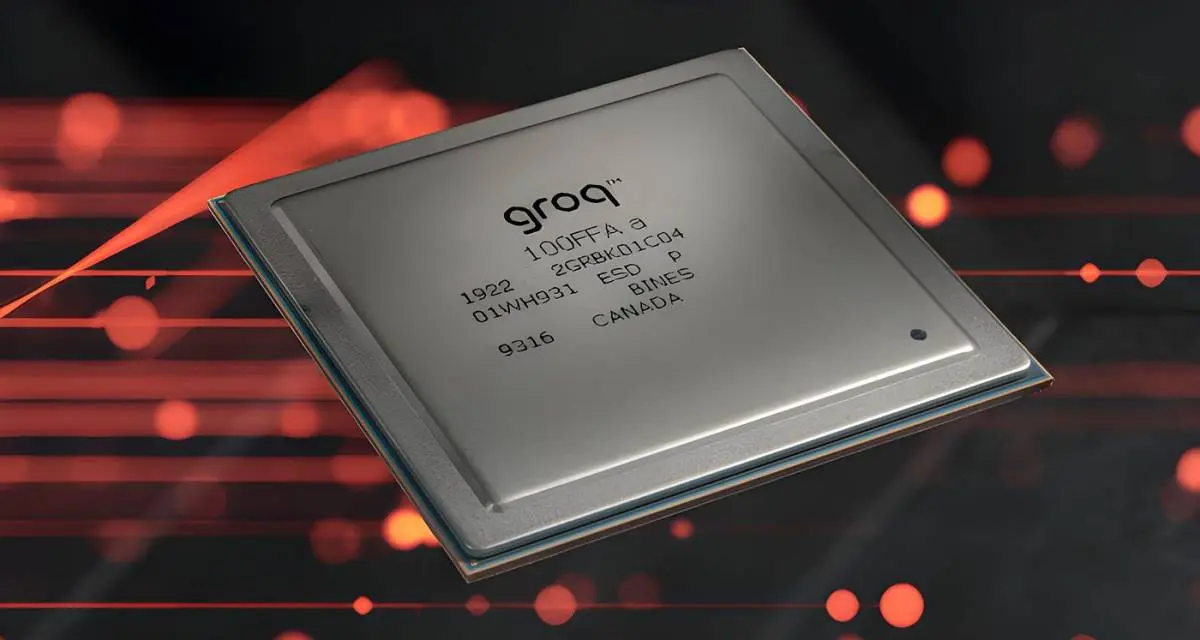
Nvidia unveils Groq 3 LPU to accelerate AI inference with SRAM-powered architecture
16 Mar 2026•Technology

Nvidia Unveils Blackwell Ultra GPUs and AI Desktops, Focusing on Reasoning Models and Revenue Generation
19 Mar 2025•Technology
Recent Highlights



Recent Highlights
Today's Top Stories







Don’t drown in AI news. We cut through the noise - filtering, ranking and summarizing the most important AI news, breakthroughs and research daily. Follow topics that matter to you and stay ahead.


