Nvidia Becomes Top VC Investor While Mobilizing $500 Billion to Finance AI Infrastructure Boom


3 Sources
[1]
Analysis: What Nvidia's Massive Supply-Demand Gap Says About AI Mania
Commentary from Nvidia's latest earnings shows how it's helping fuel the market's fast growth while contributing to industry-wide supply constraints with its own financial muscle in service of rapidly increasing revenue and profits. And the channel stands to benefit. Nvidia is once again showing
[2]
Nvidia Becomes the World's Most Active $100 Million-Plus VC Investor | PYMNTS.com
Through the first eight months of 2026, the artificial intelligence ecosystem giant has reportedly participated in at least 53. That puts the semiconductor company ahead of Andreessen Horowitz, with 44 such rounds, Sequoia Capital with 42 and Lightspeed Venture Partners with 38. The comparison
[3]
Nvidia takes new role as AI's $5 trillion bill comes due
Nvidia (NVDA) and Broadcom (AVGO) already make billions selling the technology powering the artificial intelligence boom. Now they're increasingly helping customers find the money to buy it. Bank of America (BAC) says major chip suppliers are taking on an unexpected role as "credit
Share
Copy Link
Nvidia is reshaping AI infrastructure financing by partnering with BlackRock, Apollo, and KKR to raise over $500 billion in capital. The chip giant forecasts 70% revenue growth but faces a $100 billion supply-demand gap as it becomes the world's most active venture capital investor in large funding rounds.
Nvidia Forecasts 70% Growth Amid $100 Billion Supply Shortfall
Nvidia revealed during its second-quarter earnings call that it expects approximately 70% revenue growth next year, potentially reaching nearly $700 billion in sales for 2027
1
. The company disclosed that demand acceleration continues even at its current scale, with customers' forecasts pointing to growth that could double revenue if not for supply constraints1
. CFO Colette Kress stated that annual revenue could double next year without significant supply constraints felt across the entire supply chain1
. CEO Jensen Huang confirmed that the vendor "needs a lot more" supply, with the entire supply chain running flat out1
. This suggests Nvidia could leave demand unfulfilled for more than $100 billion in AI infrastructure gear, including GPUs, CPUs, and DPUs1
.
Source: PYMNTS
Nvidia Emerges as Most Active Venture Capital Investor
Through the first eight months of 2026, Nvidia participated in at least 53 funding rounds of $100 million or more, surpassing Andreessen Horowitz with 44 rounds, Sequoia Capital with 42, and Lightspeed Venture Partners with 38
2
. The company's equity investments were valued at approximately $99 billion as of July 26, up from roughly $7 billion a year earlier, while it had another $25 billion of investment commitments according to its filings2
. This positions Nvidia at the center of a collapsing AI capital stack where venture equity, infrastructure financing, compute contracts, and strategic investments converge2
.$500 Billion Partnership Transforms AI Infrastructure Financing
Nvidia is partnering with Apollo Global Management, BlackRock, Blackstone, Brookfield, Goldman Sachs, and KKR to mobilize over $500 billion in third-party capital for AI infrastructure
3
. These collaborations aim to build specialized pools of finance that Nvidia's clients can access at reasonable rates, addressing the fundamental mismatch between upfront AI infrastructure costs and delayed revenue generation3
. Jensen Huang explained the strategic shift: "We began by building chips; today, we are helping create a new class of productive, investable infrastructure: AI factories"3
. Bank of America forecasts AI capital expenditures might reach over $5 trillion between 2026 and 2030, requiring about $1.2 trillion of external finance3
.Channel Partners Navigate Extended Lead Times and Price Pressures
For channel partners, supply constraints have translated into lead times stretching as long as a year, causing fast-rising prices for systems
1
. Chris Kapusta, vice president at GDT, noted that "nothing feels sustainable about the current supply chain," while partners brace for price increases from Nvidia itself1
. Despite governance and safety debates from industry voices including OpenAI CEO Sam Altman, analysts haven't observed any impact on hardware demand1
. Richard Rudometkin from International Computer Concepts confirmed that demand for AI infrastructure remains "nonstop" even without financial assistance1
.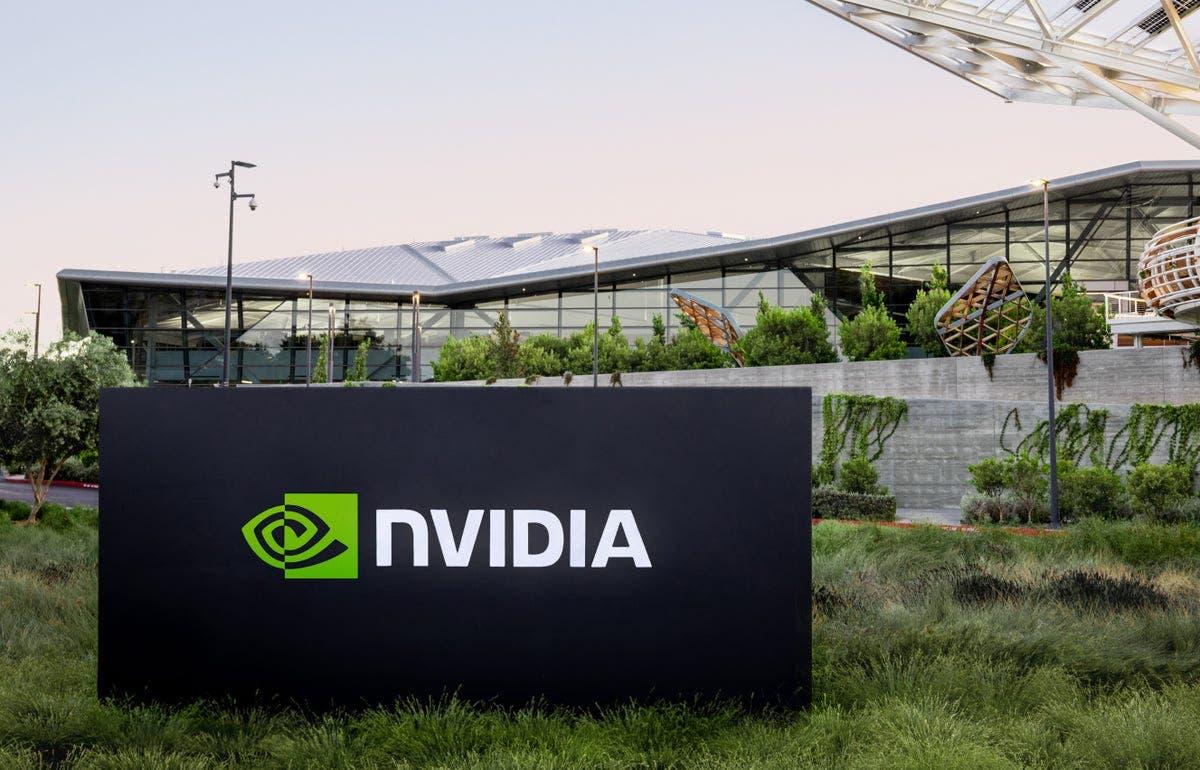
Source: CRN
Related Stories

Nvidia and Broadcom Become Credit Intermediaries
Bank of America identifies major chip suppliers as emerging "credit intermediaries" that help remove financial risks making massive data centers difficult or expensive to finance
3
. Nvidia invested $1.5 billion in SB Energy and will provide finance assistance for land, electricity, and construction at the PORTS-Pike Technology Campus in Ohio, delivering 4.25 gigawatts of AI factory capacity with OpenAI as an expected user3
. Broadcom's AI XPV Platform secured senior notes covering $31 billion of a $35 billion loan package arranged with Apollo and Blackstone, with guaranteed portions priced at 5.75% versus 8.5% for unsecured debt3
. Broadcom reported $16.7 billion in AI semiconductor sales for its fiscal third quarter, up 221% year-over-year and 54% quarter-over-quarter3
.Hybrid Capital Structure Reshapes Technology Investment
The AI capital stack now requires venture equity for model development, infrastructure debt for physical assets, multiyear compute contracts, GPU leasing financed by private capital, and strategic investments from GPU suppliers simultaneously
2
. This hybrid capital structure resembles a combination of software company, telecom network, power project, and leveraged infrastructure business rather than a conventional technology startup2
. Companies deciding where to build AI infrastructure now choose between ecosystems incorporating chips, networking, software, cloud capacity, developer support, and capital rather than just processors2
. Microsoft spent $41 billion in capital expenditures during its fiscal fourth quarter, with approximately two-thirds on shorter-lived equipment including CPUs and GPUs, while booking $5.6 billion in financing leases for data center facilities3
.References
Summarized by

Navi
[3]
Related Stories
Nvidia's $500B AI Infrastructure Financing Plan Creates Secondary Market for Aging GPUs
10 Aug 2026•Business and Economy
Nvidia invests $1.5B in SB Energy, backs OpenAI's Ohio data center with $105B guarantee
15 Aug 2026•Business and Economy
Nvidia revenue tops $96 billion as AI chip demand accelerates and memory commitments reach $160 billion
24 Aug 2026•Business and Economy
Recent Highlights



Recent Highlights
Today's Top Stories







Don’t drown in AI news. We cut through the noise - filtering, ranking and summarizing the most important AI news, breakthroughs and research daily. Follow topics that matter to you and stay ahead.


