AI's Surging Energy Demands Pose Challenges and Opportunities for Power Grids


4 Sources
[1]
Confronting the AI/energy conundrum
Caption: (From left to right:) Moderator Elsa Olivetti of MIT explores opportunities to reduce data center demand with panelists Dustin Demetriou of IBM, Emma Strubell of Carnegie Mellon University, and Vijay Gadepally of the MIT Lincoln Laboratory Supercomputing Center. The explosive growth of
[2]
OpenAI's gargantuan data center is even bigger than Elon Musk's xAI Colossus -- world's largest 300 MW AI data center in Texas could reach record 1 gigawatt scale by next year
Elon Musk's xAI made quite a splash when it built a data center with 200,000 GPUs that consumes approximately 250 MW of power. However, it appears that OpenAI has an even larger data center in Texas, which consumes 300 MW and houses hundreds of thousands of AI GPUs, details of which were not
[3]
AI's power needs could short-circuit US infrastructure
Power required by AI datacenters in the US may be more than 30 times greater in a decade, with 5 GW facilities already in the pipeline.. A Deloitte Insights report, "Can US infrastructure keep up with the AI economy?" paints a picture of ever larger datacenters burning ever more energy, while the
[4]
AI's energy demands are surging - the grid needs to catch up
As AI models grow larger and more capable, the supporting infrastructure must evolve in tandem. AI's insatiable appetite has Big Tech going as far as restarting nuclear power plants to support massive new datacenters, which today account for as much as 2% of global electricity consumption, or more
Share
Copy Link
The explosive growth of AI computing centers is creating unprecedented electricity demand, threatening power grids and climate goals. However, AI technologies could also revolutionize energy systems, accelerating the transition to clean power.
The AI Energy Conundrum
The rapid expansion of artificial intelligence (AI) is creating an unprecedented surge in electricity demand, posing significant challenges for power grids and climate goals. Experts from industry, academia, and government are grappling with the dual challenge of meeting AI's energy needs while harnessing its potential to revolutionize energy systems
1
.Staggering Energy Consumption

Source: Tom's Hardware
AI's appetite for electricity is growing at an alarming rate. In the United States, computing centers now consume approximately 4% of the nation's electricity, with projections suggesting this could rise to 12-15% by 2030
1
. The power required for sustaining large AI models is doubling almost every three months, with a single ChatGPT conversation consuming as much electricity as charging a phone1
.Emergence of Massive Data Centers
The AI boom is driving the construction of increasingly large data centers. OpenAI operates what is described as the world's largest single data center building, with an IT load capacity of around 300 MW and a maximum power capacity of approximately 500 MW
2
. Even more staggering, there are 50,000-acre datacenter campuses in the early planning stages that could consume as much as 5 GW, equivalent to the power consumption of about 5 million homes3
.Challenges for Power Grids
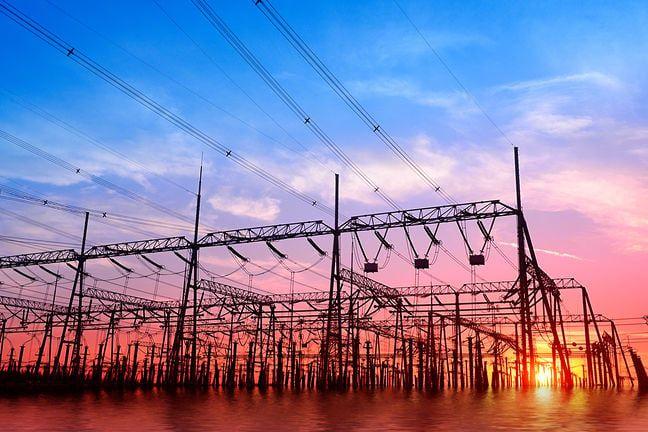
Source: The Register
The rapid growth of AI data centers is creating significant challenges for power companies and grid operators:
-
Unprecedented Demand: The sheer scale of power consumption by AI facilities is forcing power companies to build or upgrade infrastructure at an unprecedented pace
2
. -
Unstable Power Usage: AI data centers can swing from maximum demand to minimal usage in moments, placing enormous stress on grid management
2
. -
Planning and Coordination Challenges: Integrating these data centers into the grid requires complex coordination with regional planning authorities, often lagging behind the speed of data center construction
2
.
Related Stories


Strategies for Clean Energy Solutions
To address the AI-energy challenge, experts are exploring multiple pathways:
-
Regional Variations: Research shows regional variations in the cost of powering computing centers with clean electricity, with the central United States offering lower costs due to complementary solar and wind resources
1
. -
Nuclear Power: There is renewed interest in nuclear power, with companies like Constellation Energy restarting reactors to meet data center demand
1
. -
Grid Modernization: Experts call for a holistic energy strategy, including grid decarbonization, embracing traditional energy sources while transitioning to cleaner alternatives, and upgrading transmission infrastructure
4
.
AI's Potential to Revolutionize Energy Systems
While AI poses challenges for energy systems, it also offers potential solutions:
-
Grid Optimization: AI can accelerate power grid optimization, potentially solving complex power flow problems at significantly faster speeds than traditional models
1
. -
Emissions Reduction: AI applications are already contributing to carbon emissions reduction, such as Google Maps' fuel-efficient routing feature
1
. -
Semiconductor Advancements: The growth of AI is driving innovations in semiconductor technology, which could lead to more energy-efficient computing and power management solutions
4
.
As the AI revolution continues to unfold, balancing its energy demands with sustainable practices and grid resilience will be crucial for maintaining technological progress while meeting climate goals.
References
Summarized by

Navi
[3]
Related Stories
Recent Highlights



Recent Highlights
Today's Top Stories



Don’t drown in AI news. We cut through the noise - filtering, ranking and summarizing the most important AI news, breakthroughs and research daily. Follow topics that matter to you and stay ahead.


