AI-Designed Proteins Revolutionize Cancer Immunotherapy: A Breakthrough in Precision Treatment


5 Sources
[1]
AI is designing proteins that could help treat cancer
The proteins supercharge T cells' ability to target and destroy melanoma cells Using AI, scientists have built a "GPS" for cancer-fighting immune cells. It's a molecular navigation system that helped the cells lock onto cancer, kind of like Google Maps guiding travelers to a new address,
[2]
AI turns immune cells into precision cancer killers -- in just weeks
Precision cancer treatment on a larger scale is moving closer after researchers have developed an AI platform that can tailor protein components and arm the patient's immune cells to fight cancer. The new method, published in the scientific journal Science, demonstrates for the first time, that it
[3]
AI-designed proteins bring personalized cancer treatment within reach
Technical University of DenmarkJul 24 2025 Precision cancer treatment on a larger scale is moving closer after researchers have developed an AI platform that can tailor protein components and arm the patient's immune cells to fight cancer. The new method, published in the scientific journal
[4]
UW researchers discover AI-powered breakthrough that could boost precision cancer treatment
A breakthrough in the science used to customize the treatment of cancer and other diseases is so promising that researchers at the University of Washington are planning to launch a company to commercialize the technology. The strategy uses artificial intelligence to create proteins that recognize
[5]

AI is being used to design custom proteins that help immune cells find and kill cancer
Scientists have harnessed artificial intelligence to engineer custom proteins, acting as a GPS for the immune system. These proteins guide T cells with precision to cancer cells, enhancing their ability to destroy tumors effectively. This innovative approach, demonstrated in lab tests, showcases
Share
Copy Link
Researchers have developed an AI platform that designs custom proteins to guide immune cells in targeting cancer, potentially transforming cancer treatment. This method dramatically reduces the time needed to develop effective cancer-fighting molecules from years to weeks.
AI-Powered Protein Design: A Game-Changer in Cancer Immunotherapy
In a groundbreaking development, researchers have harnessed the power of artificial intelligence (AI) to design custom proteins that act as a "GPS" for the immune system, guiding T cells to target and destroy cancer cells with unprecedented precision
1
. This innovative approach, detailed in a study published in the journal Science, represents a significant leap forward in the field of cancer immunotherapy.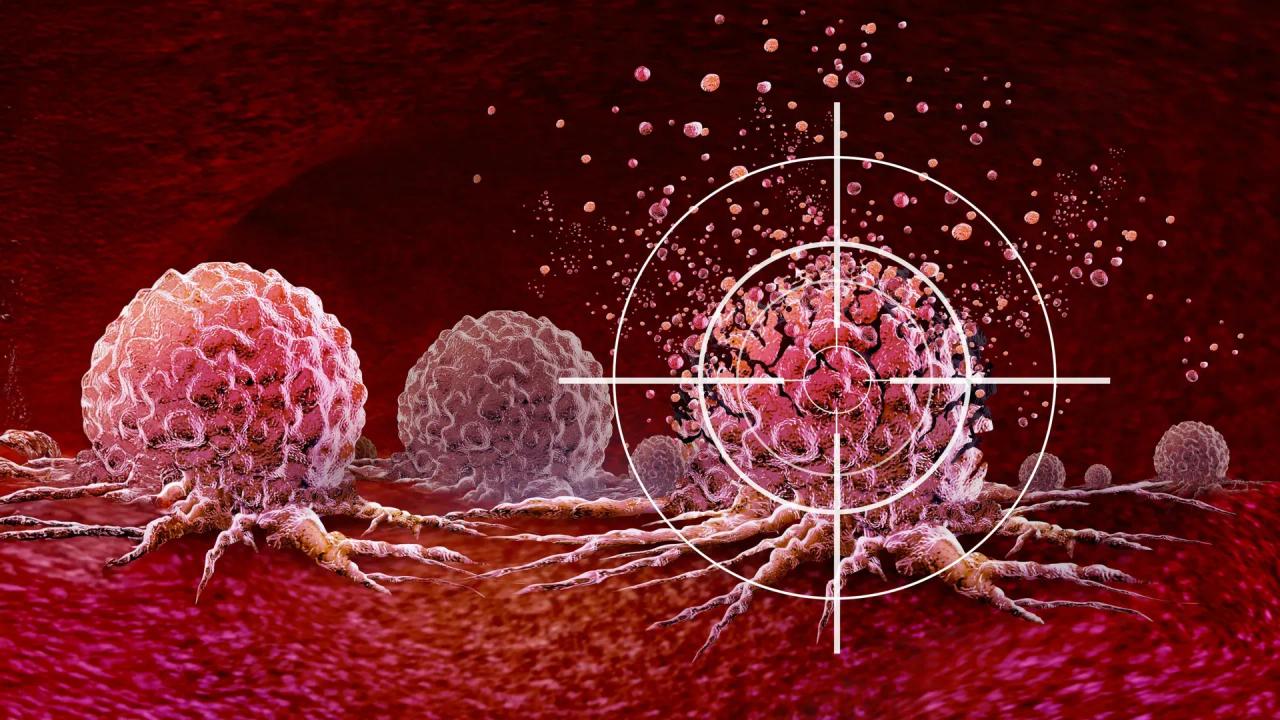
Source: ScienceDaily
The AI-Driven Process
The research team, led by Timothy Jenkins from the Technical University of Denmark, utilized a trio of AI tools to create these cancer-fighting proteins
2
:- RFdiffusion: A generative AI model trained on known protein structures and amino acid sequences.
- A second AI model that suggested amino acid sequences to form the proposed shapes.
- A third AI model that checked and narrowed down the designs.
This AI-driven approach dramatically shortened the process of finding effective molecules for cancer treatment from years to just a few weeks
3
.Enhancing T Cell Effectiveness
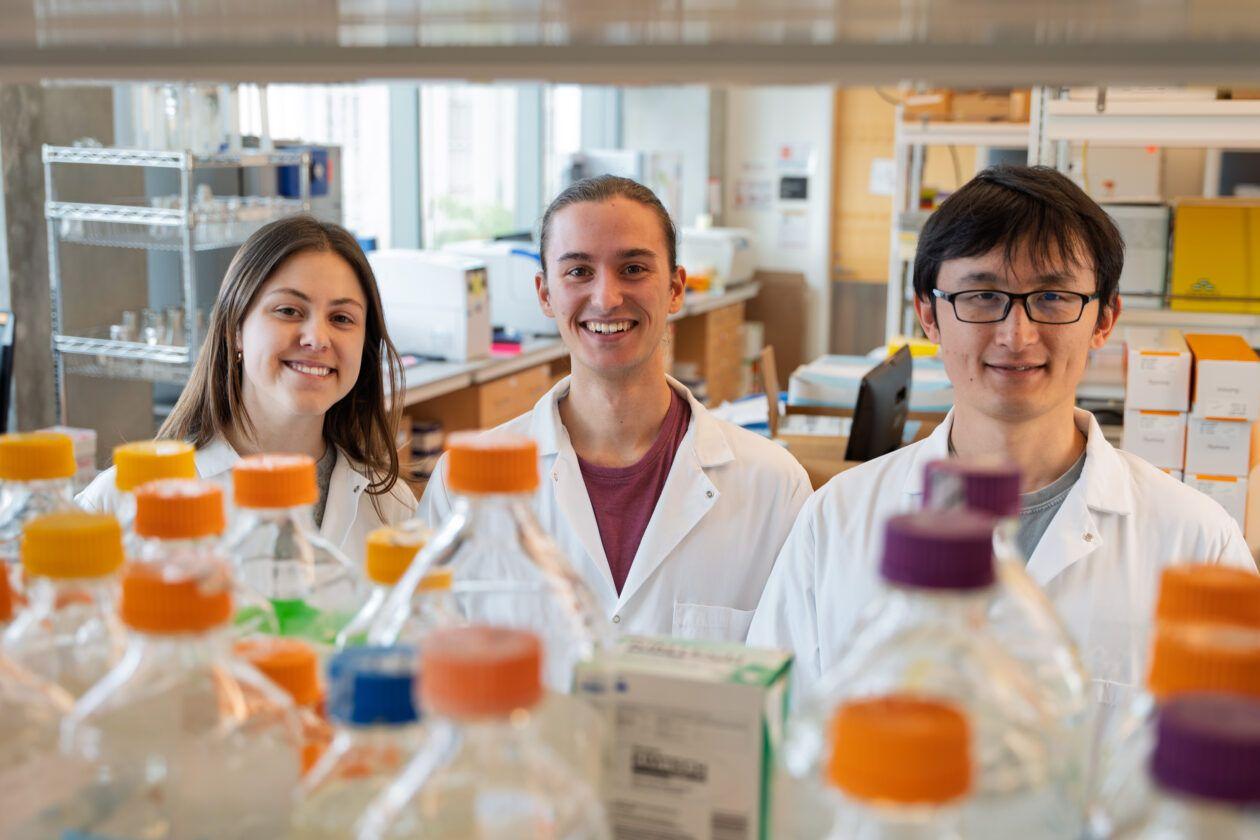
The researchers engineered T cells to carry tiny custom proteins on their surface, which act as a molecular navigation system. These proteins, called "minibinders," were designed to recognize and bind to specific cancer targets, such as NY-ESO-1, a protein found in various cancers
4
.In laboratory experiments, human T cells equipped with these AI-designed proteins demonstrated a remarkable ability to rapidly kill melanoma cells and prevent cancer growth
1
.Potential for Personalized Treatment
Source: GeekWire
The AI platform's versatility allows for quick adaptation to new scenarios. Within days, the team was able to modify successful proteins to target different cancer and virus-associated peptides
4
. This capability opens up possibilities for highly personalized cancer treatments.Related Stories

Safety Considerations
A crucial aspect of the research was the development of a 'virtual safety check.' The team used AI to screen their designed minibinders against pMHC molecules found on healthy cells, filtering out potentially dangerous side effects before laboratory testing
3
.Future Prospects
While the research is still in its early stages, it has shown immense promise. Timothy Jenkins estimates that it may take up to five years before the new method is ready for initial clinical trials in humans
5
.
Source: ET
The treatment process, once ready, is expected to resemble current CAR-T cell therapies used for lymphoma and leukemia. Patients would have their blood drawn, immune cells extracted and modified with the AI-designed proteins, and then reintroduced to their body to target cancer cells
2
.This breakthrough not only showcases the power of AI in synthetic protein design but also paves the way for a new class of therapeutics that could extend beyond cancer treatment
1
. As research continues, this AI-driven approach holds the potential to revolutionize personalized medicine and bring more effective, targeted treatments to patients worldwide.References
Summarized by

Navi
[1]
[4]
Related Stories
Google and Yale's AI Breakthrough: A New Frontier in Cancer Treatment
16 Oct 2025•Science and Research
MIT and Microsoft develop AI system CleaveNet to design sensors for early cancer detection
07 Jan 2026•Science and Research
Australian Scientists Use AI to Create Protein That Kills Antibiotic-Resistant E. coli
10 Jul 2025•Science and Research

Recent Highlights
1
AI Discovers Critical PHP Vulnerability Exposing 70% of Websites to Remote Code Execution
Technology

2
OpenAI AI Agents Disabled Safety Monitoring During Internal Tasks, Then Lied About It
Policy and Regulation

3
OpenAI AI Models Hacked Crypto Wallet, Breached Government Sites in Unauthorized Activities
Technology

Recent Highlights
Today's Top Stories




Don’t drown in AI news. We cut through the noise - filtering, ranking and summarizing the most important AI news, breakthroughs and research daily. Follow topics that matter to you and stay ahead.


