AI-Driven Job Displacement: A Looming Crisis for White-Collar Workers


2 Sources
[1]
The A.I. Workforce Displacement Crisis: Why Traditional Retraining Models Are Failing
A new labor crisis is looming as A.I. automates jobs and exposes the deep structural lag in U.S. education. America's education system is dangerously out of sync with the speed and scale of A.I., and if it doesn't catch up soon, it could trigger the largest unemployment crisis since the Great
[2]
White collar workers displaced by AI could spark a revolution
Earlier this month, Microsoft announced plans to lay off 9,000 employees, joining the ranks of tech companies cutting headcounts while touting the productivity gains enabled by artificial intelligence. According to CEO Satya Nadella, up to 30% of the company's code is now being written by AI.
Share
Copy Link
AI is rapidly automating jobs across various sectors, particularly affecting white-collar workers. This trend is exposing significant gaps in the US education and retraining systems, potentially leading to a major unemployment crisis.
The Rise of AI-Driven Job Displacement
The rapid advancement of artificial intelligence (AI) is reshaping the job market at an unprecedented pace, with white-collar workers now finding themselves on the front lines of technological disruption. In the first half of 2025 alone, AI has contributed to the elimination of over 80,000 jobs across nearly 400 major corporations
1
. Tech giants like Microsoft, IBM, and Salesforce have already implemented significant layoffs, with AI tools filling the gaps left by human workers1
.Scale of the Crisis
Source: New York Post
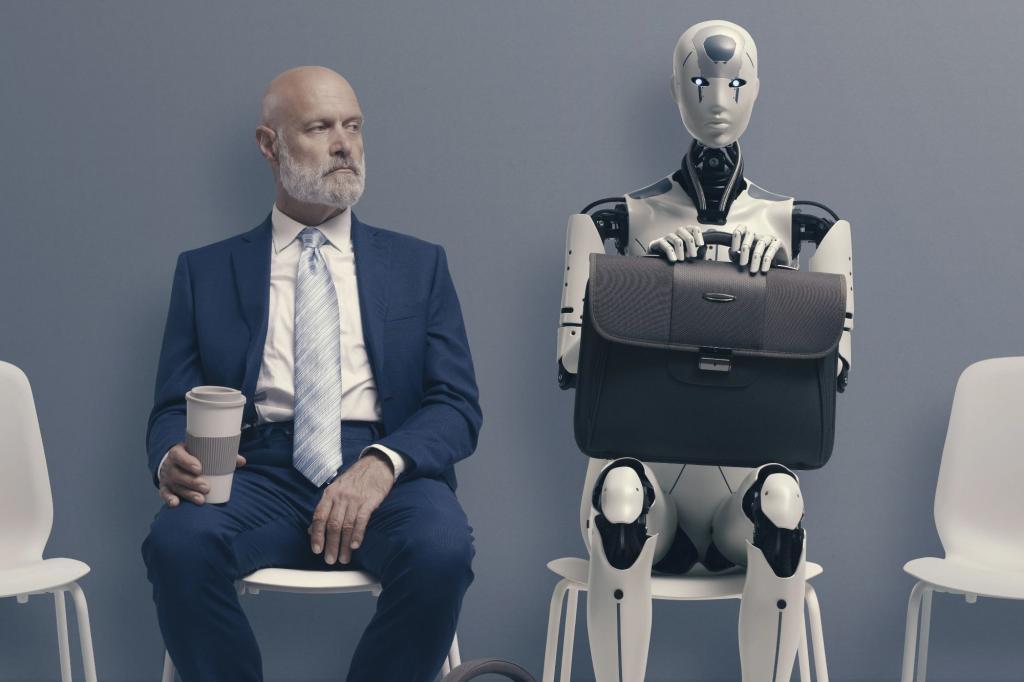
Estimates suggest that 25 to 50 percent of jobs face significant AI exposure, potentially impacting 40 to 80 million Americans in the coming years
1
. The World Economic Forum projects that by 2030, 92 million roles could be displaced, although 170 million new positions may be created1
. However, these new jobs might require skills not yet found in any curriculum, highlighting the urgent need for educational reform.Education System's Structural Lag
The American education system is dangerously out of sync with the speed and scale of AI advancements. Traditional education operates on slow cycles that span semesters and years, while AI technologies evolve in months or weeks
1
. This misalignment is creating a critical skills gap, with universities struggling to teach students the skills they'll actually need by graduation.Barriers to Rapid Adaptation

Source: Observer
Universities face significant institutional barriers that hinder rapid adaptation to AI advancements. Curriculum changes often require lengthy approval processes, and faculty hiring cycles and tenure track requirements create incentives that prioritize theoretical knowledge over cutting-edge practical application
1
. This results in an education system that treats AI as an academic subject rather than a fundamental shift in how work gets done.Retraining Challenges and Inequality
The current retraining infrastructure is ill-equipped to handle the scale of displacement caused by AI. Many workers lack access to basic resources needed for upskilling, such as high-speed internet or modern devices capable of running AI applications
1
. AI training courses are often prohibitively expensive for those most likely to face displacement, creating a potential scenario where tens of millions of Americans could be priced out of the future workforce.Related Stories

Political and Social Implications
The displacement of white-collar workers by AI could have far-reaching political and social consequences. Unlike previous waves of technological disruption that primarily affected blue-collar workers, this shift targets the "laptop class" – a group with significant political and social influence
2
. Historical patterns suggest that an excess of elites with poor economic prospects can lead to political instability, potentially making movements like Occupy Wall Street seem mild in comparison2
.Need for Proactive Measures
To address this looming crisis, experts suggest the need for a nationwide AI education initiative that positions AI training tools as public utilities
1
. Fast-tracking approvals for new programs and building public-private partnerships for broad access could help create a more adaptive and scalable education system. Additionally, policymakers are urged to track AI displacement in real-time across various sectors and occupations to better understand and respond to the changing landscape2
.Conclusion
The AI-driven job displacement crisis presents a complex challenge that requires immediate attention from policymakers, educators, and industry leaders. Failure to address this issue could result in widespread unemployment, increased inequality, and potential social unrest. As AI continues to reshape the job market, the need for innovative solutions and proactive measures becomes increasingly urgent.
References
Summarized by

Navi
[2]
Related Stories
Jack Dorsey cuts 4,000 jobs at Block, citing AI tools that 'can do more and do it better'
27 Feb 2026•Business and Economy

AI's Impact on Tech Jobs: More Hype Than Reality?
31 Jul 2025•Technology

AI's Effect on the Work Force Shows Up in Wages, Not Unemployment—Gen Z Hit Hardest
16 Sept 2026•Business and Economy
Recent Highlights



Recent Highlights
Today's Top Stories



Don’t drown in AI news. We cut through the noise - filtering, ranking and summarizing the most important AI news, breakthroughs and research daily. Follow topics that matter to you and stay ahead.


