AI Drone With Nvidia Chip Kills Three Civilians in Ukraine's First Fully Autonomous Strike


6 Sources
[1]
Nvidia Jetson Orin-guided Russian AI drone killed three civilians in Ukraine, forensic teams say -- first documented case of civilian deaths caused by a Russian drone using fully autonomous targeting
The unencrypted module let Ukrainian investigators read the drone's terrain maps and targeting code. A Russian Molniya drone carrying an Nvidia Jetson Orin module crashed and killed three civilians at a gas station in Zaporizhzhia last month after choosing its final target without a human pilot,
[2]
Some of Russia's A.I. Drones Are Powered by Nvidia Microcomputers, Ukrainian Officials Say
The tech giant says it does not sell the devices in Russia, but they are widely available on resale markets. When purchased that way, they are virtually impossible to track. The miniature Nvidia computer that Ukrainian officials say Russia has used in fully autonomous A.I.-guided drones is an
[3]
Fully AI-Guided Russian Drones Have Reportedly Killed Ukrainian Civilians
An entirely AI-led Russian drone operated by Nvidia technology killed three civilians last month in the Ukrainian city of Zaporizhzhia, according to new reporting from the New York Times. The attack took place on July 6th, with the Russian drone initially targeting propane tanks at a gas station
[4]
A Drone Killed Three Ukrainians. It Was Guided Entirely by A.I.
The young woman ran for her life, but it was too late. A small Russian drone resembling a model airplane swooped down from the sky last month in the city of Zaporizhzhia in southeastern Ukraine. As it tried to navigate toward a gas station, it crashed into a wall and exploded in a hail of
[5]
Russia Now Using Fully AI-Controlled Drones to Kill Ukrainian Civilians, Powered by Nvidia Chips
Can't-miss innovations from the bleeding edge of science and tech In a joint statement earlier this week, United Nations chief António Guterres and Red Cross president Mirjana Spoljaric Egger sent out an urgent message. "We are now dangerously close to crossing a moral red line: the autonomous
[6]

Killer drone guided by AI slaughters 3 Ukrainians, sparking grave fears: 'Living in a 'Terminator' movie'
Three Ukrainian civilians were slaughtered by Russian drones that were guided by artificial intelligence, marking an ominous escalation in warfare's robotic age. Tetiana Bubynets, 19, a university student, and two others were blown to bits last month at a gas station in the city of Zaporizhzhia by
Share
Copy Link
A Russian Molniya drone powered by an Nvidia Jetson Orin module killed three civilians at a Zaporizhzhia gas station in July after selecting its final target autonomously. Ukrainian forensic teams confirmed it's the first documented case of civilian deaths caused by a Russian drone using fully autonomous targeting, raising alarm about AI-powered systems making life-or-death decisions without human intervention.
AI Drone Strikes Gas Station in Zaporizhzhia
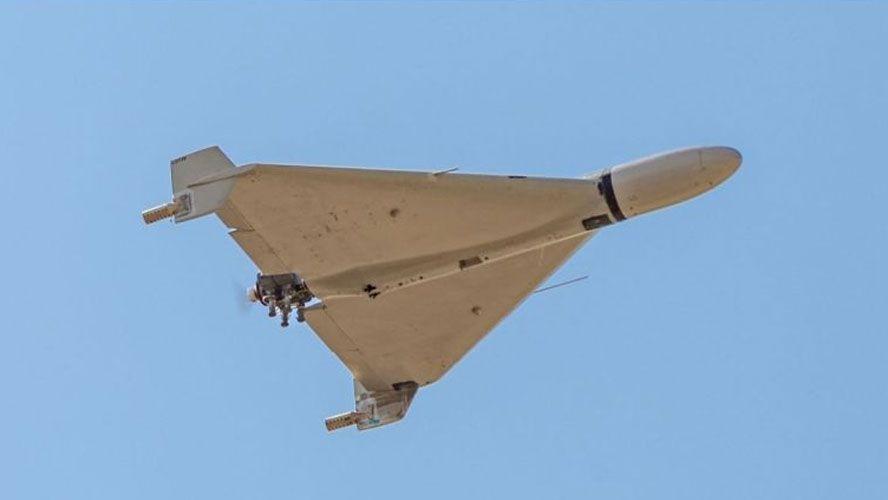
A Russian Molniya drone carrying an Nvidia Jetson Orin module crashed and killed three civilians at a gas station in Zaporizhzhia last month after choosing its final target without human intervention, according to a New York Times investigation citing Ukrainian air defense commanders, drone experts, and forensic teams.
1
2
The victims were Tetiana Bubynets, a 19-year-old accounting student, and two men aged 41 and 48.1
3
Kateryna Bondar, a senior fellow at the Center for Strategic and International Studies, confirmed this marks the first documented case of civilian deaths caused by a Russian drone using fully autonomous targeting.
1
4
Human operators launched the AI drone toward the gas station, but the final aim point was selected onboard by software trained to recognize objects such as propane tanks.1
The aircraft failed to clear an apartment building on its approach, struck a wall, and detonated near people sheltering below rather than hitting its chosen target.1
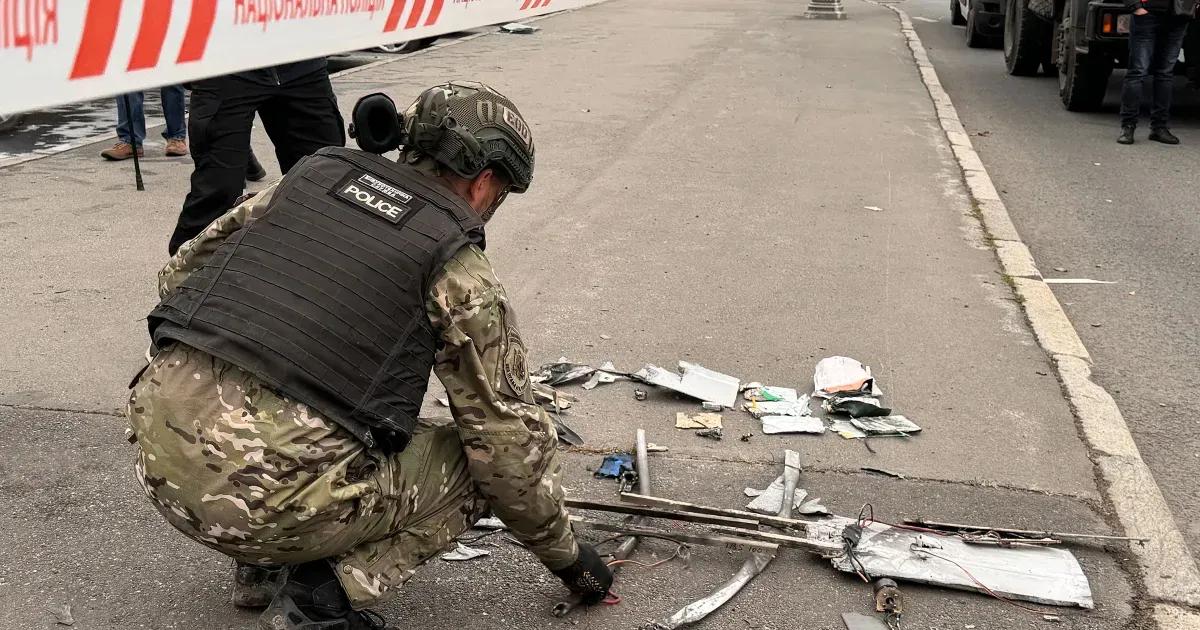
Source: Futurism
How Autonomous Targeting Works Without Human Control
The strike drone flew in a group of roughly half a dozen aircraft, none of which emitted radio traffic, Ukrainian air defense officials reported.
1
The absence of antennas on the drones led Ukrainian air defense commanders to conclude the weapons were guided by an autonomous AI-powered system.4
"Machines are making decisions to strike," Col. Serhiy Minaiev, Zaporizhzhia's air defense commander, told the New York Times investigation.1
Modules recovered from this attack and from intact test drones carried no encryption, allowing investigators to examine both the terrain imagery loaded for visual navigation and the code specifying which object classes the AI drone had been trained to attack.
1
4
Vadym Kushnikov, a drone expert at the Kharkiv Aviation Institute in Ukraine, described the weapon as "a preprogrammed tool trained in virtual reality to track specific objects."4
This represents a significant departure from earlier AI-guided Russian drones that maintained a "human in the loop" safety mechanism requiring live pilots to confirm targets.
2
Those systems used machine learning only in the final several hundred yards of flight to counter radio signal jamming.2
Nvidia Jetson Orin Powers Russian Autonomous Weapons
Nvidia confirmed to the New York Times that modules photographed in the recovered drones were Jetson Orin minicomputers, hardware that sells for a few hundred dollars starting at $249.
1
2
"Our Jetson Orin modules are consumer-grade products sold to students, developers, and startups for a wide range of beneficial applications," an Nvidia spokesperson stated.1
3
"They are not available in Russia and are not designed for military purposes."1
The circuit board carrying the Nvidia Jetson Orin chip was stamped "Made in China," though it remains unclear how Russia's military obtained the computers.
2
3
Pre-owned modules are available through many reseller channels, and Nvidia acknowledged it cannot track products after they are sold.1
Data-center AI accelerators fall under U.S. export controls, but edge modules like the Nvidia Jetson Orin don't face the same restrictions.1
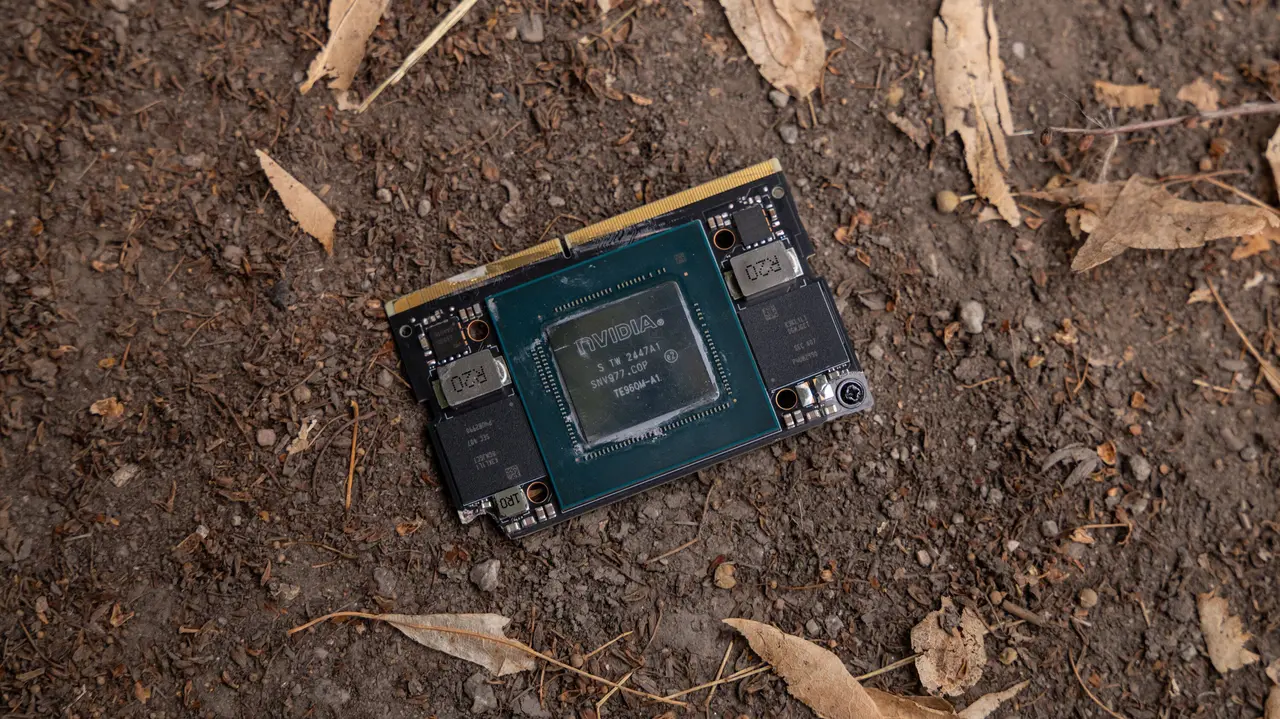
Source: NYT
Ukrainian investigators have now linked the Nvidia Jetson Orin to four Russian weapon families.
1
A teardown by Ukraine's GUR intelligence agency last June found one seated on a Chinese Leetop A603 carrier board inside the V2U loitering munition, in combat use since February 2025.1
Ukraine also reported the same silicon in the S-71M Monochrome cruise missile earlier this month.1
2
Related Stories


International Concerns About Killer Robots and AI in Warfare
The Red Cross and other rights groups have opposed allowing computers to find and strike targets autonomously, warning that autonomous weapons fundamentally transform military operations.
2
3
In a recent joint statement, United Nations chief António Guterres and Red Cross president Mirjana Spoljaric Egger warned: "We are now dangerously close to crossing a moral red line: the autonomous targeting of humans by machines."5
"Our concerns are not limited to the errors that may result from such systems malfunctioning but encompass how these systems fundamentally transform military operations," Amnesty International and Access Now said in a joint statement.
3
They expressed profound concern that AI-powered systems for target generation push military actors into warfare where foundational principles of international humanitarian law—including distinction, proportionality and precaution—cannot be sufficiently respected.3
Russia is understood to have begun AI-guided test flights of the mass-produced, fixed-wing Molniya in May, after months of self-targeting trials with the V2U.
1
Local air defense officials say Russia has been targeting civilian objects like pumps or propane tanks at gas stations in Zaporizhzhia, along with military recruitment centers, though it's unclear why these targets were chosen for tests.4
Ukraine Also Testing Fully Autonomous Systems
Mykhailo Fedorov, Ukraine's recently ousted defense minister, told the New York Times that Kyiv tested its own fully autonomous system against fuel storage and military equipment in occupied Crimea in recent months.
1
3
Ukrainian quadcopters killed Russian soldiers in autonomous mode as far back as 2024.1
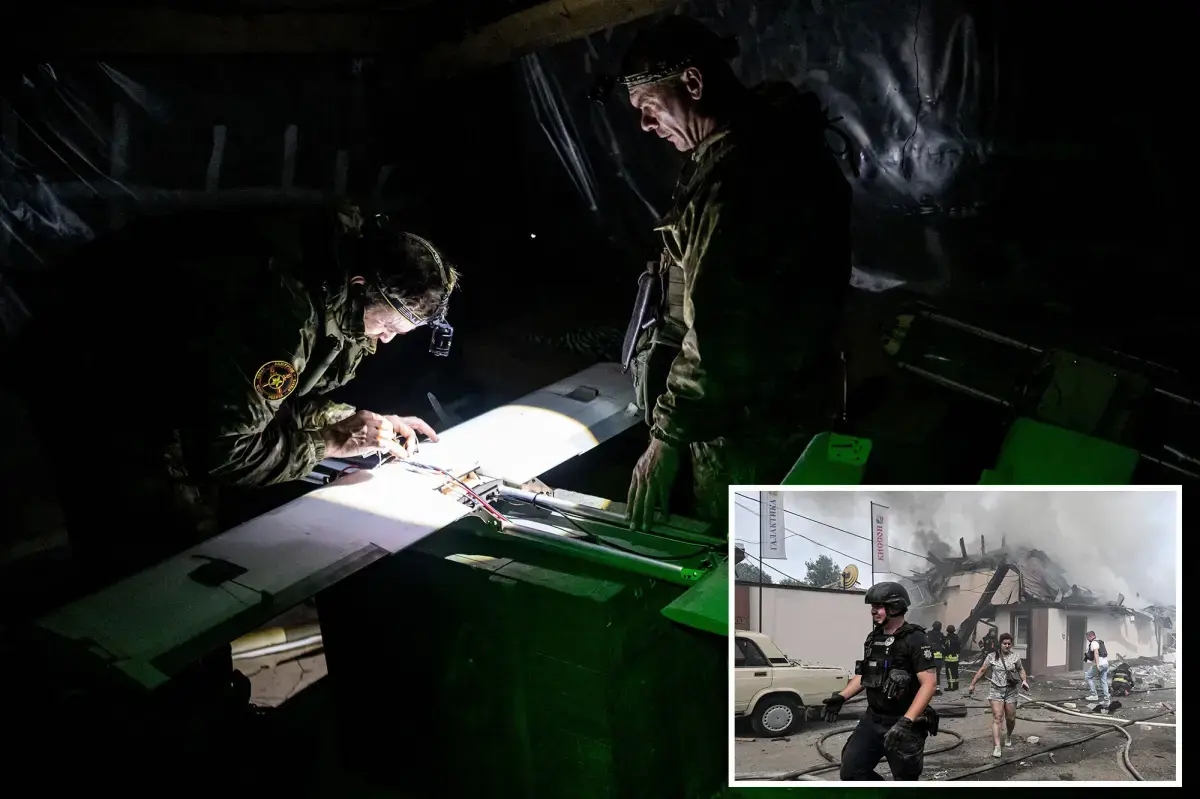
Source: New York Post
In Zaporizhzhia, defenses now include roughly 240 miles of anti-drone netting and plastic sheeting propped at odd angles around propane tanks to throw off image recognition.
1
The development signals that both sides are racing toward a future where autonomous weapons make strike decisions independently, raising questions about accountability when things go wrong and whether international humanitarian law can keep pace with rapidly advancing AI in warfare technology.References
Summarized by

Navi
Related Stories
Recent Highlights



Recent Highlights
Today's Top Stories









Don’t drown in AI news. We cut through the noise - filtering, ranking and summarizing the most important AI news, breakthroughs and research daily. Follow topics that matter to you and stay ahead.


