3 Sources
[1]
Nvidia Jetson chip found in Russian cruise missile, Ukraine claims -- presence in S-71 'Monochrome' weapon may indicate use of AI tech
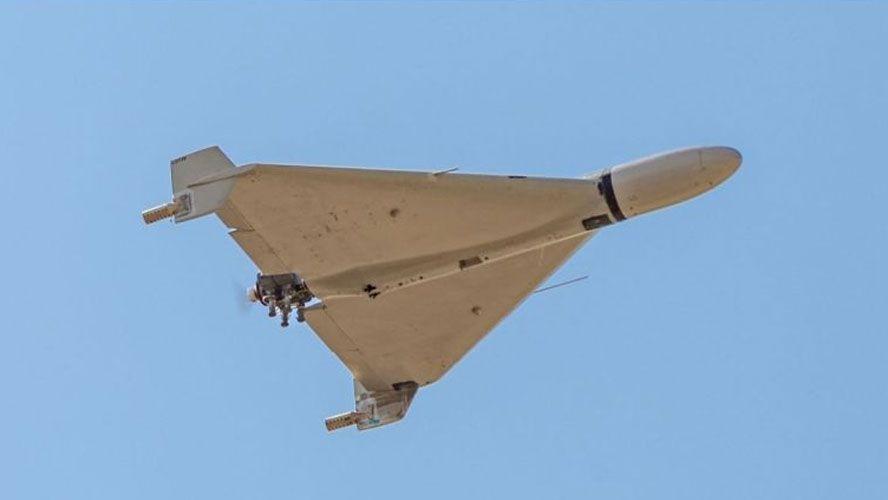
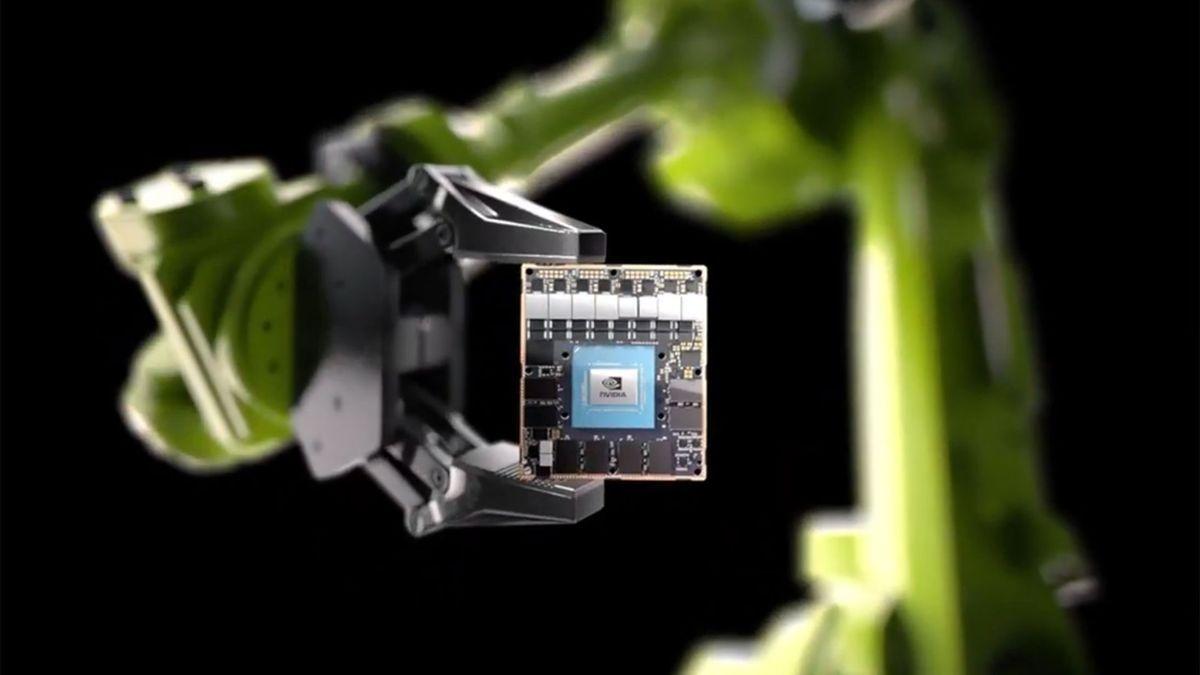
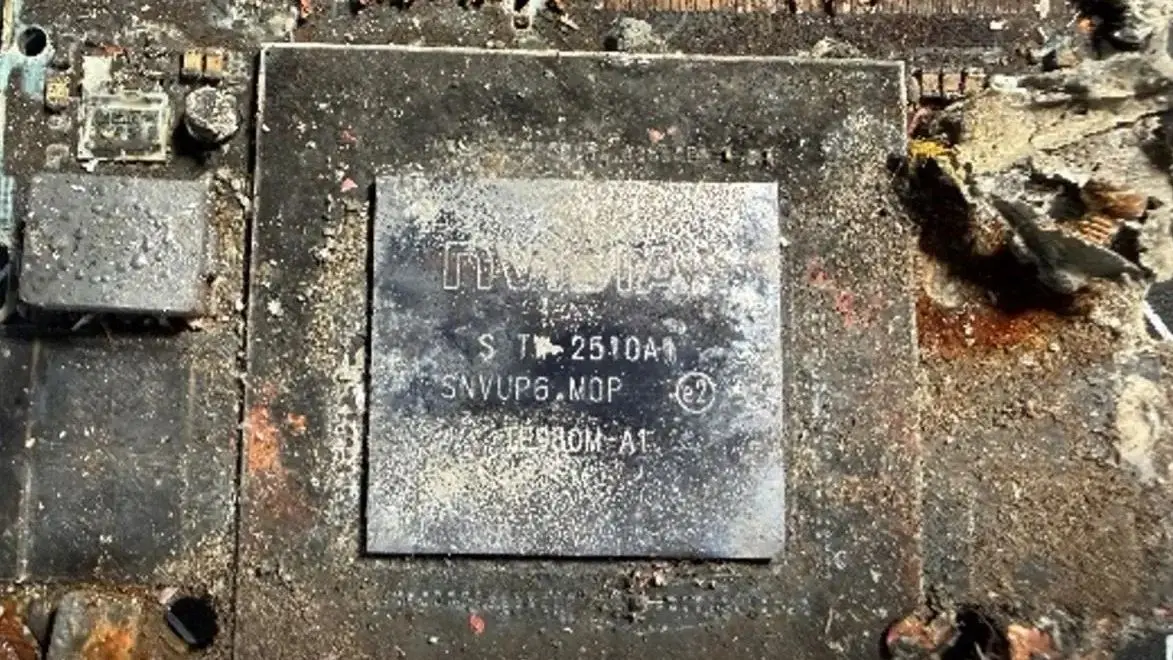
AI accelerators are export controlled, hardware that can run AI models locally is not. Russia's latest S-71 'Monochrome' cruise missiles use Nvidia's Jetson Orin modules with artificial intelligence capabilities, the Main Directorate of Intelligence of the Ministry of Defense of Ukraine claimed on Wednesday. The S-71 'Monochrome' is distinguished by reduced observability and autonomous targeting capability, reports Militarnyi. Nvidia says the Jetson Orin is a consumer-grade device that is not export-controlled and is not officially available in Russia. According to the claims, the module in question carries an Nvidia chip marked as SNVUP6.MOP TE980M-A1 and resembles the Jetson Orin NX 8GB/16GB system-on-module. The Orin NX is an automotive-grade SoM based on a system-on-chip featuring up to eight Arm Cortex-A78AE cores, a GPU featuring Ampere architecture with 1024 CUDA cores and 32 Tensor cores that provide up to 157 sparse INT8 TOPS performance for AI, dedicated NVDLA engines, and a vision accelerator. The unit has been shipping since 2023, though based on the markings on the chip purportedly found in the missile, it was packaged in October, 2025. "Our Jetson Orin modules are consumer-grade products sold to students, developers, and startups for a wide range of beneficial applications," an Nvidia spokesperson told Tom's Hardware. "They are not available in Russia and are not designed for military purposes. Pre-owned Jetsons are available through many reseller channels. Although we cannot track products after they are sold, if we determine that any customer is violating U.S. export controls, we will take appropriate action." Nvidia positions Jetson Orin NX as a solution for space- and power-constrained applications that need vision, but cannot accommodate more powerful and power-hungry solutions, which essentially means drones and mobile robots that work on battery power. Conceptually, an Orin NX could function as a dedicated electro-optical perception computer that can recognize images locally and pass the information to a separate flight-control/guidance system. In the S-71 'Monochrome' missile, capabilities of Nvidia's Jetson Orin NX are potentially useful as the compute engine behind an electro-optical perception system (based on a Honpho TS130C-01 module that is made in China) that recognizes images in real time and assists terminal guidance. As per Militarnyi, the S-71M 'Monochrome' can be fired from Su-57 fighters or S-70 Okhotnik drones. With a range of up to 300km, it carries a 250k high-explosive fragmentation bomb as its payload. Previously, Ukrainian intelligence reported that Russia used Nvidia's Jetson Orin NX modules in its Shahed MS001 autonomous drones for local decision-making and terminal guidance. Nvidia's Jetson Orin NX modules have been shipping since 2023 and are widely available, which means that Nvidia sells hundreds of thousands, if not millions, every year. Meanwhile, the majority of Jetson Orin NX-based products available in retail are not the SoMs themselves, but rather small-form-factor systems or development kits. The modules are available too, though not as widely. For example, a German store sells them for €685 with a 19% VAT. In any case, while the American government does export control for high-end AI accelerators like Nvidia's H100 or B200, which can be used to train AI models that can later be used for military purposes, it does not export control hardware that can run these models locally. Ultimately, the models are trained anyway, and the hardware that can use them is readily available. Follow Tom's Hardware on Google News, or add us as a preferred source, to get our latest news, analysis, & reviews in your feeds.
[2]
Russian missile uses Nvidia AI chip to help target Ukraine
Sanctions and Nvidia's exit from Russia in 2022 haven't stopped its Jetson Orin hardware from turning up in Russian missiles, according to Ukrainian military intelligence. The Defense Ministry's Intelligence Directorate (GUR) reported this week that it spotted an Nvidia Jetson Orin module in the remains of a Russian S-71 Monochrome cruise missile. The S-71M is an air-launched weapon with autonomous capabilities that can reportedly search for and engage targets using optical sensors and onboard computing. "The use of this component may indicate the use of artificial intelligence technologies in the missile," GUR said. That assumption makes sense, as information on the S-71M suggests that it can operate with user oversight or entirely autonomously. Photos included with the GUR announcement show a heavily scorched Nvidia chip with the identifier TE980M-A1 stamped onto its surface, indicating that the chip is a Jetson Orin NX 16GB unit that Nvidia released in early 2023. It's a capable chip, but not exactly datacenter-class hardware - Orin systems are designed precisely for use cases like autonomous systems. Nvidia used to have offices in Russia and do business there, but it closed up shop in Ukraine's bellicose neighbor in 2022 following Moscow's decision to go to war with Kyiv. That was prior to the introduction of the TE980M-A1, meaning it must have reached Russian hands through another channel after Nvidia stopped direct sales to the country in early 2022. In other words, whatever sanctions the US has enacted or business decisions Nvidia has made, its hardware is still turning up in Russian weaponry used to target Ukrainians. The one good thing about the entire affair, according to GUR, is the fact that the recovered hardware proves Russian tech manufacturing still isn't up to snuff. According to Nvidia, Orin modules are consumer grade and are sold to all sorts of different people for all sorts of purposes, with military applications not being among their intended design. The chips aren't supposed to be available in Russia, either, a spokesperson told The Register, adding that there are plenty of ways for Russia to get ahold of the chips that are out of its control. "Pre-owned Jetsons are available through many reseller channels," Nvidia told us. "Although we cannot track products after they are sold, if we determine that any customer is violating U.S. export controls, we will take appropriate action." US export controls have restricted exports of advanced chips to Russia and China. Chipmakers have responded to China-specific restrictions by producing hardware designed to comply with US export rules, while third parties have allegedly used smuggling to get restricted higher-end components into China. It's not clear how the Nvidia component ended up in Russian hands. GUR's latest disclosures also document Chinese-made electronics in Russian weapons. However the salvaged chip made its way to Russia, GUR said its evidence shows that current export control regimes aren't working. "The discovery of Nvidia Jetson in a new Russian missile once again demonstrates the need for increased sanctions pressure and coordination of the efforts of the civilized world," the intelligence agency said. ®
[3]
Ukraine finds Nvidia Jetson Orin chip inside Russia's new S-71 missile
Ukraine's military intelligence has reportedly discovered a powerful Nvidia Jetson Orin computer inside Russia's new S-71 Monochrome air-launched cruise missile earlier this month. The Main Directorate of Intelligence (HUR) of the Ministry of Defense of Ukraine announced the discovery of the chip on August 12. According to HUR officials, it could indicate that Russia is relying on artificial intelligence (AI) technologies in the new weapon. The Nvidia hardware was among 35 foreign electronic components that Ukrainian experts identified in the Russian weapons they examined. "HUR specialists, along with researchers from Ukrainian scientific institutions continue to examine Russian weapons and determine the origins of their electronic components," HUR said. This finding offers a look at Russia's reliance on foreign technology for its missiles and drones, which persists despite years of international sanctions and efforts to restrict access to advanced electronics. The Nvidia Jetson Orin family of computer modules are designed for AI, computer vision, and autonomous systems. Depending on the model, they can deliver up to 275 trillion operations per second (TOPS) of performance. The flagship Jetson AGX Orin delivers up to 275 TOPS while using between 15 and 60 watts of power, while the smaller Orin NX reaches up to 157 TOPS at 10 to 40 watts. The compact Orin Nano series provides up to 67 TOPS with power options ranging from seven to 25 watts. Moreover, the platform relies on the Ampere GPU design and supports the firm's JetPack software stack for AI applications. The module family delivers substantial computing power in a compact form factor. It is made for applications requiring advanced onboard processing. HUR found the part inside the S-71. The Monochrome cruise missile is based on the S-71 Kovyor and is designed for carriage inside the weapons bays of the Su-57 fighter jet and S-70 Okhotnik drone. It is designed to be harder to detect and reportedly can search for targets on its own. The Nvidia chip's presence could eventually point to the use of AI in the new S-71 missile. "However, Ukrainian intelligence did not disclose precisely how the Nvidia hardware is being used or what functions it performs during missile operations," HUR said. The finding is part of a broader effort by HUR and Ukrainian research institutions to examine captured and recovered Russian weapons and determine the origins of their electronic components. Among the components identified were parts of a passive radar seeker that Russia has begun installing on Geran-2 unmanned aerial vehicles. According to HUR, the system is intended to allow the drones to detect and strike Ukrainian surface-to-air missile systems and radar stations. The investigators also identified a Chinese-made Honpho TS130C-01 camera recovered from a Geran-4 jet-powered drone. Other findings included components from the active seeker of Russia's Kh-47M2 Kinzhal aeroballistic missile. Ukraine publishes information about such discoveries through the 'Components in Weapons' section of HUR's War-Sanctions portal. "These findings help Ukraine and its partners identify critical foreign technologies used in Russian weapons and strengthen measures aimed at preventing their supply to Russia," HUR said in a statement.
Share
Copy Link
Ukrainian military intelligence discovered an Nvidia Jetson Orin module inside Russia's new S-71 Monochrome cruise missile, suggesting AI-powered autonomous targeting capabilities. The finding raises serious questions about the effectiveness of current export controls and sanctions enforcement despite Nvidia's 2022 exit from Russia.
The Main Directorate of Intelligence (HUR) of Ukraine's Ministry of Defense announced on August 12 that specialists discovered an Nvidia Jetson Orin module inside the wreckage of a Russian S-71 Monochrome cruise missile
1
2
. Ukrainian military intelligence identified the chip as an Nvidia Jetson Orin NX 8GB/16GB system-on-module, marked with the identifier TE980M-A1, indicating it's a 16GB unit released in early 20232
. The discovery suggests Russia is integrating artificial intelligence technologies into its latest weapons systems, specifically for autonomous targeting capabilities3
. The AI chip was among 35 foreign electronic components that Ukrainian experts identified in Russian weapons during ongoing examinations3
.
Source: Tom's Hardware
The Nvidia Jetson Orin NX represents a powerful consumer-grade AI accelerator designed for space- and power-constrained applications requiring computer vision capabilities
1
. The system-on-chip features up to eight Arm Cortex-A78AE cores, a GPU with Ampere architecture containing 1024 CUDA cores and 32 Tensor cores that deliver up to 157 sparse INT8 TOPS performance for AI processing1
. The module also includes dedicated NVDLA engines and a vision accelerator, making it ideal for autonomous systems that need to process visual information locally1
. In the S-71 Monochrome cruise missile, the Jetson Orin NX likely functions as the compute engine behind an electro-optical perception system based on a Chinese-made Honpho TS130C-01 module that recognizes images in real time to assist terminal guidance1
.The S-71 Monochrome cruise missile is distinguished by reduced observability and autonomous targeting capabilities that allow it to search for and engage targets using optical sensors and onboard computing
1
2
. This air-launched cruise missile can be fired from Su-57 fighters or S-70 Okhotnik drones, with a range of up to 300km and carries a 250kg high-explosive fragmentation bomb as its payload1
. The weapon can operate with user oversight or entirely autonomously, suggesting sophisticated AI in modern military systems integration2
. This isn't Russia's first use of Nvidia's AI chip in weapons—Ukrainian intelligence previously reported that Russia used Jetson Orin NX modules in Shahed MS001 autonomous drones for local decision-making and terminal guidance1
.Related Stories
Nvidia closed its offices in Russia and stopped direct sales to the country in 2022 following Moscow's invasion of Ukraine, yet the company's hardware continues appearing in Russian weaponry
2
. An Nvidia spokesperson told media outlets that Jetson Orin modules are consumer-grade products sold to students, developers, and startups for beneficial applications, are not available in Russia, and are not designed for military purposes1
. The company acknowledged that pre-owned Jetsons are available through many reseller channels and stated that while they cannot track products after sale, they will take appropriate action if any customer is found violating U.S. export controls1
2
. The modules have been shipping since 2023 and Nvidia sells hundreds of thousands, if not millions, annually, with German retailers offering them for €685 including 19% VAT1
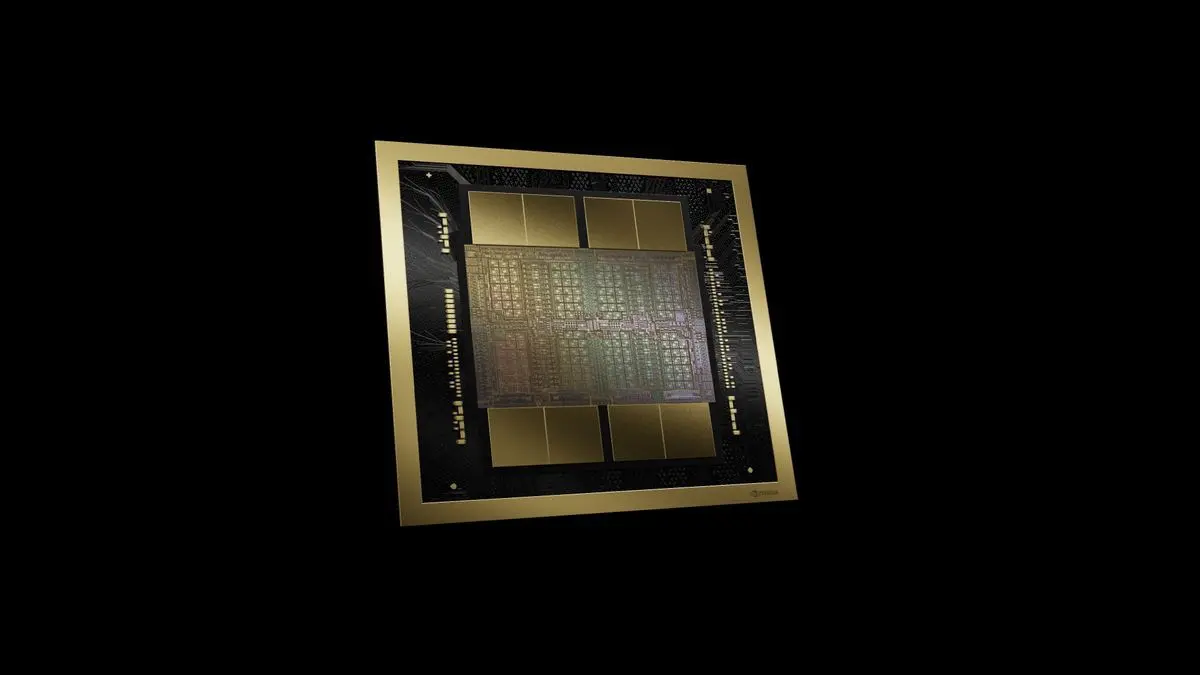
.The American government maintains export controls for high-end AI accelerators like Nvidia's H100 or B200 that can train AI models for military purposes, but does not restrict hardware that can run these models locally
1
. This creates a significant loophole where AI models are trained anyway and the hardware capable of deploying them remains readily available through various channels. GUR stated that the discovery of foreign components in Russian weapons demonstrates the need for increased sanctions pressure and better coordination among international partners2
. HUR emphasized that these findings help Ukraine and its partners identify critical foreign technologies used in Russian weapons and strengthen measures aimed at preventing their supply to Russia3
. Ukraine publishes information about such discoveries through the 'Components in Weapons' section of HUR's War-Sanctions portal to track foreign components in Russian weapons and support sanctions enforcement efforts3
. Watch for potential policy shifts in how governments regulate AI-capable hardware that can execute trained models, not just the training infrastructure itself.Summarized by
Navi
[1]
[2]
[3]
08 Jul 2025•Technology

24 Aug 2026•Technology

02 Jun 2026•Policy and Regulation

1
Technology

2
Policy and Regulation

3
Technology