The Rise of AI-Powered Digital Resurrection: Comfort, Controversy, and Ethical Concerns


3 Sources
[1]
When a journalist uses AI to interview a dead child, isn't it time to ask what the boundaries should be? | Gaby Hinsliff
The virtual world can bring a kind of friendship and a kind of connection, even to the grieving. But it can also facilitate exploitation of very human needs Joaquin Oliver was 17 years old when he was shot in the hallway of his high school. An older teenager, expelled some months previously, had
[2]
Digital resurrection: fascination and fear over the rise of the deathbot
Ozzy Osbourne appeared as an AI-generated image at a recent Rod Stewart concert, prompting questions about how the ghoulish phenomenon will affect grieving Rod Stewart had a few surprise guests at a recent concert in Charlotte, North Carolina. His old friend Ozzy Osbourne, the lead singer of Black
[3]
An AI version of you could live forever -- but who would 'you'...
Living forever was once the stuff of sci-fi fantasy and Oasis song lyrics. No more. A digital recreation of you with no expiration date can be created for those who possess the money and desire. Tech entrepreneurs are happily building AI-powered versions of human beings after their flesh and
Share
Copy Link
As AI technology advances, the creation of digital avatars of deceased individuals is becoming increasingly common, sparking debates about ethics, grief, and the boundaries of technology in preserving human connections.
The Emergence of Digital Resurrection
In recent years, the concept of "digital resurrection" has moved from science fiction to reality. Artificial Intelligence (AI) is now being used to create digital avatars of deceased individuals, sparking both fascination and controversy. This technology, often referred to as "griefbots" or "deathbots," uses photographs, videos, voice messages, and other digital remnants to recreate a person's likeness and personality
1
2
.High-Profile Cases and Public Reaction
Several recent incidents have brought this technology into the spotlight. Rod Stewart's concert featured AI-generated images of deceased music legends, including Ozzy Osbourne and Michael Jackson
2
. In a more controversial case, an AI recreation of Joaquin Oliver, a victim of the 2018 Parkland school shooting, was interviewed by former CNN correspondent Jim Acosta1
3
. These events have divided public opinion, with some finding them touching tributes and others viewing them as disrespectful or exploitative.The Technology Behind Digital Avatars
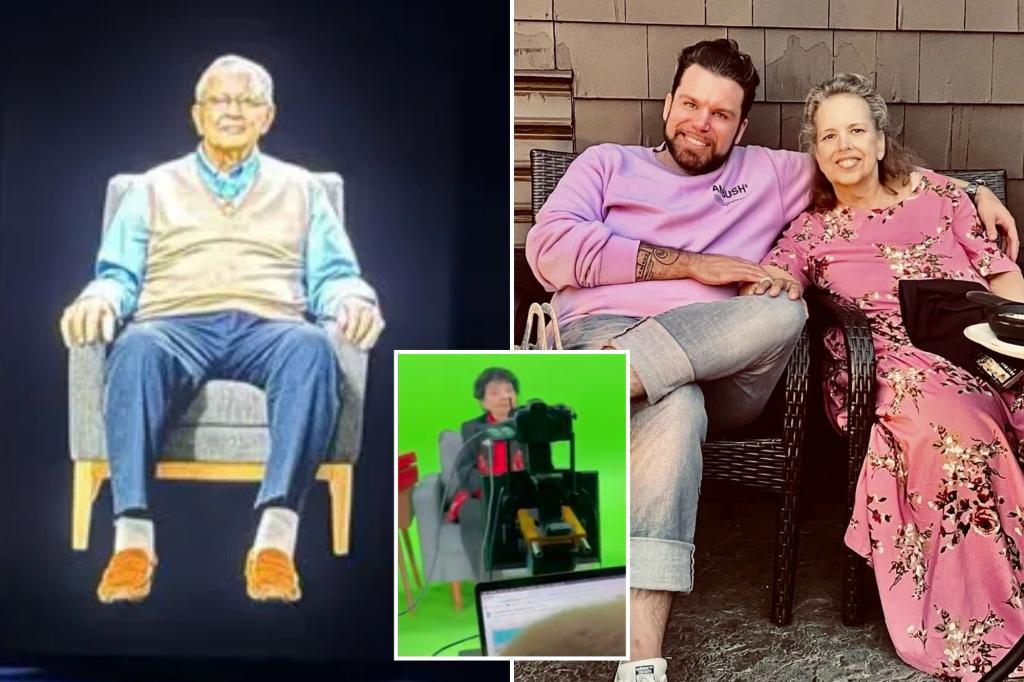
Companies like StoryFile and You, Only Virtual are at the forefront of this technology. The process typically involves interviewing and filming the person while they're alive, creating a database of responses and personality traits. After death, AI uses this information to generate responses to new questions, even on topics not explicitly covered in the original material
3
.
Source: New York Post
Motivations and Applications
For many, the primary motivation is preserving connections with loved ones. Michael Staenberg, a 73-year-old real estate developer, sees it as a way to mentor future generations
3
. Jason Gowin, battling colon cancer, is creating an AI version of himself for his children to interact with at future milestones3
.Ethical Concerns and Debates
The rise of digital resurrection has sparked numerous ethical debates. Key concerns include:
- Consent and privacy: The deceased cannot give permission for their digital recreation
1
. - Exploitation: There are worries about the commercialization of grief
1
. - Impact on the grieving process: Some experts argue that these avatars might hinder acceptance of loss
2
. - Authenticity: Questions arise about how accurately these avatars represent the deceased, especially regarding complex or controversial topics
1
3
.
Related Stories

Psychological Impact and Grieving
Experts are divided on how this technology affects the grieving process. While some see it as a natural extension of how we remember the dead, others worry it might create unhealthy dependencies or prevent proper closure
2
. A 2023 YouGov poll found that 14% of respondents would find comfort in interacting with a digital version of a deceased loved one, with younger generations more open to the idea2
.Future Prospects and Market Growth
The market for digital resurrection technology is growing rapidly, especially in countries like China. Estimates suggest the market was worth about £1.3 billion in 2022 and could quadruple by 2025
2
. As technology advances, we can expect more realistic and interactive avatars, potentially blurring the lines between digital and physical presence even further.Conclusion
As AI-powered digital resurrection becomes more accessible and sophisticated, society faces complex questions about the boundaries of technology, the nature of grief, and the ethics of posthumous representation. While it offers comfort to many, it also challenges our traditional notions of life, death, and memory.
References
Summarized by

Navi
[1]
[3]
Related Stories
AI Afterlife: How Digital Grief Tech is Reshaping Mourning
13 Sept 2025•Technology
The Ethical Dilemma of AI-Powered 'Digital Resurrection': Comfort or Exploitation?
31 Oct 2024•Technology

The Rise of AI Deadbots: Digital Resurrection Sparks Ethical Debates and Economic Opportunities
28 Aug 2025•Technology
Recent Highlights



Recent Highlights
Today's Top Stories










Don’t drown in AI news. We cut through the noise - filtering, ranking and summarizing the most important AI news, breakthroughs and research daily. Follow topics that matter to you and stay ahead.


