AI-Generated 'Mask' Revolutionizes Art Restoration, Completing Work in Hours Instead of Years


5 Sources
[1]
Have a damaged painting? Restore it in just hours with an AI-generated "mask"
Art restoration takes steady hands and a discerning eye. For centuries, conservators have restored paintings by identifying areas needing repair, then mixing an exact shade to fill in one area at a time. Often, a painting can have thousands of tiny regions requiring individual attention. Restoring
[2]
Years of painting restoration work done in just hours by new technique
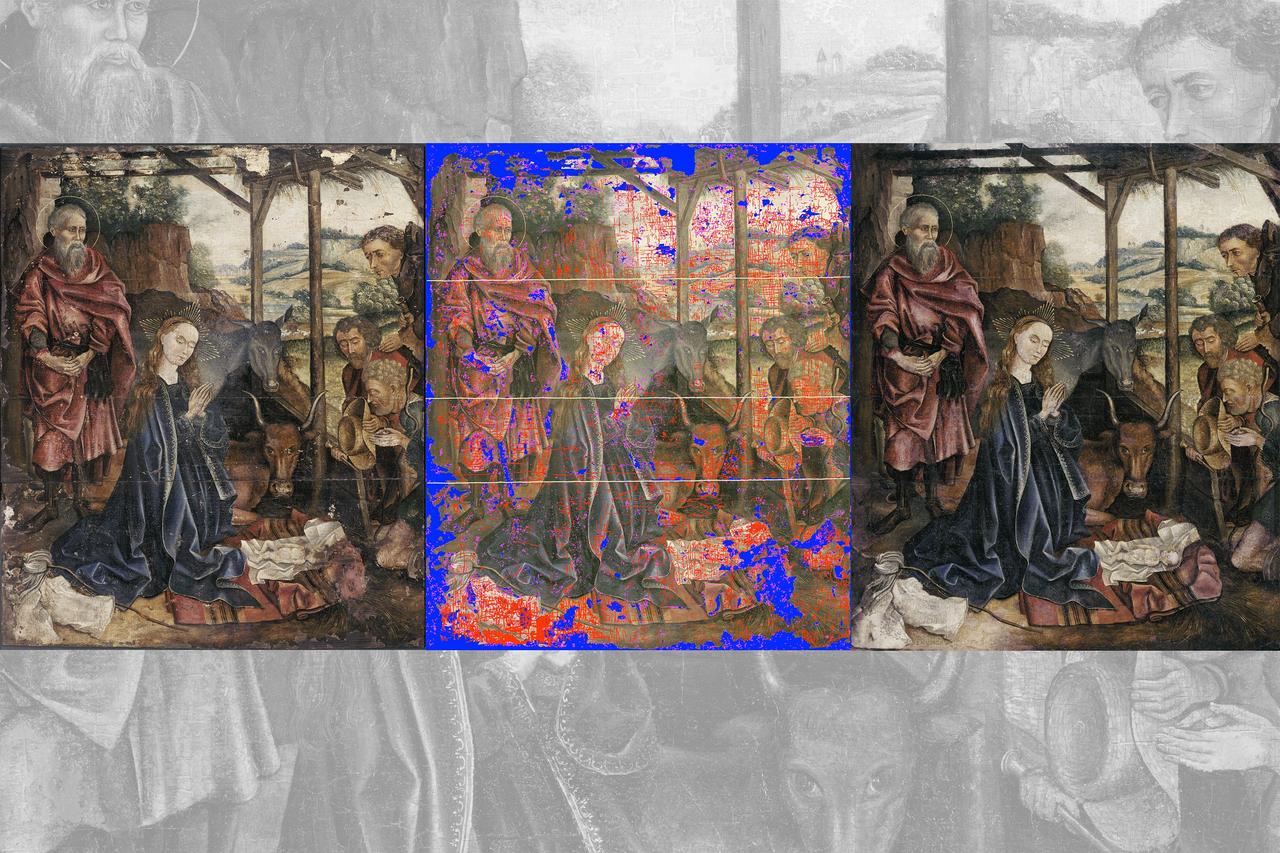
At left is a damaged painting, with the middle panel showing a map of the different kinds of damage present - green lines show full splits in the underlying panel support, thin red lines depict major paint craquelure, blue areas correspond to large paint losses, while pink regions show smaller
[3]
Researchers create AI-based tool that restores age-damaged artworks in hours
By slashing time and cost of restoration, technique could be used on paintings not valuable enough for traditional approach The centuries can leave their mark on oil paintings as wear and tear and natural ageing produce cracks, discoloration and patches where pieces of pigment have flaked
[4]
Have a damaged painting? Restore it in just hours with an AI-generated 'mask'
Art restoration takes steady hands and a discerning eye. For centuries, conservators have restored paintings by identifying areas needing repair, then mixing an exact shade to fill in one area at a time. Often, a painting can have thousands of tiny regions requiring individual attention. Restoring
[5]

Put the paintbrush down - AI can restore artworks quicker and better
Artificial intelligence (AI) could spell the end of art restoration by humans after MIT showed that damaged paintings can be repaired in just a few hours. Typically, conservators spend months or years researching and matching paints, colours and techniques to ensure the finished product is as
Share
Copy Link
MIT researcher Alex Kachkine develops a groundbreaking AI-based technique that can restore damaged paintings in hours, potentially transforming art conservation and increasing public access to previously unseen artworks.
Revolutionary AI-Powered Art Restoration Technique
MIT graduate student Alex Kachkine has developed a groundbreaking method for restoring damaged paintings using artificial intelligence (AI) and advanced printing technology. This innovative approach, detailed in a recent paper published in Nature, promises to dramatically reduce the time and cost associated with traditional art restoration techniques
1
2
3
.The AI-Generated Mask Process
Kachkine's method involves several key steps:
-
Cleaning and Scanning: The damaged painting is first cleaned using traditional techniques to remove any previous restoration attempts
1
4
. -
AI Analysis: The cleaned painting is scanned, and AI algorithms analyze the image to create a digital reconstruction of the original work
1
2
. -
Damage Mapping: Custom software developed by Kachkine creates a detailed map of damaged areas requiring repair, along with the exact colors needed for restoration
1
4
. -
Mask Creation: The digital restoration is printed onto a thin, two-layer polymer film. One layer contains the color information, while the other is printed in white to ensure full color reproduction
1
2
. -
Application: The printed mask is carefully aligned and adhered to the original painting using a thin varnish spray
2
.
Impressive Results and Time Savings
To demonstrate the effectiveness of his technique, Kachkine applied the method to a highly damaged 15th-century oil painting. The AI-powered process:
Source: MIT
- Identified 5,612 separate regions needing repair
- Used 57,314 different colors for restoration
- Completed the entire restoration in just 3.5 hours
Kachkine estimates that this process is approximately 66 times faster than traditional restoration methods, which can take weeks, months, or even years to complete
1
2
3
4
.Related Stories

Potential Impact on Art Conservation and Public Access
This new technique has the potential to revolutionize art conservation and increase public access to damaged artworks:
-
Increased Efficiency: The dramatic reduction in restoration time could allow galleries to restore and display many more damaged paintings
1
3
5
. -
Reversibility: The mask can be easily removed without damaging the original artwork, addressing a key concern in conservation
2
3
. -
Digital Record-Keeping: A digital file of the mask can be stored for future reference, providing clear documentation of restoration efforts
1
4
. -
Accessibility: The method could be particularly useful for paintings of relatively low value that might otherwise remain in storage, unseen by the public
3
5
.
Ethical Considerations and Limitations
While the potential benefits are significant, Kachkine and other experts acknowledge that there are ethical considerations and limitations to consider:
- The appropriateness of having a film covering the original painting
- Potential impact on the viewing experience
- The suitability of specific corrections, such as copied features from other paintings
- The method's applicability only to varnished paintings with smooth surfaces
3
5
Kachkine emphasizes that any application of this new method should be done in consultation with conservators knowledgeable about a painting's history and origins
1
4
.As this AI-powered restoration technique continues to develop, it has the potential to transform the field of art conservation, making it possible for more people to experience and appreciate previously inaccessible works of art.
References
Summarized by

Navi
[5]
Related Stories
AI art analysis challenges centuries-old beliefs about El Greco's mysterious painting
17 Apr 2026•Science and Research

AI photo restoration tools are fabricating faces and erasing your family's real history
28 Mar 2026•Entertainment and Society

AI Film Restoration Sparks Debate as Studios Use Technology to Revive Classic Movies
27 Mar 2026•Entertainment and Society
Recent Highlights
1
Meta Unveils Muse Wonder Frontier AI Models, Claims Performance Matching OpenAI and Anthropic
Technology

2
IMF Report Warns AI Market Correction Could Spark Global Financial Crisis With $1.4T at Risk
Business and Economy

3
Eight States Sue OpenAI Over ChatGPT Safety Concerns and Unlawful Collection of Children's Data
Policy and Regulation

Recent Highlights
Today's Top Stories







Don’t drown in AI news. We cut through the noise - filtering, ranking and summarizing the most important AI news, breakthroughs and research daily. Follow topics that matter to you and stay ahead.


