2 Sources
2 Sources
[1]
Did AI just solve the mystery of one of El Greco's most enigmatic paintings?
For years, art historians believed The Baptism of Christ was likely painted by El Greco with assistance from other artists. But new research suggests otherwise The Baptism of Christ is one of Spanish Renaissance painter El Greco's most mysterious artworks. The oil painting depicts a towering John the Baptist pouring water on the head of an even larger, almost shimmering Jesus; in the background, God, angels and cherubs look down from heaven in an ecstatic frenzy. It's a vital and arresting image. Art historians believe it was unfinished at the time El Greco died in 1614 and that it was completed by the painter's son, Jorge Manuel, with help from other apprentices in El Greco's workshop. But new research suggests otherwise. Using artificial intelligence, researchers analyzed The Baptism of Christ at the microscopic level, looking for trends in the texture of the paint at the resolution of a single paintbrush bristle. The results suggest El Greco painted the majority of The Baptism himself -- but some experts caution more research is needed. While not definitive, the study has "muddied the waters" on the multipainter hypothesis and raises questions about The Baptism that warrant more investigation, says Andrew Van Horn, the paper's lead author and a postdoctoral fellow in the department of anthropology at Purdue University. If you're enjoying this article, consider supporting our award-winning journalism by subscribing. By purchasing a subscription you are helping to ensure the future of impactful stories about the discoveries and ideas shaping our world today. During the Renaissance, master painters typically employed apprentices to work alongside them as the apprentices learned their craft. These assistants might mix paint pigments, stretch canvases and even help fill in certain details on paintings. Without detailed records of work, determining exactly who painted what in any given artwork from a master's workshop can be challenging, Van Horn says. For decades, art historians have relied on brushstroke styles and other visual and textural tells to identify whether a painting can be fully attributed to a single artist or if it should be attributed to his workshop more generally. But this detective work is sometimes fraught, and it can lead to some priceless artwork being misattributed, overlooked or disputed. That's where artificial intelligence could help make a difference: Van Horn and his colleagues developed a machine-learning model that was trained on 25 paintings by nine student artists. Then the researchers showed the model two paintings by El Greco: The Baptism of Christ and Christ on the Cross with Landscape, which, unlike the former painting, was thought to have been solely El Greco's work. As expected, the AI determined that Christ on the Cross was the work of a single artist. But when it analyzed The Baptism, the AI detected an underlying connection between segments of the painting that were thought to have been done by different painters, Van Horn says. In other words, on the micro level, the painting was more uniform than previously determined. "What helps us is that we can look at a really fine scale, and so we're able to see some things that maybe you can't see with the naked eye," Van Horn says. The findings, which were made in collaboration with art historians, suggest that The Baptism could have been largely created by El Greco, perhaps while using different brushes than usual -- or with hands that were affected by aging. The findings were published on Friday in Science Advances. "Creating an AI system that can detect the authorship of a painting is an incredibly challenging problem," says Mark Hamilton, a visiting researcher at the Massachusetts Institute of Technology's Computer Science & Artificial Intelligence Laboratory, who was not involved in the study. "Artists may change their styles as they paint, collaborating artists may attempt to mimic the style of a master painter, and conservation and physical damage can affect measurements." "Any AI system needs to be robustly tested on real unseen data where art historians already know the 'answer' so that we can establish the quality of the system before trusting it," he says. "Although this work takes steps in this direction, it both trains and evaluates its algorithm on a small dataset of 25 student paintings [of the same photograph of lilies] and does not validate their system on real paintings from antiquity. I would be cautious of trusting any predictions this system makes on real paintings from antiquity without more validation." "The work represents a good first step at establishing El Greco's authorship, but more work remains to be done," says Richard Taylor, a professor of physics, psychology and art at the University of Oregon, who also was not involved with the study. "While [the researchers'] analysis shows a strong interconnected set of communities within the painting, it cannot definitely rule one way or the other," he adds, noting that the artwork of students may be more varied than that of artists who are trained at the same workshop and that the study has a small sample size. "A more thorough and complete analysis of many more paintings would be necessary to say anything definitive." If confirmed, however, the results could change how art historians view the end of El Greco's life, as well as the value of the work he created at that time. Van Horn also hopes to use the AI tool to analyze different paintings by the same workshop to look for lesser-known individuals' signature styles as a way to identify and track these artists. But he emphasizes the AI tool is not designed to replace art historians. "To be able to trace people, or some phantom person, through different workshops into their own workshop would be amazing," he says.
[2]
Case Western Reserve Researchers Using AI at Hair-Width Scale to Reveal Renaissance Master's Hidden Hand | Newswise
Newswise -- CLEVELAND -- Case Western Reserve University (CWRU) researchers are using artificial intelligence (AI) and physics at the width of a single hair to peer into the surface of Renaissance paintings, offering new clues about how masterpieces were made -- and by whom. Researchers -- from the physics and the art history departments -- found a new way to read 400-year-old paintings, using AI to map microscopic surface textures. They uncovered hidden patterns in works by El Greco, revealing clues about authorship, collaboration and the artist's distinctive hand. In a new study published in the journal Science Advances, researchers led by Michael Hinczewski, associate professor of physics in the College of Arts and Sciences, scanned the surface of two Renaissance paintings to create ultra-detailed topographic maps, capturing tiny ridges and grooves left by brushstrokes. The interdisciplinary team of researchers then trained an AI system to analyze the centimeter-scale areas -- that they call "patches" -- detecting patterns and relationships across the surface that are invisible to the human eye. By treating each painting like a network of small, interconnected pieces, the algorithm could determine whether the surface patterns pointed to a single artist's hand or multiple contributors. The approach revealed a striking unity in one painting, "Christ on the Cross" housed at the Cleveland Museum of Art (CMA). While examining another work, the "Baptism of Christ," housed in Toledo, Spain, the team made a significant discovery: The work was long believed to have been finished posthumously by the master's workshop, but the evidence in this study pointed to an underlying connection between regions of the painting previously attributed to different artists. The research findings suggest a single set of materials, or even a single hand. If confirmed, that finding could reshape how scholars understand El Greco's late work, researchers noted. Hinczewski said the team's new technique offered a novel, data-driven method to tackle long-standing questions of attribution and artistic practice. "This is the first time we've been able to take surface texture at this scale and use it to say something meaningful about who made a painting," he said. "When you can analyze details down to the width of a single paintbrush bristle, you start to uncover a kind of fingerprint -- one that could eventually help us authenticate works and better understand how artists like El Greco actually painted." Connecting the dots Hinczewski said the project itself began in an unlikely way: a conversation between two Case Western Reserve graduate students who were dating -- one studying art history, the other physics. That connection sparked a collaboration that has now spanned seven years, ultimately bringing together scientists, art historians and partners at the CMA, Cleveland Institute of Art and the Factum Foundation in Madrid. "This is what happens when science meets art," said Andrew Van Horn, the Ross-Lynn postdoctoral fellow in the Department of Anthropology at Purdue University, who worked on the research as a postdoctoral fellow in both physics and art history at CWRU. "Applying computational methods to actual questions in art history was integral both to creating a new AI method and making a really cool discovery about El Greco's art. Interdisciplinarity is going to be a key driver of innovation going forward, and the impressive team we put together at CWRU -- along with other great schools and institutions -- is proof of that." Looking ahead, Hinczewski said he envisions applying the technique across larger collections -- comparing surface "fingerprints" from different works to more confidently attribute paintings, track how an artist's style evolved over time and even resolve long-standing debates about disputed pieces. As the database grows, the approach could also help flag subtle inconsistencies that point to modern imitations, offering museums and collectors a powerful new tool for detecting counterfeits. "This is just the beginning," Hinczewski said. "We're learning that even a few millimeters of paint can carry a wealth of information about how a work was made. As these tools evolve, they could transform how we study artists over time -- and how cultural heritage is protected."
Share
Share
Copy Link
Researchers used AI to analyze The Baptism of Christ at microscopic levels, examining paint texture down to single brushstrokes. The findings challenge the long-held belief that El Greco's son and workshop apprentices completed the unfinished painting after the master's death in 1614, suggesting instead that El Greco painted most of it himself.
For centuries, art historians believed The Baptism of Christ was left unfinished when El Greco died in 1614 and was completed by his son Jorge Manuel and apprentices from the master's workshop
1
. But new research using AI is challenging that narrative. Researchers from Case Western Reserve University and Purdue University developed a machine-learning model that analyzed Renaissance paintings at microscopic levels, examining paint texture down to the width of a single paintbrush bristle2
.
Source: Scientific American
The interdisciplinary team, led by Michael Hinczewski from Case Western Reserve University's physics department, created ultra-detailed topographic maps of the painting's surface, capturing tiny ridges and grooves left by brushstrokes
2
. Andrew Van Horn, the study's lead author and postdoctoral fellow at Purdue University, explains that analyzing brushstrokes at such fine scales reveals patterns invisible to the naked eye1
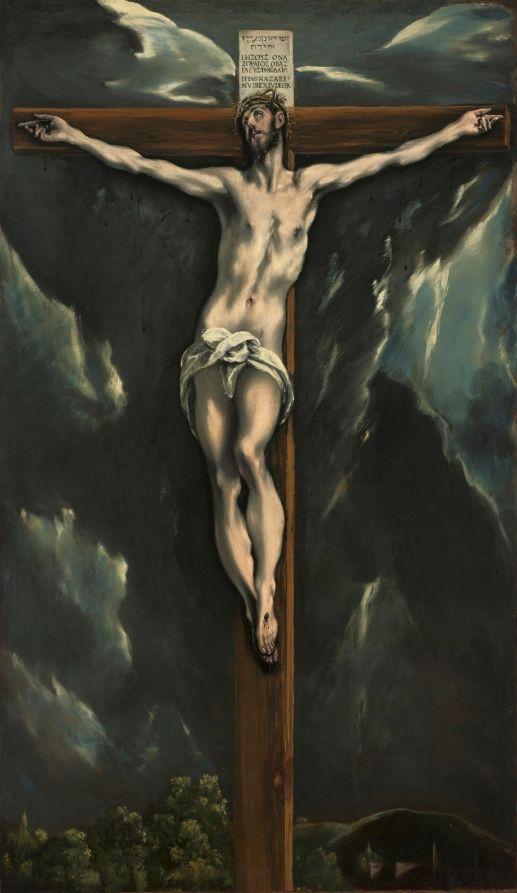
.The algorithm was trained on 25 paintings by nine student artists before being applied to two works by El Greco: The Baptism of Christ and Christ on the Cross with Landscape
1
. By treating each painting like a network of interconnected patches, the AI in art attribution and analysis detected underlying connections between segments previously thought to have been painted by different artists2
.
Source: Newswise
As expected, the AI determined Christ on the Cross was the work of a single artist. But the microscopic analysis of The Baptism revealed striking uniformity across the surface texture, suggesting El Greco painted the majority himself—perhaps using different brushes than usual or with hands affected by aging
1
. The findings, published in Science Advances, emerged from a seven-year collaboration between physics and art history departments at Case Western Reserve University, along with partners at the Cleveland Museum of Art and Factum Foundation in Madrid2
.While the research offers intriguing insights into authorship and collaboration, some experts urge caution. Mark Hamilton from MIT's Computer Science & Artificial Intelligence Laboratory notes the algorithm was trained and evaluated on a small dataset of 25 student paintings and lacks validation on other real paintings from antiquity
1
. Richard Taylor from the University of Oregon agrees the work represents a good first step but cannot definitively rule one way or the other1
.During the Renaissance, master painters typically employed apprentices who mixed pigments, stretched canvases, and filled in details, making it challenging to determine exactly who painted what without detailed records
1
. Van Horn says the study has "muddied the waters" on the multipainter hypothesis and raises questions warranting further investigation1
.Related Stories
Hinczewski envisions applying this technique across larger collections to compare surface fingerprints from different works, track how an artist's style evolved, and resolve debates about disputed pieces
2
. The approach could help authenticate artworks and flag subtle inconsistencies pointing to modern imitations, offering museums a tool for detecting counterfeiting2
. As the database grows, art analysis at this scale could transform how scholars study the distinctive hands of master painters over time and how cultural heritage is protected2
.Summarized by
Navi
[1]
1
Technology

2
Science and Research

3
Technology