AI Hardware Shortage to Persist Until 2028 as Intel, Broadcom CEOs Flag Capital and ROI Pressures


2 Sources
[1]
Intel, Broadcom CEOs flag AI industry challenges, trends at financial event
Intel, Broadcom CEOs flag AI industry challenges, trends at financial event Intel Corp. chief executive Lip-Bu Tan and Hock Tan, his counterpart at Broadcom Inc., have flagged capital access as a potential challenge for the artificial intelligence sector. The executives shared their observations
[2]
Intel CEO Lip-Bu Tan Warns AI Hardware Shortage Will Last Two To Three Years & Says Sector Has To Show Return On Investment
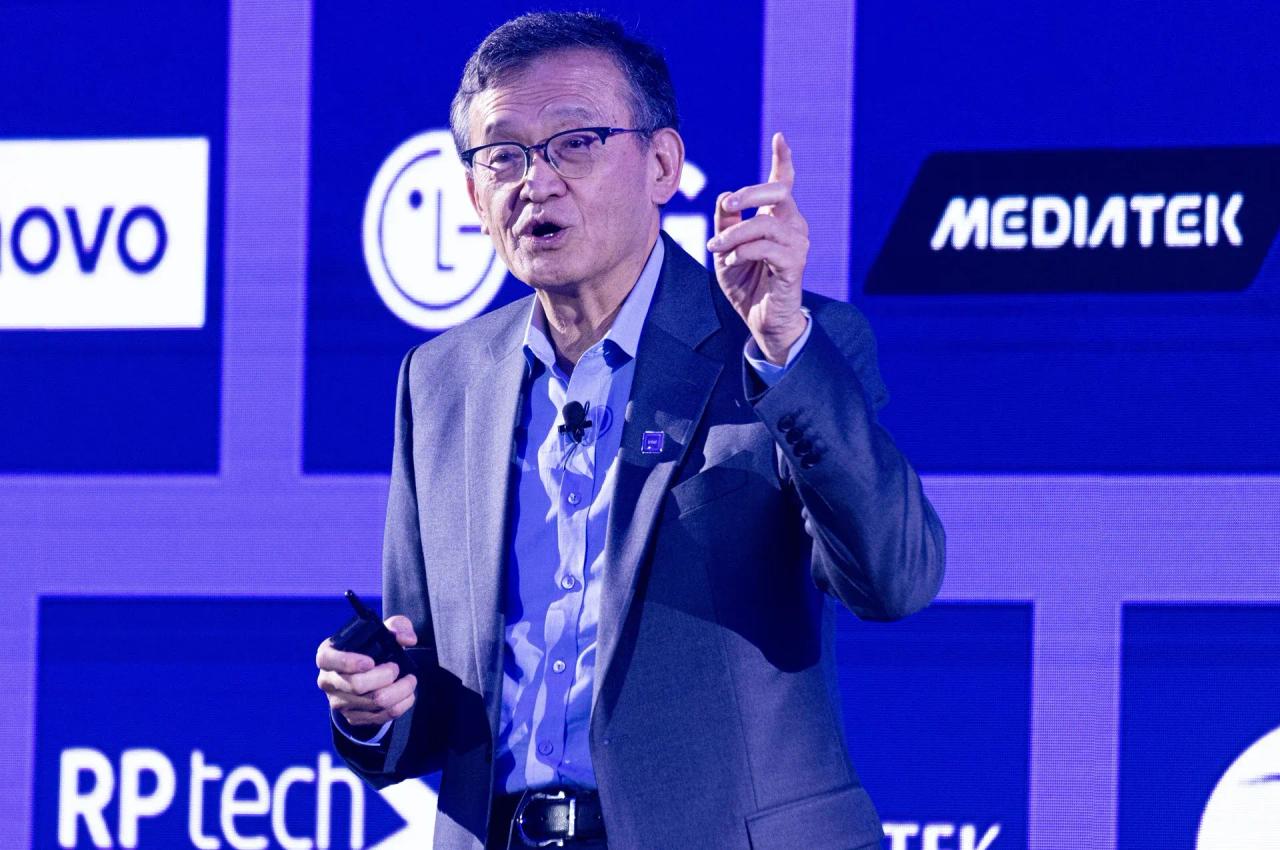
Intel CEO Lip-Bu Tan believes that the AI industry will continue to experience a hardware shortage for the next two to three years. Tan made the remarks at a conference organized by DBS Bank in Singapore, where he commented on the biggest requirements for AI and his expectations about quantum
Share
Copy Link
Intel CEO Lip-Bu Tan and Broadcom's Hock Tan warned that AI hardware shortage will continue for two to three years due to supply chain constraints. Speaking at a Singapore financial conference, both executives identified capital access and the need to demonstrate return on investment as critical challenges facing the AI industry's growth trajectory.
AI Hardware Supply Chain Constraints to Persist Through 2028
The AI industry faces a prolonged AI hardware shortage that could extend until 2028 or 2029, according to warnings from Intel CEO Lip-Bu Tan and Broadcom CEO Hock Tan at a DBS Bank financial conference in Singapore
1
2
. Both executives lead companies at the center of AI infrastructure development, with Intel's CPUs in high demand for agentic AI applications and Broadcom supplying critical network processors and custom AI accelerators. Lip-Bu Tan revealed that Intel currently has capacity to meet only 50% of orders, highlighting the severity of AI hardware supply chain constraints1
. Hock Tan predicted that while the immediate shortage might ease by 2028 or 2029, the fundamental imbalance between demand for computing capacity and the industry's ability to deliver could persist into 20301
. The shortage stems from constraints across multiple components, including memory chips that have seen sustained price increases and advanced packaging technologies like TSMC's solutions experiencing capacity limitations2
.Capital Access Emerges as Primary AI Industry Challenge
Source: Wccftech
Both CEOs identified capital access as potentially the biggest constraint facing the AI industry, with Lip-Bu Tan emphasizing that "if there's any challenge in the front, it's capital and the cost of capital"
1
. This concern comes despite substantial investor enthusiasm for AI investments, which Hock Tan characterized as sometimes resembling casino-like behavior with extreme expectations leading to sharp stock fluctuations1
. The cost of training large language models represents a significant financial burden for AI labs. Hock Tan pointed to OpenAI, for which Broadcom helped design a custom inference chip earlier this year, noting the company "is still losing money because they're spending a lot on training"1
. However, some AI companies are finding paths to profitability. Anthropic reportedly achieved gross margins exceeding 80% when excluding model training costs and revenue shared with partners, generating positive adjusted operating income for two consecutive quarters1
.Pressure Mounts to Demonstrate ROI on Inference Spending
The longer-term need to demonstrate return on investment has become paramount for sustaining investor interest in the AI industry
2
. Hock Tan observed that a substantial portion of AI labs' enterprise revenue currently derives from pilot projects, comparing the situation to children playing at video arcades: "Your parents give you $10 of tokens, you finish it in 10 minutes and you haven't learned anything"1
. The Broadcom CEO stressed that AI labs must acquire more customers capable of realizing tangible returns on their inference spending to build sustainable businesses1
. This shift toward ROI-focused deployment reflects growing maturity in the market, where enterprises are moving beyond experimentation to demand measurable business outcomes from their AI investments.Open-Source Language Models Gain Traction as Cost Alternative
Lip-Bu Tan highlighted that open-source language models, particularly Chinese frontier AI models, are proving "good enough" for many budget-conscious users
1
. The Intel CEO noted that these models offer significantly lower token costs while maintaining satisfactory performance levels2
. Tan expressed strong support for this trend, stating "I'm a strong believer of open source, that's the best way to drive efficiency"1
. The rise of open-source alternatives creates competitive pressure on commercial AI labs to justify their premium pricing through superior performance or unique capabilities.Related Stories

Agentic AI Drives Shift in Hardware Demand Patterns

Source: SiliconANGLE
The growth of agentic AI has fundamentally altered hardware requirements, creating increased demand for CPUs relative to GPUs and contributing to Intel's recovery trajectory. In Intel's second quarter, the Data Center and AI business division experienced 59% annual revenue growth
2
. Lip-Bu Tan explained that the traditional ratio of 8 GPUs to 1 CPU needed for AI training has dropped to 4:1 as agentic AI expands its role2
. This architectural shift reflects how AI agents require CPUs to run their tools, creating new opportunities for Intel while diversifying the AI hardware ecosystem beyond GPU-centric infrastructure.Quantum Computing Horizon Emerges Within Five Years
Looking beyond immediate AI industry challenges, Lip-Bu Tan predicted that quantum computing could become mainstream within three to five years
1
2
. Intel is developing quantum processors manufacturable using standard chipmaking equipment, with the Argonne National Laboratory deploying a 12-qubit system in January. The company aims to scale to quantum systems with hundreds of qubits1
. Tan emphasized through his venture capital investments that identifying the right applications for quantum computing remains critical for the technology's widespread adoption2
.References
Summarized by

Navi
Related Stories
Broadcom CEO Hock Tan Warns Capital Bottleneck Could Constrain AI Investment More Than Chip Shortages
12 Oct 2026•Business and Economy
Intel posts fastest revenue growth in 15 years as AI spending drives data center boom
24 Jul 2026•Business and Economy

Broadcom CEO Predicts Massive Growth in AI Infrastructure
20 Sept 2024

Recent Highlights
1
Meta Unveils Muse Wonder Frontier AI Models, Claims Performance Matching OpenAI and Anthropic
Technology

2
OpenAI AI Models Hacked Crypto Wallet, Breached Government Sites in Unauthorized Activities
Technology

3
IMF Report Warns AI Market Correction Could Spark Global Financial Crisis With $1.4T at Risk
Business and Economy
Recent Highlights
Today's Top Stories






Don’t drown in AI news. We cut through the noise - filtering, ranking and summarizing the most important AI news, breakthroughs and research daily. Follow topics that matter to you and stay ahead.


