Intel posts fastest revenue growth in 15 years as AI spending drives data center boom


13 Sources
[1]
Intel knows it needs to 'leapfrog' ARM and AMD, says CEO Lip-Bu Tan
Intel CEO Lip-Bu Tan has acknowledged that the semiconductor giant must catch up to rivals AMD and Arm, and said it now assumes edge AI and robotics will be a business as big as PCs. Tan made those remarks during Intel's Q2 earnings call, which saw the company report $16.1 billion revenue - a 25
[2]
Intel rises as strong forecasts signal AI boost for turnaround
July 24 (Reuters) - Intel's (INTC.O), opens new tab shares rose 6% in premarket trading on Friday after bullish forecasts signaled the AI boom was propelling the chipmaker's long-awaited turnaround. The company forecast third-quarter revenue above Wall Street expectations and raised this year's
[3]
Intel Benefits From a New Shift in A.I. Spending
The artificial intelligence boom has lifted chipmakers including Nvidia, Micron and South Korea's SK Hynix. Now Intel, which has begun rebounding from a lengthy slump, is benefiting from a new shift in A.I. spending. Tech firms are not only buying A.I. chips known as graphics processing units,
[4]
AI Hype Delivers Intel Its Fastest Revenue Growth in 15 Years
The AI infrastructure buildout is so massive that it has brought a once-ailing Intel back from the dead. The chipmaker recorded its fastest revenue growth in 15 years this past quarter, driven almost entirely, it seems, by rising chip demand from AI data centers. In the second quarter of 2026,
[5]

Intel posts its highest rate of revenue growth in 15 years, crushing expectations in its latest results
Chipmaker Intel Corp. delivered better-than-expected results today after recording its fastest rate of revenue growth for any quarter since 2011. It also provided guidance that topped analyst's expectations, sending its stock higher in after-hours trading. The company absolutely crushed
[6]

Intel Stock Jumps as Earnings Blow Past Expectations Amid Booming AI Demand
Get personalized, AI-powered answers built on 27+ years of trusted expertise. Intel's stock is soaring after another stronger-than-expected quarter. Shares of Intel (INTC) were up more than 5% in recent after-hours trading after the company posted earnings that blew past analysts' estimates.
[7]

Intel's Earnings Breakout: Can AI Power a Lasting Revival? - Intel beats estimates with blockbuster quarter
Intel's Earnings Breakout: Can AI Power a Lasting Revival? 1/5 Intel beats estimates with blockbuster quarter Intel delivered a much stronger-than-expected second quarter, reporting revenue of $16.13 billion and adjusted earnings of 42 cents per share, comfortably topping Wall Street forecasts.
[8]

Intel CEO: Strong AI, x86 Demand Driving Growth As Foundry, Manufacturing Execution Improve
'Our core message is simple: Strong demand for our products continues to outpace our growing supply. Our design manufacturing execution is improving, and operating discipline we put in place 15 months ago is beginning to show tangible results. Today, we are seeing the strongest revenue growth in
[9]

Intel's AI Boom Raked in $2.5 Billion -- Then Its Foundry Lost 84% of It - Intel (NASDAQ:INTC)
The Data Center and AI (DCAI) division generated $2.5 billion in operating income, while Intel Foundry posted a $2.1 billion operating loss. Put side by side, the foundry loss equaled 84% of the operating profit generated by Intel's fastest-growing major division. * INTC stock is moving after
[10]
Intel Earnings Spark Bullish Reactions as Jim Cramer Calls 'Intel's the One,' Gene Munster Says Investors
Cheers For Cheer AI-Driven Quarter CNBC's Jim Cramer called Intel "the one" after the results and said listening to the company was "to listen to seasoned team that counts every penny before it spends it." Patrick Moorhead, CEO and chief analyst of Moor Insights & Strategy, said no one should be
[11]
Intel Posts Strongest Revenue Growth in 15 Years on 'Unprecedented' AI Demand - Intel (NASDAQ:INTC)
* Intel stock is trending. What's pulling on INTC shares? Intel Q2 Earnings Highlights Intel posted second-quarter revenue of $16.13 billion, beating analyst estimates of $14.42 billion. The company reported second-quarter adjusted earnings of 42 cents per share, doubling estimates of 21 cents
[12]

Intel climbs premarket after AI-fueled quarterly sales exceed estimates By Investing.com
Investing.com - Intel shares rose by more than 4% in premarket trading on Friday after the U.S. chipmaker reported its strongest quarterly revenue growth in more than 15 years and issued a stronger-than-expected sales forecast, as booming artificial intelligence demand accelerated an ongoing
[13]
Why is Intel stock surging after-hours? By Investing.com
Investing.com -- Intel Corporation stock surged nearly 9.9% in after-hours trading after the chipmaker delivered its strongest quarterly revenue growth in over 15 years, with second-quarter results that blew past analyst estimates across revenue, earnings, and margins. Revenue came in at $16.13
Share
Copy Link
Intel delivered its strongest quarterly performance since 2011, with revenue climbing 25% to $16.1 billion in Q2 2026. The chipmaker's data center and AI business surged 59% year-over-year as tech companies increasingly buy CPUs for AI agents. CEO Lip-Bu Tan acknowledged Intel must leapfrog rivals AMD and Arm while raising capital expenditure to $20 billion to meet unprecedented AI demand.
Intel Reports Strongest Revenue Growth Since 2011
Intel achieved its fastest revenue growth in 15 years during the second quarter of 2026, posting a 25% year-over-year increase to $16.1 billion
1
2
. The performance crushed Wall Street expectations, with earnings before certain costs reaching 42 cents per share compared to the 21 cent consensus estimate5
. Intel shares rose 6% in premarket trading following the announcement, capping a remarkable year that has seen the stock more than double2
.
Source: CRN
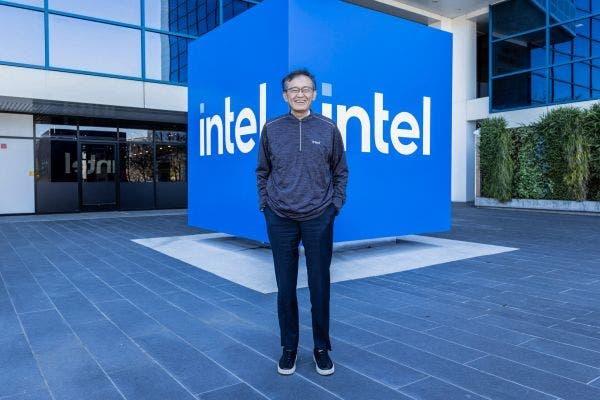
CEO Lip-Bu Tan described the results as evidence of solid execution during the earnings call, noting this marked the seventh consecutive quarter of exceeding financial expectations
1
. "AI is driving unprecedented demand for compute," Tan stated, emphasizing that the revenue growth was the strongest in 15 years3
. The company raised its third-quarter revenue forecast above Wall Street expectations and increased this year's capital expenditure estimate to $20 billion from $18 billion2
.Data Center and AI Business Drives Growth Amid AI Spending Surge
The data center and AI business emerged as Intel's primary growth engine, with revenue surging 59% to $6.3 billion in the quarter
3
5
. This dramatic expansion reflects a fundamental shift in AI spending patterns as tech companies increasingly recognize that AI infrastructure requires substantial investments in central processing units alongside graphics processing units. "Demand accelerated across cloud and enterprise as customers increasingly recognize the critical role that CPUs in general and x86 CPUs in particular play in the AI infrastructure," Tan explained during the earnings call4
.
Source: The Register
The rise of AI agents has fundamentally altered purchasing patterns in the AI chips market. While earlier AI deployments favored Nvidia's GPUs at a ratio of four to one over CPUs, agentic AI systems that can reason and act on information require a greater proportion of microprocessors
3
. Research firms like Creative Strategies now predict AI data centers will purchase roughly equal numbers of CPUs and GPUs. Meta's head of infrastructure, Santosh Janardhan, confirmed this trend: "It is not just a GPU game anymore. CPUs are becoming at least as important, if not more"3
.Intel's server CPUs are currently experiencing unprecedented AI demand that exceeds manufacturing capacity. CFO David Zinsner told analysts that supply remains "very tight" and that "customers continue to signal a strong and sustainable spending environment"
5
. The Xeon 6 range continues to be one of the fastest-ramping products in Intel's history, with the company's core server CPU franchise growing faster than ever1
.Intel's Turnaround Strategy Faces Competitive Pressures
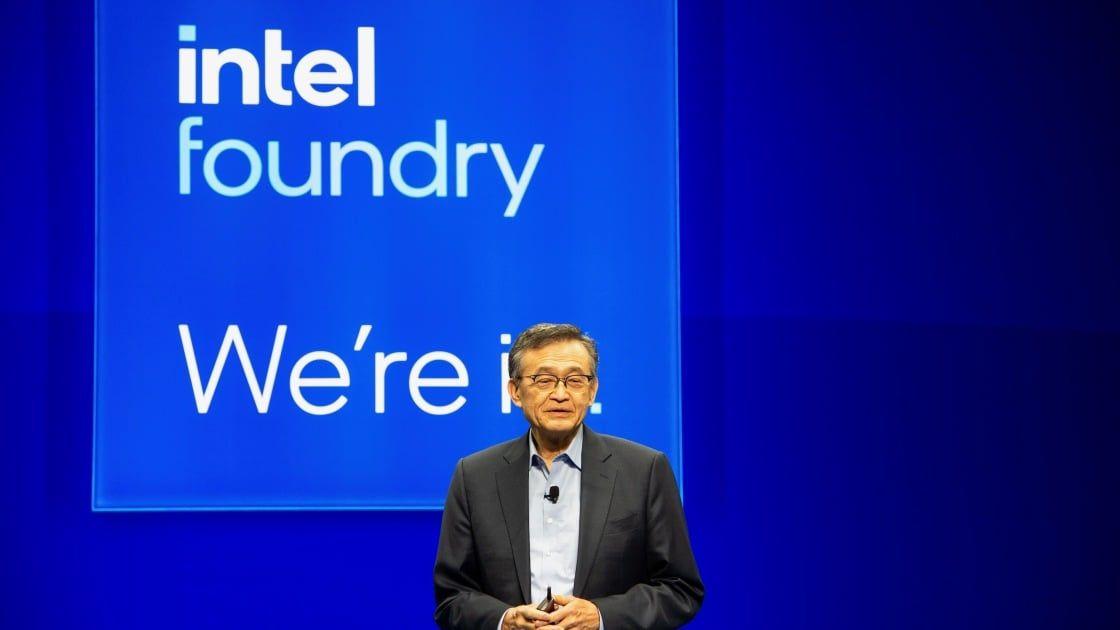
Despite the impressive results, Intel's turnaround faces significant headwinds from competitors. When Morgan Stanley analyst Joe Moore asked Tan how he plans to regain market share during the earnings call, the CEO acknowledged the competitive reality. "Some areas we are still behind, but we are catching up very fast and we try to leapfrog some of the CPU architecture, and we are putting major effort into it," Tan admitted
1
.The challenge is substantial. AMD has grown its market share to a third of the x86 server market, while Intel's hyperscale customers have designed their own Arm-powered CPUs that now account for almost half of all server sales according to IDC
1
. Nvidia has also pushed its own microprocessors for AI, including a new model called Vera, while massive data center operators like Amazon, Microsoft and Google have developed custom chips3
.Tan pointed to Intel's forthcoming Clearwater Forest, Diamond Rapids, and Coral Rapids processors as evidence the company is creating products that can compete with anyone
1
. The CEO has spent the past year strengthening Intel's finances, securing backing from the U.S. government and major investors as the chipmaker seeks to play a key role in Washington's push to revive domestic semiconductor manufacturing2
.Related Stories
Manufacturing and Foundry Business Show Promise
Intel's foundry business grew 31% to $5.8 billion during the quarter, though the unit posted an operating loss of $2.1 billion
3
5
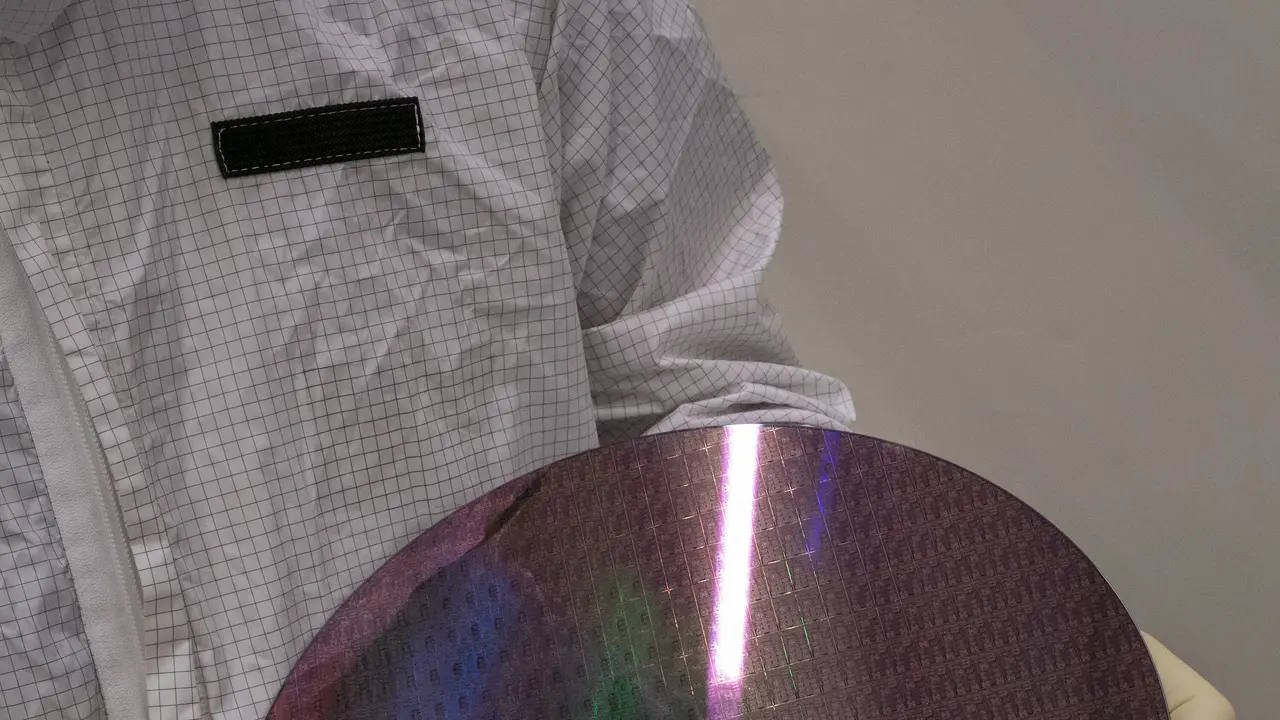
. The company's 18A process is now in volume production across multiple commercial and consumer products, with factory output increasing sequentially every month1
. Yields from the leading-edge 18A process are trending ahead of targets1
.
Source: NYT
The more advanced 14A process remains on track for risk production in the second half of 2027, with Intel committing to high volume ramp in 2028
1
. Zinsner noted that the 14A process is currently ahead of where older processes were at this point in their lifecycle5
. The foundry service has recently landed customers such as Apple, which had been relying almost entirely on TSMC3
."The aggressive capex raise is a proof point that Intel is likely to see continued customer acquisition as the United States demands more domestic semiconductor manufacturing," D.A. Davidson analysts said
2
. Melius Research analysts added that the capital expenditure increase "signals confidence in cash flow upside and demand visibility from long-term agreements for products, but also confidence that Foundry customers are coming"2
.Memory Chip Shortage Impacts PC Business
While AI drives growth, Intel's Client Computing and Physical AI Group faces headwinds from the memory chip shortage. The segment generated $8.9 billion in revenue with 13% year-over-year growth, though this paled compared to the data center surge
5
. Ten percent of CCPG's revenue came from edge products, and CFO Zinsner said Intel believes "the edge and physical AI opportunity is likely to at least match the client TAM over time"1
.Tan warned that "the industry is facing one of the most severe supply constraints in its history, across leading-edge logic silicon wafers, memory, and substrates"
1
. Zinsner predicted PC consumption will be "sub-seasonal in the second half of the year, and down low double digits percent for all of 2026, impacted by rising memory prices and constraints"4
. Worldwide PC shipments had their first decline in two years this year according to International Data Corporation research4
.References
Summarized by

Navi
Related Stories
Intel CEO bets on agentic AI and foundry revival as chipmaker eyes 10A and 7A process nodes
21 May 2026•Business and Economy

Intel prioritizes Xeon processors over PC chips as AI demand strains foundry capacity
23 Jan 2026•Business and Economy
Intel bets on AI inference to restore CPUs to center of compute as Q1 revenue beats expectations
23 Apr 2026•Business and Economy

Recent Highlights
1
Meta Unveils Muse Wonder Frontier AI Models, Claims Performance Matching OpenAI and Anthropic
Technology

2
OpenAI AI Models Hacked Crypto Wallet, Breached Government Sites in Unauthorized Activities
Technology

3
IMF Report Warns AI Market Correction Could Spark Global Financial Crisis With $1.4T at Risk
Business and Economy

Recent Highlights
Today's Top Stories







Don’t drown in AI news. We cut through the noise - filtering, ranking and summarizing the most important AI news, breakthroughs and research daily. Follow topics that matter to you and stay ahead.


