Broadcom and Intel CEOs Warn Capital Crunch Could Become AI Industry's Biggest Bottleneck


9 Sources
[1]
Intel, Broadcom CEOs warn capital crunch could become AI's biggest bottleneck
* Intel and Broadcom warned that access to capital could emerge as a major constraint on the artificial intelligence boom. * "[What] I think might be the biggest constraint is capital," Hock Tan said at the DBS Asia Future Forward Conference in Singapore on Monday. In this article * AVGO *
[2]
Intel and Broadcom CEOs warn capital may bottleneck AI growth
Both executives said financing costs and the need to demonstrate returns on AI investment pose a greater risk than chip or power shortages Broadcom $AVGO CEO Hock Tan and Intel $INTC CEO Lip-Bu Tan said Monday that financing constraints could prove harder to overcome than the industry's
[3]
Broadcom CEO Hock Tan calls AI investors casino gamblers
Hock Tan said many investors have little understanding of what they're betting on, and questioned whether businesses are wasting money on AI Broadcom $AVGO Inc. CEO Hock Tan said Monday that many AI investors resemble casino gamblers, arguing they lack a clear understanding of the technology they
[4]
Broadcom CEO Says AI Investors Have 'No Clue' - NVIDIA (NASDAQ:NVDA)
Broadcom CEO Says Many AI Investors Have 'No Clue,' Likens Boom to a Casino Broadcom Inc. (NASDAQ:AVGO) CEO Hock Tan warned Monday that many artificial intelligence investors don't understand what they're buying, comparing their behavior to casino gambling even as his company forecasts $230
[5]
ASML Sees AI Chip Boom Beyond 2028 as Financing Risk Grows - ASML Holding (NASDAQ:ASML)
ASML CEO Says AI Chip Boom Could Stretch Beyond 2028, but Broadcom Warns of Financing Bottleneck ASML (NASDAQ:ASML) CEO Christophe Fouquet sees the artificial intelligence chip boom potentially lasting beyond 2028, but Broadcom Inc. (NASDAQ:AVGO) chief Hock Tan warns that financing may become the
[6]
Forget Chip Shortages: Intel, Broadcom CEOs Warn AI's Next Big Crisis Could Be Cash - Intel (NASDAQ:INTC)
Intel Corporation (NASDAQ:INTC) and Broadcom Inc. (NASDAQ:AVGO) executives warned Monday that financing could constrain artificial intelligence expansion, even as demand for computing infrastructure remains strong. Capital Could Become AI's Biggest Bottleneck Speaking at the DBS Asia Future
[7]
Broadcom CEO compares AI investors to gamblers: 'They are in a casino'
AI investors are treating the market like a casino, according to the CEO of semiconductor giant Broadcom. The exec, Hock Tan, argued Monday that people investing in the tech barely understand where they are putting their money. "A lot of investors have no clue what they are investing in," he said
[8]

Broadcom CEO Says Money, Not Memory Chips, is AI's Biggest Hurdle
Broadcom CEO Hock Tan said on Monday, October 12, that access to capital is now the biggest limit on AI growth. Building and expanding AI systems costs more each year, and funding is getting harder to find than chips. Broadcom makes custom AI chips and networking parts for large computing centers.
[9]

Broadcom CEO says biggest hurdle in AI-fuelled tech growth is capital, not memory chips
SINGAPORE, Oct 12 (Reuters) - Broadcom CEO Hock Tan said on Monday that capital will be the biggest constraint facing the company as AI development continues. o At a panel in Singapore on Monday, Tan said that the company is overcoming wafer shortages and memory shortages, but capital will be the
Share
Copy Link
Broadcom CEO Hock Tan and Intel's Lip-Bu Tan warn that financing constraints could emerge as the primary obstacle to AI expansion, surpassing semiconductor shortages and power supply issues. Despite strong near-term demand for AI computing infrastructure, rising borrowing costs and pressure to demonstrate returns threaten to slow the industry's growth trajectory.
Capital Crunch Emerges as Primary AI Growth Bottleneck
Broadcom CEO Hock Tan and Intel CEO Lip-Bu Tan warned that access to capital could become the most significant constraint on the AI industry, potentially surpassing well-documented challenges like semiconductor shortages and electricity shortages
1
. Speaking at the DBS Asia Future Forward Conference in Singapore on Monday, Hock Tan stated bluntly: "What I think might be the biggest constraint is capital"2
. Lip-Bu Tan echoed these concerns, pointing to rising borrowing costs and mounting pressure on companies to demonstrate tangible returns. "If there's any challenge in the front, it's capital and the cost of capital, and then the other part is in the longer run, people want to see the ROI," he said1
. These remarks highlight an emerging challenge for the AI industry as financing constraints threaten to complicate investments in data centers, advanced chips, and power infrastructure.Financing Constraints Outweigh Supply Chain Issues
The executives' warnings mark a shift in focus from traditional supply-chain bottlenecks to financial limitations. While the AI industry has repeatedly encountered shortages of memory chips, semiconductors, and power capacity over the past two years, Hock Tan suggested these constraints would gradually ease as production capacity expands
1
. He projected that wafer shortages could loosen around 2028 or 2029, with electricity access also set to improve as new infrastructure comes online2
. However, both CEOs emphasized that financing risk poses a more fundamental threat. Higher bond yields could make it more expensive to fund data center construction and chip purchases, potentially putting pressure on the economics of projects that may take years to generate returns1
. The concerns come as companies have poured enormous sums into AI computing infrastructure in anticipation of surging demand for computing capacity.Strong Near-Term Demand Masks Long-Term Uncertainty
Despite financing concerns, both executives remained bullish on near-term demand for AI computing infrastructure. Hock Tan said demand for compute capacity exceeds what the industry can supply and that the imbalance could persist through 2029 and potentially into 2030
2
. Lip-Bu Tan similarly said a significant slowdown over the next two to three years was unlikely, given growing adoption of AI applications1
. However, sustaining that AI growth beyond the next few years depends on how quickly businesses adopt AI and whether the technology delivers meaningful economic benefits. Hock Tan cautioned that spending on computing infrastructure might decelerate if uptake of cutting-edge large language models falls short of expectations or the pace of capability gains starts to level off2
. Lip-Bu Tan emphasized that companies would increasingly need to demonstrate tangible returns from AI investment through improved efficiency and new business models1
.Broadcom CEO Compares AI Investors to Casino Gamblers
In particularly stark comments, Hock Tan said many AI investors resemble casino gamblers, arguing they lack a clear understanding of the technology they are funding. "A lot of investors have no clue what they are investing in," Tan said at the Singapore event. They "set very extreme expectations only to find out that it's almost like they are in a casino,"
3
. He directed particular skepticism at AI investors backing frontier large language models, suggesting the rush into that segment has outpaced investors' grasp of the underlying economics3
. Tan also questioned whether businesses are spending productively on AI, comparing enterprise experimentation with AI tokens to a child burning through arcade tokens with nothing to show for it. "When you are a kid you go to a video arcade, you play. Your parents give you $10 of tokens, you finish it in 10 minutes and you haven't learned anything," he said. "That's what happening in enterprises today"3
.Massive Financing Deals Underscore Capital Intensity
The warnings come as both Broadcom and Intel have moved to raise large sums to finance AI infrastructure. Broadcom is assembling $60 billion in debt financing to help Anthropic and other companies access AI chips and infrastructure, with banks readying a $42 billion senior-secured tranche and Blackstone leading an $18 billion junior debt tranche
2
. Under a lending commitment disclosed in Anthropic's IPO prospectus, Broadcom agreed to lend Anthropic up to $42 billion to help cover infrastructure spending, an amount that could be converted into Anthropic equity. Anthropic is expected to become Broadcom's largest compute customer in 20272
. Intel, meanwhile, upsized a common stock offering to $20 billion in August, pricing 210,526,315 shares at $95 each to fund expansion of its chip contract manufacturing business2
. These massive financing arrangements illustrate the capital intensity of the AI chip boom and the growing role of debt in funding infrastructure expansion.Related Stories
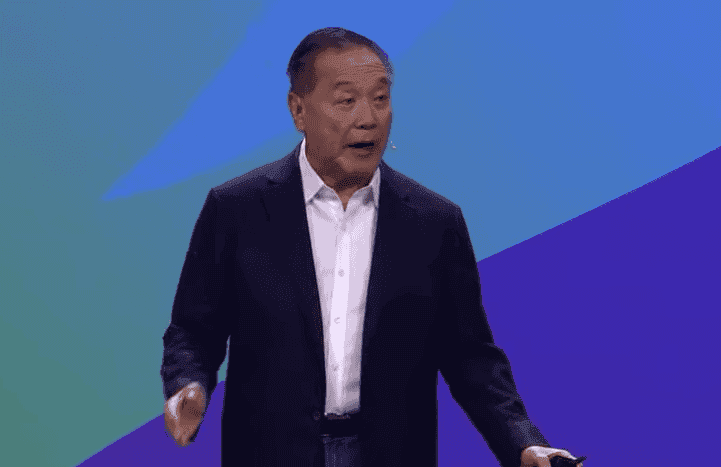
OpenAI Revenue Growth Offers Hope Amid Profitability Questions
Hock Tan acknowledged signs of a viable commercial path for frontier AI, citing OpenAI's annualized revenue hitting $50 billion in September as an encouraging milestone
3
. However, he noted that durable profitability remains out of reach given the ongoing costs of training new models. "For now it's still losing money because they're spending a lot on training," Tan said. "So frankly, it doesn't tell anything at this point except that there is a lot of potential revenue growth out of providing frontier generative AI models"3
. The comments underscore the tension between rapid revenue growth and the enormous capital requirements needed to sustain development of advanced AI systems. Broadcom itself has been a direct beneficiary of AI infrastructure spending, with Hock Tan projecting AI semiconductor revenue would reach $115 billion in fiscal 2027, then double to $230 billion in fiscal 20283
.Market Signals Point to Growing Financing Skepticism
Signs of investor skepticism toward AI infrastructure valuations are already emerging. Firmus Grid Ltd., an Australian data center company with Nvidia Corp. backing, pulled its planned $5.5 billion IPO last week as investor skepticism toward AI infrastructure valuations continued to mount
3
. On Polymarket, traders assign only a 6% probability to a qualifying AI downturn by December 31, with $2.44 million traded4
. The contract requires three of six events within 90 days, including 50% declines from record highs for Broadcom or Nvidia4
. Broadcom shares fell 1% to $357 in late-morning trading Monday, leaving the stock roughly 28% below its 52-week high of $4954
. These market signals suggest investors are beginning to reassess the risks associated with AI financing, even as demand for computing infrastructure remains strong.ASML Sees Extended AI Chip Boom Despite Capital Concerns
While Broadcom and Intel focus on financing constraints, ASML CEO Christophe Fouquet sees the AI chip boom potentially lasting beyond 2028
5
. ASML makes the machines that chipmakers need to manufacture the world's most advanced processors, and Fouquet said the industry's outlook had transformed dramatically from expectations of a relatively flat market to a scramble to meet AI demand. "What you see now is the whole industry trying to catch up on a pretty significant backlog," Fouquet said5
. He expects AI infrastructure construction to last two to five years, potentially fueling semiconductor demand beyond 2028. Most new orders for ASML's advanced chipmaking machines are already scheduled for 2028 delivery, according to JPMorgan's September assessment5
. However, ASML warns in its annual filing that high interest rates and volatile markets could make it harder for customers to raise money to buy its machines, with economic uncertainty potentially leading to delayed or canceled orders5
.References
Summarized by

Navi
Related Stories
Broadcom CEO Stands Firm on $230B AI Revenue Targets Despite Anthropic's Slowdown Push
15 Sept 2026•Business and Economy

Broadcom projects AI chip sales to exceed $100 billion by 2027 on surging custom silicon demand
26 Feb 2026•Technology

AI demand called unlimited, but chip stocks fall as spending questions mount across industry
12 Jul 2026•Business and Economy
Recent Highlights
1
Microsoft and Nvidia Launch Surface Laptop Ultra: A $2,599 AI-Ready PC With RTX Spark Chip
Technology

2
Meta Muse AI Agent Surges to 6.6M Downloads Despite Privacy and Security Controversies
Technology

3
Scientists Build AI Model That Reconstructs Images From Brain Scans in Record Time
Science and Research

Recent Highlights
Today's Top Stories











Don’t drown in AI news. We cut through the noise - filtering, ranking and summarizing the most important AI news, breakthroughs and research daily. Follow topics that matter to you and stay ahead.


