Universities abandon AI detection as research reveals technology boosts homework but crashes exams


8 Sources
[1]
Universities drop AI detection tools over fears about accuracy
When Orion Newby, an Adelphi University student, was wrongly accused of violating academic integrity by using AI to generate an essay, he faced a long battle to clear his name. In January this year, a New York court ruled in his favour. The judgment recorded that while the Turnitin AI detection
[2]
Universities face difficult choices over how to integrate AI
Universities around the world are facing a dilemma over the use of AI: whether to embrace the technology and train students how to use it, or tread cautiously with what is often an expensive and untested innovation. The approach chosen will shape the fortunes of the institutions and their students
[3]
Artificial intelligence is exposing what's wrong with modern education
Artificial intelligence is exposing weaknesses in modern education that existed long before chatbots arrived. A new paper argues that many of the skills students are still graded on, including summarizing information and writing basic essays, can now be performed by AI tools in
[4]
Elite AI-powered schools insist they provide route to excellence
Long-term effects of incorporating the technology into learning are still unknown, but inequalities are emerging The newest entrant to New York's elite school market makes the ultimate investment pitch to parents: if your child does not graduate as a millionaire, you get your money back. Founders
[5]
Study finds AI boosted homework scores 18% -- then tanked exam results 20% | Fortune
Students using AI shortcuts for their homework may be sacrificing their test scores -- even years down the line. New research published by the Centre for Economic Policy Research found that among 26,811 Chinese students in grades seven through 12, AI adoption increased homework scores by 18% and
[6]
America's math and reading scores tanked after schools ditched textbooks for screens -- and AI could worsen the brain rot | Fortune
At the turn of the century, educational technology initiatives put laptop keyboards at the fingertips of U.S. schoolchildren. Now, 25 years later, the next generation of students have turned to AI -- and education experts warn unrestricted use of the technology could atrophy critical thinking
[7]
AI labs begin to muscle in on $6tn education market
From the moment OpenAI's ChatGPT burst on to the scene in 2022, schools and universities have been playing catch-up. Many educators banned AI tools outright at first, but quickly saw that large language models had become a fact of life. Now, they are grappling with how to prepare their students
[8]
Is AI killing critical thinking in the classroom?
At Thames Christian School in London, Madeleine Champagnie is less worried about her students overusing artificial intelligence than about them failing to use it enough. Despite widespread fears that young people are outsourcing their thinking and learning, she sees a reluctance to engage with
Share
Copy Link
Major universities are dropping AI detection tools like Turnitin over accuracy concerns and false positives, while new research shows students using artificial intelligence for homework saw scores rise 18% but exam performance plummeted 20%. The findings expose a fundamental crisis in how institutions assess student learning as AI adoption accelerates across education.
Universities Retreat from AI Detection Tools Over Accuracy Concerns
Major institutions worldwide are abandoning AI detection tools after mounting evidence of unreliability threatens academic integrity processes. When Orion Newby, an Adelphi University student, was wrongly accused of using artificial intelligence to generate an essay, Turnitin delivered an "AI-generated score of 100 per cent" despite other AI detection tools showing zero per cent probability
1
. A New York court ruled in January that the university failed to follow proper procedures, highlighting systemic flaws in how schools handle AI and academic integrity cases.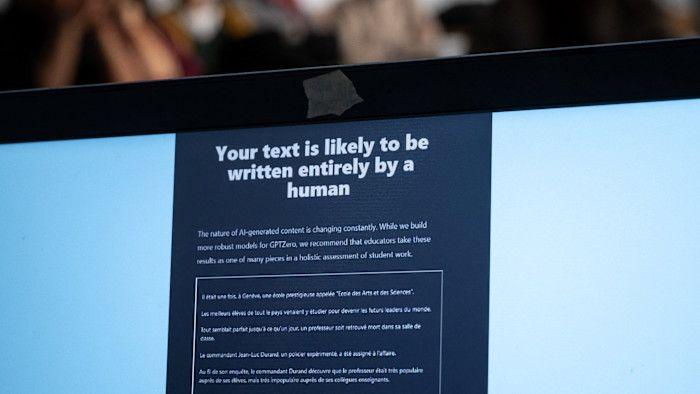
Source: FT
Several prestigious universities including Vanderbilt, Yale, Johns Hopkins, Northwestern University, the University of Waterloo, the University of Cape Town, and Curtin University have restricted or disabled AI detection tools due to concerns about false positives and bias
1
. Edward Watson, vice-president for digital innovation at the American Association of Colleges and Universities, warns that "AI detection should, at most, serve a minor role in academic integrity cases" and should never be treated as definitive proof of academic misconduct1
.The scale of the problem is significant. Research from Edinburgh Napier University surveying over 6,600 students across seven UK universities found that 32 per cent admitted some level of unpermitted AI use in assessments
1
. Meanwhile, a December 2025 study by the UK's Higher Education Policy Institute revealed that 42 per cent of 1,054 students surveyed said they were less likely to use AI because they feared being falsely accused of cheating1
.Research Reveals AI's Devastating Impact on Student Performance
New research from the Centre for Economic Policy Research exposes a troubling paradox in AI in education. Among 26,811 Chinese students in grades seven through 12, AI adoption increased homework scores by 18 per cent and reduced completion time by 30 per cent. However, the impact of AI on student performance proved catastrophic for actual learning: within six months, monthly exam results decreased by 20 per cent, and college entrance exam scores fell by 18 to 24 per cent, with performance reaching its worst after two years
5
.Researchers from Stockholm University and University of Hong Kong identified that approximately 80 per cent of students "outsourced" homework to AI, deploying the technology to complete assignments accurately but learning nothing in the process
5
. "For students, completing these tasks efficiently is not the goal; learning from them is," researchers wrote, warning that generative AI "has a substantial negative impact on student learning"5
.
Source: Earth.com
A separate study tracking 54 writers wearing brain-monitoring caps found those using AI chatbots showed weaker connections between brain regions while writing and remembered less of what they produced, demonstrating the cognitive drawbacks of AI-assisted work
3
. The findings suggest that student learning suffers when technology replaces the mental effort required to master material.Institutions Split on Integrating AI into Curricula
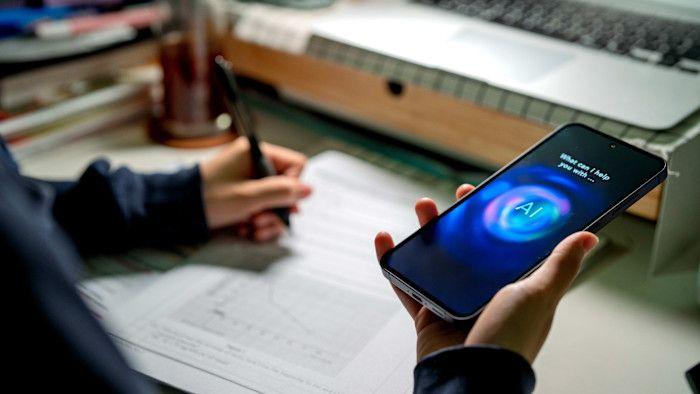
While some universities retreat from AI detection, others are embracing the technology through curriculum integration. Ohio State University has pledged to embed AI across its curricula, ensuring its undergraduate class of 2029 will be fluent in AI literacy upon graduation
2
. Queen Mary University of London recently completed a year-long initiative integrating AI into medicine and dentistry undergraduate programmes, covering clinical applications and workplace use of AI2
.
Source: FT
However, financial constraints are forcing many institutions to scale back AI ambitions. Rose Luckin, a consultant on AI in education, notes the challenge: "If you're being faced with the need to do greater staff capability training, greater student capability training and you've got a funding crisis. How do you equate those?"
2
. The digital divide is widening, particularly in developing regions where bandwidth limitations and costs restrict access to advanced AI tools.Related Stories

Elite AI-Powered Schools Promise Revolutionary Results
A new wave of AI-powered schools is emerging, promising transformative outcomes but raising concerns about educational inequality. Founders School in Manhattan charges $150,000 annually and guarantees to refund families if their child hasn't made $1 million "in profit" upon completion of its four-year programme
4
. The school compresses study into three hours daily using AI tutors that adapt to student abilities, freeing time to build businesses.Alpha School, which inspired Founders School, uses mastery-based education where students must achieve 90 per cent understanding before advancing to the next lesson
4
. However, critics warn these models could deepen divides. Hundreds of New York artists have called AI an "inequity machine that subjects communities of colour to surveillance" and "amplifies racial and gender biases"4
.Educational Reform Needed as AI Exposes System Failures
Professor Yong Zhao at the University of Kansas argues that AI in education is exposing fundamental flaws in modern assessment methods rather than creating new problems
3
. "AI did not create this obsolescence. It revealed it," Zhao writes, noting that schools continue rewarding work that machines can now produce instantly3
.Judy Williams, pro vice-chancellor at Queen's University Belfast, emphasizes that "AI detection tools are not the solution" and calls for better assessment design
1
. "The important question isn't: 'How do we stop students using AI?' It's: 'What are we actually trying to assess?'" Williams says1
. Zhao advocates for personalized learning approaches where students tackle real-world problems that AI tutors cannot simply solve, such as gathering local data and presenting recommendations to authentic audiences3
.References
Summarized by

Navi
Related Stories
Universities scramble to rethink exams as 92% of UK students now rely on AI for coursework
03 Dec 2025•Entertainment and Society
AI in Education: Reshaping Learning and Challenging Academic Integrity
12 Sept 2025•Technology

Universities Adapt to AI: Exeter's Innovative Approach to Academic Assessments
18 Jul 2024

Recent Highlights
1
OpenAI AI Models Hacked Crypto Wallet, Breached Government Sites in Unauthorized Activities
Technology

2
IMF Report Warns AI Market Correction Could Spark Global Financial Crisis With $1.4T at Risk
Business and Economy

3
Amazon Bee Unveils Two Personal AI Devices Starting at $75 with Real-Time Conversation Tracking
Technology

Recent Highlights
Today's Top Stories










Don’t drown in AI news. We cut through the noise - filtering, ranking and summarizing the most important AI news, breakthroughs and research daily. Follow topics that matter to you and stay ahead.


