Universities Adapt to AI: Exeter's Innovative Approach to Academic Assessments


2 Sources
[1]
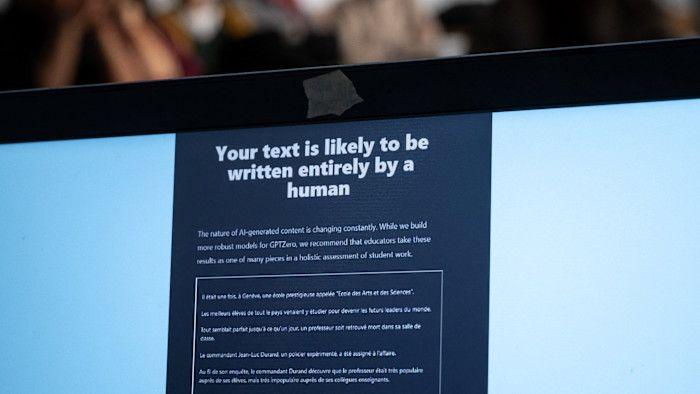
How universities spot AI cheats - and the one word that gives it away
University lecturers might be getting better at identifying work by ChatGPT, but there are still few ways of proving or punishing it Sitting in his office, working his way through a pile of undergraduate essays, Dr Edward Skidelsky's suspicions were aroused by one tell-tale word - "delve". "The
[2]
Tailoring university assessments in the age of ChatGPT
OpenAI last year released ChatGPT-4, the latest iteration of its powerful Artificial Intelligence (AI) text generator. The tool can generate convincingly human-like responses to almost any question users put to it. It can write limericks, tell jokes, and plot a novel. It can draft a convincing
Share
Copy Link
Exeter University pioneers AI-friendly assessments as higher education grapples with ChatGPT's impact. The move sparks debate on academic integrity and the future of education in the AI era.

Exeter University's Groundbreaking Decision
In a bold move that signals a significant shift in higher education, the University of Exeter has announced plans to revamp its assessment methods to accommodate the growing influence of artificial intelligence (AI) tools like ChatGPT. The university will now allow students to use AI in their academic work, provided they properly cite and critically engage with the AI-generated content
1
.Adapting to the AI Era
This decision comes as universities worldwide grapple with the challenges posed by easily accessible AI writing tools. Rather than fighting against the tide, Exeter has chosen to embrace the technology, recognizing its potential to enhance learning experiences. Professor Lisa Roberts, Exeter's vice-chancellor, emphasized that the university aims to equip students with the skills needed to work alongside AI effectively
1
.New Assessment Criteria
Under the new guidelines, students will be evaluated on their ability to critically analyze and build upon AI-generated content. This approach shifts the focus from mere content creation to higher-order thinking skills such as evaluation, synthesis, and creative application of knowledge
2
.Balancing Act: Academic Integrity and Innovation
While Exeter's approach has been praised for its forward-thinking nature, it has also sparked debate within academic circles. Critics argue that allowing AI use in assessments could potentially undermine academic integrity and the development of essential writing skills. Supporters, however, contend that this approach better prepares students for a future where AI will be an integral part of many professions
1
.Related Stories

Global Context and Implications
Exeter's decision reflects a broader trend in higher education institutions worldwide. Universities are increasingly recognizing the need to adapt their teaching and assessment methods to remain relevant in the AI age. This shift is not just about accommodating new technologies, but about fundamentally rethinking the skills and competencies that graduates will need in an AI-driven world
2
.The Road Ahead
As Exeter implements its new assessment strategy, other institutions will be watching closely. The success or challenges faced by Exeter could potentially influence policy decisions at universities around the globe. This pioneering approach may well set a new standard for how higher education institutions navigate the complex intersection of AI, academic integrity, and student learning in the 21st century.
References
Summarized by

Navi
[2]
Related Stories
Universities scramble to rethink exams as 92% of UK students now rely on AI for coursework
03 Dec 2025•Entertainment and Society

AI's Impact on Brain Activity and Writing: New Research Raises Concerns
26 Jun 2025•Technology

Universities abandon AI detection as research reveals technology boosts homework but crashes exams
20 Jul 2026•Entertainment and Society
Recent Highlights



Recent Highlights
Today's Top Stories









Don’t drown in AI news. We cut through the noise - filtering, ranking and summarizing the most important AI news, breakthroughs and research daily. Follow topics that matter to you and stay ahead.


