AI in Science: A Double-Edged Sword - Advancing Research While Fueling Misconduct


2 Sources
[1]
AI can be a powerful tool for scientists. But it can also fuel research misconduct
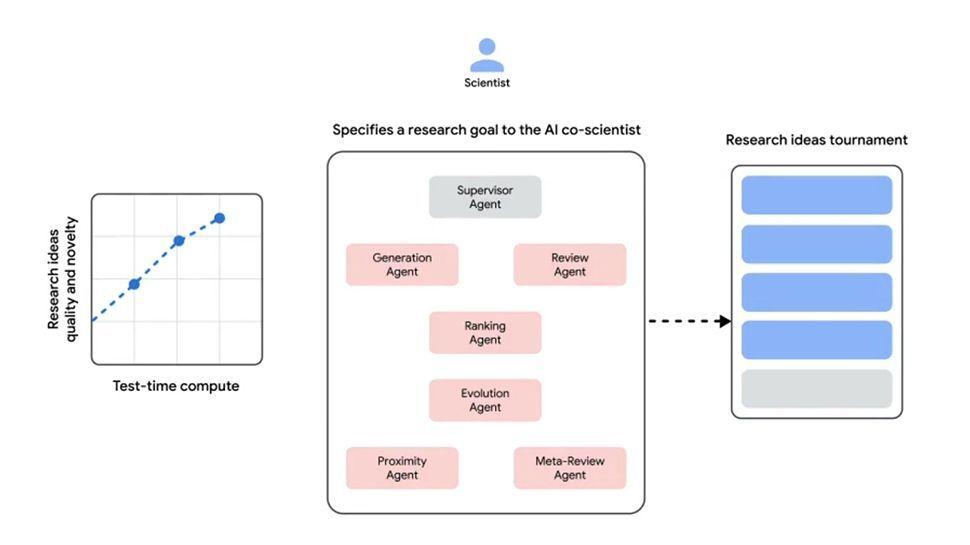
In February this year, Google announced it was launching "a new AI system for scientists". It said this system was a collaborative tool designed to help scientists "in creating novel hypotheses and research plans". It's too early to tell just how useful this particular tool will be to scientists.
[2]
AI can be a powerful tool for scientists, but it can also fuel research misconduct
In February 2025, Google announced it was launching "a new AI system for scientists." It said this system was a collaborative tool designed to help scientists "in creating novel hypotheses and research plans." It's too early to tell just how useful this particular tool will be to scientists. But
Share
Copy Link
AI is transforming scientific research, offering breakthroughs and efficiency, but also enabling easier fabrication of data and papers. The scientific community faces the challenge of maximizing AI's benefits while minimizing risks of misconduct.

AI's Transformative Impact on Scientific Research
Artificial Intelligence (AI) is rapidly transforming the landscape of scientific research, offering unprecedented opportunities for advancement while simultaneously presenting new challenges. In February 2025, Google announced the launch of "a new AI system for scientists," designed to assist in creating novel hypotheses and research plans
1
2
. This development underscores the growing integration of AI into scientific processes.Breakthroughs and Nobel Recognition
The potential of AI in science was dramatically illustrated when computer scientists won the Nobel Prize for Chemistry for developing an AI model capable of predicting the shape of every known protein. This achievement, described as a "50-year-old dream" by Nobel Committee Chair Heiner Linke, solved a problem that had eluded scientists since the 1970s
1
2
.The Dark Side: Rising Scientific Misconduct
While AI is enabling remarkable scientific breakthroughs, it's also contributing to an increase in scientific misconduct. Paper retractions have risen exponentially, surpassing 10,000 in 2023, with these retracted papers being cited over 35,000 times
1
2
. A study found that 8% of Dutch scientists admitted to serious research fraud, double the previously reported rate1
2
.AI-Facilitated Research Fabrication
The increasing capabilities of generative AI programs like ChatGPT have made it easier to fabricate research. In a striking demonstration, researchers used AI to generate 288 complete fake academic finance papers predicting stock returns
1
2
. This experiment highlights the potential for AI to be misused in generating fictitious clinical trial data or modifying gene editing experimental results.Peer Review and AI: A Complex Relationship
AI is also being used in the peer review process, a cornerstone of scientific integrity. A Stanford-led study revealed that up to 17% of peer reviews for top AI conferences were written, at least in part, by AI
1
2
. This trend raises concerns about the quality and integrity of the peer review process.Related Stories

Unintentional Errors: AI Hallucinations
AI can also lead to unintentional fabrication of scientific results through "hallucinations" - instances where AI systems generate false information. A study on computer programming found that 52% of AI-generated answers to coding questions contained errors, with human oversight failing to correct them 39% of the time
1
2
.Balancing Benefits and Risks
Despite these challenges, AI offers significant benefits to science. Researchers have long used specialized AI models to solve complex scientific problems. Generative AI models like ChatGPT promise to serve as general-purpose scientific assistants, capable of performing a wide range of tasks
1
2
.The Way Forward: Ethical AI Use in Science
The scientific community now faces a critical choice: to embrace AI by developing and advocating for an AI code of conduct that enforces ethical and responsible use in science, or to risk letting a small number of bad actors discredit entire fields of research
1
2
. The challenge lies in implementing appropriate policies and guardrails to maximize the benefits of AI while minimizing its risks in scientific research.References
Summarized by

Navi
[1]
Related Stories
AI tools boost individual scientists 3x but shrink science's collective scope, major study reveals
14 Jan 2026•Science and Research

AI's Double-Edged Sword: Revolutionizing Scientific Research While Raising Ethical Concerns
06 Jan 2025•Science and Research

Google's AI Co-Scientist: A Controversial Step Towards AI-Assisted Scientific Research
06 Mar 2025•Science and Research
Recent Highlights



Recent Highlights
Today's Top Stories






Don’t drown in AI news. We cut through the noise - filtering, ranking and summarizing the most important AI news, breakthroughs and research daily. Follow topics that matter to you and stay ahead.


